

Wooden Speaker Placement and Cabinet Care at Home
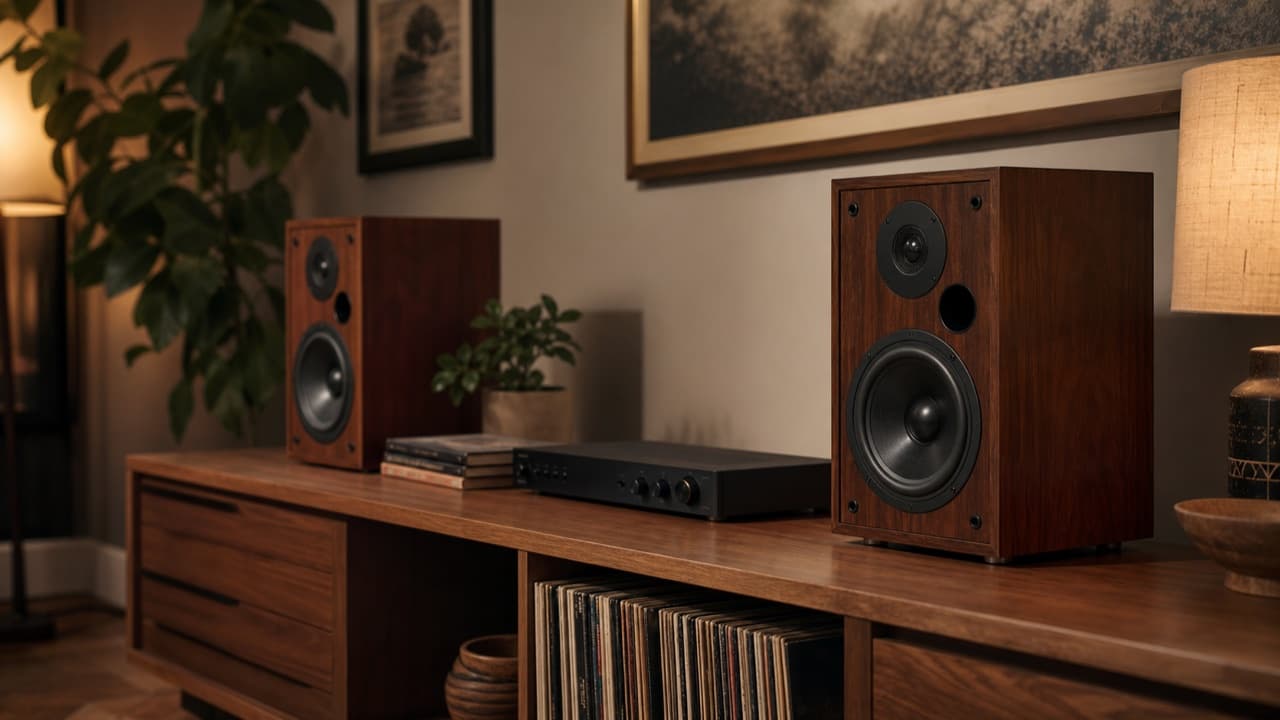
For good wooden speaker placement, put the speaker on a solid, level surface with the tweeter near seated ear height, a few inches clear of the back wall, and angled slightly toward where you sit. Then keep the wood itself safe from heat, direct sun, swings in humidity and the wrong cleaning products. This guide is for anyone with a wood-cabinet bookshelf speaker, Bluetooth speaker or retro-style radio speaker in a living room, bedroom or home office.
Key takeaways
- Treat left and right speakers and your seat as the corners of a rough triangle, with the tweeters at about ear height when you are seated.
- Walls and corners add bass but also muddiness. Start several inches out from the wall and move in small steps, never blocking a rear port.
- Wood reacts to its environment: keep cabinets away from radiators, heating vents, fireplaces and sunny windowsills, and aim for moderate room humidity.
- Clean with a dry or barely damp soft cloth. Never spray liquid on the speaker, and use furniture polish only if the maker says it is safe.
- Rattles are usually the shelf, not the speaker. Level the cabinet, add felt or rubber pads and clear loose objects nearby.
Wooden speaker placement basics: height, angle and spacing
The same acoustic rules apply to any cabinet speaker, whether it is walnut veneer or plastic. A pair works best when each speaker is a similar distance from you, and when the space between the two is not wildly different from your distance to them. For desk listening that might be 2 to 4 feet (about 60 to 120 cm); in a living room it is more often 6 to 10 feet (about 2 to 3 meters) of spacing. Aim the speakers slightly inward, then experiment with a little more or less angle until voices sound anchored in the middle instead of stuck in one speaker.
Height matters because tweeters beam high frequencies more narrowly than the rest of the sound. For most people on a sofa or dining chair, ear height is roughly 36 to 42 inches (90 to 105 cm) off the floor, but measure your own. If your sideboard or TV unit is lower, use stands or a small wedge to tilt the speaker upward rather than aiming it at your knees.
A single Bluetooth speaker or retro-style radio, which plays in mono, has simpler rules. Put it at ear height or slightly below, facing the room, and avoid tucking it into a corner or behind objects. If you use two for stereo, our guide to connecting multiple Bluetooth speakers explains the pairing options.
How far should wooden speakers be from the wall?
Each nearby surface reinforces low frequencies. A speaker beside a wall gets more bass, and one in a corner gets more still, which is why corner placement often sounds boomy and slow. The reinforcement also varies with frequency, so it can create peaks and dips rather than a clean boost.
- Rear-ported speakers need breathing room. A starting point of 6 to 12 inches (15 to 30 cm) from the rear wall is typical, but follow the manual, and never push a port against a wall, a curtain or a stack of books.
- Front-ported and sealed cabinets tolerate closer placement, which makes them easier on a shelf.
- Bookshelf placement: pull the speaker to the front edge of the shelf, not deep inside a bookcase, where the sound turns boxy.
- Test method: play a track you know well, move the speaker 2 to 3 inches at a time, and listen for the spot where bass is full without drowning the vocals. If the bass is still thin or heavy, an equalizer can help; see our portable speaker EQ and bass guide.
Shelf, desk, sideboard or stand: where to put them
| Location | Works well when | Watch out for | Fix |
|---|---|---|---|
| Bookshelf | The cabinet is built for shelf use and sits near the front edge | Boxy sound, a buzzing shelf board | Pull forward, add felt pads, remove loose items |
| Desk | Listening distance is 2 to 4 feet and tweeters are near ear level | Desk resonance, bass bounce from the wall behind | Angle up with a pad or stand, move a few inches out |
| Sideboard or TV unit | There is room for a symmetrical pair | Low height, rattling glass and ornaments | Use a wedge or stand, clear the surface |
| Floor stands | You have the space and want the clearest stereo image | Wobble on thick carpet, scratches on timber floors | Level carefully, use pads under the base |
| Windowsill | Rarely a good idea | Sun, heat and cold drafts on the wood | Choose another spot |
What kind of wood is it? Care depends on construction
A speaker described as wooden can be several things, and that changes how careful you need to be. Check the product page or manual, and if the construction is not stated, assume the more delicate option.
| Construction | What it is | Main risk | Care approach |
|---|---|---|---|
| Solid wood | Cabinet panels cut from timber | Expands and shrinks with humidity; joints or finish may crack | Stable room conditions, away from heat and sun |
| Wood veneer on MDF | Thin wood layer over engineered board | Veneer edges lift if wet; MDF swells if water gets in | Barely damp cloth at most, dry at once, protect edges |
| Wood-look wrap or grain print | Vinyl or printed film on a board | Peeling at corners from heat; some cleaners dull the surface | Dry cloth, mild approach, avoid solvents |
Protect the cabinet from humidity, heat and sun
Wood absorbs and releases moisture, so very dry winter air can open hairline cracks and lift veneer, while damp rooms can swell panels and cloud the finish. Many furniture makers suggest keeping rooms at a moderate relative humidity, often cited as roughly 35 to 55 percent. A cheap hygrometer will tell you where your room sits. If you run a humidifier or diffuser nearby, keep its mist away from the cabinet; our notes on aromatherapy diffuser safety and placement and dehumidifier size and placement help you manage the room.
Keep speakers a few feet from radiators, heating vents, stoves and fireplaces. Direct sunlight fades and dries finishes and warms the cabinet and electronics. If the speaker has a built-in amplifier or battery, leave vents and the area around the cabinet clear, and do not drape cloth, stack objects or park a plant on top. Water in a vase or a drink on top is a spill waiting to happen.
How to clean a wooden speaker cabinet safely
- Switch the speaker off and unplug it.
- Dust with a dry, soft microfiber cloth, wiping along the grain.
- For fingerprints on a sealed finish, dampen a cloth with water until it is barely damp, wipe lightly, and dry straight away. Avoid wetting veneer edges or seams.
- Clean cloth or mesh grilles with a soft brush or a lint roller. Do not press on the drivers or tweeter domes.
- Check the feet. Felt or rubber pads protect both your furniture and the cabinet bottom, and they harden or wear out over time.
Avoid sprays aimed at the speaker, because liquid can run into drivers, ports and controls. Skip silicone or wax furniture polish, alcohol, ammonia cleaners and abrasive pads unless the manual approves them. For scratches, ask the maker which touch-up product is safe, and test it on a hidden spot first. Our guide on cleaning headphones and portable speakers covers grilles and ports in more detail.
Mistakes to avoid
- Pushing a rear-ported speaker against the wall. It boosts and blurs the bass, and a blocked port can cause chuffing noises.
- Using a wobbly shelf. A speaker rocking on an uneven surface loses clarity and may mark the finish.
- Setting the pair at different distances. The stereo image tilts toward the nearer speaker.
- Leaving it in a sunny window. The finish fades and the cabinet heats up.
- Spraying polish on the cabinet. Overspray reaches the driver edges and the grille.
- Judging bass in one spot for one minute. Small moves change the sound, so test from where you actually sit.
- Stacking things on top. It blocks ventilation, rattles, and invites scratches.
Which placement fits your room
- Pick a desk setup if you listen from 2 to 4 feet: angle the pair inward, raise the tweeters to ear level and keep them off the wall.
- Pick a shelf or sideboard if the speakers are part of a living space, but choose front-ported or sealed models, pull them forward and fit felt pads.
- Pick stands if you want the best stereo image and have clear floor space.
- Pick a single speaker at ear height for a bedroom or kitchen, away from corners, radiators and steam.
If you are shopping for a retro wooden look, the Retro Wooden Bluetooth Speaker with FM Radio is listed at ADLTHUB; check its product page for dimensions, power, construction details and care instructions, and if it has a telescopic FM antenna, test reception by turning the antenna and moving the speaker away from other electronics. Browse more audio gear in Electronics and Accessories, or read how to choose a portable Bluetooth speaker for sizing advice. For patios and gardens, see our outdoor speaker placement guide instead.
Frequently asked questions
How far should speakers be from the wall?
A common starting point for rear-ported speakers is 6 to 12 inches from the back wall, with sealed or front-ported models able to sit closer. Check the manual, then move the speaker a few inches at a time while listening for the best balance between bass weight and clarity.
Can I put wooden speakers inside a bookshelf?
Yes, if they are designed for shelf use, but keep them near the front edge with a clear space around the ports. Placing them deep inside the shelf tends to make the sound boxy.
How do I clean a wooden speaker without damaging it?
Unplug it, dust with a dry microfiber cloth, and use a barely damp cloth only on sealed finishes, drying right away. Avoid spraying liquids, silicone polish, alcohol and abrasive pads.
Does a wooden cabinet make a speaker sound better?
A stiff, well-damped cabinet resists unwanted vibration, which helps, but the wood species matters less than driver design, tuning and placement. Treat a warm wood tone as a description of style, not a guarantee of sound.
Should I put a wooden speaker near a window or radiator?
It is best not to. Sunlight and heat can fade the finish and dry out the wood, and a speaker on a radiator shelf will see large swings in temperature. Pick an interior wall or a stand away from heat sources.
Shop Tech & Gadgets
View all →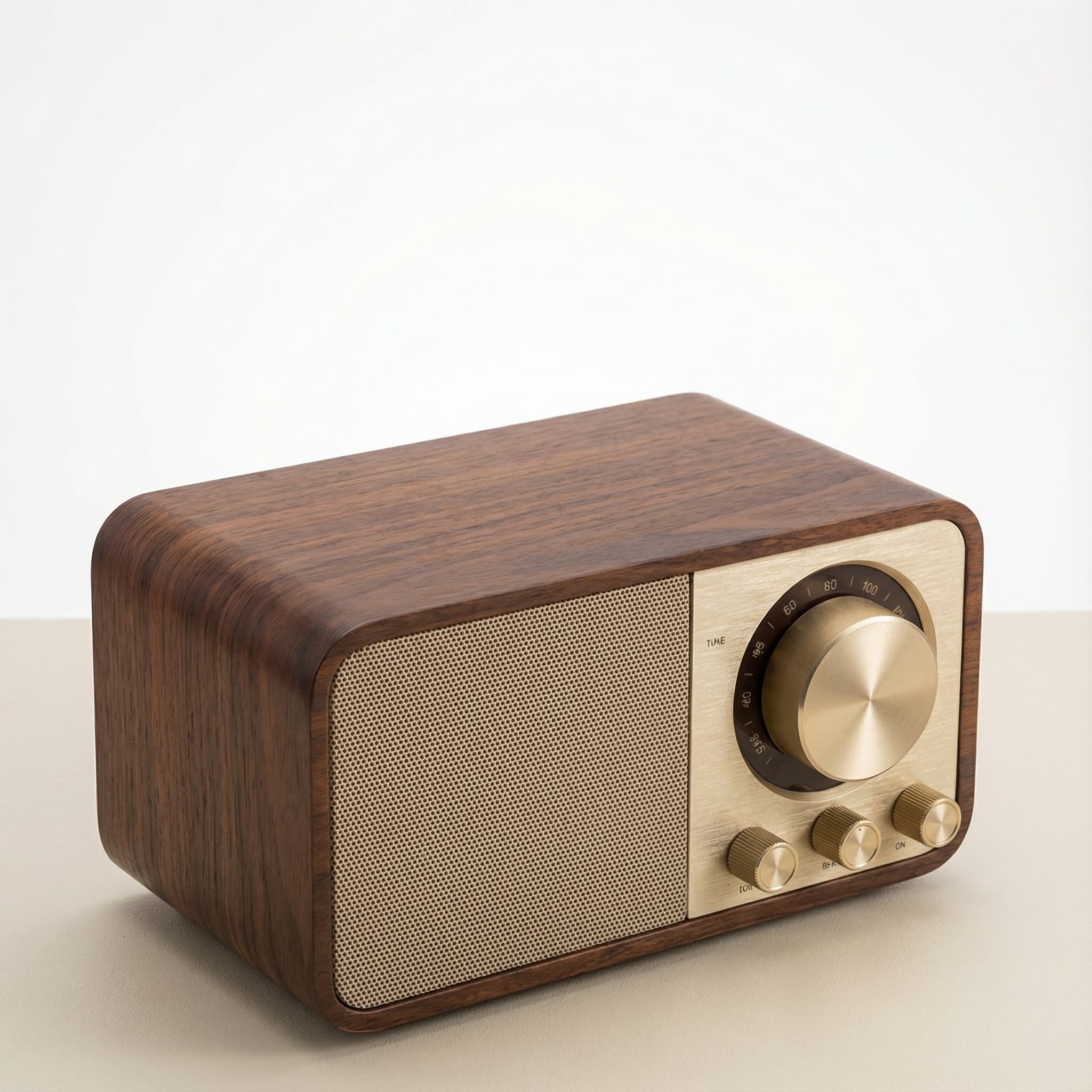 Sale
Retro Wood-Cabinet Bluetooth Speaker with FM Radio
In stock · Ships in 7–21 business days

Ortizan X10 Portable Bluetooth Speaker with RGB Lights
In stock · Options available · Ships in 7–21 business days
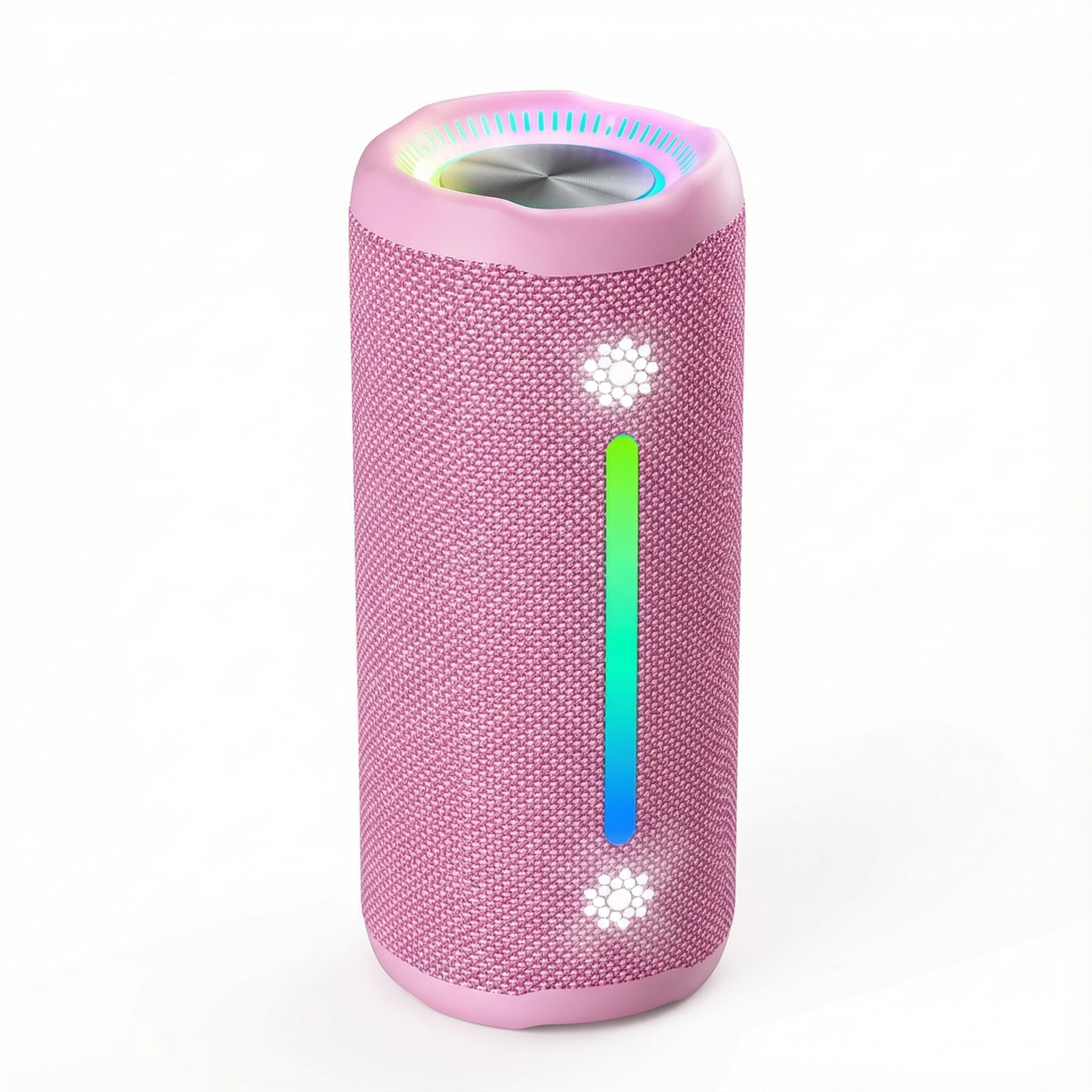
Ohayo X10 Max Bluetooth Speaker with Bass Boost and Lights
In stock · Options available · Ships in 7–21 business days
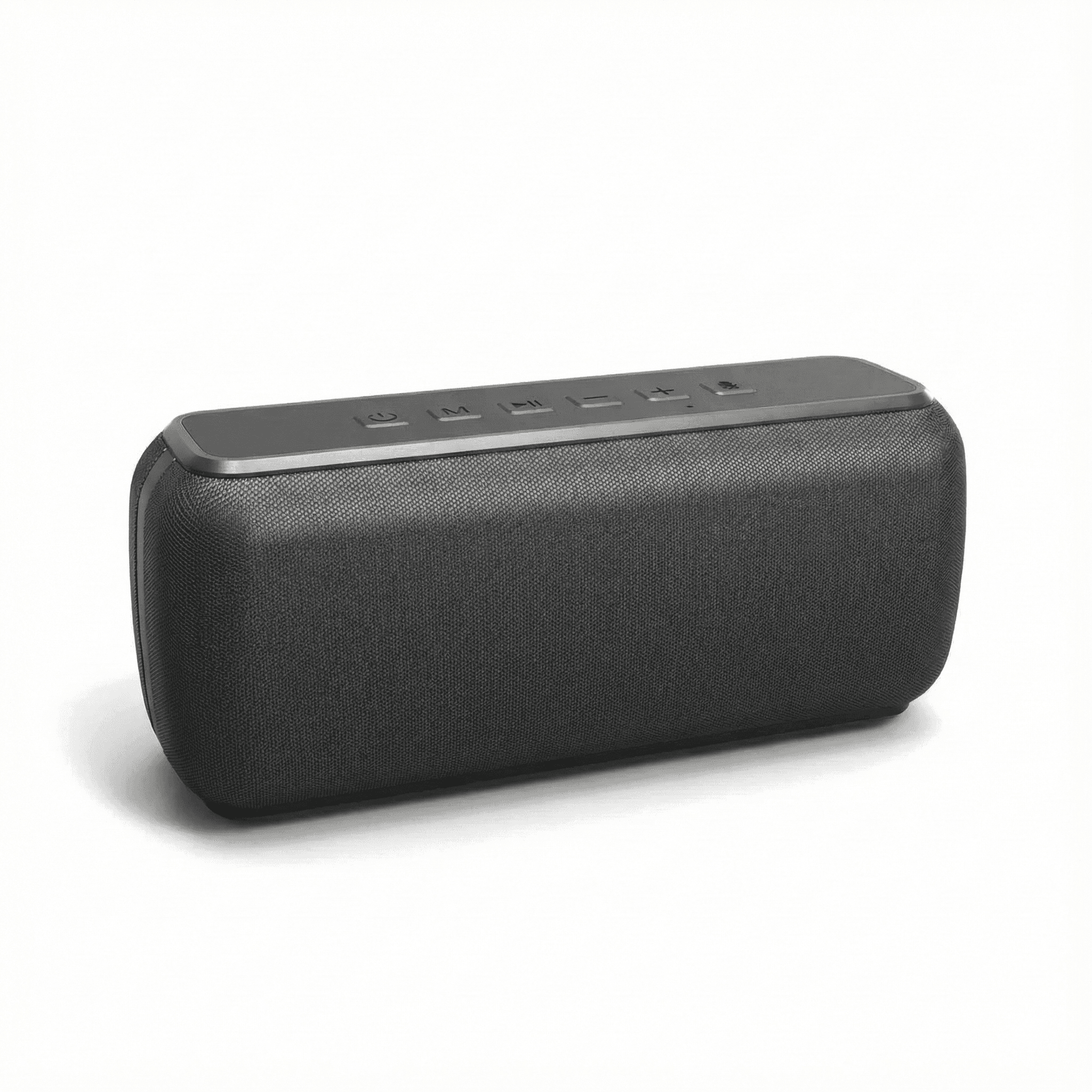
Xdobo X8 II Portable Bluetooth Speaker with Power Bank
In stock · Options available · Ships in 7–21 business days
Continue reading
 Tech & Gadgets
Portable Speaker Battery Care: Charging, Storage and Heat
Portable speaker battery care made simple: how to charge, store and use a Bluetooth speaker so its lithium-ion battery lasts longer and stays safe.
 Tech & Gadgets
Outdoor Speaker Placement: Where to Put a Speaker Outside
Outdoor speaker placement for patios, decks and yards: height, wall and corner bass tricks, Bluetooth range limits, weather and sun, and keeping neighbors calm.
 Tech & Gadgets
Portable Speaker EQ Settings: How to Get Better Bass
Portable speaker EQ settings explained: how bass boost, app presets and placement change the sound, why bass fades at high volume, and how to tune it well.