

How to Choose a Portable Bluetooth Speaker in 7 Steps
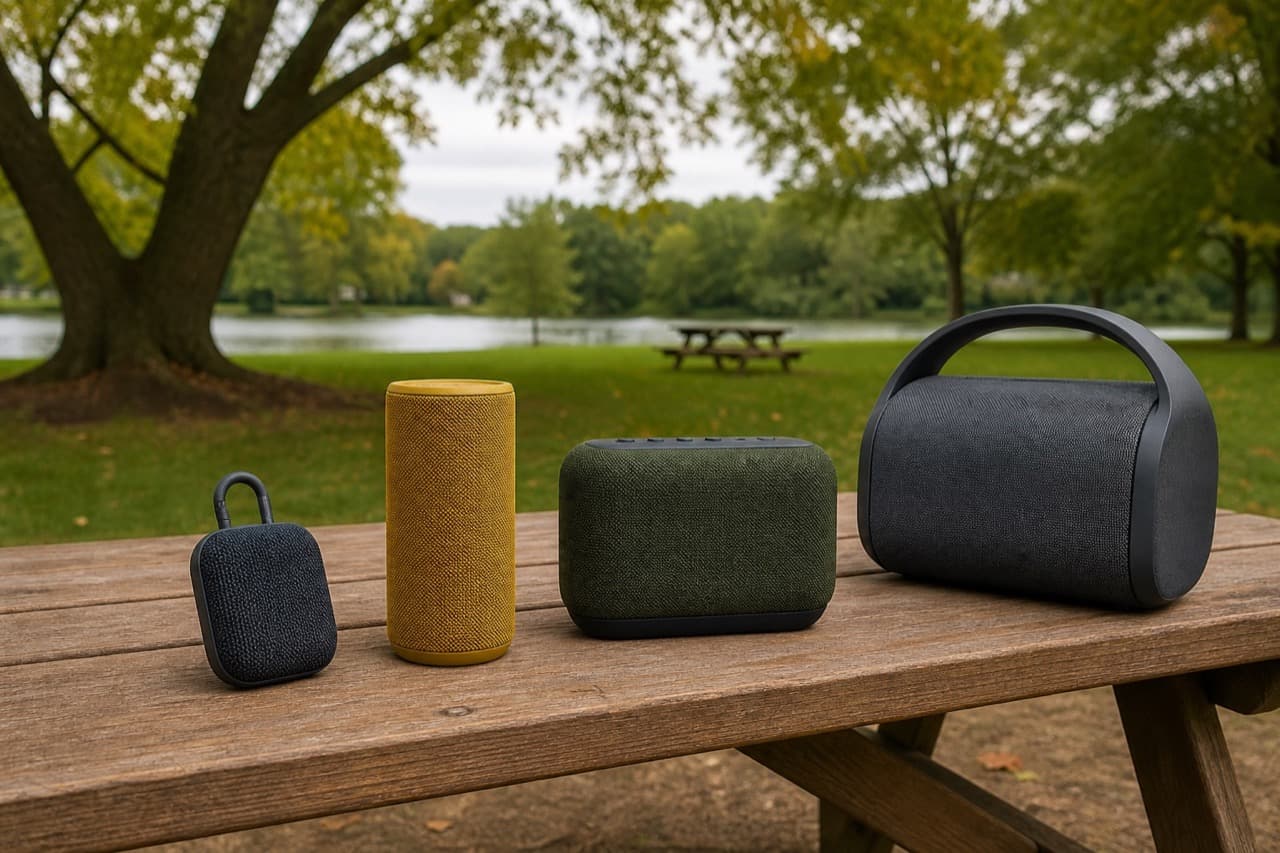
The fastest way to work out how to choose a portable Bluetooth speaker is to decide where it will spend most of its life, since that one answer sets the size, loudness, water rating and battery you need. A clip-on speaker for showers and hikes, a lunchbox-size speaker for the backyard and a handle-carry party speaker are different products, and comparing them on watts alone leads to poor choices. This guide is for anyone buying a first speaker or upgrading. It walks through seven decisions in order and points to our deeper guides on each topic when you want the detail.
Key takeaways
- Choose the size class first; it decides bass, loudness and how often the speaker actually leaves the house.
- Listed watts are not a reliable comparison between brands; compare driver size, size class and listening reports instead.
- IP67 covers dust and temporary immersion; IPX4 only covers splashes. Neither means it can live in a pool.
- Battery claims usually reflect moderate volume; expect less at party volume.
- Stereo pairing and party linking usually work only with the same brand, sometimes only the same model.
- USB-C charging and a working app for EQ and updates make day-to-day ownership easier.
Step 1: Pick the size class for where you will use it
| Size class | Typical weight | Strengths | Limits | Best for |
|---|---|---|---|---|
| Clip-on or pocket | Under 1 lb (0.45 kg) | Goes everywhere, often rugged | Little bass, modest volume | Showers, hikes, bikes, desks |
| Bottle or lunchbox size | About 1 to 3 lb (0.45 to 1.4 kg) | Fuller sound, still bag-friendly | Fills a patio, not a party | Bedrooms, kitchens, beach, picnics |
| Large carry-handle | About 3 to 8 lb (1.4 to 3.6 kg) | Real bass, outdoor volume | Bulky to pack | Backyards, camping, small gatherings |
| Party or tower | Often 10 lb (4.5 kg) and up | Loudest, lights, mic inputs | Heavy, needs power planning | Parties, events, garages |
Be honest about carrying. A big speaker that stays home because it is a hassle is worse than a smaller one that comes along. Our portable speaker size and loudness guide explains why cabinet size and bass are so closely linked.
Step 2: Judge loudness without trusting the watt number
Speaker listings quote watts, but there is no single standard behind the number; some brands quote peak figures and others continuous output, and the figure says nothing about speaker efficiency. Two speakers listed at 20 W can sound very different. Better signals are driver size and count, the presence of passive radiators (which help bass in small boxes), the size class, and whether the speaker uses a separate tweeter. For a full breakdown, read Bluetooth speaker wattage explained.
Rough expectations: a small speaker fills a bedroom or desk; a mid-size one handles a kitchen or patio; open outdoor spaces need a large speaker because sound spreads and there are no walls to reflect it.
Step 3: Match the IP rating to real exposure
An IP rating has two digits. The first is dust protection (6 is dust-tight; X means not rated). The second is water protection:
- IPX4: splashes from any direction. Fine near a sink or in light rain.
- IPX5: water jets. Handles rain and a rinse.
- IPX7: temporary immersion, typically up to 1 meter (about 3.3 feet) for 30 minutes in fresh water.
- IP67: IPX7 water protection plus dust-tight, which matters at beaches and campsites.
Ratings are tested in fresh water with ports closed. Salt water, chlorine, hot tubs and long submersion are outside the test, and rubber port covers must be sealed for the rating to apply. Rinse with fresh water after the beach and dry before charging. Our waterproof speaker IP ratings guide covers the details.
Step 4: Read battery claims realistically
Many portable speakers list somewhere between about 10 and 24 hours of playback, measured at moderate volume. At high volume, with lights on, or with heavy bass, runtime can drop sharply. Check:
- Charging port: USB-C is easiest to live with; older micro-USB means another cable.
- Charge time: often several hours for larger batteries.
- Power-out port: some speakers can top up a phone, which drains the speaker faster.
- Play while charging: useful for parties near an outlet.
Lithium-ion batteries age with heat and long storage at full or empty. Our portable speaker battery care guide covers storage and charging habits that help.
Step 5: Check Bluetooth features that affect daily use
- Bluetooth version: 5.0 or newer is common and generally offers stable connections. Typical reliable range is around 30 feet (10 meters) indoors, less through walls and bodies.
- Codecs: most speakers use SBC, many add AAC; aptX or LDAC appear on some. On a small speaker, the drivers and tuning usually matter more than the codec. See our Bluetooth codec and range guide.
- Multipoint: connects two phones at once, handy for shared playlists.
- App support: an app with EQ, firmware updates and battery readout adds real value. Check it is still maintained and supports your phone.
- Speakerphone: a built-in mic is useful for calls, but quality varies widely.
- Aux input and FM radio: useful for older devices or places without phone signal.
Step 6: Plan for stereo pairing or party linking
Many speakers can pair two units as left and right (stereo pairing) or link several to play the same audio (party mode). Almost always, these features only work between speakers of the same brand, and sometimes only the same model or generation. If you think you might want two later, check compatibility now. Our stereo pairing setup guide covers sync and lag fixes.
Step 7: Consider durability, design and ownership
- Build: rubberized bumpers and fabric grilles survive knocks better than bare plastic or glossy finishes.
- Controls: large, raised buttons are easier to use with wet hands or gloves.
- Mounting: straps, carabiners or flat bases depending on whether it hangs, rides on a bike or sits on a table.
- Style: wooden or retro speakers suit living spaces but are usually not built for water or rough handling.
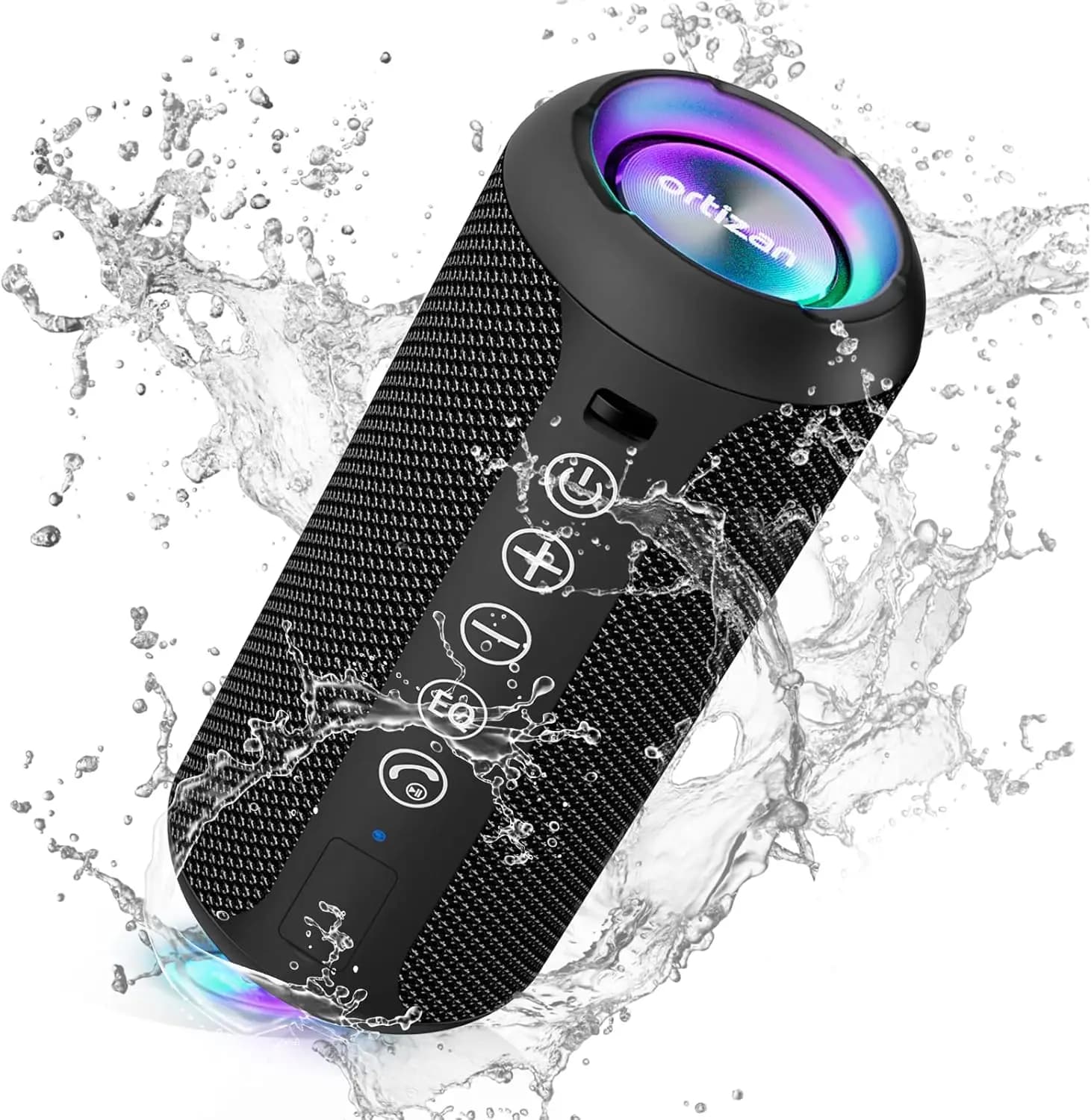
ADLTHUB carries speakers across the size classes, from the compact Tribit StormBox Mini 12W Portable Speaker and the Ortizan 24W Waterproof Portable Speaker to the larger Xdobo X8 II 60W Portable Bluetooth Speaker, plus the home-oriented Retro Wooden Bluetooth Speaker with FM Radio. Check each product page for its rating, battery details, delivery and returns, or browse the electronics and accessories category.
Mistakes to avoid
- Comparing watts across brands. The numbers are measured differently and mislead more than they help.
- Buying too big to carry. If it will not fit your bag or bike, it will not leave the house.
- Treating IPX7 as pool-proof. The test is short, shallow and in fresh water. Salt, chlorine and long dunks can still cause damage.
- Charging with a wet port. Dry it fully first; moisture in a port during charging can cause corrosion or faults.
- Assuming any two speakers will pair. Stereo and party modes are usually brand- and model-specific.
- Leaving it in a hot car. Heat accelerates battery aging and can warp plastics.
Which portable speaker fits you
- Pick a clip-on rugged speaker if you want music in the shower, on hikes or on a bike, and portability beats bass.
- Pick a mid-size IP67 speaker if you want one speaker for the kitchen, beach and backyard.
- Pick a large carry-handle speaker if you host outdoor gatherings or camp with a group.
- Pick two of the same model if you want true stereo at home or across a patio.
- Pick a wooden or retro speaker if it will stay indoors and you care about how it looks on a shelf.
Frequently asked questions
What size Bluetooth speaker do I need?
For a desk, bedroom or shower, a small speaker is usually enough. For a kitchen or patio, choose a mid-size model; for open outdoor spaces and gatherings, a large carry-handle speaker gives the volume and bass you will want.
Is a higher watt Bluetooth speaker louder?
Not reliably. Brands measure watts differently, and loudness also depends on speaker efficiency and design. Compare size class and driver setup rather than the watt figure alone.
What does IP67 mean on a speaker?
IP67 means dust-tight and protected against temporary immersion, typically up to 1 meter for 30 minutes in fresh water, with port covers closed. It does not cover salt water, chlorine or long submersion.
How long should a portable speaker battery last?
Many list roughly 10 to 24 hours, measured at moderate volume. Expect noticeably less at high volume or with lights on, and gradual capacity loss over the years.
Can I pair two different Bluetooth speakers together?
Usually not for stereo or party modes, which are generally limited to the same brand and often the same model. Some phones can stream to two Bluetooth devices at once, but sync can be imperfect.
Shop Tech & Gadgets
View all →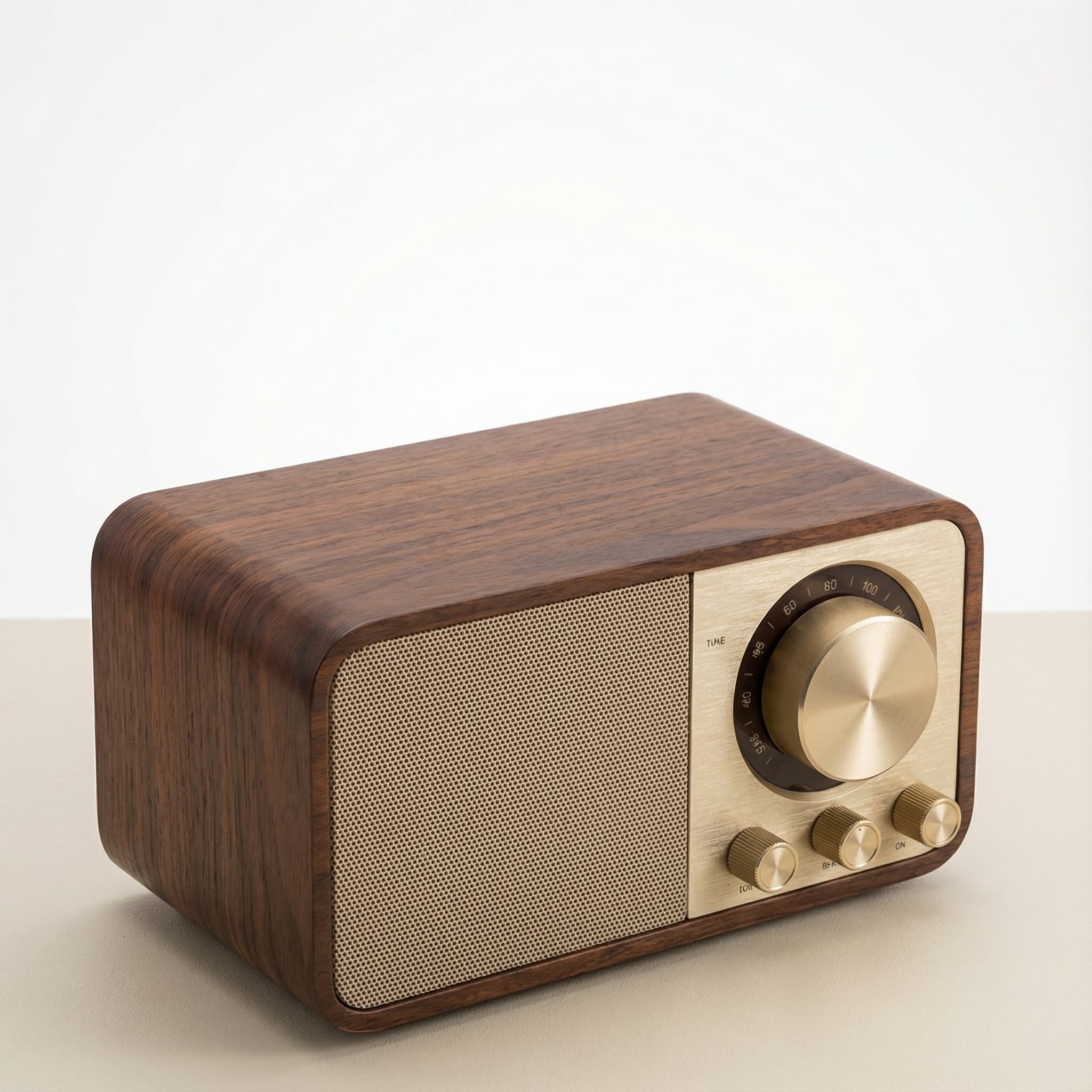 Sale
Retro Wood-Cabinet Bluetooth Speaker with FM Radio
In stock · Ships in 7–21 business days
Ortizan X10 Portable Bluetooth Speaker with RGB Lights
In stock · Options available · Ships in 7–21 business days
Ohayo X10 Max Bluetooth Speaker with Bass Boost and Lights
In stock · Options available · Ships in 7–21 business days
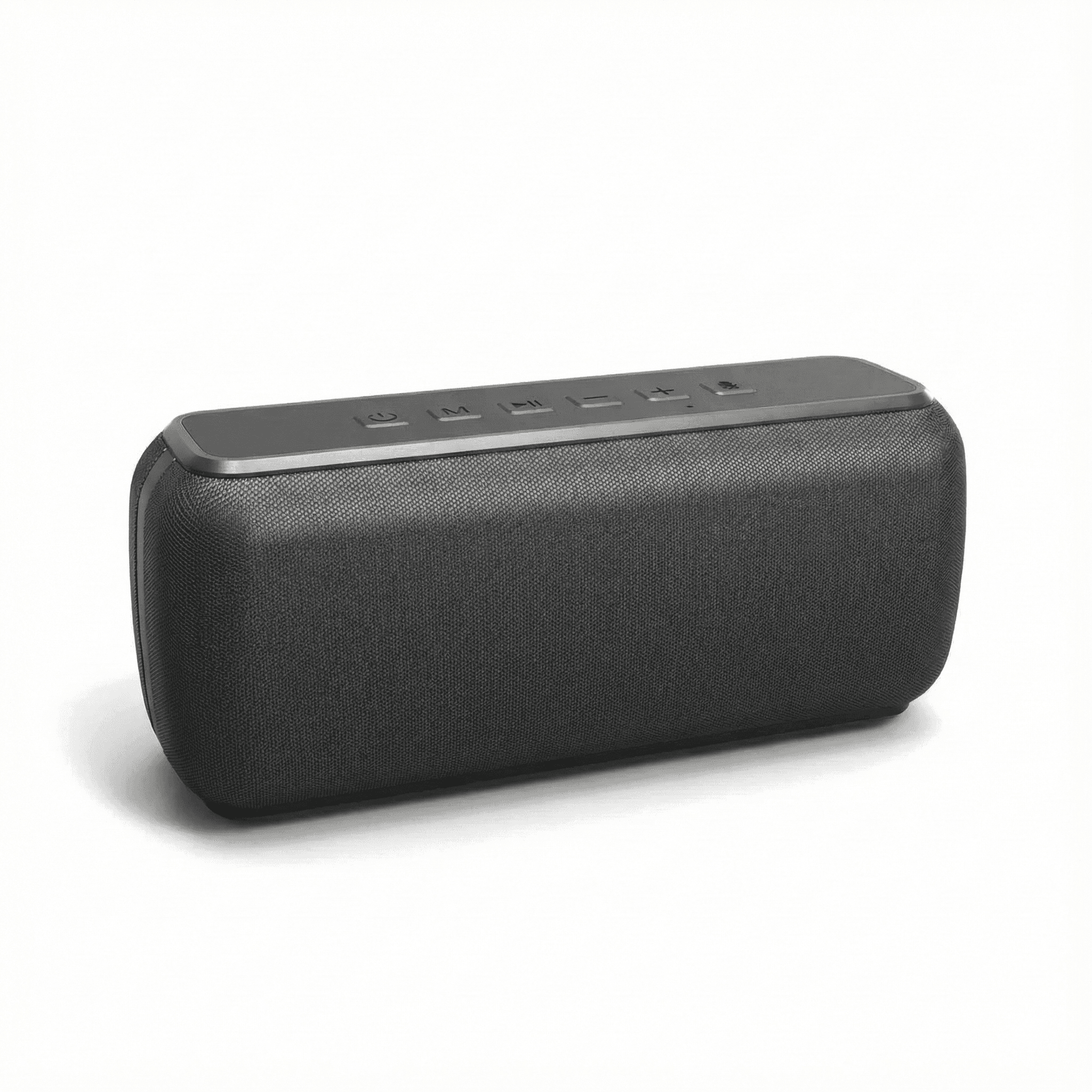
Xdobo X8 II Portable Bluetooth Speaker with Power Bank
In stock · Options available · Ships in 7–21 business days
Continue reading
 Tech & Gadgets
Portable Speaker EQ Settings: How to Get Better Bass
Portable speaker EQ settings explained: how bass boost, app presets and placement change the sound, why bass fades at high volume, and how to tune it well.
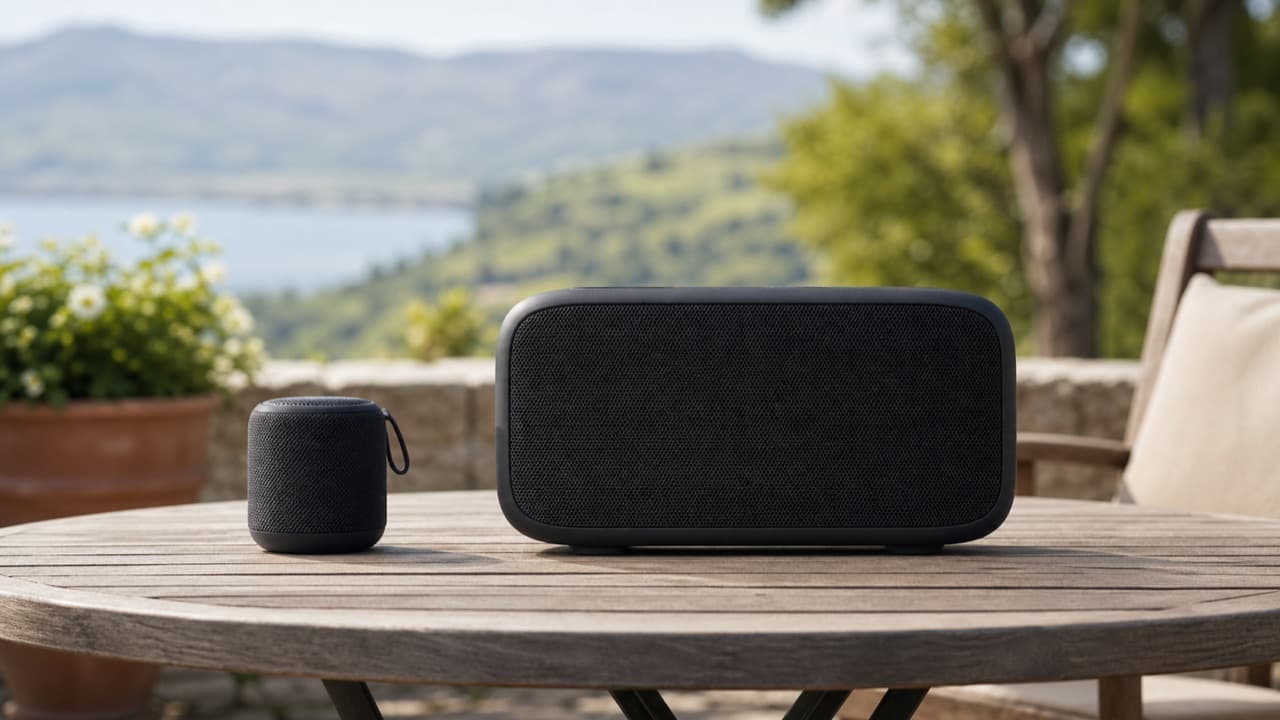 Tech & Gadgets
What Size Portable Speaker Do You Need? Loudness Guide
What size portable speaker do you need? Match speaker size class to room, crowd and listening distance, and learn how loudness falls with distance outdoors.
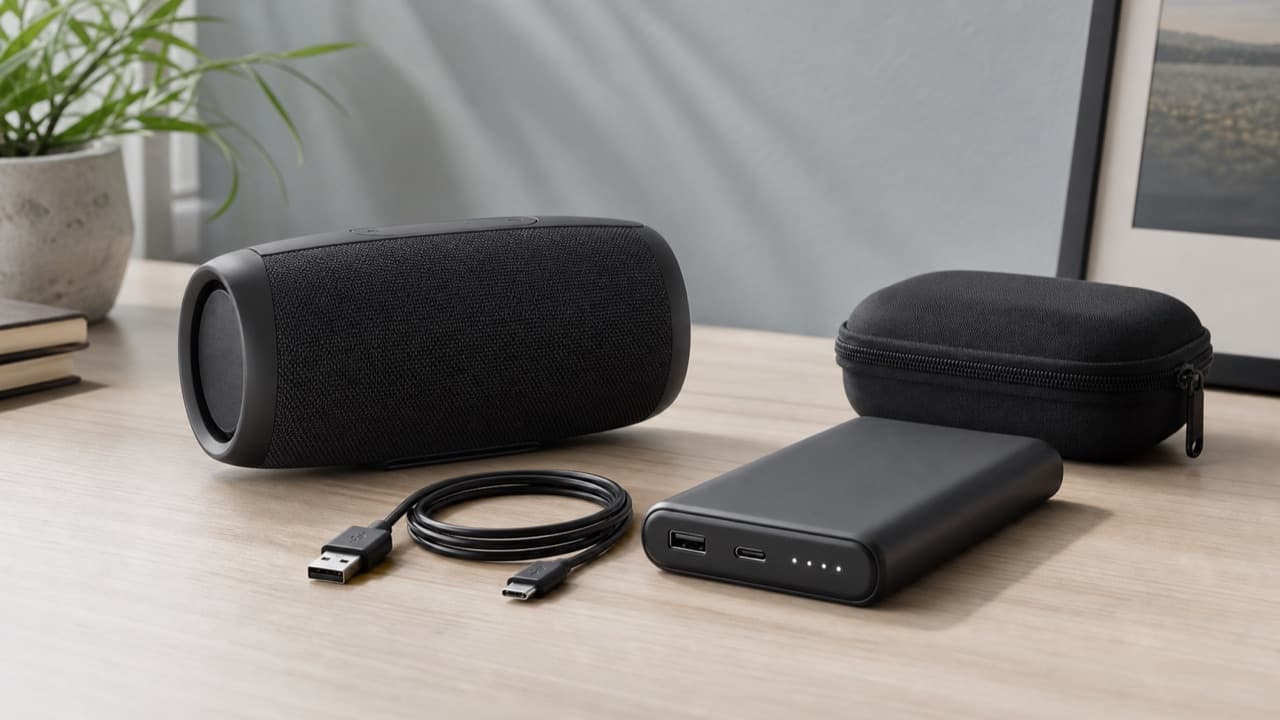 Tech & Gadgets
Portable Speaker Battery Care: Charging, Storage and Heat
Portable speaker battery care made simple: how to charge, store and use a Bluetooth speaker so its lithium-ion battery lasts longer and stays safe.