

What Size Portable Speaker Do You Need? Loudness Guide
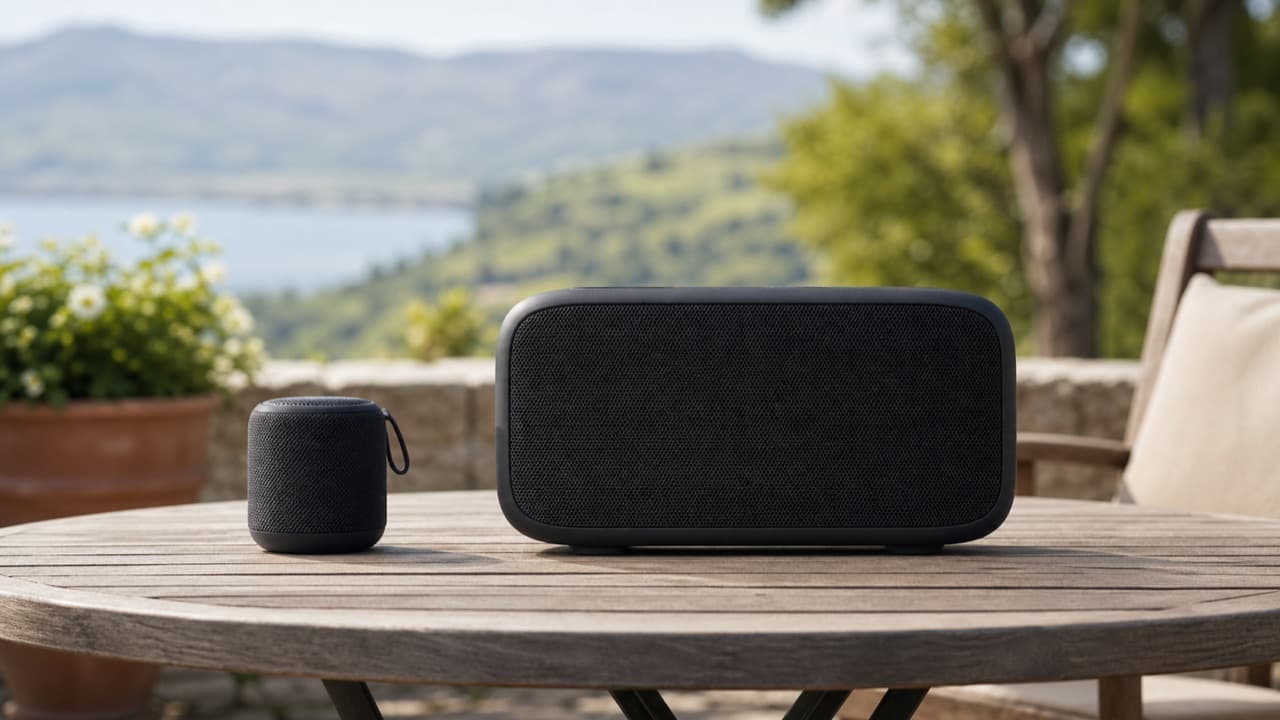
To work out what size portable speaker you need, start with listening distance and setting, not watts: a palm-sized speaker fills a desk or a tent, a bottle-sized one handles a small room or patio, and a lunchbox or boombox-sized speaker is needed for a backyard group. Outdoors, sound level drops quickly with distance, so the bigger the area, the more cabinet and driver size you need. This guide is for shoppers choosing between small, medium and large Bluetooth speakers who want enough volume without carrying more weight than the job needs.
Key takeaways
- Size class predicts real-world loudness and bass better than the watt rating, because bigger cabinets and drivers move more air.
- Outdoors, sound level falls by about 6 dB each time you double your distance from the speaker, so a speaker that’s loud at 3 feet is far quieter at 25 feet.
- Indoors, walls reflect sound back, so a small speaker can feel much louder in a bedroom than on a lawn.
- Bigger speakers trade portability for output: weight can rise from under 1 pound to well over 10 pounds (about 0.5 to 5 kg).
- Two medium speakers spread around an area often sound better than one large speaker pushed to its limit.
Portable speaker size classes compared
Brands don’t use standard size names, so the classes below are rough groupings by shape and typical weight. Use them to narrow the field, then check each listing’s measurements.
| Size class | Typical size and weight | Realistic use | Main trade-off |
|---|---|---|---|
| Pocket or clip-on | Palm-sized, often under 1 lb (0.45 kg) | Desk, shower, tent, bike handlebar, one or two listeners close by | Little bass; volume fades fast beyond a few feet |
| Bottle-sized | Fits a cup holder or bag pocket, roughly 1 to 2.5 lb (0.45 to 1.1 kg) | Bedroom, small patio, picnic for a few people | Decent mids, limited low end outdoors |
| Lunchbox or mid-size | Two-handed carry or shoulder strap, roughly 2.5 to 6 lb (1.1 to 2.7 kg) | Living room, backyard gathering, beach with a small group | Bulkier in a daypack; longer charge times |
| Boombox or party | Handle-carried, often 6 lb (2.7 kg) or more | Larger outdoor gatherings, garages, events | Heavy, often needs wall power for full output, overkill for close listening |
Why size matters more than watts
Loudness depends on how efficiently a speaker converts electrical power into sound and how much air its drivers can move before distorting. Two physical factors dominate:
- Driver area and travel. A larger cone, or one that can move further, displaces more air. That matters most for bass, which needs large air movement to be heard at a distance.
- Cabinet volume. A bigger enclosure lets the designer tune deeper bass with ports or passive radiators. Small cabinets rely on processing that limits bass as volume rises.
Watt ratings are inconsistent between brands, often quote peak figures and say nothing about efficiency. Our Bluetooth speaker wattage explainer goes into RMS versus peak power; for sizing, the practical rule is to compare speakers by physical class and use the watt number only within a single brand’s lineup.
A maximum loudness figure in decibels (dB SPL) is more useful when a maker publishes one, but only if it states the distance it was measured at, commonly 1 meter (about 3.3 feet). A figure without a distance can’t be compared.
Listening distance: how loud is a speaker across a yard?
In open air, sound spreads out in all directions. The rule of thumb is that sound pressure level drops about 6 dB each time the distance doubles. A speaker producing a certain level at 3 feet will be about 6 dB quieter at 6 feet, about 12 dB quieter at 12 feet and about 18 dB quieter at 24 feet. A 10 dB drop sounds roughly half as loud to most people, so a group spread across a 25-foot patio hears far less than the person next to the speaker.
Indoors the picture changes. Walls, ceiling and furniture reflect sound, so the level doesn’t fall as quickly and bass builds up. That’s why the same speaker can seem plenty loud in a 12 by 12 foot (3.7 by 3.7 m) bedroom and disappointing in an open park.
Practical sizing by setting
- Desk, bedside or shower: a pocket or bottle-sized speaker within 3 to 6 feet is enough.
- Living room or kitchen: bottle-sized for background music, mid-size if you want to fill an open-plan space.
- Patio or campsite with 4 to 8 people: mid-size, placed centrally and close to the group.
- Backyard party or beach with a larger crowd: a party-sized speaker, or two mid-size speakers linked together and spread out. The multi-speaker party linking guide covers how pairing works and its limits.
The cost of going bigger: weight, battery and charging
A larger speaker usually has a larger battery, but it also draws more power at volume. Advertised runtimes are normally measured at a moderate volume, so expect far fewer hours at high volume regardless of size. Some larger speakers reach their full output only when plugged in.
- Weight: anything over about 5 pounds (2.3 kg) becomes noticeable in a daypack on a hike. A handle or shoulder strap helps but doesn’t remove the bulk.
- Charging time: bigger batteries take longer to refill. Check whether the speaker charges by USB-C and what charger wattage it accepts, or needs its own adapter.
- Power bank feature: some mid-size and larger models can charge a phone from a USB port, which drains the speaker’s own runtime.
- Durability: a heavier speaker hits the ground harder when it falls; look at the water and drop claims, explained in the rugged speaker durability guide.
Play loud, but protect your hearing
A speaker large enough for a party can produce levels that are risky with long exposure, especially for anyone standing right next to it. US occupational guidance from NIOSH sets 85 dBA averaged over 8 hours as a recommended limit, with the safe time halving for every 3 dB increase. You don’t need a sound meter for everyday use: if people have to raise their voices to talk at arm’s length, the level is high enough to limit how long you keep it there. Place a large speaker so no one is sitting right against it, and aim it toward the group rather than turning it up to reach the far end of the yard.
Mistakes to avoid
- Buying by the biggest watt number. Peak and total-channel figures make small speakers look powerful; size class tells you more.
- Testing at home and assuming it will work outdoors. Room reflections flatter every speaker. Expect less loudness and bass outside.
- Running a small speaker at maximum all night. It will distort, limit its own bass and drain the battery quickly. Size up instead.
- Placing the speaker at one end of the group. Because level drops with distance, a central position lets you use less volume for the same coverage.
- Buying a party speaker for a backpack. If you mostly listen alone on trails, the extra weight is a daily cost for occasional benefit.
Which speaker size fits you
- Pick a pocket or bottle-sized speaker if you listen alone or with one or two people, travel light, or want something for the bathroom or desk. The Tribit StormBox Mini is one compact option on ADLTHUB.
- Pick a mid-size speaker if you want one speaker that handles the living room, patio and the occasional picnic.
- Pick a party-sized speaker if you host outdoor groups regularly and usually have a car or wall power nearby. Larger options include the OHAYO X10 Max outdoor speaker.
- Pick two medium speakers if your space is long or irregular and even coverage matters more than peak volume.
For each product, check the product page for current specifications, delivery and returns. For a wider look at features beyond size, read how to choose a portable Bluetooth speaker, or browse electronics and accessories.
Frequently asked questions
Is a bigger Bluetooth speaker always louder?
Usually, but not always. A larger cabinet and drivers give more potential output and bass, yet tuning, amplifier quality and limiter settings also play a part. Compared within the same brand, the bigger model is nearly always louder.
How loud should a speaker be for an outdoor party?
Loud enough to be heard clearly by the group without shouting near the speaker. Because outdoor sound drops about 6 dB each time distance doubles, place the speaker centrally, or use two speakers, rather than relying on one at maximum volume.
What size speaker do I need for a bedroom?
A pocket or bottle-sized speaker is plenty for most bedrooms, since walls reflect sound and you’re usually within a few feet. A larger speaker mainly adds bass, which can carry through walls to neighbors.
Does a small speaker sound worse than a big one?
Not necessarily at close range and moderate volume, where a well-tuned small speaker can sound clear and balanced. The differences show at distance and high volume, where small speakers run out of bass and headroom first.
Why do speakers list loudness at 1 meter?
Sound level depends on distance, so a decibel figure is only comparable when the measuring distance is stated. One meter is a common reference point, and real listening positions are usually further away and therefore quieter.
Shop Tech & Gadgets
View all → Sale
Retro Wood-Cabinet Bluetooth Speaker with FM Radio
In stock · Ships in 7–21 business days
Ortizan X10 Portable Bluetooth Speaker with RGB Lights
In stock · Options available · Ships in 7–21 business days
Ohayo X10 Max Bluetooth Speaker with Bass Boost and Lights
In stock · Options available · Ships in 7–21 business days
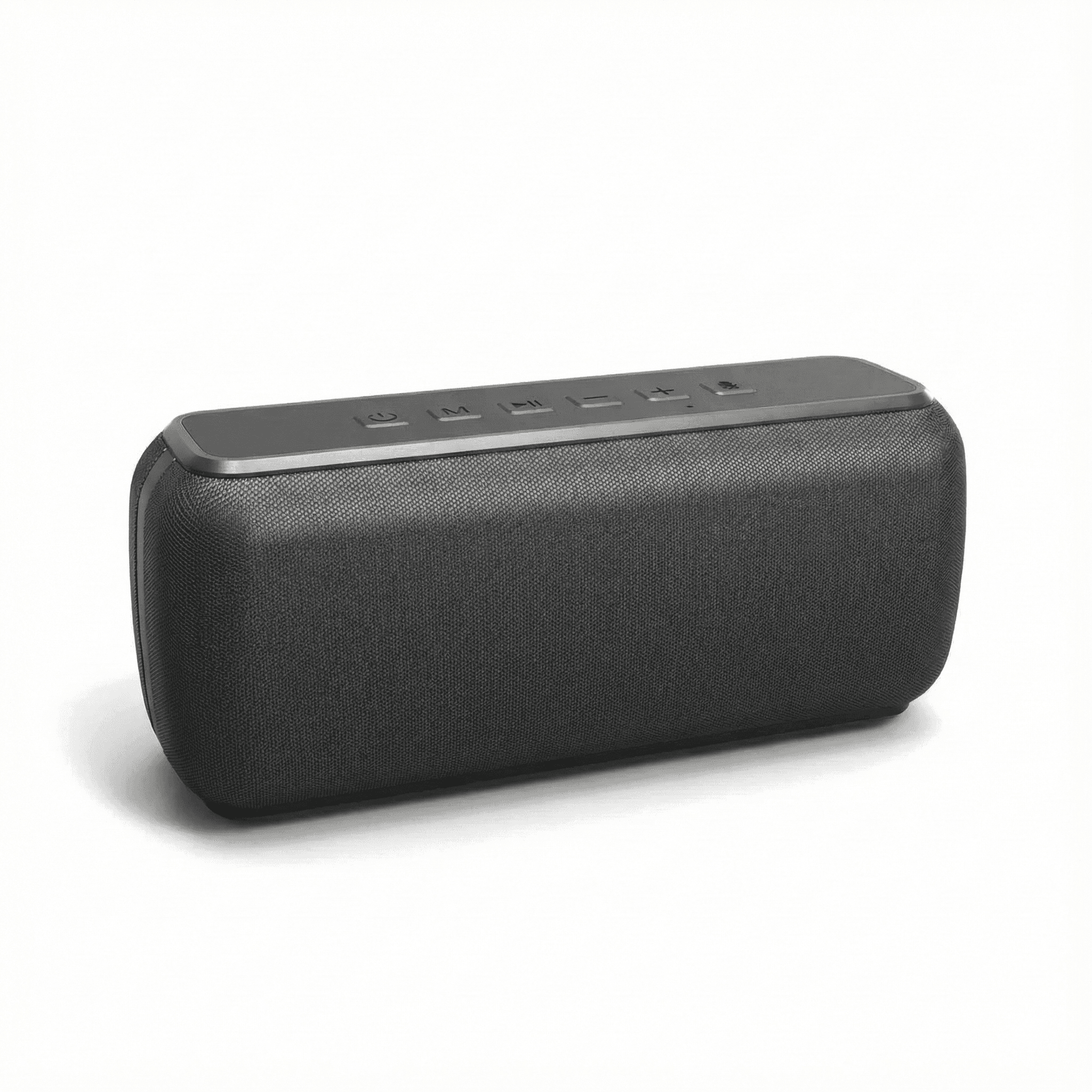
Xdobo X8 II Portable Bluetooth Speaker with Power Bank
In stock · Options available · Ships in 7–21 business days
Continue reading
 Tech & Gadgets
Portable Speaker EQ Settings: How to Get Better Bass
Portable speaker EQ settings explained: how bass boost, app presets and placement change the sound, why bass fades at high volume, and how to tune it well.
 Tech & Gadgets
Portable Speaker Battery Care: Charging, Storage and Heat
Portable speaker battery care made simple: how to charge, store and use a Bluetooth speaker so its lithium-ion battery lasts longer and stays safe.
 Tech & Gadgets
Soundbar Size Guide: TV Width, Height and Placement
Soundbar size guide: match bar width to your TV, check height against the screen and IR sensor, and place the bar, subwoofer and Atmos speakers well.