

Portable Speaker EQ Settings: How to Get Better Bass
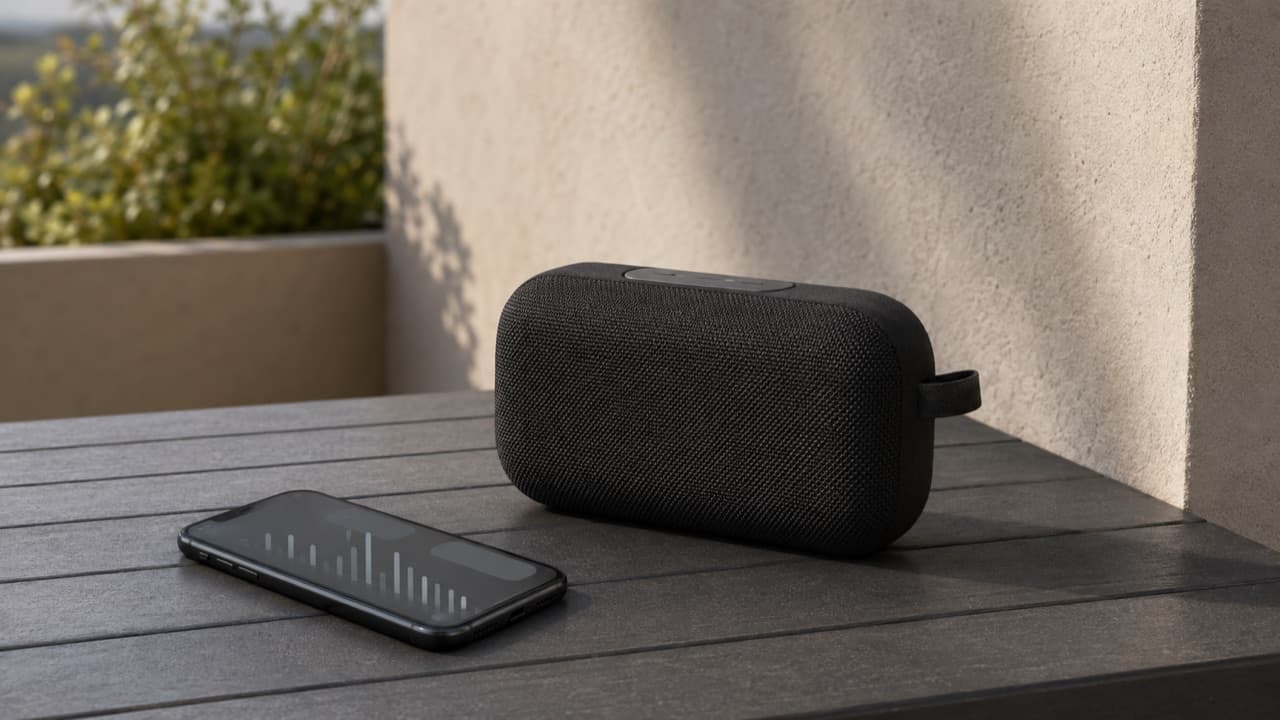
The best portable speaker EQ settings start flat, then add only a small bass lift (around 2 to 4 dB) and move the speaker near a wall before touching anything else. Most “muddy” or “thin” Bluetooth sound comes from placement and overcooked presets, not from a bad speaker. This guide is for anyone who owns or is shopping for a portable speaker with an app equalizer or a bass-boost button and wants fuller, cleaner low end without distortion or wasted battery.
Key takeaways
- Placement is the free equalizer: a speaker near a wall or in a corner gets noticeably more bass than one in the middle of a table or open lawn.
- Cut before you boost. Reducing a harsh or boomy band is cleaner than pushing everything else up, because boosts eat amplifier headroom.
- Small speakers physically can’t reproduce deep sub-bass; EQ that targets very low frequencies mostly adds distortion and battery drain.
- Many speakers quietly reduce bass at high volume to protect the drivers. That is normal processing, not a fault.
- Check the EQ in the companion app before you buy: some speakers offer a multi-band custom EQ, others only a bass-boost toggle or nothing at all.
How a small speaker makes bass in the first place
Bass needs air moved in large volumes. A portable speaker has small drivers and a small cabinet, so designers use tricks to make it sound bigger than it is.
Passive radiators and ports
Many portable speakers use passive radiators: unpowered diaphragms (often the rubber panels you see bouncing on the ends) that resonate with the air inside the cabinet and extend the low end. Others use a bass port, a tuned opening that does a similar job. Both work only when they can move freely. Lay a speaker on a soft bed, cover a radiator with a hand, or stuff it in a cup holder and the bass drops sharply.
DSP tuning and dynamic bass
Almost every Bluetooth speaker runs digital signal processing (DSP). At low and medium volume it often boosts bass to compensate for the drivers’ natural roll-off. As you turn the volume up, a limiter or “dynamic bass” circuit trims that boost so the drivers don’t hit their excursion limit or the amplifier doesn’t clip. That’s why many speakers sound fullest around 60 to 80 percent volume and thinner, though louder, at the very top.
What “bass” means in numbers
- Sub-bass, roughly 20 to 60 Hz: the rumble you feel. Pocket and bottle-sized speakers reproduce very little of it.
- Bass, roughly 60 to 250 Hz: kick drums and bass guitar. This is where portable speakers can be tuned to sound punchy.
- Low mids, roughly 250 to 500 Hz: too much here sounds boxy or muddy, and it’s a common culprit when people think they have “too much bass”.
If a listing quotes a frequency response such as “60 Hz to 20 kHz”, treat it as a rough guide. Without a tolerance (for example plus or minus 3 dB) and a stated test method, the low number can be very optimistic. Our Bluetooth speaker wattage explainer covers why the watt figure is an even weaker predictor of bass.
Placement first: the bass you get for free
Before opening an app, move the speaker. Each nearby hard surface reflects low frequencies back in phase with the direct sound, and the effect is large enough to hear immediately.
- Middle of a table or open lawn: leanest bass, clearest mids. Good for speech and podcasts.
- Against a wall, a few inches away: a clear bass lift without much boom. The best default for most rooms.
- In a corner or on a shelf in a corner: the most bass, often too much indoors and easily boomy.
- On a hard floor or tile: more low end than on carpet or grass, which absorb it.
Outdoors there are no walls, so speakers sound thinner than they did in your living room. Backing the speaker against a fence, the side of a cooler or a tree trunk recovers some of that lost bass without any EQ change. For layouts with more than one speaker, see the outdoor speaker placement guide.
Bass boost, presets and custom EQ compared
Speakers handle tone control in three main ways. Knowing which one you’re getting matters more than the marketing name of the preset.
| Control type | What it usually does | Best use | Watch out for |
|---|---|---|---|
| Bass-boost button or mode | A fixed low-frequency lift, sometimes paired with a different limiter setting | Outdoors or at moderate volume where bass sounds thin | Can make indoor sound boomy and drain the battery faster at high volume |
| Named presets (Rock, Pop, Vocal, Outdoor) | Pre-set curves chosen by the maker; often a “smile” curve of boosted bass and treble | Quick changes when you don’t want to fiddle | Names vary by brand, and two presets can differ only slightly |
| Custom EQ (3, 5 or more bands) | Lets you raise or lower specific bands, usually by up to about 6 to 12 dB | Fixing a specific problem such as boxy mids or sharp treble | Large boosts cause distortion; settings may be stored in the app, not the speaker |
| Phone or streaming-app EQ | Alters the audio before it is sent over Bluetooth | Speakers with no app of their own | Stacks with the speaker’s own tuning, so small changes go a long way |
A simple EQ routine that works on most speakers
- Set everything flat and turn off phone-side EQ, “spatial” or “enhancer” effects so you hear the speaker’s own tuning.
- Place the speaker where you’ll actually use it, at the volume you’ll actually listen at. EQ set at low volume on a desk won’t suit a loud backyard.
- Play a track you know well with a clear bass line and vocals.
- If it sounds muddy or boxy, cut the low-mid band (around 250 to 500 Hz) by 2 to 3 dB before touching the bass.
- If it sounds thin, raise the lowest adjustable band by 2 to 4 dB. Stop when kick drums gain weight; going further usually just adds flab.
- If vocals are harsh, lower the upper-mid or treble band slightly rather than raising bass to mask it.
- Turn it up to your loudest normal level and listen for crackling, buzzing or “pumping”. If you hear it, back off the bass boost.
Save separate presets for indoor and outdoor use if the app allows it. An outdoor setting with a modest bass lift and a slightly reduced treble often travels well across music styles.
Why bass distorts, and what EQ costs in battery
Every decibel of boost demands more power from the amplifier: a 3 dB boost needs roughly double the power in that frequency range, and a 6 dB boost roughly four times. A battery speaker has limited amplifier headroom, so heavy bass EQ can push it into clipping, which sounds like crackling or a harsh, flattened kick drum. The protective limiter may then lower overall volume or “pump” in time with the beat.
Low frequencies also consume most of the amplifier’s power in typical music, so a strong bass boost at high volume is one of the faster ways to shorten runtime. If your speaker falls well short of its advertised hours, try a flatter EQ before blaming the battery; the portable speaker battery care guide explains other causes.
A rattle or buzz that appears only on certain bass notes is often mechanical: something loose on the table, a strap buckle touching the grille, or the speaker vibrating against a hard surface. Move it before you change the EQ.
Mistakes to avoid
- Maxing every slider. Raising all bands equally is just a volume increase that eats headroom. Shape the sound by cutting what bothers you.
- Stacking EQs. Phone EQ plus streaming-app EQ plus speaker bass boost can add up to a large boost nobody intended, and distortion follows.
- Chasing sub-bass in a small speaker. Boosting the lowest band on a palm-sized speaker rarely adds audible rumble; it mostly adds distortion and drains the battery.
- Judging bass in the wrong spot. Bass varies a lot around a room. Sit where listeners will sit before deciding the speaker is weak or boomy.
- Blocking passive radiators. Soft surfaces, bags and hands damp them and kill the low end you paid for.
- Using bass boost for spoken word. Podcasts and calls sound clearer with a flat or “vocal” curve.
Which tuning approach fits you
- Pick a speaker with a multi-band app EQ if you listen to varied genres, use it both indoors and outside, or are sensitive to boomy or harsh sound.
- A simple bass-boost button is enough if you mostly play music outdoors at moderate volume and don’t want an app.
- Choose a larger speaker rather than more EQ if you want real low-end weight at a party. Cabinet size and driver area matter more than any preset; the portable speaker size and loudness guide explains the trade-off in weight and runtime.
- Stay flat with good placement if you mostly listen at a desk or bedside at low volume.
If you’re comparing models, larger options such as the Xdobo X8 II portable speaker and the OHAYO X3 portable speaker sit at the bigger end of the range; check each product page for the current specifications, app support, delivery and returns. You can browse more options in electronics and accessories.
Frequently asked questions
What is the best EQ setting for a Bluetooth speaker?
There’s no single best curve, because the room, placement and speaker tuning all differ. A reliable starting point is flat, then a 2 to 4 dB lift in the lowest band and a small cut around the low mids if the sound turns muddy. Adjust at the volume and location you actually use.
Why does my speaker lose bass when I turn it up?
Most portable speakers use dynamic processing that reduces bass as volume rises so the drivers and amplifier don’t distort or get damaged. It’s an intentional design choice. A bigger speaker, or placing it against a wall, gives you more bass at high volume than EQ can.
Does bass boost drain the battery faster?
Generally yes, especially at high volume. Bass frequencies take most of the amplifier’s power, and each 3 dB of boost roughly doubles the power needed in that range. At low listening levels the difference is much smaller.
Can EQ damage a portable speaker?
Built-in limiters protect most speakers in normal use, but sustained heavy bass boost at maximum volume can cause audible distortion and stresses the drivers. If you hear crackling, rattling or the volume pumping, reduce the boost or volume.
Why does my speaker sound better indoors than outside?
Walls, floors and ceilings reflect bass back toward you indoors. Outdoors that sound escapes, so the speaker seems thinner. Put it against a solid surface and use a modest bass lift for outdoor listening.
Shop Tech & Gadgets
View all →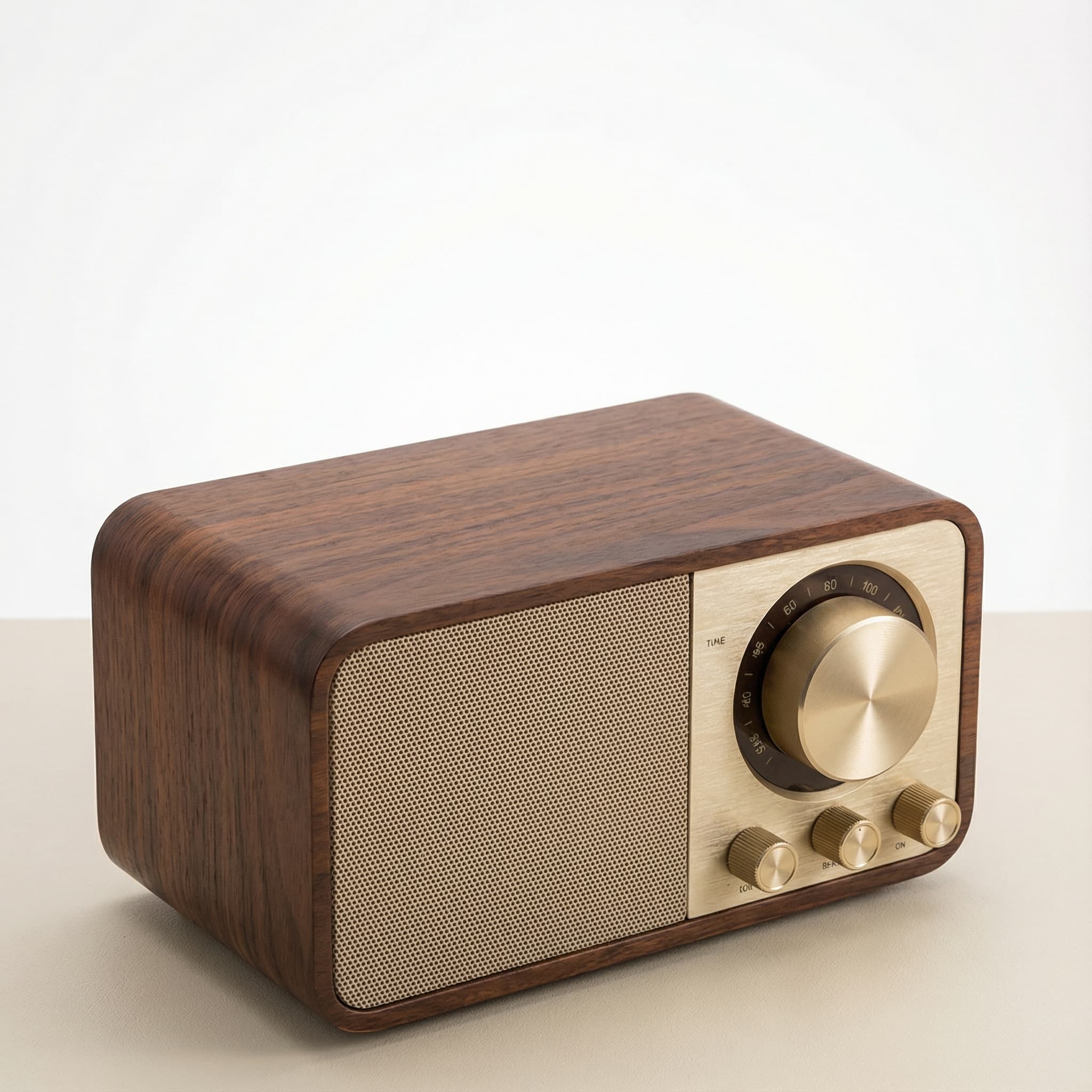 Sale
SaleRetro Wood-Cabinet Bluetooth Speaker with FM Radio
In stock · Ships in 7–21 business days
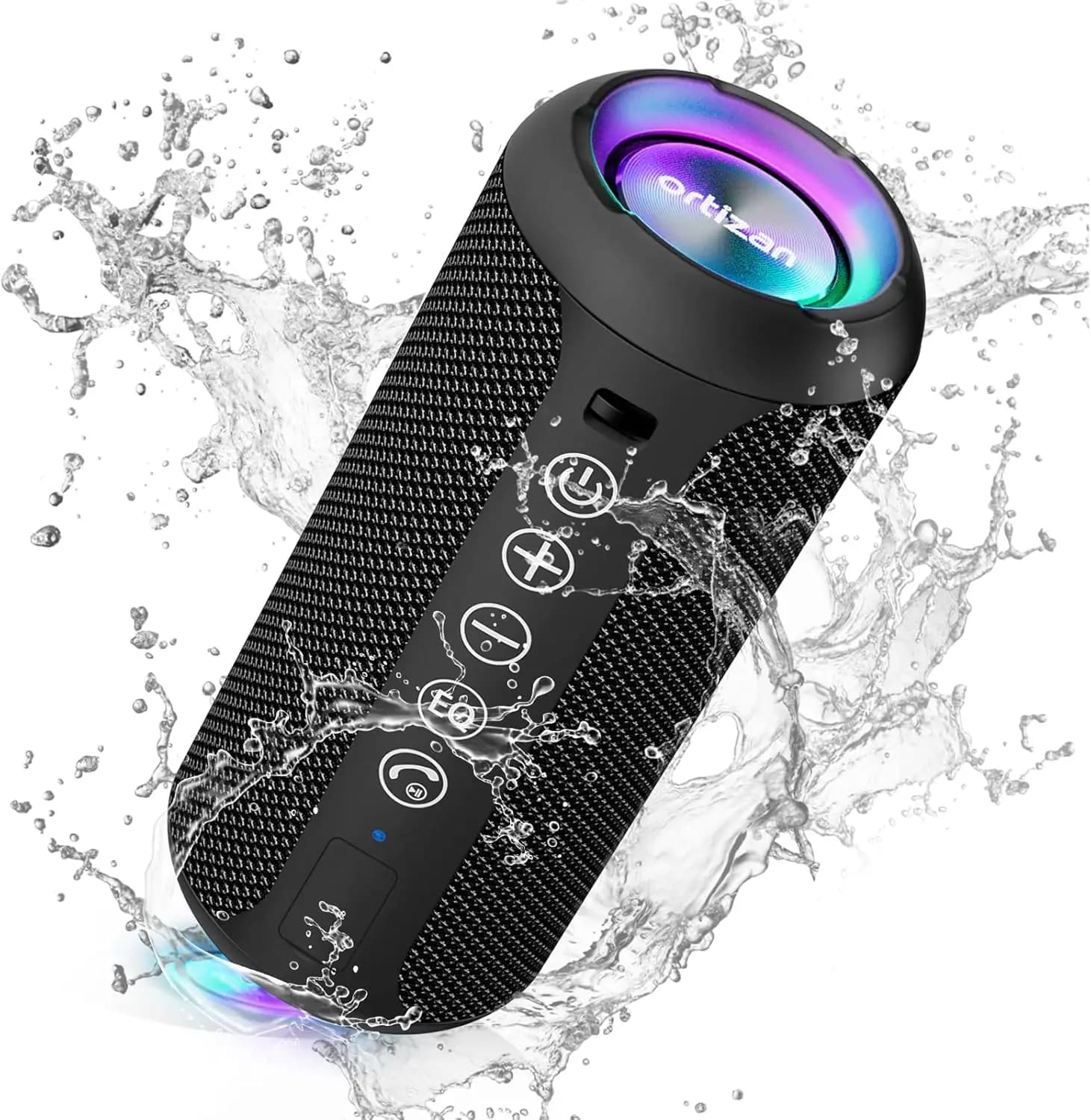
Ortizan X10 Portable Bluetooth Speaker with RGB Lights
In stock · Options available · Ships in 7–21 business days
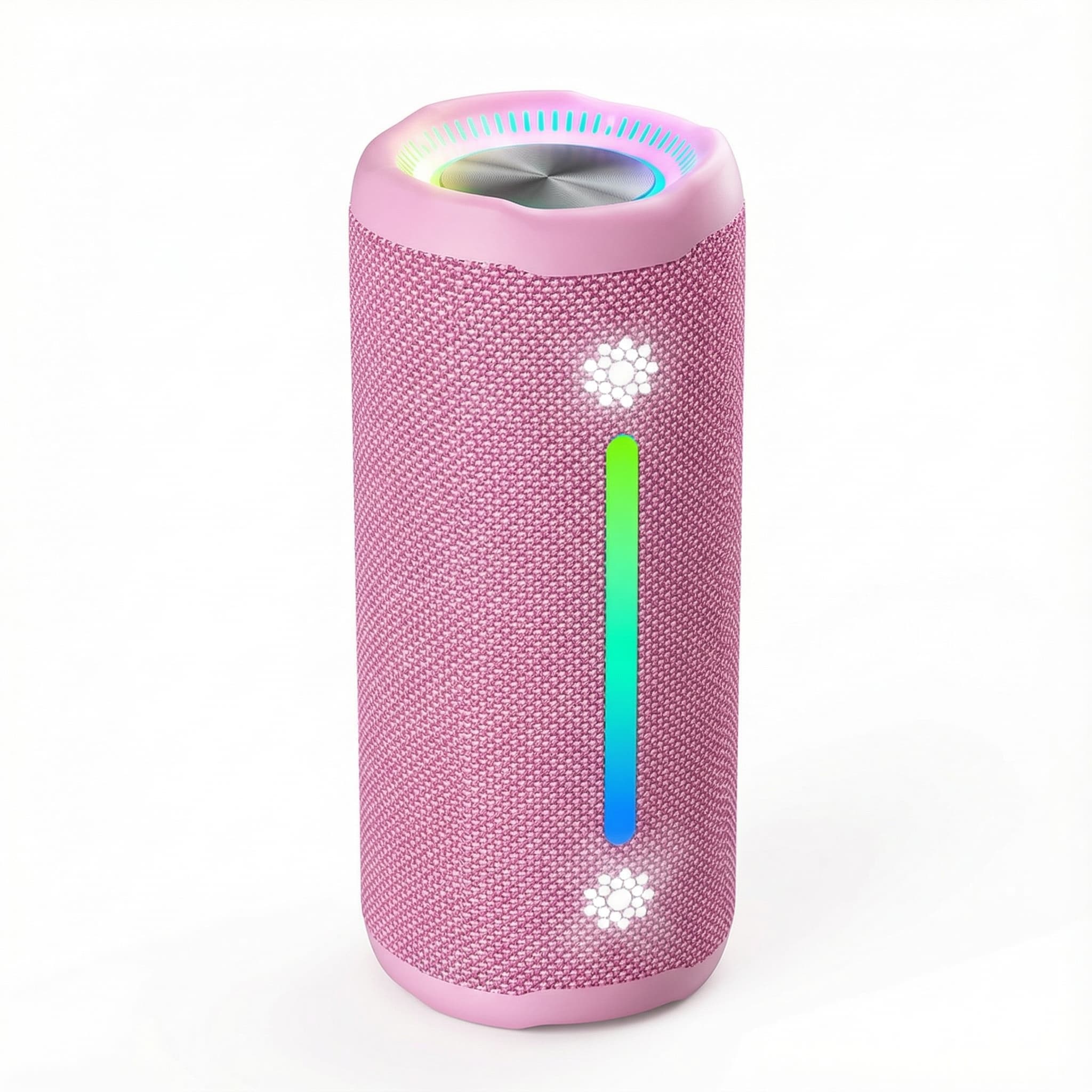
Ohayo X10 Max Bluetooth Speaker with Bass Boost and Lights
In stock · Options available · Ships in 7–21 business days
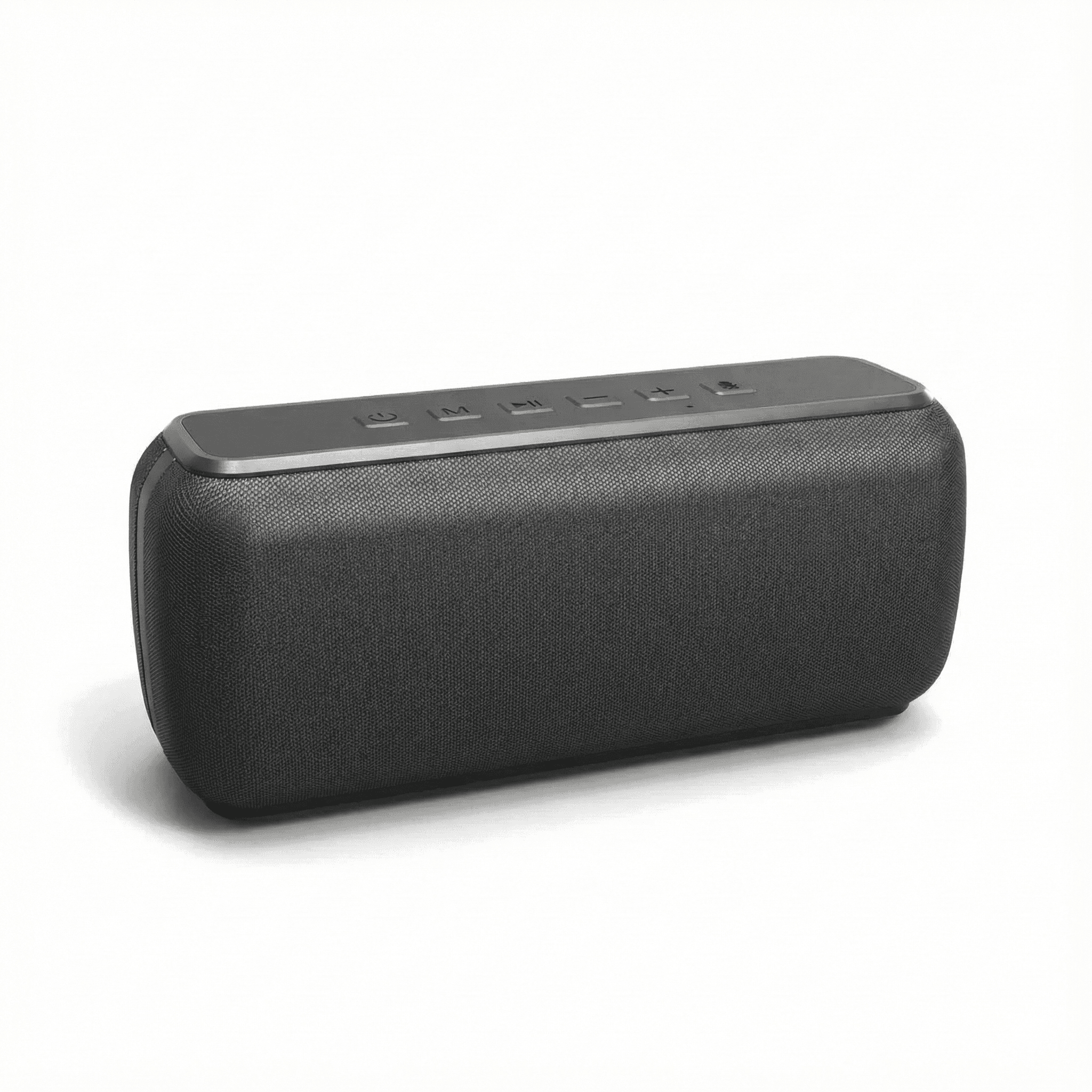
Xdobo X8 II Portable Bluetooth Speaker with Power Bank
In stock · Options available · Ships in 7–21 business days
Continue reading
 Tech & Gadgets
What Size Portable Speaker Do You Need? Loudness Guide
What size portable speaker do you need? Match speaker size class to room, crowd and listening distance, and learn how loudness falls with distance outdoors.
 Tech & Gadgets
Portable Speaker Battery Care: Charging, Storage and Heat
Portable speaker battery care made simple: how to charge, store and use a Bluetooth speaker so its lithium-ion battery lasts longer and stays safe.
 Tech & Gadgets
Budget Webcam Lighting: Look Better on Video Calls
Budget webcam lighting that works: where to place a key light, window tricks, color temperature and CRI, ring light glare fixes and webcam settings to lock.