

Carry-On Backpack for Digital Nomads: Size, Fit and Rules
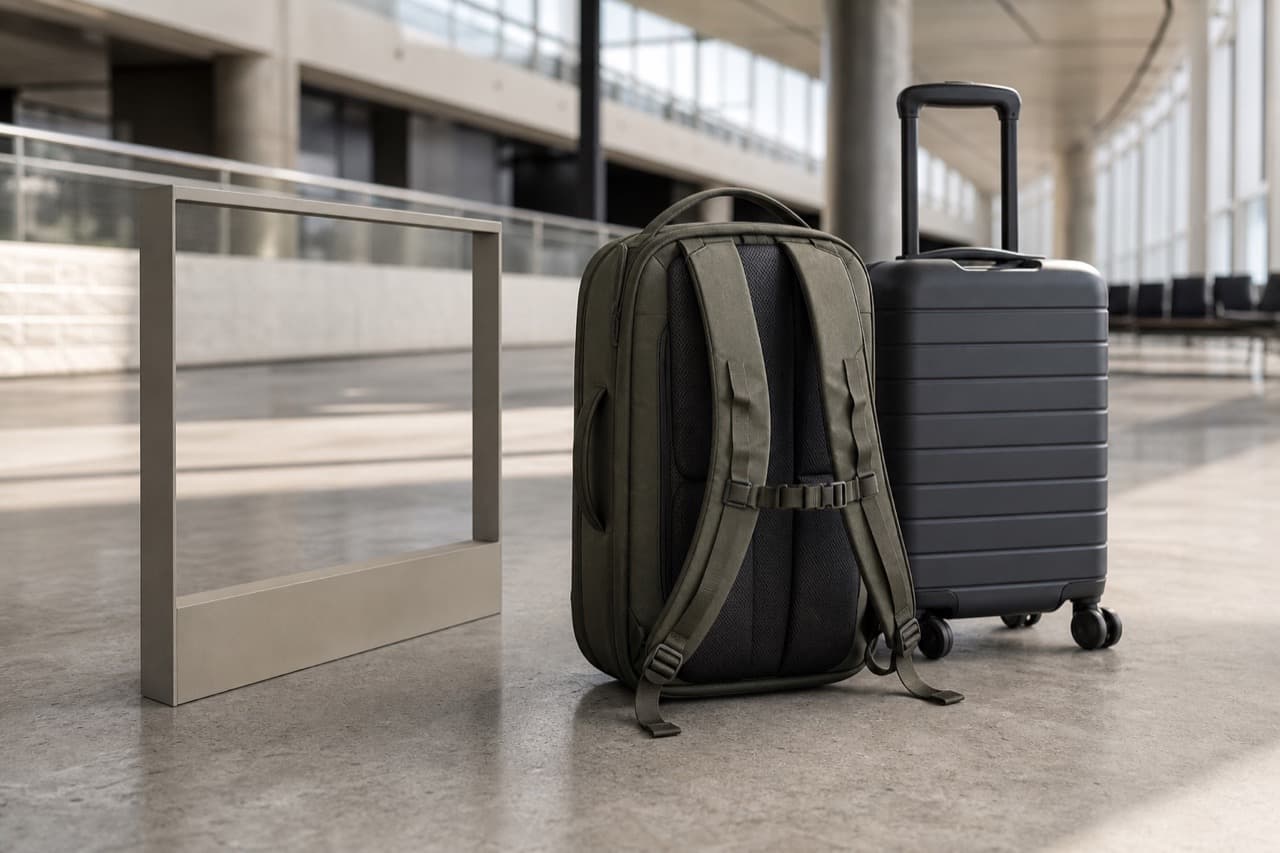
The right carry-on backpack for digital nomads is usually in the 30 to 40 liter range, opens like a suitcase, carries a laptop in its own quickly reachable sleeve and has a harness that fits your torso, because you’ll be wearing it through airports, train stations and walk-ups for months, not just a weekend. Bigger isn’t better: a 45-liter bag at the US size limit often bulges past it when full, and many airlines outside the US weigh carry-ons. This guide is for remote workers and long-term travelers choosing one bag to live and work out of.
Key takeaways
- Many major US airlines use a carry-on limit of 22 x 14 x 9 inches (56 x 35 x 23 cm), about 45 liters in theory; soft packs that size often exceed the depth when stuffed.
- If you fly budget or international carriers often, aim for 30 to 35 liters and an empty weight under about 3.5 pounds (1.6 kg), since 7 to 10 kg (15 to 22 lb) weight caps are common.
- A clamshell (fully opening) main compartment makes living out of a bag far easier than a top-loader.
- A separate laptop compartment you can open without unpacking speeds up security screening and work sessions.
- Spare lithium batteries and power banks must stay in the cabin. If your bag gets gate-checked, take them out.
- Harness fit matters more than features. A bag that fits your torso length can carry the same load comfortably for much longer.
Carry-on backpack size: liters vs airline dimensions
Airlines measure carry-ons in inches or centimeters, not liters, and they include handles, straps and anything bulging out of pockets. Backpack makers quote liters, and they don’t all measure the same way, with some counting external pockets and some not. That gap is where travelers get caught.
| Backpack size | Fits best with | Good for | Watch out for |
|---|---|---|---|
| 20 to 28 L | Personal-item allowances and the strictest budget fares | Minimalists, short trips, warm climates | Little room for a second pair of shoes or cold-weather layers |
| 30 to 35 L | Most carry-on limits worldwide, including many weight-capped carriers | Long-term travel with a laptop and a capsule wardrobe | Requires disciplined packing |
| 36 to 40 L | Typical US and many international carry-on limits | Colder climates, gear-heavy work, longer stays | Can exceed weight limits when fully packed |
| 41 to 45 L | Generous US limits when not overstuffed | Travelers who rarely fly budget airlines | Bulges past 9 in deep; heavy on the back; may be gate-checked |
Before you buy, check the bag’s listed dimensions (not just liters) against the strictest airline you’re likely to fly. Compression straps help a soft bag stay within depth limits on the way to the gate. And remember that some budget carriers only include a small under-seat bag in the base fare, so a full carry-on may cost extra.
Weight: the limit nomads hit first
Many US airlines don’t routinely weigh carry-ons, but plenty of carriers in Europe, Asia, Australia and Latin America set limits commonly between 7 and 10 kg (about 15 to 22 lb) and do check them at the counter or gate. A laptop, charger, power bank and a few cables can weigh 4 to 6 pounds (about 2 to 3 kg) alone.
- Empty weight matters. Travel packs range from around 2 pounds to over 5 pounds empty (roughly 1 to 2.3 kg). Heavy fabrics, frames and many zips add up.
- Weigh it at home. A cheap luggage scale saves arguments at the gate. See how to weigh carry-on luggage at home.
- Wear your heaviest layers. Jackets and boots worn on the plane usually don’t count.
Features that matter for remote work on the road
Clamshell opening and organization
A clamshell bag unzips around three sides and opens flat like a suitcase, so you can reach anything without unloading the rest. Pair it with packing cubes and you can unpack into a drawer in two minutes and repack just as fast. Our guide to compression packing cubes covers how much space they realistically save.
Laptop compartment
- Separate access from the side or top so you can pull the laptop out at security or in a cafe without opening the main compartment.
- Suspended sleeve. A sleeve that stops above the bottom of the bag protects the laptop when you set the bag down.
- Correct size. Check the sleeve’s listed laptop size against your machine, including any case.
Tech organization
A small admin pocket for a charger, cables, adapters and a power bank keeps your work kit together. Under FAA rules, spare lithium batteries and power banks must travel in the cabin, not checked baggage; batteries up to 100 watt-hours are generally allowed without approval, while 100 to 160 Wh needs airline approval. Pack them where you can remove them quickly if the bag is gate-checked. Our guide to travel power banks and plug adapters has a packing system for this kit.
Durability and weather
Look for high-denier nylon or coated fabrics, reinforced bottom panels, quality coil zippers with storm flaps on exposed openings, and stitched-down strap anchors. “Water-resistant” means it sheds rain for a while, not that it’s waterproof. A packable rain cover or dry bags for electronics are cheap insurance.
Security and transit features
Lockable zipper pulls, a hidden pocket for a passport and cards, stowable shoulder straps for when the bag goes into an overhead bin or a bus hold, and a luggage pass-through for rolling bags are all useful. Our backpack security guide covers zipper design and theft-resistant packing.
Harness fit and comfort for long carries
Nomads walk with their bags far more than typical tourists. A good harness keeps the load close and stable.
- Torso length. Measure from the bony bump at the base of your neck to the top of your hip bones. Many travel packs have a fixed harness sized for an average torso; adjustable or sized harnesses suit very short or tall travelers better.
- Hip belt. Once a pack gets heavy, a padded hip belt moves weight onto your hips. A removable or stowable belt is ideal for a carry-on.
- Sternum strap and load lifters. These stop the straps sliding apart and pull the top of the bag toward your shoulders.
- Back panel. A ventilated or padded panel helps in hot, humid destinations.
The backpack strap adjustment guide explains the order to tighten straps, and the hiking backpack fit guide goes deeper on torso measurement if you’re between sizes.
Mistakes to avoid
- Buying the biggest bag that’s technically allowed. You’ll fill it, it will bulge past the limits, and it will exceed weight caps.
- Ignoring empty weight. A 5-pound bag leaves little of a 7 kg allowance for your laptop and clothes.
- Choosing a top-loader for long-term travel. Digging for one shirt every morning gets old quickly.
- Picking style over harness. A boxy bag with thin straps is fine through an airport but painful on a 20-minute walk to an apartment.
- Packing power banks in a bag that might be gate-checked. Keep them reachable so you can carry them on.
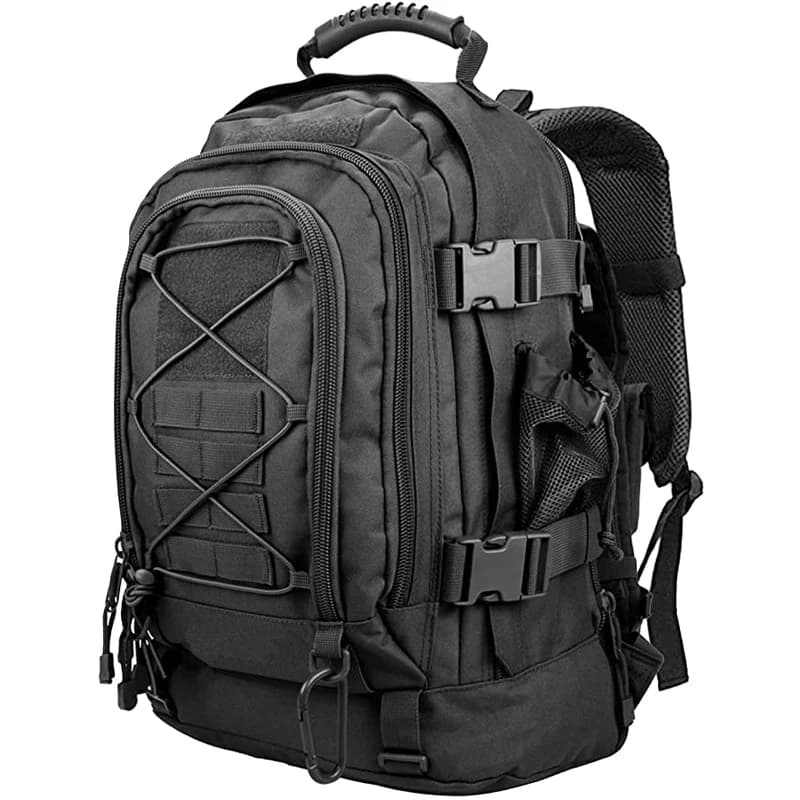
- Using a tactical or hiking pack as a carry-on. Large tactical packs with lots of external webbing, and hiking packs with frames and many outside pockets, often exceed carry-on dimensions. See our tactical backpack guide for where those bags shine.
Which carry-on backpack fits your travel style?
- Pick 30 to 35 liters with a light empty weight if you fly budget and international carriers, move cities often and pack a capsule wardrobe.
- Pick 36 to 40 liters if you travel through colder climates, carry camera or work gear, or stay longer in each place.
- Pick a smaller 20 to 28 liter bag as your only bag if you’re a strict minimalist in warm climates, or as a daypack alongside a larger main bag.
- Prioritize an adjustable harness and hip belt if you walk a lot between transit and lodging, or if you’re shorter or taller than average.
For the rest of your kit, see our mobile office checklist and the carry-on toiletry bag size guide, and browse travel gear in the outdoor and travel category.
Frequently asked questions
What size backpack counts as a carry-on?
Many major US airlines allow carry-ons up to 22 x 14 x 9 inches (56 x 35 x 23 cm), including straps and handles. International and budget carriers are often smaller and may add weight limits, so check the strictest airline you’ll fly.
Is a 40 liter backpack carry-on size?
Often yes, as long as its listed dimensions are within the airline’s limit and it isn’t overstuffed. Use compression straps to keep the depth down, and check weight limits on non-US airlines.
How heavy can a carry-on backpack be?
Many US airlines don’t set a carry-on weight limit for most routes, but carriers elsewhere commonly cap it between about 7 and 10 kg (15 to 22 lb). Weigh your packed bag before leaving for the airport.
Can I bring a power bank in my carry-on backpack?
Yes, and you must: spare lithium batteries and power banks aren’t allowed in checked bags. Batteries up to 100 watt-hours are generally fine; 100 to 160 Wh needs airline approval.
Is a backpack better than a rolling carry-on for digital nomads?
For cobblestones, stairs, buses and frequent moves, a backpack is usually easier. A roller is kinder to your back on smooth airport floors, but it’s heavier empty and awkward on rough streets and stairs.
Shop Outdoor & Travel
View all →
Zealot S56 Rugged Outdoor Bluetooth Speaker
In stock · Ships in 7–21 business days
 Sale
SaleXiaomi Sound Outdoor Portable Bluetooth Speaker
In stock · Options available · Ships in 7–21 business days
LQArmy 60L Tactical Backpack with Molle Webbing
In stock · Options available · Ships in 7–21 business days
Continue reading
 Outdoor & Travel
Carry-On Toiletry Bag Size: TSA 3-1-1 Rules Explained
Carry-on toiletry bag size made simple: TSA 3-1-1 limits, what counts as a liquid, quart-bag dimensions, solid swaps and how much to pack for your trip length.
 Outdoor & Travel
Hiking Backpack Size Guide: Liters, Torso Length and Fit
Hiking backpack size guide: how many liters you need by trip length, how to measure torso length and hip size, and how to load and adjust a pack to carry well.
 Outdoor & Travel
Tactical Backpack Buying Guide: Size, Straps and MOLLE Explained
Tactical backpack buying guide: match liter size to your use, check torso fit and the hip belt, and judge fabric, zippers and MOLLE webbing before you buy.