

How to Weigh Carry-On Luggage at Home Accurately
The simplest answer to how to weigh carry-on luggage at home is the bathroom scale method: weigh yourself, weigh yourself holding the bag, and subtract. A handheld luggage scale is quicker and more precise for repeated trips. Either way, the goal is to know your number before an airline does, because many international and low-cost carriers enforce carry-on weight limits as low as 7 kg (about 15 lb). This guide is for travelers flying budget airlines, connecting internationally, or packing one bag for a long trip.
Key takeaways
- Bathroom-scale subtraction works, but most home scales are least precise for small differences; weigh twice and leave a margin of 1 to 2 lb (0.5 to 1 kg).
- A handheld luggage scale is the more accurate home option for bags, and you can check it against a known weight such as a full gallon of water (about 8.3 lb or 3.8 kg).
- Most major US airlines do not publish a weight limit for standard carry-ons on most routes, but many international and budget carriers do, commonly 7 to 10 kg (15 to 22 lb).
- Some airlines count your personal item toward the carry-on weight allowance; read the rule, not just the number.
- Your empty bag can eat 15 to 35 percent of a 7 kg allowance. Weigh the bag empty before you pack.
Method 1: the bathroom scale
- Place the scale on a hard, level floor. Carpet and uneven tile throw off readings.
- Weigh yourself without the bag and note the number.
- Pick up the packed bag and hold it close to your body, then step on again. Stand still until the reading settles.
- Subtract your weight from the combined weight. The difference is the bag.
- Repeat once. If the two results differ, average them or use the higher.
Why the margin: many bathroom scales display to 0.2 lb (0.1 kg) but are less consistent than that, and small errors in two readings can add up. Digital scales that round can also hide a pound. If your bag has wheels and is light enough, you can place it directly on the scale instead, but large bags may block the display or overhang the platform, which can skew the result.
Method 2: a handheld luggage scale
A handheld luggage scale has a strap or hook that loops through the bag’s top handle. You lift it until the bag hangs freely and read the weight, usually in pounds or kilograms.
- Zero or turn on the scale with nothing attached.
- Thread the strap through the top carry handle, not the side handle, so the bag hangs straight.
- Lift slowly and hold steady with the bag off the ground, keeping your arm close to your body.
- Wait for the reading to lock. Many digital scales beep or freeze the display when stable.
To check accuracy, weigh something with a known weight. A full gallon of water weighs about 8.3 lb (3.8 kg) plus the jug; an unopened 5 lb bag of flour or sugar also works. If the scale reads more than a few tenths off, note the difference and correct for it, or replace the batteries and try again. A scale is also handy on the trip itself, since souvenirs make return flights heavier.
Bathroom scale vs luggage scale vs kitchen scale
| Tool | Typical precision for luggage | Pros | Cons |
|---|---|---|---|
| Bathroom scale (subtraction) | Roughly within 1 lb (0.5 kg) when done carefully | Free if you own one | Two readings add error; awkward with heavy bags |
| Handheld luggage scale | Often within a few tenths of a pound | Portable, quick, usable in hotels | Needs batteries; reading depends on holding it steady |
| Kitchen scale | Very precise but low capacity | Great for weighing individual items like laptops or toiletry kits | Most top out around 11 to 22 lb (5 to 10 kg) |
Airline carry-on weight limits explained
Carry-on rules have two parts: size and weight. US carriers typically allow a carry-on around 22 x 14 x 9 inches (56 x 36 x 23 cm), including wheels and handles, and most major US airlines do not set a weight limit for it on most routes, as long as you can lift it into the overhead bin yourself. Many international full-service airlines and most budget carriers do set limits, often between 7 and 10 kg (15 to 22 lb). Some apply the limit to the carry-on alone; others to the carry-on and personal item combined. Business class allowances are sometimes higher.
Enforcement varies. Some carriers weigh carry-ons at check-in or the gate, especially on full flights or regional aircraft with small bins. Paying for an overweight carry-on at the gate is often more expensive than adding a checked bag online in advance. Check your exact fare’s rules a few days before departure, since allowances can differ by route and fare type. For checked bags, 50 lb (23 kg) is the common economy limit, with overweight fees above that.
How to cut carry-on weight
- Start with a lighter bag. Empty carry-on rollers commonly weigh about 5 to 9 lb (2.3 to 4 kg); soft backpacks are often lighter. On a 7 kg allowance, that difference is huge. The carry-on backpack guide covers size and comfort trade-offs.
- Wear the heaviest items. Boots, jackets and your bulkiest sweater travel on you, not in the bag.
- Weigh your tech. Laptops, chargers and power banks add up quickly; a kitchen scale shows which items matter most.
- Decant toiletries. Full-size bottles are heavy. Travel sizes also keep you within liquid limits; the carry-on toiletry bag size guide explains the rules.
- Pack fewer, lighter clothes. Merino and synthetic layers weigh less than cotton and dry faster for rewearing. The minimalist packing list shows how to build a light kit.
- Use a personal item wisely, where the airline weighs only the main carry-on. Moving heavy items to it is allowed only if the rules permit.
Mistakes to avoid
- Weighing on carpet. Soft floors can make bathroom scales read inaccurately.
- Packing to the exact limit. Home and airport scales differ. Aim at least 1 lb (0.5 kg) under.
- Forgetting the return trip. Gifts, wet clothes and paperwork add weight. Bring a luggage scale or leave room.
- Ignoring personal item rules. Some airlines combine weights; a heavy tote can push you over.
- Using the side handle with a luggage scale. The bag hangs at an angle and the reading can wobble.
- Assuming last year’s rules apply. Airlines change allowances and fare bundles; check before every trip.
Which method should you use
- Use the bathroom scale if you fly occasionally with generous allowances and only need a ballpark figure.
- Buy a handheld luggage scale if you fly budget carriers, travel internationally, or shop on trips.
- Add a kitchen scale check when you are fighting for every ounce on a 7 kg allowance.
- Consider a checked bag when weight is consistently over the limit; prebooking is usually cheaper than gate fees. Browse travel gear in the outdoor and travel category.
Travelling with a backpack? If a backpack is your carry-on or personal item, weigh it the same way. The military tactical backpack on ADLTHUB is one option; compare its listed size and empty weight with your airline’s limits.
Frequently asked questions
How accurate is weighing luggage on a bathroom scale?
Done carefully on a hard floor, it is usually within about a pound, which is fine for generous limits. For tight limits, a handheld luggage scale is more reliable. Weigh twice and leave a margin either way.
Do US airlines weigh carry-on bags?
Most major US airlines do not publish a carry-on weight limit for most routes and rarely weigh carry-ons. Some smaller and international carriers do, especially on regional aircraft. Always check your airline’s current policy.
How much is 7 kg in pounds?
7 kg is about 15.4 lb. 8 kg is about 17.6 lb, and 10 kg is about 22 lb.
Does my personal item count toward the carry-on weight?
It depends on the airline. Some weigh only the main carry-on, some combine the two, and some set separate limits. Read the baggage rules for your fare.
How can I check if my luggage scale is accurate?
Weigh an item with a known weight, such as a full gallon of water (about 8.3 lb plus the jug) or a sealed 5 lb bag of flour. If the reading is off, replace the battery and retest, then correct for any remaining difference.
Shop Outdoor & Travel
View all →
Zealot S56 Rugged Outdoor Bluetooth Speaker
In stock · Ships in 7–21 business days
 Sale
Xiaomi Sound Outdoor Portable Bluetooth Speaker
In stock · Options available · Ships in 7–21 business days
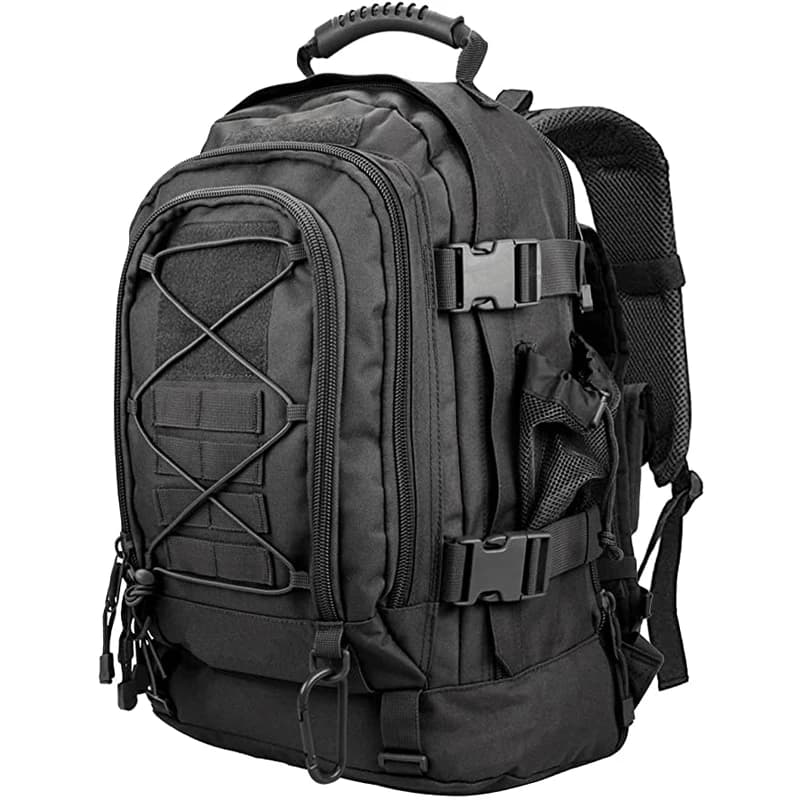
LQArmy 60L Tactical Backpack with Molle Webbing
In stock · Options available · Ships in 7–21 business days
Continue reading
 Outdoor & Travel
Carry-On Toiletry Bag Size: TSA 3-1-1 Rules Explained
Carry-on toiletry bag size made simple: TSA 3-1-1 limits, what counts as a liquid, quart-bag dimensions, solid swaps and how much to pack for your trip length.
 Outdoor & Travel
Carry-On Backpack for Digital Nomads: Size, Fit and Rules
How to choose a carry-on backpack for digital nomads: liters vs airline dimensions, weight limits, laptop access, harness fit and battery rules for long trips.
 Outdoor & Travel
Travel Pillow Neck Support: Match the Shape to How You Sleep
Travel pillow neck support explained: which shape stops forward nodding or side drops, memory foam vs inflatable, sizing, hygiene and seat-specific tips.