

Soundbar Size Guide: TV Width, Height and Placement
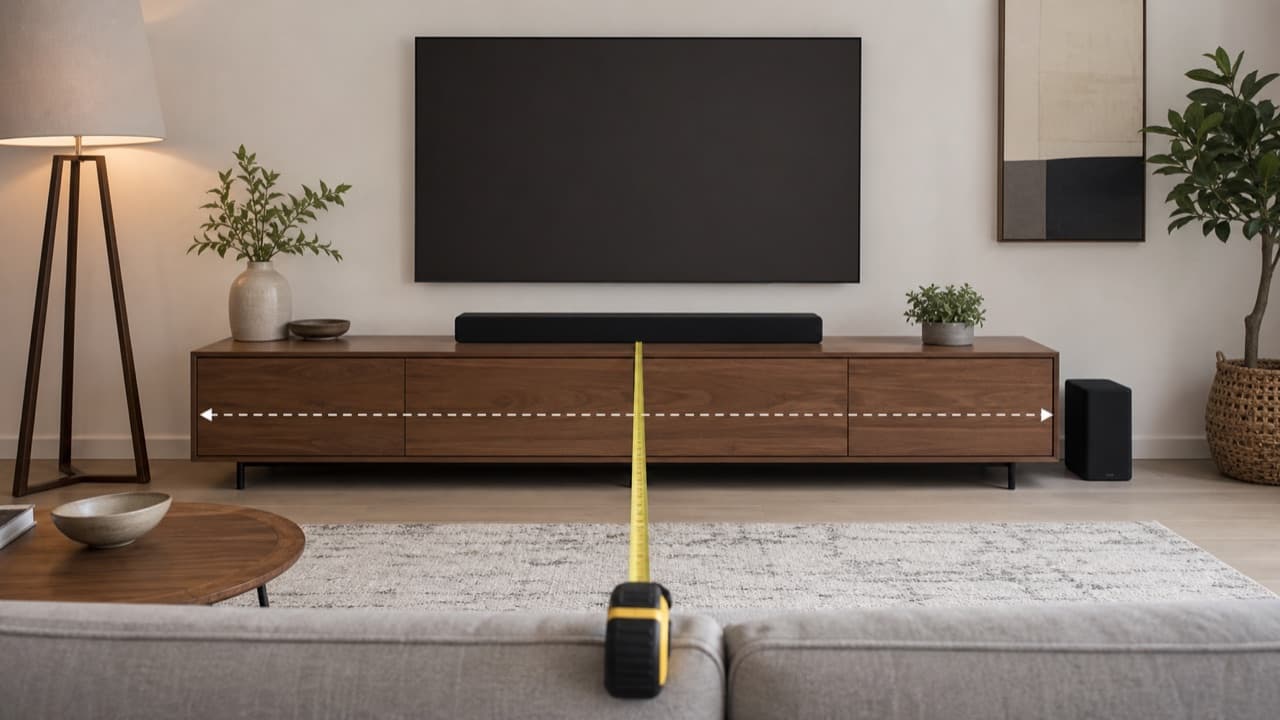
This soundbar size guide comes down to one rule: choose a bar close to, but not wider than, your TV’s width, short enough not to block the screen or remote sensor, and place it centered at the front edge of the furniture or just below a wall-mounted TV. Getting that right matters more for clear dialogue than small differences in wattage. This guide is for anyone buying a soundbar online who wants to measure once, avoid a bar that covers the picture, and set up the room so speech is clear from the sofa.
Key takeaways
- A bar that is roughly 60 to 100 percent of your TV’s width looks balanced; wider than the TV usually looks odd and may not fit the stand.
- Measure the gap between your stand top and the bottom of the screen; many bars are 2 to 3.5 in (5 to 9 cm) tall and can block the picture or IR receiver.
- Place the bar at the front edge of the shelf, not deep inside a closed cabinet cubby that muffles sound.
- Wall-mounted bars usually sit a few inches below the TV, centered, with drivers aimed at ear height.
- Subwoofers are flexible; start along the front wall near the TV and adjust for even bass at your seat.
What size soundbar for your TV
TV sizes are diagonal. The actual width of a 16:9 screen is about 87 percent of the diagonal, and the frame adds a little. Use these approximate widths as your starting point, then check your TV’s spec sheet for the exact figure without the stand:
| TV size | Approximate screen width | Soundbar width that suits it |
|---|---|---|
| 32 in | About 28 in (71 cm) | Compact bars, roughly 18 to 28 in |
| 43 in | About 37.5 in (95 cm) | Roughly 24 to 36 in |
| 50 in | About 43.5 in (110 cm) | Roughly 28 to 42 in |
| 55 in | About 48 in (122 cm) | Roughly 32 to 46 in |
| 65 in | About 56.5 in (144 cm) | Roughly 36 to 55 in |
| 75 in | About 65.5 in (166 cm) | Roughly 40 to 60 in or more |
A smaller bar is not a mistake. Compact bars suit bedrooms, small apartments and desks, and in a small room a narrow bar with good dialogue clarity is a better choice than a wide one you cannot place properly. Wider bars generally separate left and right channels more, which helps on large TVs viewed from farther away. The Wireless Bluetooth Sound Bar with LED Clock is one compact option at ADLTHUB; check its product page for exact dimensions and inputs.
Measure the space before you buy
- Stand or shelf width: the bar should sit fully on the surface with a little margin at each end.
- Stand depth: note how far back the TV feet or pedestal sit. Bars are often 3 to 5 in (8 to 13 cm) deep, and you want the bar in front of the feet, not on top of them.
- Height clearance: measure from the shelf to the bottom edge of the screen. If the bar is taller than the gap, it will cover subtitles and the bottom of the picture.
- IR receiver: find the TV’s remote sensor, usually at the bottom center or a lower corner. A bar in front of it stops the TV remote from working, unless the bar has IR repeat.
- Ventilation and cables: leave space at the back for the HDMI cable bend and the power plug.
Many TVs with feet at the far ends leave a low gap in the middle. If yours does not, a TV with a center pedestal or adjustable-height feet, or a wall mount, solves it.
Where to place a soundbar for clear dialogue
On a stand or cabinet
Center the bar on the screen so dialogue appears to come from the picture. Push it to the front edge of the shelf. When a bar sits deep in an enclosed cubby, sound reflects around the box and dialogue becomes boomy and less clear. If the bar has side-firing or up-firing drivers, an enclosed shelf also blocks them. Keep objects off the top of the bar and away from its front grille.
On the wall
Mount the bar centered under the TV, usually leaving about 2 to 4 in (5 to 10 cm) of space so the TV does not sit on top of the drivers and you can still reach buttons. Use the bracket and screws the manufacturer specifies, fix into studs or appropriate anchors, and route the cables through a raceway for a clean look. A slight downward tilt helps if the TV is mounted high above eye level, which is common over fireplaces.
Distance and room shape
Most living rooms have seating 6 to 12 ft (1.8 to 3.7 m) from the TV, which suits nearly any soundbar. Hard, bare rooms with tile, glass and few soft furnishings reflect sound and make dialogue harsher; a rug, curtains and upholstered seating calm the room more than you would expect. In open-plan rooms, sound spills into the kitchen and dining area, so a dialogue enhancement or night mode becomes more useful than extra bass.
Subwoofer, surrounds and Dolby Atmos placement
Subwoofer: bass below roughly 80 Hz is hard to locate by ear, so the sub does not need to sit next to the TV. Start along the front wall, near the TV, a few inches from the wall. Corners boost bass but can make it boomy. A practical trick is the “subwoofer crawl”: put the sub at your seat, play a bass-heavy track, crawl around the front of the room and place the sub where bass sounds most even.
Rear surrounds: place them beside or slightly behind the main seat, roughly at or a little above ear height when seated, aimed at the listener.
Up-firing Atmos drivers: they bounce sound off the ceiling, so they work best with a flat, hard ceiling of about 7.5 to 12 ft (2.3 to 3.7 m) depending on the model. Vaulted, sloped or acoustic-tile ceilings weaken the effect, and nothing should sit above the bar. Check the manufacturer’s recommended ceiling height range.
Once it is placed, connect it the right way; our soundbar connection guide covers HDMI ARC, eARC and optical. If you are styling the whole room, our smart living room ideas article covers hiding cables and lighting around the TV, and the wooden speaker placement and care guide helps if you add a bookshelf speaker elsewhere.
Mistakes to avoid
- Not measuring the screen gap. A bar that hides subtitles or the bottom of the picture is the most common return reason for soundbars that are otherwise fine.
- Burying the bar in a cubby. Enclosed shelves muffle dialogue and block side and up-firing drivers.
- Blocking the IR receiver. You lose TV remote control unless the bar has an IR repeater or you use HDMI-CEC.
- Putting the subwoofer in a cabinet. It can rattle the furniture and the sub’s port or driver needs open space.
- Buying the widest bar available. A bar that overhangs the stand or TV looks awkward and can be knocked off.
How to choose the right size and setup
Pick a compact bar for TVs up to about 43 in, bedrooms, desks and small rooms. Pick a mid-width bar roughly 70 to 90 percent of the TV’s width for 50 to 65 in TVs in typical living rooms. Pick a wide bar with a separate subwoofer for 65 in and larger screens, larger rooms or open plans. Add surrounds or Atmos only if your ceiling and seating layout support them. Browse soundbars and speakers in electronics and accessories.
Frequently asked questions
What size soundbar for a 55 inch TV?
A 55 in TV is about 48 in wide, so a soundbar roughly 32 to 46 in wide looks balanced. Make sure it fits your stand and does not block the screen or remote sensor.
Should a soundbar be wider than the TV?
Generally no. It can look unbalanced and may overhang the stand. A bar the same width or narrower is the usual choice, and a compact bar is fine in a small room.
How high should a soundbar be mounted?
Mount it centered just below the TV, typically leaving 2 to 4 in of space. If the TV is high on the wall, angle the bar slightly toward seated ear height if the bracket allows.
Can I put a soundbar inside a TV cabinet?
You can, but bring it to the front edge of the shelf. Deep inside an enclosed cubby, dialogue sounds boomy and side or up-firing drivers are blocked.
Where should I put a soundbar subwoofer?
Start on the floor along the front wall near the TV, a few inches from the wall, then adjust for even bass at your seat. Avoid enclosed cabinets, and try the subwoofer crawl method if bass sounds uneven.
Shop Tech & Gadgets
View all →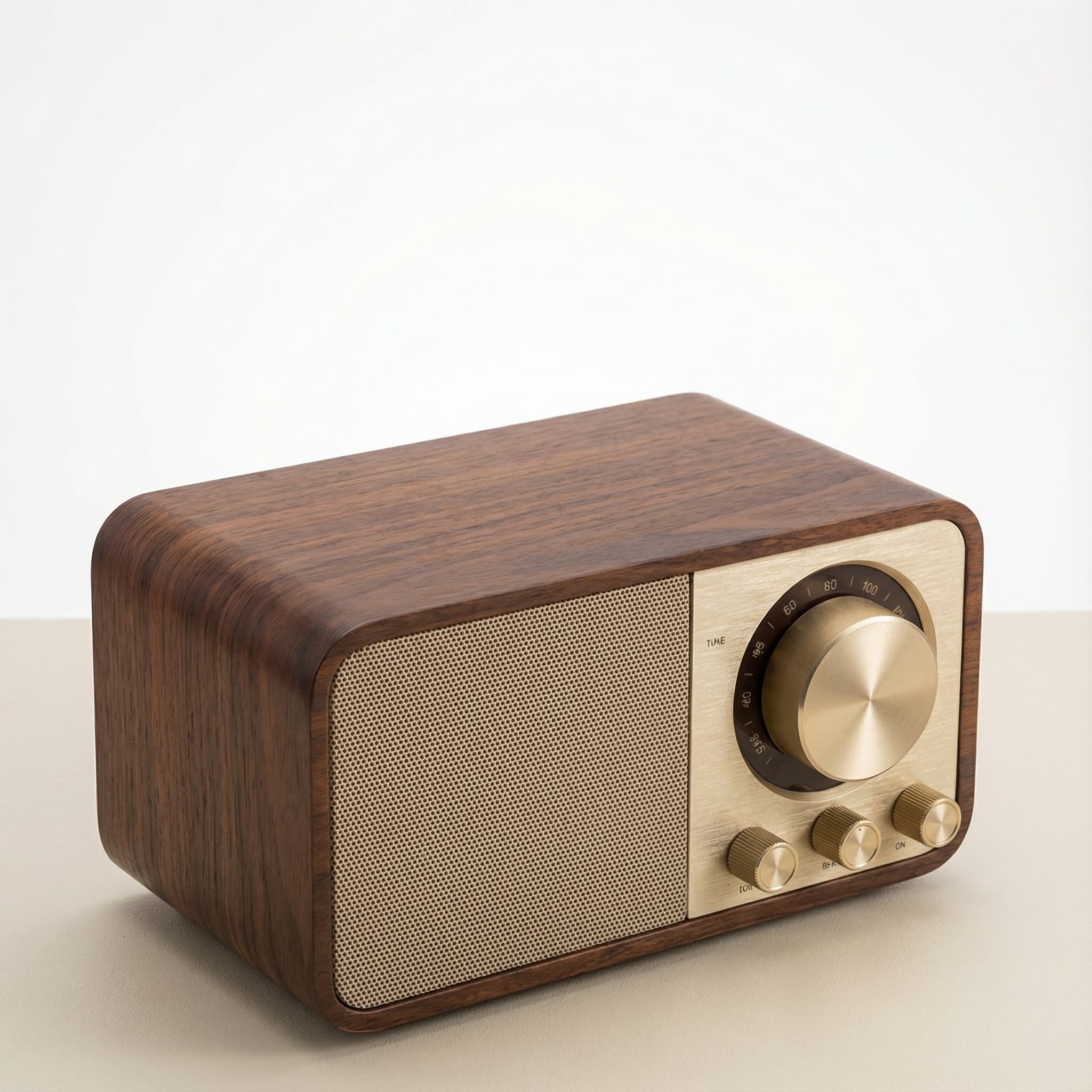 Sale
Retro Wood-Cabinet Bluetooth Speaker with FM Radio
In stock · Ships in 7–21 business days

Ortizan X10 Portable Bluetooth Speaker with RGB Lights
In stock · Options available · Ships in 7–21 business days

Ohayo X10 Max Bluetooth Speaker with Bass Boost and Lights
In stock · Options available · Ships in 7–21 business days
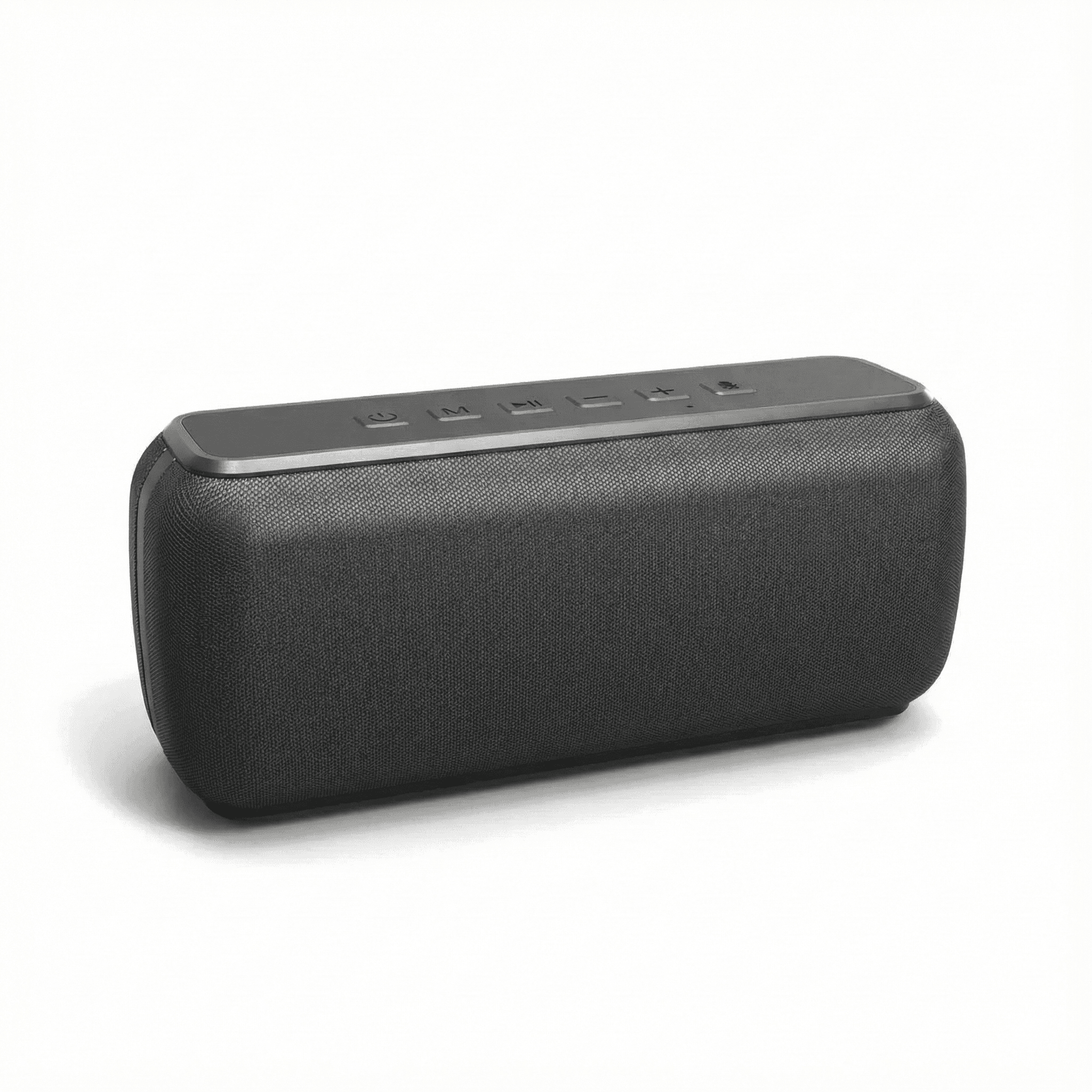
Xdobo X8 II Portable Bluetooth Speaker with Power Bank
In stock · Options available · Ships in 7–21 business days
Continue reading
 Tech & Gadgets
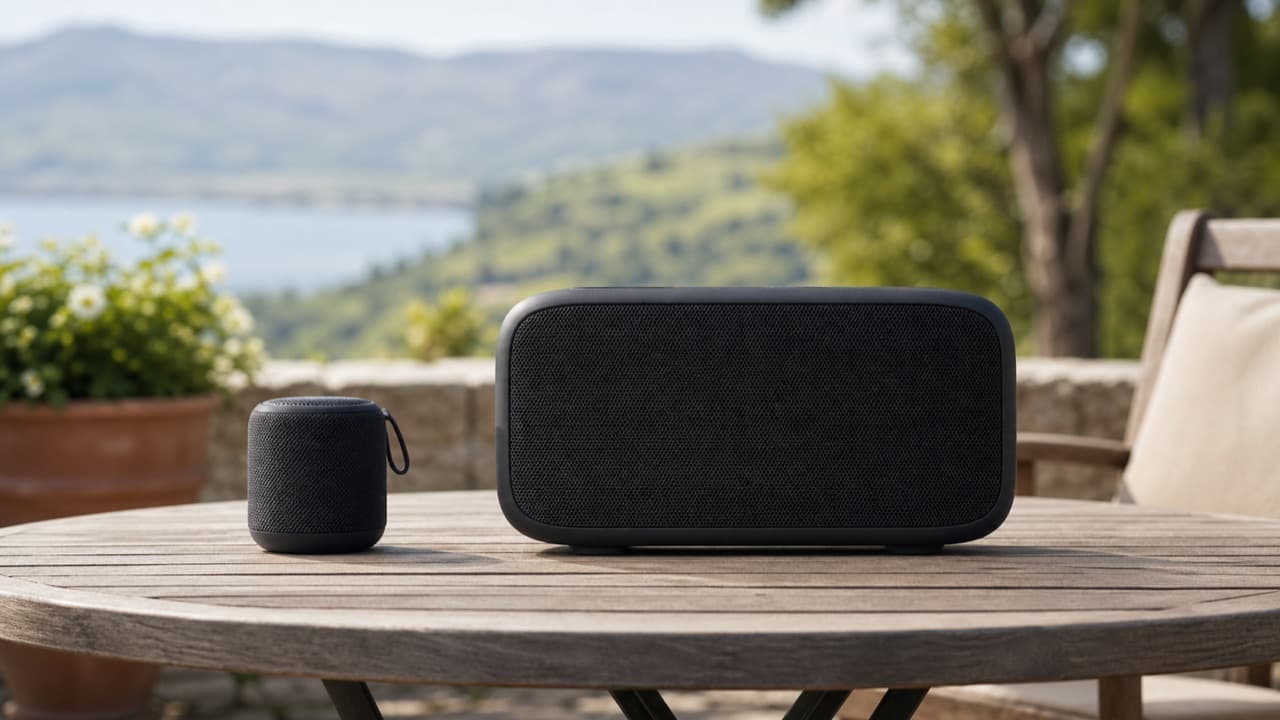
What Size Portable Speaker Do You Need? Loudness Guide
What size portable speaker do you need? Match speaker size class to room, crowd and listening distance, and learn how loudness falls with distance outdoors.
 Tech & Gadgets
Wooden Speaker Placement and Cabinet Care at Home
Wooden speaker placement for shelves, desks and sideboards: distance from walls, height and angle, plus how to protect the cabinet from damp, sun and sprays.
 Tech & Gadgets
Outdoor Speaker Placement: Where to Put a Speaker Outside
Outdoor speaker placement for patios, decks and yards: height, wall and corner bass tricks, Bluetooth range limits, weather and sun, and keeping neighbors calm.