

Wall Light Placement Guide: Heights for Every Room
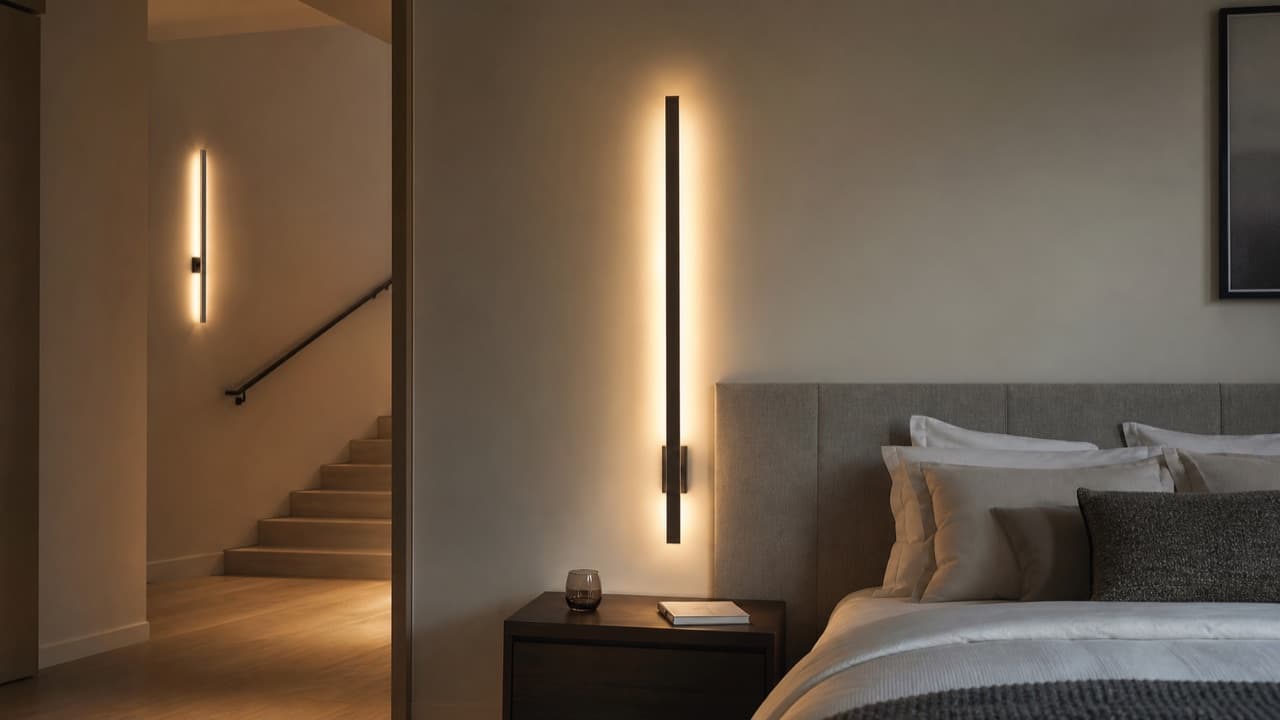
Good wall light placement comes down to two numbers and one test: a mounting height that keeps the bulb or diffuser out of your direct line of sight, a spacing that avoids dark gaps, and a check from the position where you will actually use the light. Most living-area sconces land around 60 to 72 inches (152 to 183 cm) above the finished floor, but bedrooms, vanities and stairs each need their own adjustments. This guide is for homeowners and renters planning new wall lights or moving existing ones, before the electrician arrives or the drill comes out.
Key takeaways
- Use 60 to 72 inches (152 to 183 cm) to the center of the fixture as a starting point for general sconces; about 66 inches (168 cm) suits many rooms with 8 to 9 foot ceilings.
- Bedside lights are set by the bed, not the floor: measure from the top of the mattress while sitting up against the headboard.
- Vanity sconces work best on either side of the mirror at roughly face height, not just above it, to avoid shadows under the eyes and chin.
- In hallways, space fixtures about 8 to 10 feet (2.4 to 3 m) apart and keep projection shallow so people do not catch a shoulder on them.
- On stairs, aim for even light on every tread with switching at the top and bottom; glare at the top of a flight is a trip hazard.
Typical wall light heights by room
These are common design ranges, not code requirements. Ceiling height, fixture size and who uses the room all shift the final number, so treat them as a first pencil mark.
| Location | Typical height | Spacing or position |
|---|---|---|
| Living room, general sconce | 60 to 72 in (152 to 183 cm) to center | Roughly 6 to 10 ft (1.8 to 3 m) apart on long walls |
| Bedside reading light | Shade bottom about 18 to 24 in (46 to 61 cm) above mattress top | Centered on, or just outside, each nightstand |
| Bathroom vanity, side-mounted | About 60 to 66 in (152 to 168 cm), near eye level | Either side of mirror, about 28 to 40 in (71 to 102 cm) apart |
| Bathroom vanity, above mirror | About 75 to 80 in (190 to 203 cm) | Fixture roughly as wide as the mirror or a little narrower |
| Hallway | About 66 to 72 in (168 to 183 cm) | About 8 to 10 ft (2.4 to 3 m) apart |
| Stairway sconce | About 66 to 72 in (168 to 183 cm) measured from the tread nosing | Top, bottom and every 8 to 10 ft along the run |
| Step or low-level light | Often 12 to 18 in (30 to 46 cm) above the tread | Every step or every other step |
On taller ceilings, move general sconces up a few inches so they relate to the room’s proportions, but keep any light you look at directly out of eye line. A useful rule: if a seated or standing person can see the bare LED or bulb, the fixture is either too low, too high or needs a better shade.
Bedroom wall lights: placing them from the bed
Bedside sconces free up nightstand space, but they are the easiest to get wrong because people measure from the floor. Mattress heights vary from under 20 inches on a platform bed to well over 25 inches on a thick mattress with a box spring. Instead:
- Sit up against the headboard in your normal reading position.
- Have someone hold the fixture (or a cardboard template) on the wall. The light should land on the page from slightly behind and to the side, with the shade’s lower edge around shoulder height.
- Check that your partner, lying flat on the other side, cannot see the light source.
- Mark the switch or dimmer within reach without stretching across the bed. Many plug-in sconces have an inline cord switch; position it before you trim the cord cover.
Swing-arm and adjustable-head sconces forgive small errors. Fixed up-and-down wall washers do not, so measure twice. For a warm, sleep-friendly tone, 2700K is the common bedroom choice; our article on how color temperature affects sleep explains why.
Bathroom vanity sconces and damp locations
For grooming, light from the sides beats light from above. A single bar above the mirror throws shadows into eye sockets and under the chin, which is why makeup artists light faces from the front and sides. Mount a pair of vertical sconces flanking the mirror, with their centers near eye level for the main users, and the light will wrap the face evenly. If the mirror is too wide for side lights to reach (over about 40 inches between fixtures), combine an above-mirror bar with good ceiling light.
Bathrooms bring safety rules. Look for fixtures listed for damp locations for general bathroom use and wet locations anywhere water can spray directly on them. The US electrical code also restricts certain fixture types in the zone above and around a tub or shower, so lights near a shower need extra care. These details vary by jurisdiction and fixture design, so confirm with a licensed electrician or your local building department rather than guessing.
Hallways and stairs: even light without glare
Hallways
Narrow halls are where projection matters. Accessibility guidance for public buildings limits wall-mounted objects between 27 and 80 inches above the floor to 4 inches of projection in circulation paths, and that is a sensible target at home too. Slim up-and-down or flush designs avoid shoulder knocks. Spacing of 8 to 10 feet usually gives overlapping pools of light; start about 2 to 3 feet from each end of the hall.
Stairs
Stair lighting is a safety job first. You want every tread edge visible, no bright point shining into the eyes of someone walking down, and control from both ends. The International Residential Code, adopted in some form by most US states, requires a light source for interior stairways and, where a stairway has six or more risers, a wall switch at each floor level. Practically, that means three-way switching or smart switches at top and bottom.
Measure stair sconce height from the nosing (front edge) of the tread directly below the fixture, so each light sits at the same height relative to the slope. Low step lights, set about 12 to 18 inches above each tread, are excellent for night navigation but usually need a sconce or ceiling light for full brightness. Shielded or downward-facing designs keep glare off the eyes of anyone coming down the flight.
Glare, brightness and how the fixture shapes the light
The same fixture can be pleasant or harsh depending on where its light goes. Up-and-down wall washers throw light onto the wall and ceiling and suit hallways and living rooms. Downlight-only shades suit reading and stairs. Open-bulb or exposed-LED designs need more care with height because the source is visible from more angles.
For ambient sconces, a few hundred lumens per fixture is often enough, especially with a dimmer; task lights such as bedside readers and vanities need more. Check that the fixture, its driver and your dimmer are listed as compatible, or you may get flicker and buzz. Our minimalist wall light buying guide covers lumens, color rendering and dimming in detail. If you like a linear look, ADLTHUB carries the Minimalist Modern Long LED Wall Lamp; check its product page for dimensions, mounting and electrical requirements.
Wiring, wall boxes and plug-in options
Hardwired sconces need an electrical box at the mounting point, which is why the decision on height should be made before drywall work, not after. Moving a box later means opening the wall. If you are renovating, mark finished heights on the studs and confirm them against your furniture plan, since a headboard or mirror that changes size will move the ideal position.
Turn off power at the breaker and verify it is off before any work, and use a licensed electrician where your local rules require it. Do not bury a fixture’s driver in insulation or a box it is not rated for, and do not exceed the wattage or bulb type marked on the fixture.
Renters and anyone without a box in the right place can use plug-in sconces with a cord cover painted to match the wall. Mount them near an outlet, keep the cord out of walkways and away from bed frames where it could be pinched.
Mistakes to avoid
- Measuring bedside lights from the floor. A thick mattress can put the light in your eyes; always measure from the bed.
- Centering one bar above a vanity and calling it done. It shadows the face. Add side light where the mirror width allows.
- Mounting a deep fixture in a narrow hall. Anything projecting more than about 4 inches gets knocked.
- Lighting only the top of a staircase. Dark lower treads and glare from above make missteps more likely.
- Ignoring the damp or wet rating. Indoor-dry fixtures near showers corrode and can become unsafe.
- Placing the box before choosing the fixture. Some sconces mount off-center on their backplate, which shifts the light from where you planned.
How to choose a position you will not regret
Pick a height near 66 inches if you want a safe default for general sconces in a typical room. Pick a lower, bed-measured position if the light is for reading. Pick side-of-mirror mounting if anyone does makeup, shaves or wears contacts. Pick shallow, shielded fixtures on stairs and in halls where safety outranks style. Then tape a paper template to the wall, live with it for a day and check it from every seat, bed and step that matters. For outdoor and roofline lighting, the rules change; see our permanent eaves light planning guide, or browse more fixtures in the home and kitchen category.
Frequently asked questions
How high should wall sconces be mounted?
A common starting point is 60 to 72 inches from the floor to the center of the fixture, often around 66 inches in rooms with 8 to 9 foot ceilings. Adjust so the light source is not directly visible from where people sit or stand.
How high should bedside wall lights be?
Measure from the mattress rather than the floor. Many people find the bottom of the shade works about 18 to 24 inches above the mattress top, roughly at shoulder height when sitting up to read.
How far apart should hallway wall lights be?
About 8 to 10 feet apart usually gives even, overlapping light. Start roughly 2 to 3 feet from each end and keep fixtures shallow so they do not catch shoulders.
Do stair lights need switches at the top and bottom?
Under the International Residential Code, interior stairways with six or more risers need a wall switch at each floor level for the stair lighting. Local codes vary, so confirm with your building department or electrician.
Can I install a wall light without hardwiring?
Yes. Plug-in sconces run their cord to a nearby outlet and can be tidied with a paintable cord cover. They suit renters and walls without a junction box in the right spot.
Shop Home & Kitchen
View all →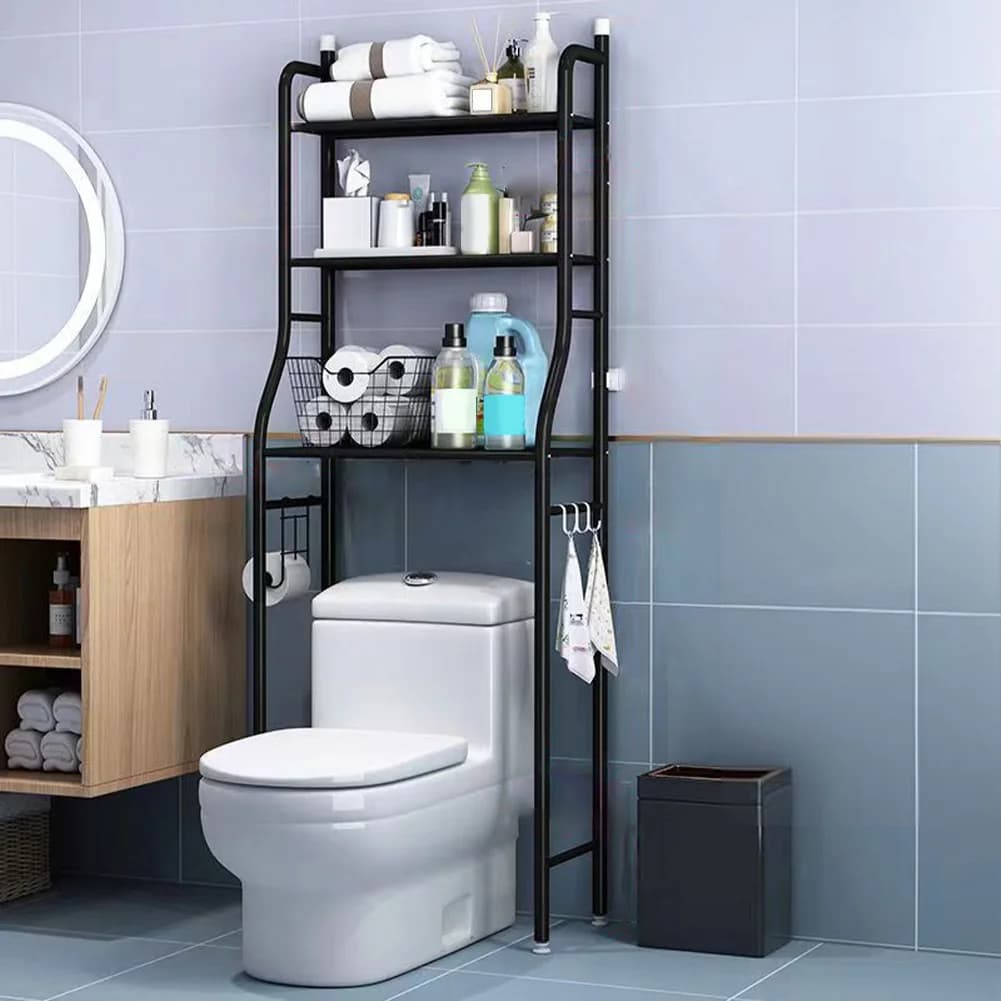
3-Tier Over-Toilet Storage Rack in Powder-Coated Carbon Steel
In stock · Options available · Ships in 7–21 business days
 Sale
Wingback Massage Recliner Chair in PU Leather with Footrest
In stock · Options available · Ships in 7–21 business days
 Sale
Mid-Century Modern Accent Armchairs, Set of Two, Wood Frame
In stock · Options available · Ships in 7–21 business days

Fireplace Flame Ultrasonic Humidifier and Oil Diffuser
In stock · Options available · Ships in 7–21 business days
Continue reading
 Home & Kitchen
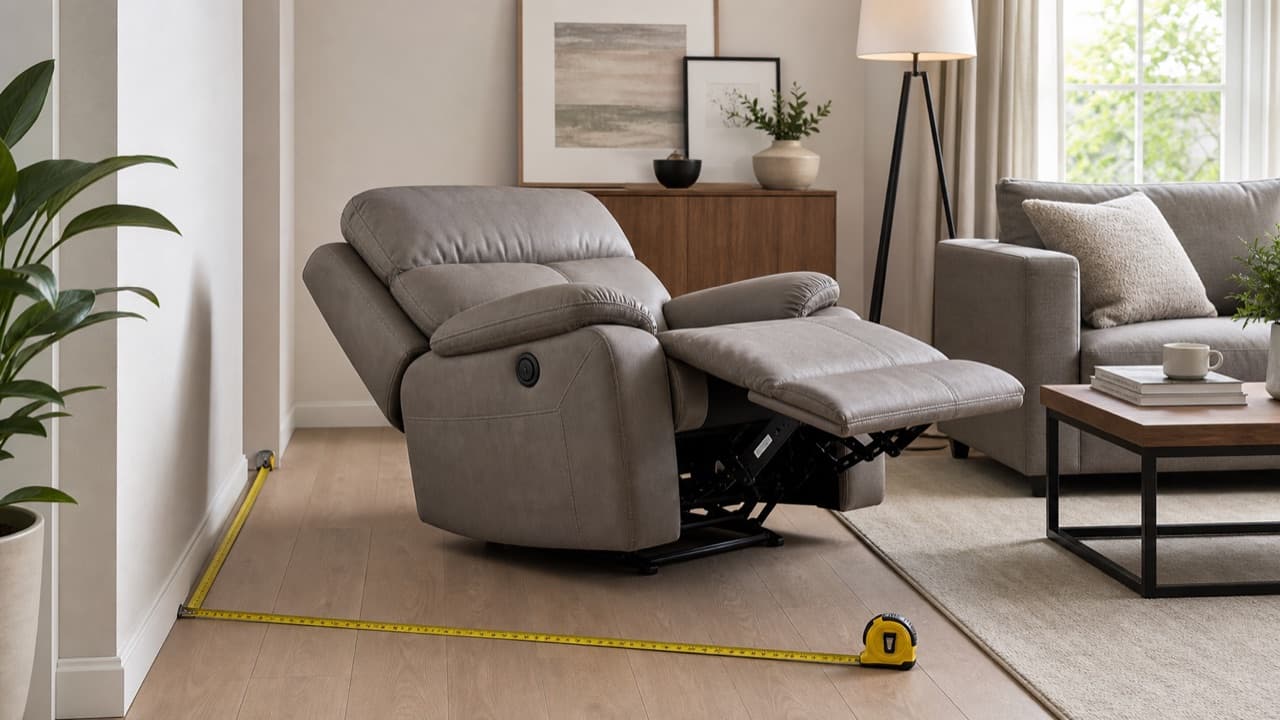
How to Measure for a Recliner: Room, Wall and Doorway
How to measure for a recliner: reclined length, wall clearance, walkways, doorway and stair access, and body-fit sizes so the chair suits you and your room.
 Home & Kitchen
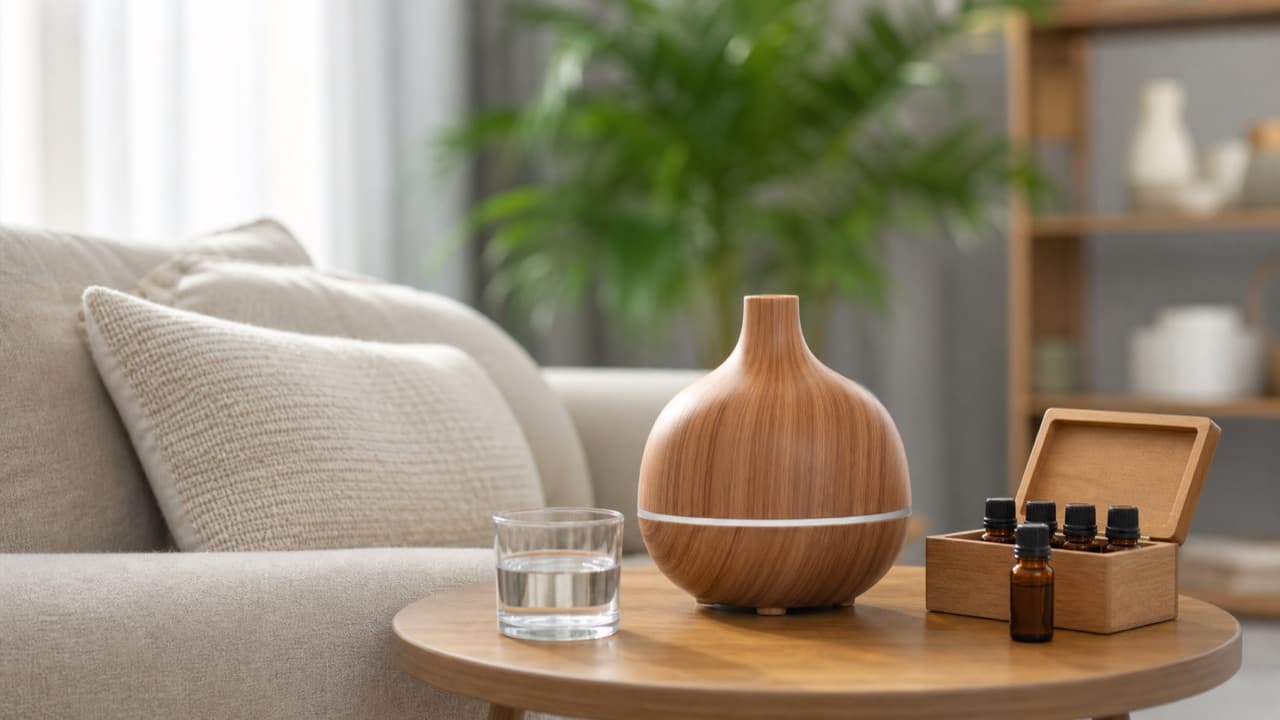
Aromatherapy Diffuser Safety: Pets, Kids and Placement
Aromatherapy diffuser safety basics: how long to run it, oils to avoid around pets and young children, safe placement, electrical care and warning signs.
 Home & Kitchen
Dehumidifier Size and Placement: Pints, Rooms and Drainage
Dehumidifier size and placement explained: how pint ratings changed, sizing for damp rooms and basements, where to put the unit, and how to plan drainage.