

How to Measure for a Recliner: Room, Wall and Doorway
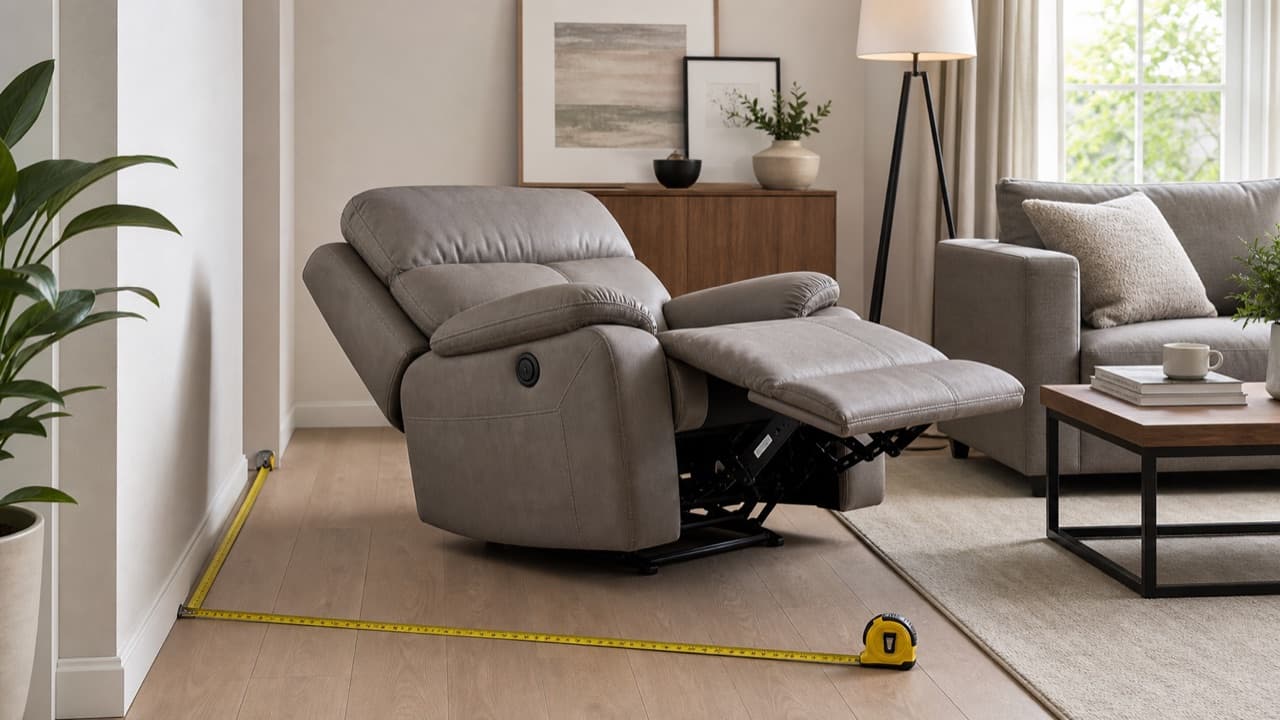
Learning how to measure for a recliner comes down to three sets of numbers: the space it takes when fully reclined (not just upright), the delivery path from your front door to the room, and your own body measurements for a comfortable fit. A recliner that fits the floor upright can still hit the wall, block a walkway or get stuck in a stairwell. This guide is for anyone buying a manual, power, rocker or massage recliner online who wants to check fit before delivery day rather than after.
Key takeaways
- Measure the fully reclined length on the listing and add it to your floor plan. Many recliners extend well beyond 60 inches (152 cm) when open.
- Check rear wall clearance. Standard recliners often need around a foot or more behind them; wall-hugger designs need only a few inches.
- Leave a walkway of roughly 30 to 36 inches (76 to 91 cm) around the extended footrest.
- Compare the chair’s narrowest packed dimension against every door, hallway turn and stairwell on the way in.
- Body fit matters: seat height, seat depth and back height decide comfort and how easy the chair is to get out of.
Step 1: Measure the room with the chair reclined
Recliners change shape. Look on the product listing for three positions: upright, fully reclined, and any intermediate “TV” position. Then map the largest one onto your floor.
- Mark the upright footprint (width by depth) on the floor with painter’s tape.
- Extend the tape forward to the fully reclined length. This shows where the footrest ends.
- Add rear clearance behind the tape (see the next section).
- Check swing and sweep: rockers move forward and back, swivels rotate, and arms on some models flare outward. Note all three.
- Walk around the taped outline. If you have to turn sideways to pass the footrest, the chair is too big for that spot.
Leave roughly 30 to 36 inches (76 to 91 cm) of walking space around the reclined chair in main traffic paths. Where furniture sits beside the chair, a few inches between the arm and an end table keeps the mechanism from rubbing.
Step 2: Wall clearance and recliner styles
How far a recliner must sit from the wall depends on its mechanism. Exact figures vary by model, so use the maker’s stated clearance when it’s listed.
| Recliner style | Typical rear clearance | Best for | Space note |
|---|---|---|---|
| Standard (push-back or lever) | Often around 12 inches (30 cm) or more | Rooms where the chair floats away from walls | The back tilts toward the wall as it reclines |
| Wall hugger or wall-saver | Often around 3 to 6 inches (8 to 15 cm) | Small rooms and apartments | The seat slides forward as it reclines, so it needs more front space |
| Rocker recliner | Similar to standard, plus room for rocking | Nurseries and reading corners | Rocking motion adds front and back movement |
| Swivel recliner | Enough for the back corners to rotate freely | Open-plan rooms | Measure the diagonal of the chair as the turning circle |
| Power lift recliner | Varies; check the listing | People who need help standing | Needs an outlet nearby and space in front for the lift |
Massage recliners often have deeper bases and longer reclined lengths than standard chairs. If you’re comparing those, the massage chair buying guide covers space and power needs in more detail.
Step 3: Measure the delivery path
Delivery is where most recliner fit problems happen, especially in apartments and older homes. Measure every opening the chair must pass:
- Door width: measure the narrowest point between the door stop moldings or the open door edge, not the frame outside. Removing a door from its hinges can gain a little width.
- Door height and diagonal: a chair can often go through on its side or tilted. Measure diagonally from one top corner of the opening to the opposite bottom corner.
- Hallways and turns: measure hallway width and any 90-degree turns, where long items get stuck.
- Stairs: width, ceiling height above the steps, landing size and handrails that reduce clearance.
- Elevators: door width, cab depth and diagonal.
Compare these to the chair’s packaged dimensions as well as its assembled ones. Many recliners ship with a detachable back, which reduces depth considerably; the listing or manual should say whether the back lifts off and whether tools are needed. Confirm who handles assembly and whether delivery is curbside or to the room.
Step 4: Measure your body for comfort
A chair that fits the room but not your body won’t get used. These measurements help you compare listings:
- Seat height: sit in a chair you find comfortable and measure from the floor to the front edge of the seat. With your feet flat, knees should be around 90 degrees. Many recliner seats fall around 18 to 21 inches (46 to 53 cm); taller people often prefer the higher end, and higher seats are usually easier to rise from.
- Seat depth: measure from the back of your hips to the back of your knees while seated. A seat that’s too deep pushes you to slouch; leave a couple of finger-widths between the seat edge and the back of your knees.
- Back height: taller users should check that the headrest reaches the head when reclined. Shorter users should check that their feet reach the footrest comfortably.
- Width between arms: sit and measure across your hips, then allow a few inches each side.
- Weight capacity: check the stated limit, especially for power and lift mechanisms.
Power, cords and safety around the mechanism
- Outlet location: power recliners need a nearby outlet. Route the cord behind the chair, not across a walkway, and avoid running it under the mechanism where it can be pinched.
- Battery backup: some power recliners can use a battery pack so the chair can be returned upright during a power cut. Check whether your model supports one.
- Children and pets: the space under a reclining footrest and the scissor mechanism can trap small hands and paws. Check under the chair before closing it, and keep it closed when not in use if you have small children or pets.
- Floors: place the chair on a level floor, and use protective pads on hard floors so the base doesn’t scratch.
Mistakes to avoid
- Measuring only the upright size. The reclined length is what decides whether you can walk past.
- Pushing a standard recliner against the wall. The back will hit the wall and the mechanism won’t fully open, or the wall gets scuffed.
- Forgetting the packaged size. A box can be bigger than the chair; check both against the stairwell.
- Ignoring the outlet. An extension cord across the room is a trip hazard.
- Choosing seat height by looks. A low, deep seat looks relaxed but can be hard to get out of, especially with knee or hip discomfort.
Which recliner fits your space
- Pick a wall hugger if the chair must sit near a wall in a small room, and you have space in front for the seat to slide forward.
- Pick a standard recliner if it can float in an open room with a foot or more behind it.
- Pick a swivel or rocker if you want movement and have clearance all around.
- Pick a power or lift recliner if getting up is hard or you want fine position control, and an outlet is within reach.
If you’re considering the massage recliner chair on ADLTHUB, check its product page for current dimensions, delivery and returns, and compare them with your taped outline. If the room is better suited to two lighter chairs, the guide to arranging a pair of accent chairs may help. Browse more seating in home and kitchen.
Frequently asked questions
How much space do you need behind a recliner?
It depends on the mechanism. Standard recliners commonly need around a foot or more behind them, while wall-hugger designs may need only a few inches. Always use the clearance figure on the product listing when it’s provided.
How much room does a recliner need in front?
Take the fully reclined length from the listing and add a walkway of about 30 to 36 inches if people need to pass the extended footrest. Wall huggers need extra front room because the seat slides forward.
Will a recliner fit through a 30-inch door?
Sometimes, especially if the back detaches or the chair can be tilted through diagonally. Compare the chair’s narrowest dimension, with the back removed if possible, against the door’s opening measured between the stops.
What is a good seat height for a recliner?
Many recliners fall around 18 to 21 inches from floor to seat. Pick one that lets you sit with feet flat and knees near 90 degrees; taller people and anyone who finds standing up difficult usually prefer a higher seat.
What is a wall hugger recliner?
It’s a recliner whose seat slides forward as the back reclines, so it can sit just a few inches from a wall. It saves space behind the chair but needs more clearance in front.
Shop Home & Kitchen
View all →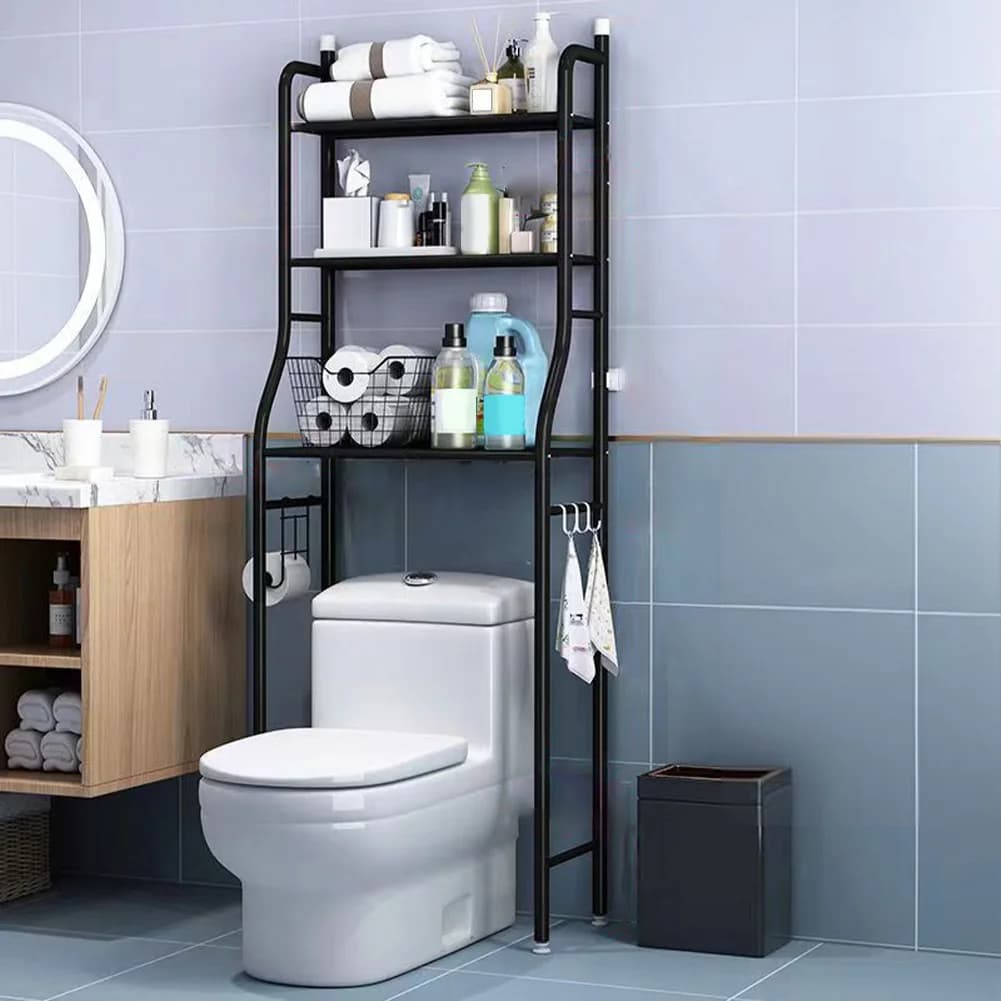
3-Tier Over-Toilet Storage Rack in Powder-Coated Carbon Steel
In stock · Options available · Ships in 7–21 business days
 Sale
Wingback Massage Recliner Chair in PU Leather with Footrest
In stock · Options available · Ships in 7–21 business days
 Sale
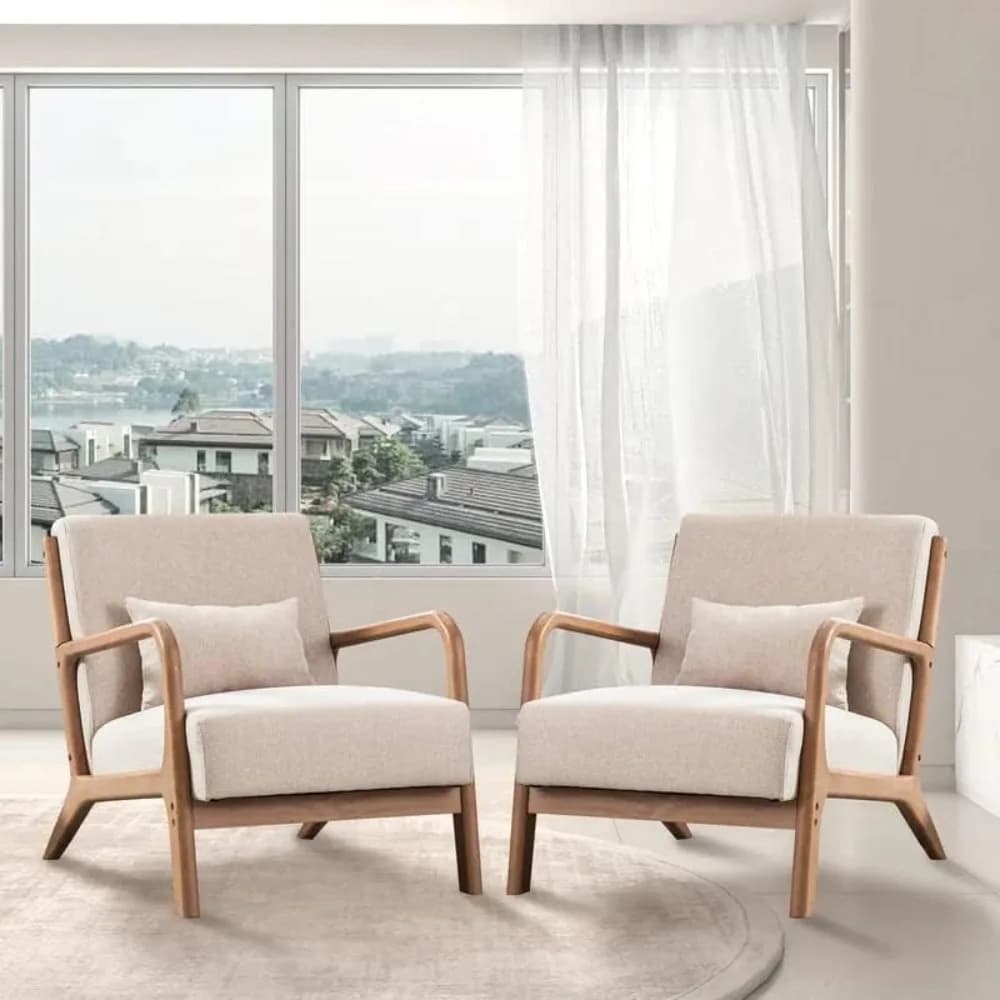
Mid-Century Modern Accent Armchairs, Set of Two, Wood Frame
In stock · Options available · Ships in 7–21 business days

Fireplace Flame Ultrasonic Humidifier and Oil Diffuser
In stock · Options available · Ships in 7–21 business days
Continue reading
 Home & Kitchen
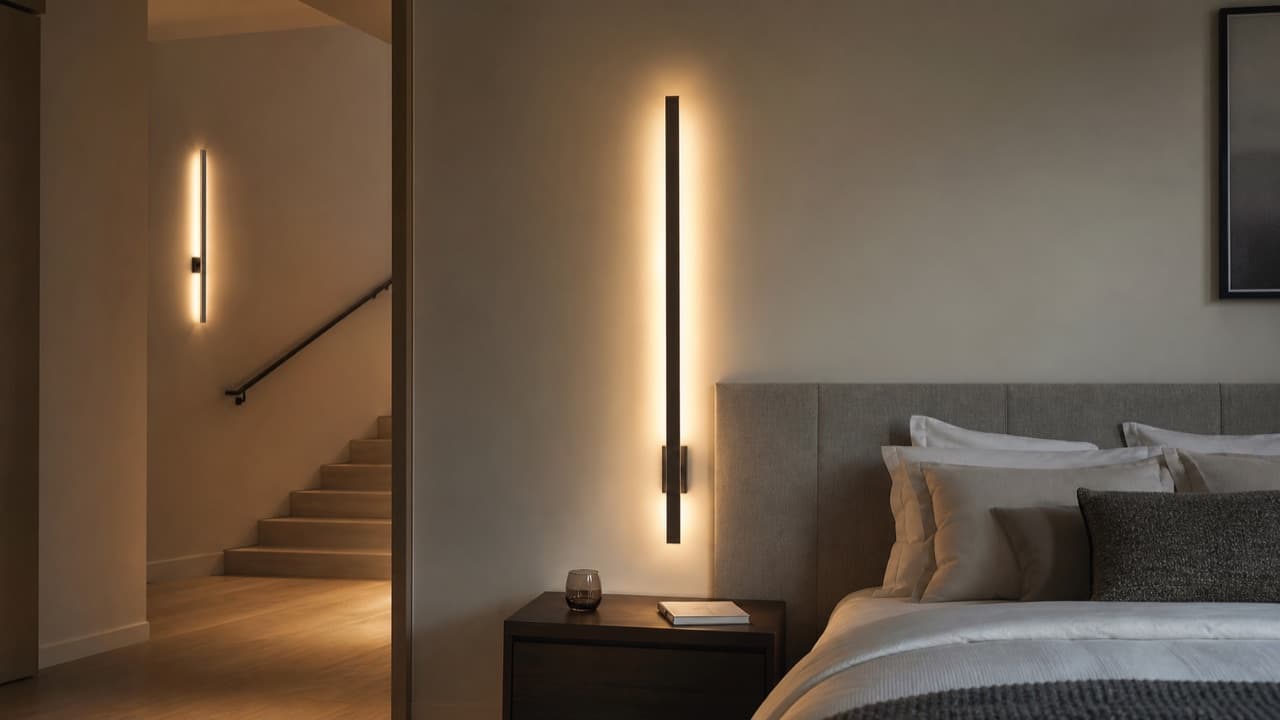
Wall Light Placement Guide: Heights for Every Room
Wall light placement guide with typical mounting heights and spacing for bedrooms, bathrooms, hallways and stairs, plus glare, switching and wiring basics.
 Home & Kitchen
Essential Oil Diffuser Room Size: Coverage and Runtime
Essential oil diffuser room size explained: coverage claims, tank capacity vs runtime, ultrasonic vs nebulizing output, and where to place it safely.
 Home & Kitchen
Under-Shelf Baskets for Small Apartments: Fit and Load Guide
Under-shelf baskets for small apartments: how to measure shelf thickness and clearance, which shelves can take them, load limits and the best spots to use one.