

Travel Garment Steamer Guide: Voltage, Fabrics and Technique
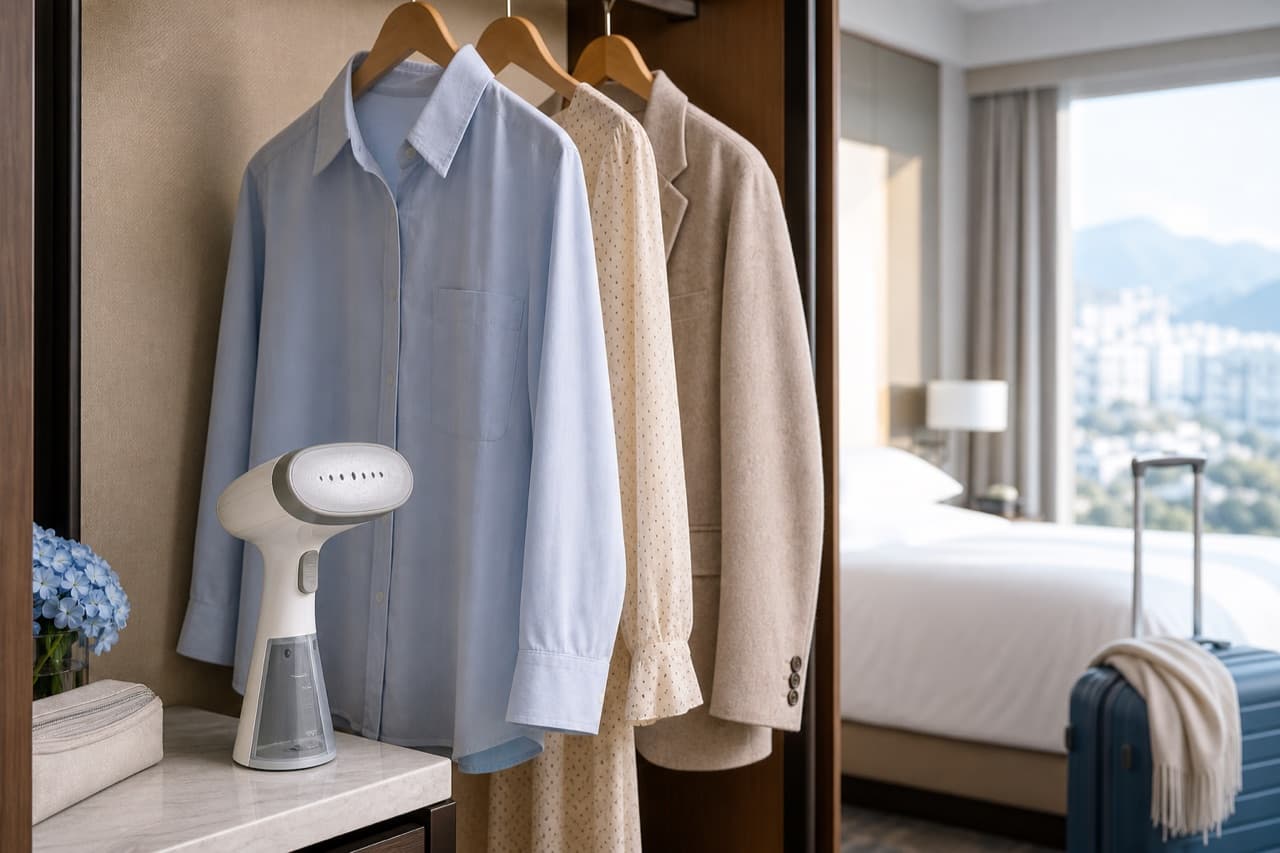
A travel garment steamer is worth packing if you live out of a suitcase for work, weddings or long trips and want to remove packing wrinkles from shirts, dresses and suit jackets in a few minutes without hunting for a hotel iron. The right one is dual voltage for international trips, light enough not to matter in your bag, and heats up in under a minute. This guide is for travelers choosing their first handheld steamer and for anyone who owns one but gets drips and half-relaxed creases; it covers specs that matter, fabrics, technique, packing rules and safe use.
Key takeaways
- For international travel, choose a steamer marked 100-240V or one with a clearly labeled voltage switch; a plug adapter alone does not convert voltage.
- Small tanks of roughly 3 to 9 oz (about 90 to 260 mL) typically give several to around 15 minutes of steam, enough for a few garments per fill.
- Steam relaxes wrinkles but does not press creases; pack sharply creased trousers carefully or use an iron for them.
- Hang the garment and pull the fabric taut with your free hand; steam works best on tension, not on a limp garment.
- Empty the tank and let the steamer cool fully before packing; residual water can leak and grow mildew in a closed bag.
Which travel garment steamer specs actually matter?
Voltage and plug
The US uses 120V outlets; most of Europe, Asia, Africa and Australia use 220 to 240V. A steamer rated 100-240V can be plugged into either with the right plug adapter. Some dual-voltage steamers have a manual switch that you must set before plugging in; forgetting to switch from 120V to 240V can damage the heater instantly. Single-voltage 120V steamers should not be used abroad without a converter, and many travel converters are not rated for heating appliances that draw hundreds of watts. Check the rating label on the steamer itself, not only the listing.
Wattage and heat-up time
Handheld travel steamers commonly draw somewhere between about 600 and 1,500 watts. Higher wattage generally means faster heat-up and more consistent steam, but it also draws more power, which matters on older hotel circuits and with converters. Heat-up times for compact models are often in the 25 to 60 second range. A steamer that spits water rather than producing a steady plume is usually being used before it is fully hot, or held at too steep an angle.
Tank size, weight and shape
Bigger tanks mean fewer refills but more weight and bulk. A tank in the 3 to 9 oz range covers most hotel touch-ups. Folding handles and detachable tanks save space; a steamer that weighs around 1 to 2 lb (0.45 to 0.9 kg) is easy to carry. A heated metal plate on the head is useful, since it lets you lightly press collars and plackets, but it also gets hot enough to scorch delicate fabrics if held still.
The Xiaomi Mijia handheld garment steamer is the handheld option in the ADLTHUB catalog; check its product page for voltage rating, plug type and tank details before taking it abroad.
Which fabrics can you steam on the road?
Always read the care label first, and test on an inside seam if you are unsure.
| Fabric | Steams well? | Tips |
|---|---|---|
| Polyester and blends | Yes, quickly | Wrinkles release fast; keep the head moving to avoid shine |
| Wool suit jackets and trousers | Yes | Steam from a few inches away; let it dry on the hanger before wearing |
| Cotton shirts | Mostly | Needs more passes; collars and cuffs benefit from a heated plate or iron |
| Linen | Partly | Softens creases but rarely gets crisp; embrace some texture |
| Silk and rayon | With care | Steam from the inside, keep distance and avoid water spots |
| Velvet | Yes, from inside | Steam the reverse side; never press the pile |
| Leather, suede, waxed cotton, plastic sequins | No | Moisture and heat can stain, shrink or warp them |
How to use a travel steamer in a hotel room
- Fill with the right water. Use bottled or filtered water where tap water is very hard, since mineral scale is the main cause of clogged steam holes. Follow the manual if it asks for tap or distilled water specifically.
- Hang the garment properly. A shower rail, closet rod or the back of a door hook works. Fasten the top button so a shirt hangs straight. Keep it away from walls and curtains you might wet.
- Heat fully. Wait for the ready light, then point the first burst into the sink or bathtub to clear any condensed water.
- Pull taut and steam top to bottom. Hold the hem with your free hand, keeping your fingers well away from the steam path, and move the head slowly downward. A heat-resistant glove, if one is included, protects your hand.
- Let it dry. Leave the garment hanging for several minutes before putting it on. Damp fabric creases again quickly.
Do not steam directly beneath a smoke detector. Steam can trigger some detectors, and a fire alarm in a hotel is an unpleasant way to start a conference day. Steaming next to the bathroom exhaust fan works well.
Packing a steamer and flying with it
Garment steamers are generally permitted in both carry-on and checked baggage in the US, but final decisions rest with the security officer, and the tank must be empty. Empty the tank, run the steamer for a few seconds to clear the line if the manual permits, and let it cool and dry, ideally overnight. Pack it in a zip bag or its pouch, away from clothes, with the cord loosely coiled rather than tightly wrapped around the body, which strains the cord at the joint. For reducing wrinkles in the first place, see how to pack a suit for travel.
Safe use and care
- Never steam clothes while someone is wearing them. Steam burns develop quickly and can be severe.
- Keep the head pointed away from your face and others, and never refill a hot steamer; unplug and let it cool first.
- Do not leave it on unattended, and place it upright on a stable surface away from children.
- Descale per the manual if steam output drops, and empty the tank after every session to slow scale and mildew.
- Inspect the cord and plug before each trip. A damaged cord, cracked tank or tripping hotel breaker is a reason to stop using it.
Mistakes to avoid
- Assuming dual voltage. Many compact steamers are 120V only. Read the rating label before you leave home.
- Steaming a lying-down garment. Without gravity and tension, the steam just dampens fabric. Hang it.
- Tilting the head too far. Many handhelds spit when angled sharply. Keep the head close to upright and move the garment rather than the steamer for awkward spots.
- Expecting crisp trouser creases. Steam removes creases; it does not set them. The travel steamer vs compact iron comparison explains when an iron is the better tool.
Is a travel garment steamer right for you?
Pick a travel steamer if you pack suits, dresses, knits or polyester-heavy wardrobes and stay in places without a reliable iron. Pick a dual-voltage model with a heated plate if you travel internationally and want some collar control. Skip it if most of your trips are short, your clothes are wrinkle-resistant knits, or your hotels always provide an iron and board. For home use, the garment steamer vs iron guide compares full-size tools. Browse travel gear in the outdoor and travel category.
Frequently asked questions
Can you bring a garment steamer on a plane?
In the US, garment steamers are generally allowed in carry-on and checked bags, as long as the water tank is empty. The security officer makes the final call. Check rules for other countries if you are connecting abroad.
Do I need a dual-voltage steamer for Europe?
Yes, unless you use a converter rated for the steamer’s wattage, which is bulky and often impractical. European outlets are around 230V, and a 120V-only steamer can be damaged quickly. A plug adapter only changes the plug shape.
Why does my travel steamer spit water?
Usually because it has not finished heating, the tank is overfilled or the head is tilted too far. Wait for the ready light, fire the first burst into a sink and keep the head close to upright. Scale buildup can also cause sputtering.
How long does a travel steamer take to remove wrinkles?
Typically a minute or two for a polyester shirt or dress, and several minutes for a cotton shirt or suit jacket. Heavier wrinkles from tight packing take longer. Let the garment dry on the hanger afterward.
Can I use tap water in a travel steamer?
Follow the manual. Many steamers accept tap water, but very hard water builds scale that clogs the head over time. Bottled or filtered water is a sensible choice in hard-water destinations.
Shop Outdoor & Travel
View all →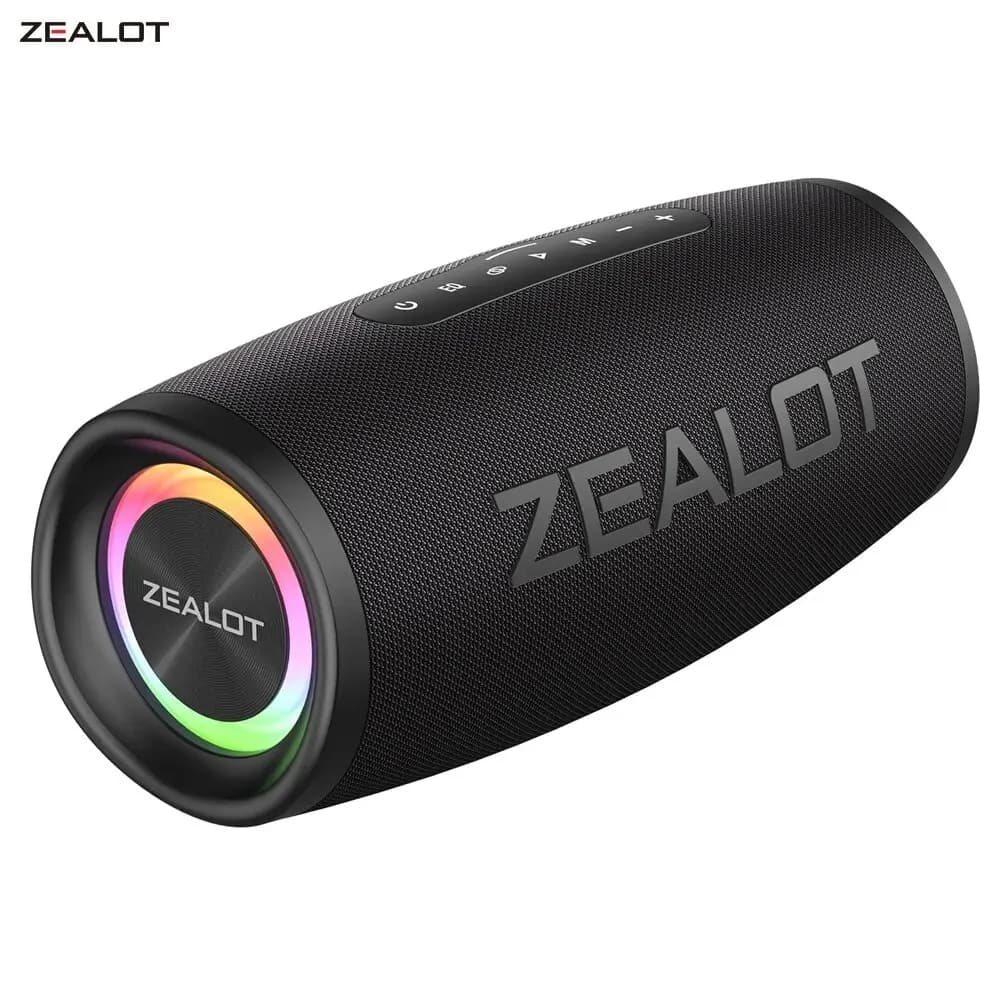
Zealot S56 Rugged Outdoor Bluetooth Speaker
In stock · Ships in 7–21 business days
 Sale
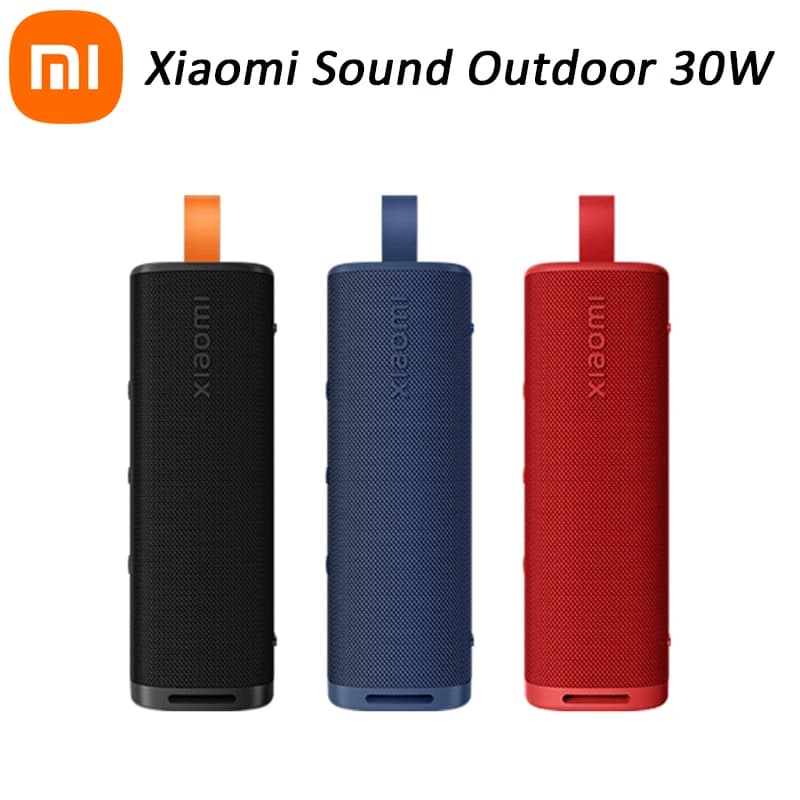
Xiaomi Sound Outdoor Portable Bluetooth Speaker
In stock · Options available · Ships in 7–21 business days
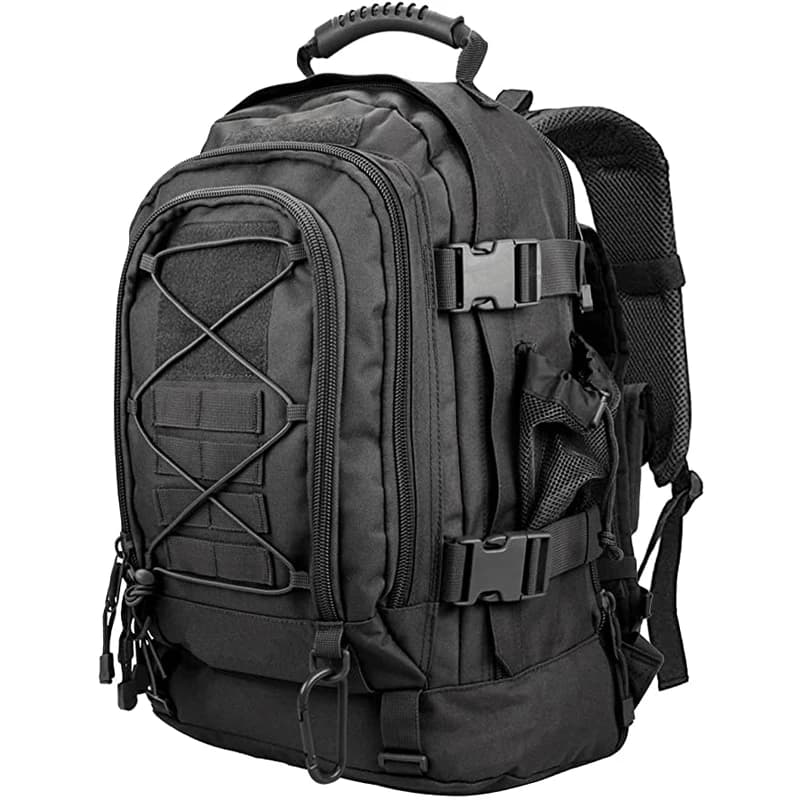
LQArmy 60L Tactical Backpack with Molle Webbing
In stock · Options available · Ships in 7–21 business days
Continue reading
 Outdoor & Travel
Travel Steamer vs Compact Iron: Which to Pack for Your Trip
Travel steamer vs compact iron: which handles dress shirts, suits and dresses, how much space each takes, voltage traps and what to pack by trip type.
 Outdoor & Travel
Travel Pillow Neck Support: Match the Shape to How You Sleep
Travel pillow neck support explained: which shape stops forward nodding or side drops, memory foam vs inflatable, sizing, hygiene and seat-specific tips.
 Outdoor & Travel
How to Organize Travel Cables, Power Banks and Adapters
How to organize travel cables, power banks and adapters: a lean charging kit, airline battery rules, plug types vs voltage, and a pouch system that works.