

Over-the-Toilet Storage Rack Safety: Anchoring and Loads
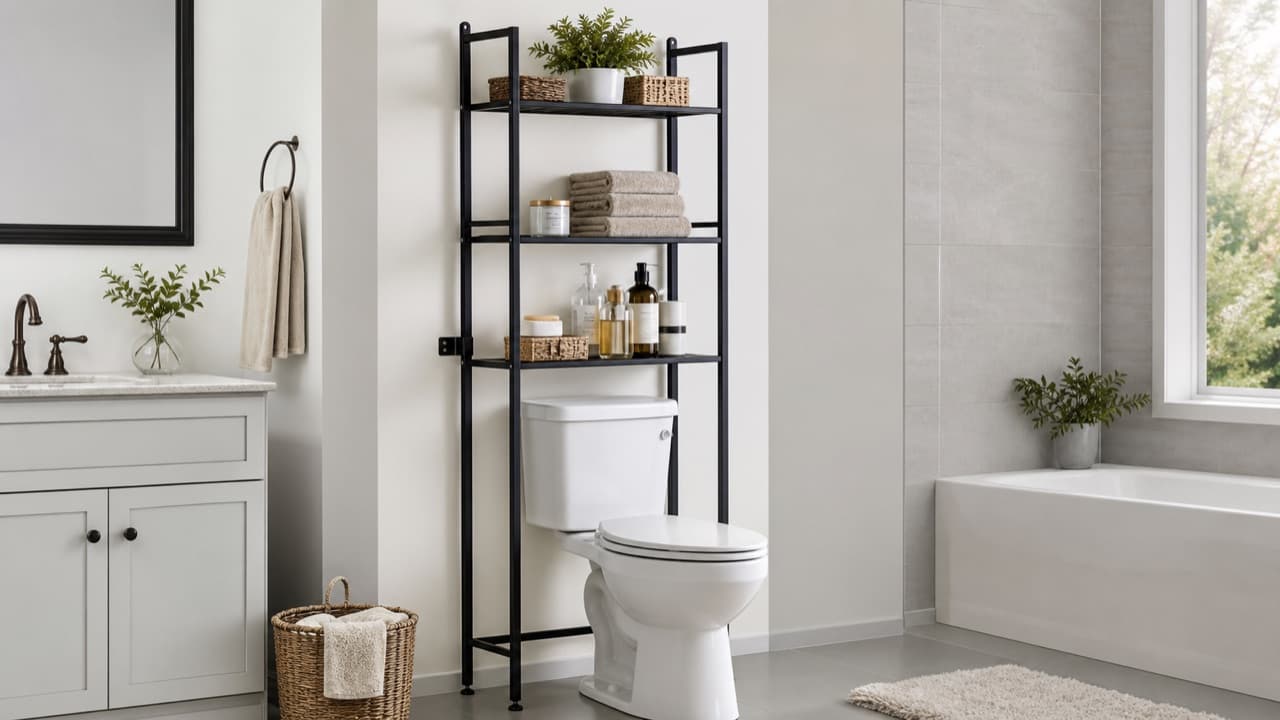
Over-the-toilet storage rack safety comes down to stopping the rack from tipping, keeping the load light and low, and leaving room to reach the tank and shutoff valve. These racks are tall, narrow and often stand on a slippery floor with a person leaning against them several times a day, so a small wobble can become a falling shelf of glass bottles. This guide is for anyone assembling, anchoring or loading an over-the-toilet organizer, and for renters who want a stable setup without heavy drilling. If you have not bought one yet, start with our bathroom organizer measurement guide to confirm fit, then come back here to install and load it safely.
Key takeaways
- Anchor the top of the rack to the wall with the anti-tip hardware supplied, or a similar strap, even if it feels stable.
- Follow the stated per-shelf load limit and keep the heaviest items on the lowest shelf.
- Leave enough clearance to lift the tank lid and reach the shutoff valve without moving the rack.
- Store nothing breakable or hazardous above the toilet: glass, razors, medications and cleaning chemicals belong elsewhere.
- Check for rust, loose bolts and lean every few months; bathrooms loosen hardware over time.
Why over-the-toilet racks tip and wobble
Most freestanding over-the-toilet racks are around 5 to 6 feet tall but have a footprint only a few inches deep on each side of the toilet. That high center of gravity is the core risk. Common causes of instability:
- Uneven floors. Bathroom floors often slope slightly toward a drain, and tile grout lines create high spots. One leg off the floor turns a rack into a rocker.
- Top-heavy loading. Stacking towels and bottles on the top shelf raises the center of gravity.
- Bumping and leaning. People brush against the legs when sitting down and pull items from shelves at an angle.
- Loose joints. Screws and cam fittings loosen with humidity and use.
- Baseboards. A baseboard pushes the bottom of the rack away from the wall so it leans forward.
How to anchor an over-the-toilet rack
Anchoring is the single most effective safety step. Use the anti-tip kit if one is included; if not, a furniture anti-tip strap rated for the job works.
- Assemble fully and level it. Tighten every bolt, set the rack in place and use any adjustable feet to remove rocking. A small level across a shelf confirms it sits square.
- Mark the anchor point on the wall near the top rear of the rack, where the strap or bracket will attach.
- Find a stud if you can. A screw into a wood stud is strongest. If there is no stud where you need it, use a drywall anchor rated for the load. On tile, use a masonry bit and the right plug, and drill through grout lines where practical to reduce cracking risk.
- Keep clear of pipes. Water supply lines often run up the wall behind the toilet. Do not drill directly above the shutoff valve or in line with the supply pipe. A stud finder with pipe detection helps, but drill carefully either way.
- Attach and tension the strap so the rack cannot tip forward but is not pulled out of square.
- Test it. Push gently forward on the top shelf. The rack should hold firm.
Renter-friendly options
Many leases allow small screw holes, which are easy to fill when you move out. If you cannot drill at all, wedge the rack against the wall with non-slip pads under the feet, keep the top shelf nearly empty, and choose a lower, wider unit or a wall-mounted cabinet installed with landlord permission. Adhesive hooks are not a substitute for anti-tip anchoring on a tall loaded rack.
Loading: weight limits and what goes where
Listings often state a per-shelf or total load limit. Treat it as a maximum for evenly spread, static weight, not a target. Practical rules:
| Shelf | Good for | Avoid |
|---|---|---|
| Top shelf | Light items: spare toilet paper, cotton pads, small baskets of soft goods | Heavy towels stacks, glass jars, anything you reach for daily |
| Middle shelf | Rolled hand towels, daily toiletries in plastic containers | Items that drip or spill onto the tank lid |
| Lowest shelf | Heaviest everyday items, larger bottles, folded bath towels | Open containers that could fall into the toilet bowl |
Use bins or baskets with lips so items cannot slide off. Keep heavier items toward the back of each shelf. If a shelf visibly sags, remove weight immediately.
What not to store over the toilet
- Glass and ceramic. A falling glass jar onto a porcelain tank can crack it or shatter.
- Razors and blades. Keep them in a closed drawer or cabinet.
- Medications and cleaning chemicals, especially in homes with children. These belong in a locked or high cabinet away from moisture.
- Electrical devices that are plugged in. Hair tools, chargers and diffusers should not sit above water or drip onto outlets.
Clearance for the tank lid, plumbing and cleaning
A rack that blocks the tank lid turns a simple flapper fix into a dismantling job. Before you commit to a position:
- Make sure the lowest shelf sits high enough above the tank to lift the lid fully and set it aside; allow several inches beyond the lid’s height.
- Check that you can reach the flush handle and, if you have one, a top-mounted dual-flush button.
- Confirm the shutoff valve at the wall stays reachable in an emergency without moving the rack.
- Leave enough space between the legs and the toilet sides to clean the floor and the base of the bowl.
Materials, rust and moisture
Bathrooms are humid, and over-the-toilet racks sit in a splash zone. Material affects both safety and lifespan:
- Powder-coated or painted steel is strong and common, but chips in the coating let rust start, especially at the feet and welds. Touch up chips and wipe up standing water.
- Stainless steel and aluminum resist corrosion better, though cheaper stainless can still show surface rust.
- Bamboo and wood look warm but can swell, warp or grow mold if they stay damp. Look for sealed finishes and good ventilation.
- Particleboard and MDF are vulnerable to moisture; swelling at joints weakens the whole unit.
Run the exhaust fan during and after showers to keep humidity down. Our dehumidifier room size and placement guide helps if your bathroom stays damp. ADLTHUB carries a 3-tier over-toilet bathroom organizer rack; check the product page for its dimensions, material, load information and included hardware before ordering.
Mistakes to avoid
- Skipping the anti-tip kit. A rack can feel solid when empty and still tip once loaded and bumped.
- Loading the top shelf first. It is the easiest to reach visually but the worst place for weight.
- Drilling blind behind the toilet. A punctured supply line floods the floor quickly.
- Ignoring a wobble. Re-tighten bolts and re-level as soon as you notice movement.
- Storing breakables above porcelain. Tanks and lids crack more easily than people expect.
- Letting rust spread. Rusted feet weaken and can stain grout and tile.
How to choose a safe over-the-toilet setup
- Pick a freestanding rack with anti-tip hardware if you can screw into the wall and want maximum storage.
- Pick a shorter or wider unit if you cannot anchor it, have small children or have an uneven floor.
- Pick a wall-mounted cabinet if you want closed storage for medications and want to keep the floor clear for cleaning.
- Pick rust-resistant materials if the bathroom lacks a fan or the rack sits near the shower.
For more small-space ideas, see our guide to small space organization, and browse storage in the home and kitchen category.
Frequently asked questions
Do over-the-toilet racks need to be anchored?
Anchoring is strongly recommended. These racks are tall with a small footprint, so a bump or top-heavy load can tip them forward. Use the supplied anti-tip kit or a furniture strap screwed into a stud or a rated anchor.
How much weight can an over-the-toilet shelf hold?
It depends on the model, so check the listing or manual for the per-shelf limit. Treat that number as a maximum for evenly spread weight, keep heavy items low, and remove items if a shelf sags.
How do I stop an over-the-toilet rack from wobbling?
Tighten every bolt, adjust the leveling feet or add non-slip pads, and anchor the top to the wall. Move heavy items to the lowest shelf. If it still wobbles, check whether a baseboard or floor slope is pushing it out of square.
Can I install an over-the-toilet rack without drilling?
You can stand it in place with non-slip feet and a light load, but it will be less stable. If you cannot drill, choose a lower, wider unit and keep the top shelf nearly empty, or ask your landlord about small anchor holes.
Is it safe to store medicine over the toilet?
It is not ideal. Bathroom humidity can affect some medications, and open shelves are reachable by children. Store medications in a closed cabinet in a cool, dry place, following the label.
Shop Home & Kitchen
View all →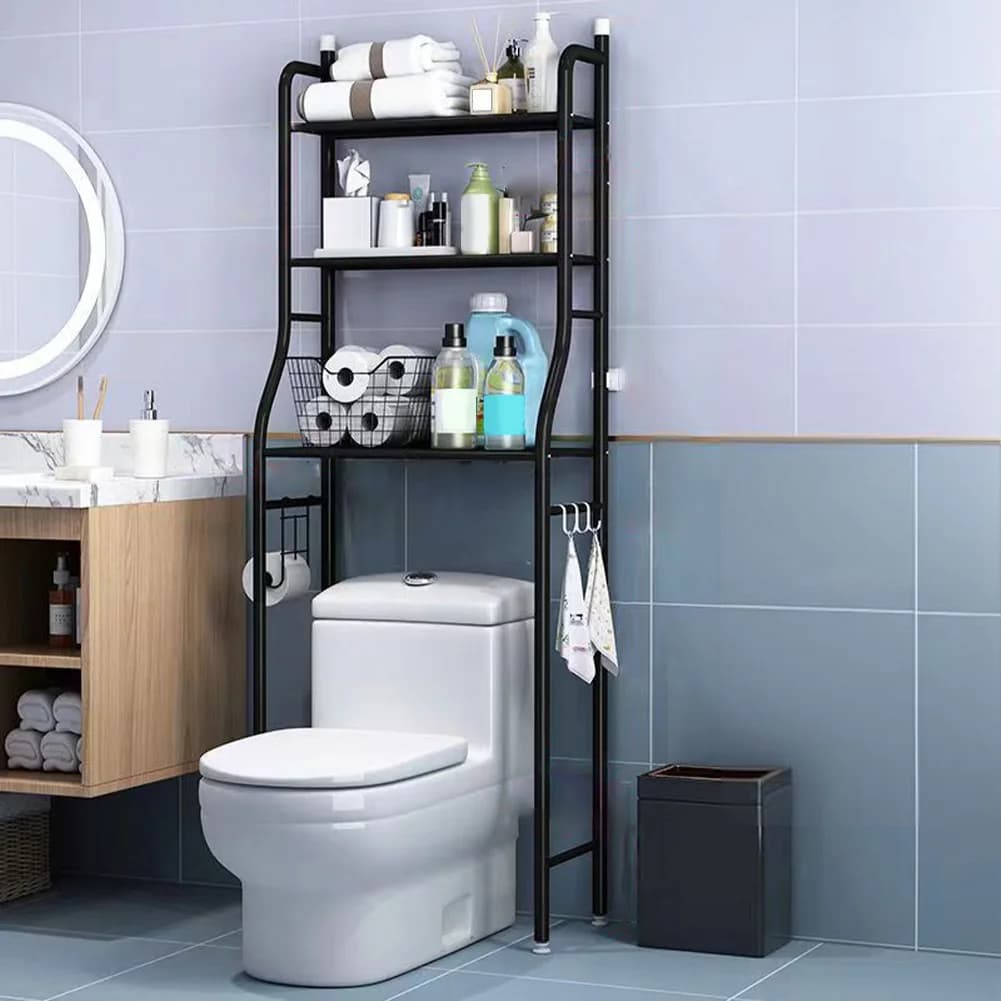
3-Tier Over-Toilet Storage Rack in Powder-Coated Carbon Steel
In stock · Options available · Ships in 7–21 business days
 Sale
Wingback Massage Recliner Chair in PU Leather with Footrest
In stock · Options available · Ships in 7–21 business days
 Sale
Mid-Century Modern Accent Armchairs, Set of Two, Wood Frame
In stock · Options available · Ships in 7–21 business days

Fireplace Flame Ultrasonic Humidifier and Oil Diffuser
In stock · Options available · Ships in 7–21 business days
Continue reading
 Home & Kitchen
Aromatherapy Diffuser Safety: Pets, Kids and Placement
Aromatherapy diffuser safety basics: how long to run it, oils to avoid around pets and young children, safe placement, electrical care and warning signs.
 Home & Kitchen
Jewelry Storage for Small Apartments: Minimalist Setups
Jewelry storage for small apartments: how to edit your collection, prevent tangles and tarnish, choose organizers by piece type and store valuables sensibly.
 Home & Kitchen
Handheld Steam Cleaner Safety: Burns, Refills and Use
Handheld steam cleaner safety explained: how to fill, heat, refill and store a pressurized steamer, avoid burns and electrical risks, and know when to stop.