

Vacuum Sealing vs Food Containers for Meal Prep
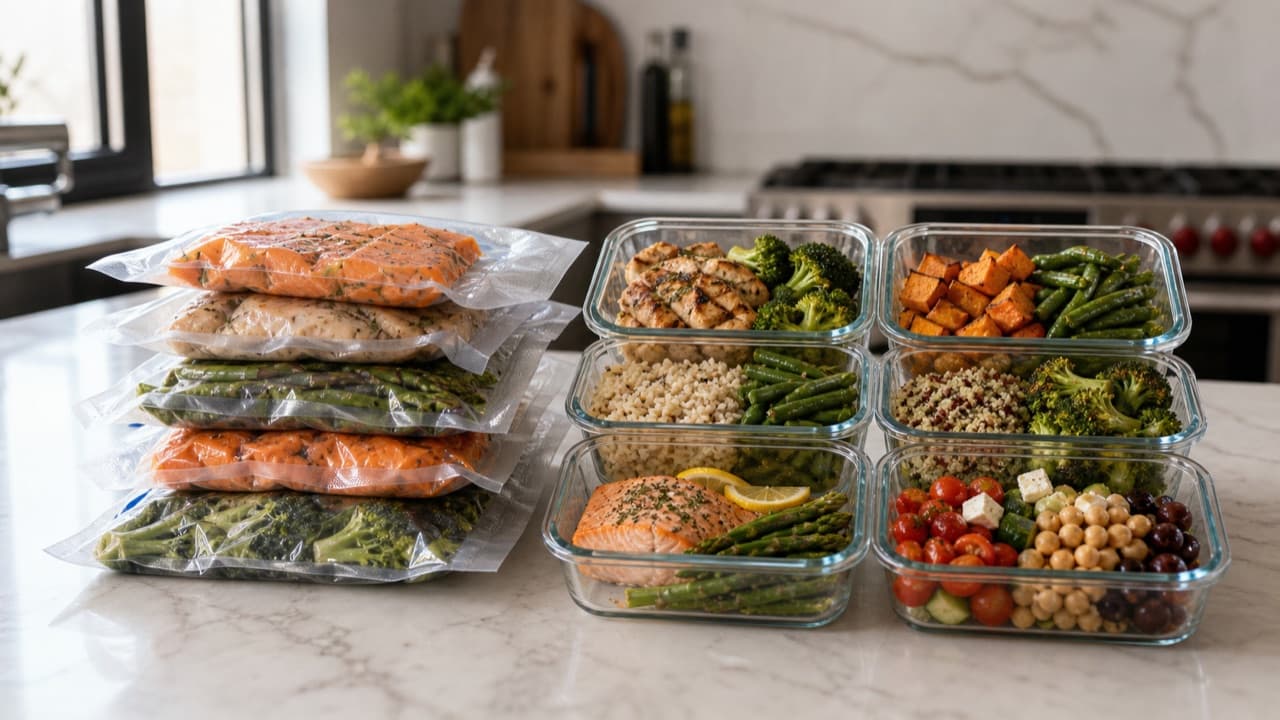
In the vacuum sealing vs food containers debate, the honest answer is that they do different jobs: reusable containers win for meals you will eat within the next three or four days, and vacuum sealing wins for anything headed to the freezer for weeks or months. This guide is for meal preppers deciding whether a sealer is worth adding to a container system, and how to split food between the two without wasting money or taking food-safety shortcuts.
Key takeaways
- Vacuum sealing does not make cooked food safe in the fridge for longer. Cooked leftovers still follow the usual 3 to 4 day refrigerator guideline.
- The real payoff of sealing is in the freezer: less air contact means far less freezer burn, so food keeps its texture and flavor for much longer.
- Containers are cheaper per meal over time because they are reused hundreds of times; sealer bags are a recurring cost unless you wash and reuse the plain ones.
- Wet, saucy and crushable meals are easier in containers, or should be pre-frozen before sealing.
- Most people end up with both: a set of matching containers for the week, and a sealer for bulk proteins, batch-cooked portions and freezer stock.
What vacuum sealing actually changes (and what it does not)
A vacuum sealer pulls most of the air out of a bag and heat-seals it shut. Less oxygen slows staling, oxidation of fats (the cardboard taste in old frozen meat) and moisture loss. In the freezer, the tight film also stops ice crystals forming on the food surface, which is what freezer burn is. That is why sealed ground beef or chicken thighs can still look and cook well after several months, while the same food in a half-empty tub often comes out grey and dry at the edges.
What sealing does not do is stop bacteria. Removing air creates a low-oxygen environment, and some of the most dangerous food-borne bacteria, including Clostridium botulinum, do not need oxygen to grow. Refrigeration and freezing are what keep perishable food safe, not the bag. So a vacuum-sealed perishable must still go straight into the fridge or freezer, never the pantry, and sealed cooked meals in the fridge should be eaten on the same timeline as any other leftovers. Treat longer fridge life claims on sealer packaging as quality claims for raw ingredients, and follow official food-safety guidance for cooked food.
Where reusable food containers win
For the typical Sunday prep of lunches and dinners eaten Monday to Thursday, containers are faster and more practical. You portion, lid, stack and go. There is no bag to cut, no sealing cycle and no fighting a sauce that keeps getting sucked toward the heat strip.
- Reheating: Glass and microwave-safe plastic go straight from fridge to microwave (lid vented or removed). Sealer bags must be cut open and emptied first unless you are reheating in a water bath.
- Saucy food: Curries, chili, soups and stews are simple to portion into containers. In a bag, liquid can foul the seal.
- Crushable food: Rice bowls, layered salads, baked goods and anything with a crisp topping keep their shape in a rigid box.
- Visibility: Clear glass lets you see what is left at a glance, which helps you eat food in order.
Glass, plastic or stainless steel?
Glass (borosilicate or tempered soda-lime) does not stain from tomato or turmeric, does not hold odors and is usually oven-safe without the lid, but it is heavy and can break if it goes from freezer straight to a hot oven. Polypropylene plastic (often marked #5) is light, cheap and microwave-safe when labeled so, but it stains and scratches over time; replace pieces that are cracked or deeply scratched. Stainless steel is light and durable for packed lunches but cannot go in the microwave. Whatever you pick, buy one or two sizes that nest and share lids. Mismatched lids are the main reason container systems fall apart.
Where vacuum sealing wins
Sealing earns its place when food is going to sit for more than a week, or when you buy in bulk.
- Bulk proteins: Split a family pack of chicken, pork or fish into single-meal portions, seal flat and freeze. Flat bags freeze and thaw quickly and stack like files.
- Batch cooking for the freezer: Pulled pork, meatballs, cooked grains and blanched vegetables hold quality far better sealed than in a container with headspace.
- Space: A flat bag takes a fraction of the freezer volume of a rigid tub, which matters in a top-freezer fridge.
- Marinating and sous vide: Sealing presses marinade against the food and is the standard way to cook sous vide.
- Dry pantry goods: Coffee beans, nuts and flour can be sealed in portions to slow staling, provided they are dry and shelf-stable to begin with.
If you have never sealed liquid-heavy food, read our guide to sealing wet and dry foods before your first batch; the short version is to freeze soups or saucy portions until solid, then seal.
Side-by-side: sealing vs containers for meal prep
| Factor | Vacuum sealing | Reusable containers |
|---|---|---|
| Best storage window | Freezer, weeks to months | Fridge, the next 3 to 4 days |
| Freezer burn protection | Strong, little air contact | Moderate; headspace lets frost form |
| Cooked-food safety in the fridge | Same timeline as any leftovers | Same timeline as any leftovers |
| Upfront cost | Sealer plus bags or rolls | One set of containers |
| Ongoing cost | Bags are mostly single-use | Near zero; replace damaged pieces |
| Liquids and sauces | Pre-freeze first | Easy |
| Reheating | Empty bag first, or water bath | Straight to microwave (if labeled safe) |
| Space | Flat, very compact | Bulky, but stackable |
Cost per meal: does a sealer pay for itself?
A container set is a one-time purchase that is reused for years, so its cost per meal falls toward a few cents. A sealer adds the machine plus a recurring bag cost, typically somewhere in the tens of cents per bag depending on size and whether you buy pre-cut bags or cut from a roll. Rolls are usually cheaper per seal because you cut each bag to the length you need.
The sealer pays its way through avoided waste and bulk buying, not through storage alone. If you regularly throw out freezer-burned meat, or you can buy proteins in larger packs at a lower price per pound, sealing can recover its cost. If you cook fresh every few days and rarely freeze, the bags are an extra expense with little return. Plain bags that held dry goods or vegetables can be washed, dried fully and resealed a little shorter; bags that held raw meat, fish or eggs should be thrown away.
If you are still choosing a machine, our vacuum sealer buying guide covers suction, seal width and bag compatibility. ADLTHUB stocks the Xiaomi Mijia Vacuum Sealer; check its product page for the bag sizes it accepts, delivery and returns.
A hybrid meal-prep workflow that works
- Cook once, split twice. Portion what you will eat in the next three or four days into containers and refrigerate within two hours of cooking.
- Cool the rest quickly. Spread the remainder in shallow containers to chill, then seal in single portions for the freezer.
- Label every bag. Write the contents and the date with a permanent marker before filling; it is hard to write on a frozen, frosty bag.
- Freeze flat. Lay bags on a tray until solid, then file them upright.
- Thaw safely. Thaw in the fridge overnight, in cold water inside the sealed bag, or in the microwave if you will cook it right away. Do not thaw on the counter.
- Rotate. Move the oldest bags to the front each time you add new ones, and keep frozen food at 0°F (-18°C) or below.
Pairing this with a tidy pantry system makes the routine easier to keep; see our pantry organization guide with modular glass storage for dry-goods ideas.
Mistakes to avoid
- Storing sealed perishables at room temperature. A sealed bag of cooked rice, meat or soft cheese is not shelf-stable. Low oxygen can actually favor certain dangerous bacteria.
- Treating sealing as a fridge-life extender for cooked food. Eat refrigerated cooked meals within the usual window, sealed or not.
- Sealing hot food. Steam weakens the seal and warm food sitting in a sealed bag cools slowly. Chill first.
- Crushing delicate food. Full vacuum flattens bread, berries and cooked fish. Pre-freeze, use a pulse or gentle mode if your sealer has one, or use a container.
- Sealing raw garlic, fresh herbs or vegetables in oil for storage. These need specific handling; freeze them rather than refrigerating them sealed for long periods.
- Skipping the blanch. Many raw vegetables keep color and texture in the freezer far better if blanched briefly before sealing.
- Microwaving unlabeled plastic. Only microwave containers marked microwave-safe, and vent the lid.
Which one fits you
Pick containers only if you prep for the week ahead, rarely freeze, and value grab-and-reheat speed. Put the money into one good nesting set rather than a sealer.
Pick a vacuum sealer plus a small container set if you buy meat in bulk, batch-cook monthly, hunt or fish, cook sous vide, or have a small freezer you need to pack efficiently.
Pick vacuum-seal containers or canisters if you mostly want to keep dry goods, coffee or cut produce fresher and do not want ongoing bag costs. They will not match bag sealing for long-term freezing, though.
For more ideas on what is worth countertop space, browse our list of kitchen gadgets every home chef needs or the full home and kitchen collection.
Frequently asked questions
Does vacuum sealing make meal prep last longer in the fridge?
It can help raw ingredients and some foods keep their quality longer, but it does not extend the safe fridge life of cooked meals. Cooked leftovers should still be eaten within about 3 to 4 days or frozen.
How long do vacuum-sealed meals last in the freezer?
Food kept at 0°F stays safe indefinitely, so the limit is quality. Sealed meals typically keep good texture and flavor for many months, much longer than the same food in a container with air space, but label and rotate them anyway.
Can you vacuum seal soup or other liquids?
Yes, but freeze them first. Portion the soup into a container or tray, freeze until solid, then seal the frozen block. Sealing liquid directly usually pulls it into the sealer and ruins the seal.
Are glass or plastic containers better for meal prep?
Glass resists stains and odors and is often oven-safe, but it is heavy and breakable. Microwave-safe polypropylene is lighter and cheaper but stains and wears out sooner. Many people use glass at home and plastic for lunches on the go.
Can vacuum sealer bags be reused?
Bags that held dry goods, bread or vegetables can be washed, dried completely and resealed slightly shorter. Discard bags that held raw meat, poultry, fish, eggs or greasy food, since they are hard to clean reliably.
Shop Home & Kitchen
View all →
3-Tier Over-Toilet Storage Rack in Powder-Coated Carbon Steel
In stock · Options available · Ships in 7–21 business days
 Sale
Wingback Massage Recliner Chair in PU Leather with Footrest
In stock · Options available · Ships in 7–21 business days
 Sale
Mid-Century Modern Accent Armchairs, Set of Two, Wood Frame
In stock · Options available · Ships in 7–21 business days

Fireplace Flame Ultrasonic Humidifier and Oil Diffuser
In stock · Options available · Ships in 7–21 business days
Continue reading
 Home & Kitchen
Robot Vacuum Setup: Stop It Getting Stuck at Home
Robot vacuum setup that stops it getting stuck: prep rooms for the first map, set no-go zones, tame cords, rugs and thresholds, and keep sensors clean.
 Home & Kitchen
How to Vacuum Seal Wet and Dry Foods Without a Mess
How to vacuum seal wet and dry foods: pre-freezing soups and berries, paper towel and pulse tricks for meat juices, and handling flour, bones and snacks.
 Home & Kitchen
Handheld Vacuum Buying Guide: Runtime, Suction, Filters
Handheld vacuum buying guide: how to read suction and runtime claims, pick attachments and filters, and match a cordless handheld to crumbs, pet hair or stairs.