

Bluetooth Speaker Wattage Explained: Watts vs Loudness
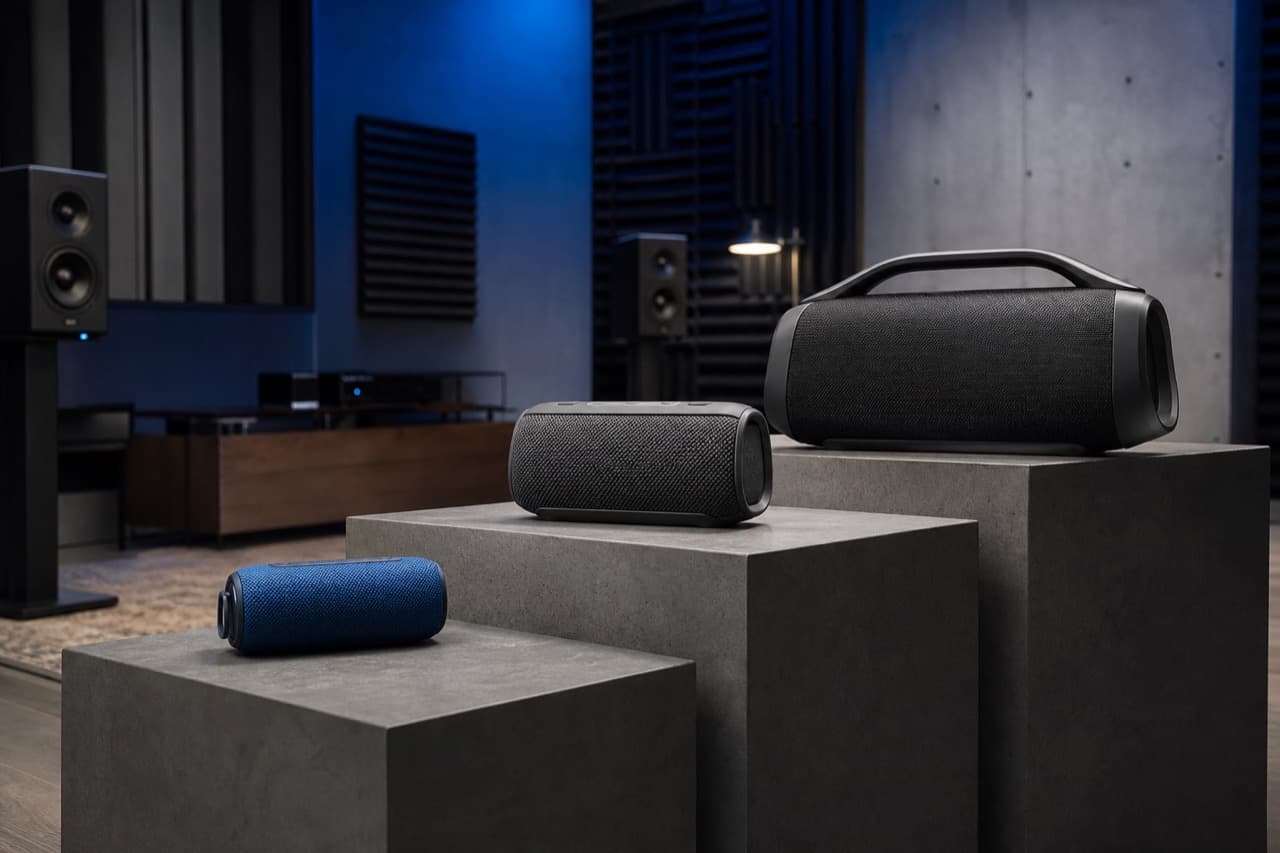
Bluetooth speaker wattage tells you how much electrical power the built-in amplifier can deliver, not how loud or good the speaker will sound. Doubling the watts adds only about 3 decibels, a small step you can just about hear, so a 40-watt speaker is not twice as loud as a 20-watt one. This guide is for shoppers comparing portable speakers whose boxes shout 20W, 40W or 60W, and who want to know which numbers actually predict volume, bass and battery life.
Key takeaways
- Continuous (RMS) watts are the meaningful figure; “peak”, “max” or “PMPO” watts are often several times higher and aren’t comparable between brands.
- Many listings add up every amplifier channel (for example two tweeters plus a woofer) into one total.
- Roughly ten times the power is needed for a sound to seem about twice as loud, so modest wattage differences rarely decide a purchase.
- Driver size, cabinet volume, sensitivity and tuning shape loudness and bass more than the watt rating.
- Some battery speakers reach their rated output only when plugged in, and maximum volume drains the battery much faster than the advertised runtime suggests.
What a watt rating actually measures
A watt figure describes the amplifier’s electrical output into the speaker drivers. It says nothing direct about how efficiently those drivers turn electricity into sound, how the cabinet reinforces bass, or how much processing limits the output at high volume. That’s why two speakers with the same rating can differ greatly in loudness.
RMS, peak and PMPO
- RMS or continuous power is the power the amplifier can sustain, ideally stated at a given distortion level (for example 1 percent or 10 percent total harmonic distortion). It is the most honest figure.
- Peak or max power is what the amplifier can produce for brief bursts. It is usually higher, and the method varies by manufacturer.
- PMPO (peak music power output) has no consistent standard and can be wildly inflated. Treat it as marketing.
Even an RMS figure can be generous if it’s measured at high distortion. A spec like “20W at 10% THD” means the speaker is audibly distorting at that power. Few listings include the distortion figure, so compare like with like and lean on other specs.
How totals are added up
A “30W” speaker might be a 20W amplifier for the woofer plus two 5W channels for the tweeters. That’s a legitimate way to describe total output, but the bass driver is what usually limits overall loudness, and it only gets a share of the headline figure.
Watts and decibels: why 60W isn’t twice as loud as 30W
Loudness is measured on the logarithmic decibel scale, and our ears perceive volume roughly logarithmically too. The rules of thumb are well established:
- Doubling amplifier power raises the maximum sound level by about 3 dB, a small but audible change.
- A 10 dB increase is commonly perceived as roughly twice as loud, and it takes about ten times the power.
- Outdoors, sound drops by about 6 dB each time you double your distance from the speaker, so moving the speaker closer can beat buying more watts.
So, all else being equal, a 60W speaker has about 3 dB more headroom than a 30W one, and a 120W speaker about 6 dB. For most listening, the difference between a 25W and a 40W portable is less important than driver size and placement, which our speaker size and loudness guide covers in more depth.
Specs that predict loudness and bass better than watts
| Spec or feature | What it tells you | How to use it |
|---|---|---|
| Sensitivity (dB SPL at 1W/1m) | How much sound a driver produces per watt | Every 3 dB of extra sensitivity is worth about double the amplifier power. Rarely listed on portables, but valuable when it is. |
| Maximum SPL (dB) | The loudest level the whole speaker reaches | The most direct loudness spec, if the measuring distance is stated. |
| Driver size and count | How much air the speaker can move | Larger woofers and passive radiators generally mean deeper, louder bass. |
| Cabinet size and weight | Room for bass to develop and for a bigger battery | A compact speaker can’t match a larger one on low bass, whatever its wattage. |
| Frequency response (Hz) | The range the speaker reproduces | A lower first number suggests deeper bass, but without a tolerance (such as plus or minus 3 dB) it’s only a rough guide. |
| Battery capacity (mAh or Wh) | Energy available to drive the amplifier | Higher output at volume needs more stored energy; compare runtime claims cautiously. |
Small speakers also use digital signal processing (DSP) to protect their drivers. As you approach maximum volume, many reduce bass so the woofer doesn’t hit its excursion limits. That’s why a compact speaker can sound thinner at full volume than at 70 percent. Our portable speaker EQ and bass guide explains how to work with this rather than against it.
Battery power vs plugged in
An amplifier’s maximum output depends on its supply voltage. Portable speakers run from lithium batteries at relatively low voltages, so delivering high continuous power usually requires a boost circuit, and the battery must supply large currents at full volume. In practice that leads to two things worth knowing:
- Some speakers play louder on AC power. A few listings state a lower output on battery and a higher one when charging. If loudness matters, check the product page for this detail.
- Runtime claims assume moderate volume. Advertised hours are usually measured at a medium level. At high volume with heavy bass, runtime can be a fraction of the figure. Plan a cable or power bank for long outdoor sessions.
Battery health also affects output over time, since an aged cell sags under load. The habits in our portable speaker battery care guide help a speaker hold its performance for longer.
How many watts do you need?
These are rough, practical bands for typical portable designs rather than hard rules:
- Roughly 5 to 15W: desks, bedrooms, showers and personal listening within a few feet. The listed 12W rating of the Tribit StormBox Mini sits in this group.
- Roughly 20 to 30W: living rooms, kitchens, small patios and small groups. Speakers such as the Ortizan 24W and Wisetiger 25W are listed in this range.
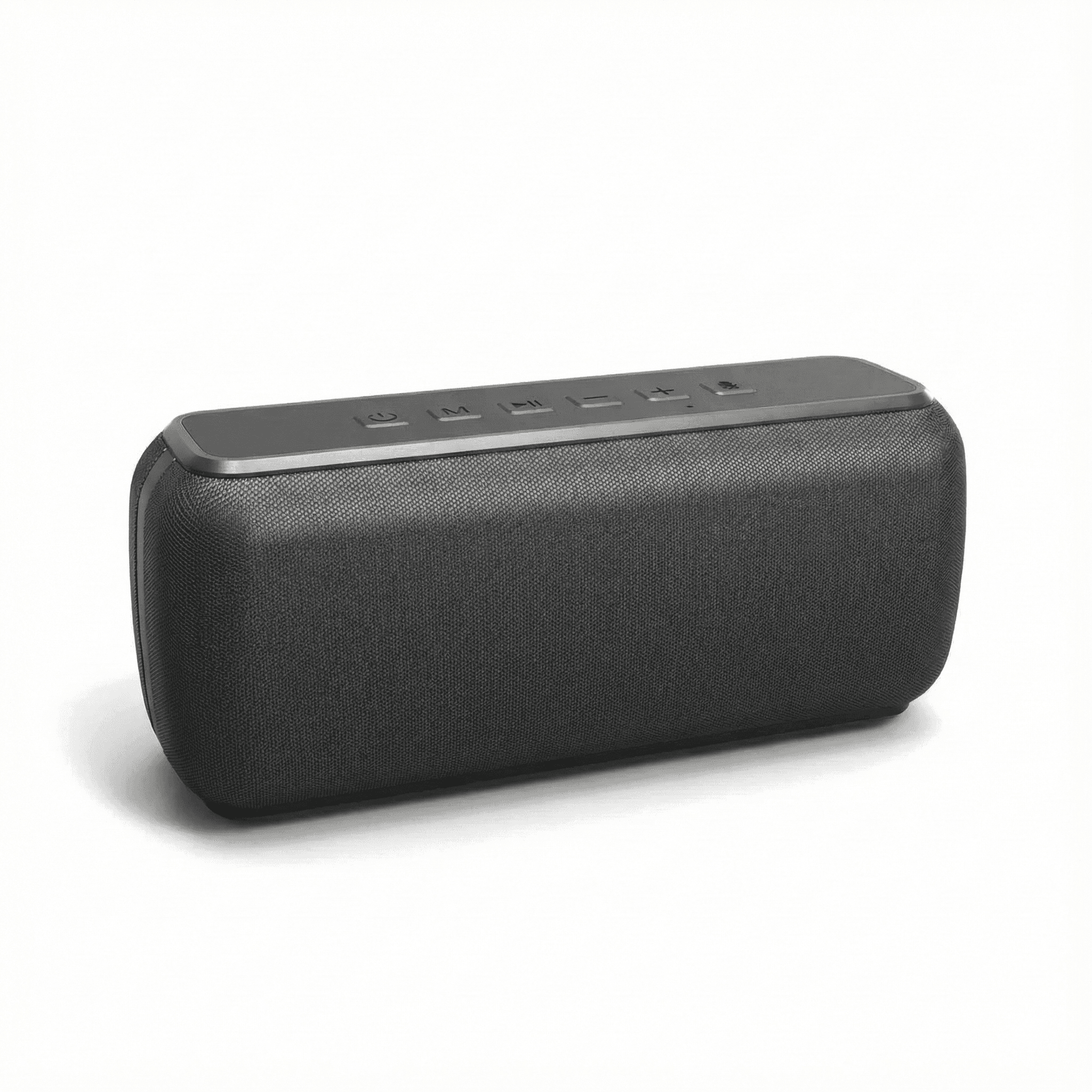
- Roughly 35W and up: backyards, beaches and larger gatherings, where bigger drivers and cabinets matter as much as the amplifier. The OHAYO X10 Max and Xdobo X8 II are listed at 35W and 60W.
Wattage in a product name is the seller’s listing figure; check each product page for full specifications, delivery and returns, and compare size and weight alongside it.
Mistakes to avoid
- Comparing peak watts from one brand with RMS from another. The numbers aren’t measured the same way, so the comparison is meaningless.
- Buying on wattage alone for bass. Deep bass needs a larger driver and cabinet; a small speaker with a big number will still roll off the low end.
- Running at maximum all the time. Distortion rises, the DSP cuts bass, the battery drains quickly and heat builds up. Two speakers at moderate volume often sound better than one at full blast.
- Ignoring placement. A speaker near a wall or corner gains bass, and one set at ear height closer to listeners sounds louder. Our outdoor speaker placement guide has specific setups.
- Forgetting your ears. Occupational guidance from NIOSH sets 85 dBA averaged over eight hours as the recommended exposure limit, with safe time halving for every 3 dB above it. Long sessions at high volume close to the speaker add up.
Which wattage fits you?
- Pick a compact, lower-watt speaker if you listen alone or with one or two people, value pocketability and want long runtime.
- Pick a mid-size speaker in the 20 to 30W range if it lives in a room or on a patio and travels occasionally; this is the most versatile size.
- Pick a large, higher-watt speaker if you host outdoor groups and accept extra weight, a bigger battery and longer charging.
- Pick two linked speakers instead of one bigger one if you want even coverage across a wide space.
Browse speakers in the electronics and accessories category and compare size, weight and battery details next to the watt figure.
Frequently asked questions
Is a 40W Bluetooth speaker twice as loud as a 20W one?
No. Doubling power adds about 3 dB of potential output, which is a small step. Sounding twice as loud takes around ten times the power, and driver size and tuning can easily outweigh the difference.
What’s the difference between RMS and peak watts?
RMS (continuous) watts describe power the amplifier can sustain, while peak watts describe short bursts and are often much higher. Compare RMS figures when you can, and treat PMPO numbers as marketing.
How many watts is good for a portable Bluetooth speaker?
For personal and small-room use, about 5 to 15 watts is typical; for rooms and patios, about 20 to 30 watts; for outdoor groups, larger speakers rated 35 watts and up. Size, driver count and placement matter as much as the number.
Why does my speaker sound worse at full volume?
At the top of the range, amplifiers approach clipping and most portables reduce bass with DSP to protect the drivers. Backing off the volume a little, or moving the speaker closer to listeners, often sounds better.
Do speakers get louder when plugged in?
Some do, because the amplifier can draw more power from the charger than from the battery alone. Others perform the same either way. The product listing or manual is the place to check.
Shop Tech & Gadgets
View all →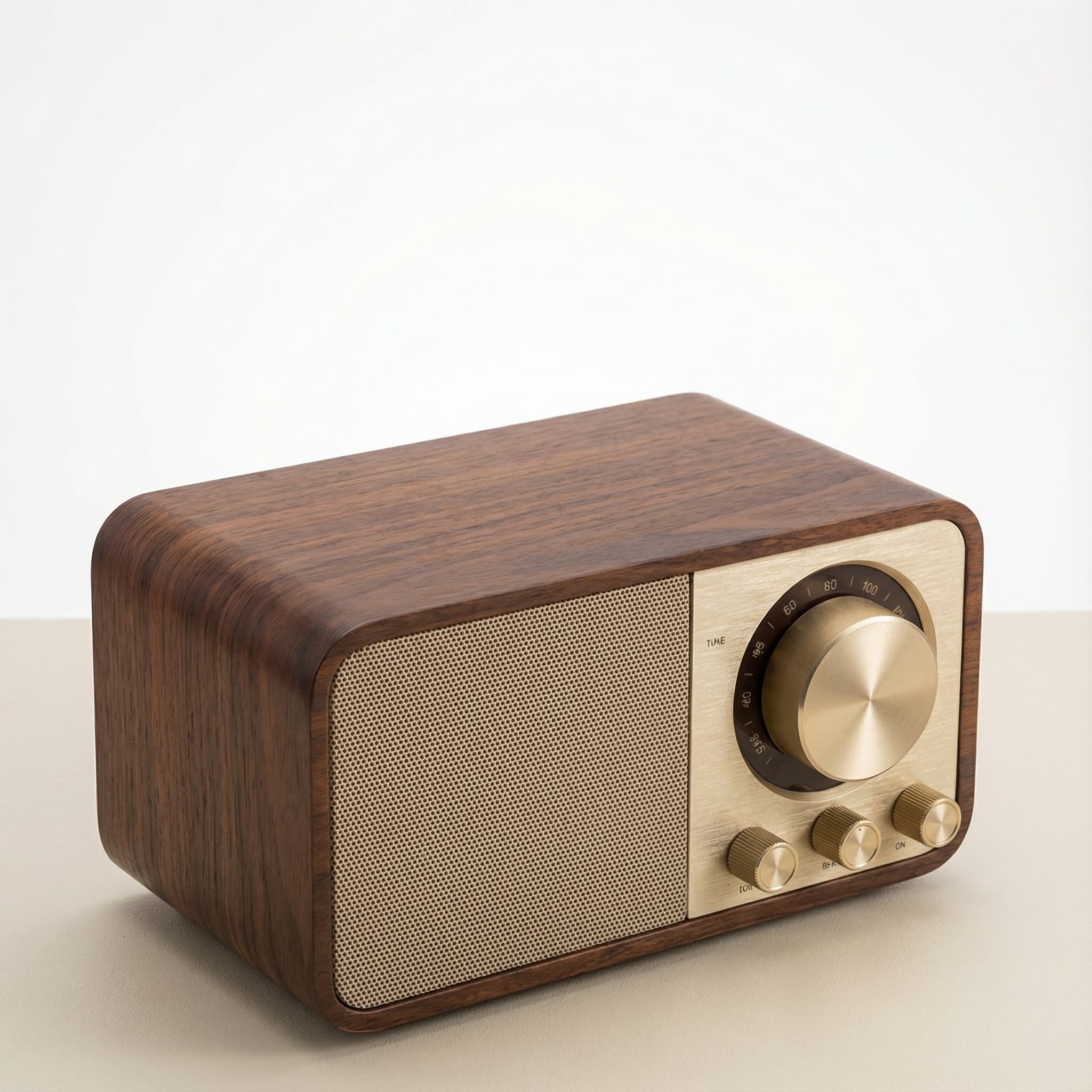 Sale
Retro Wood-Cabinet Bluetooth Speaker with FM Radio
In stock · Ships in 7–21 business days
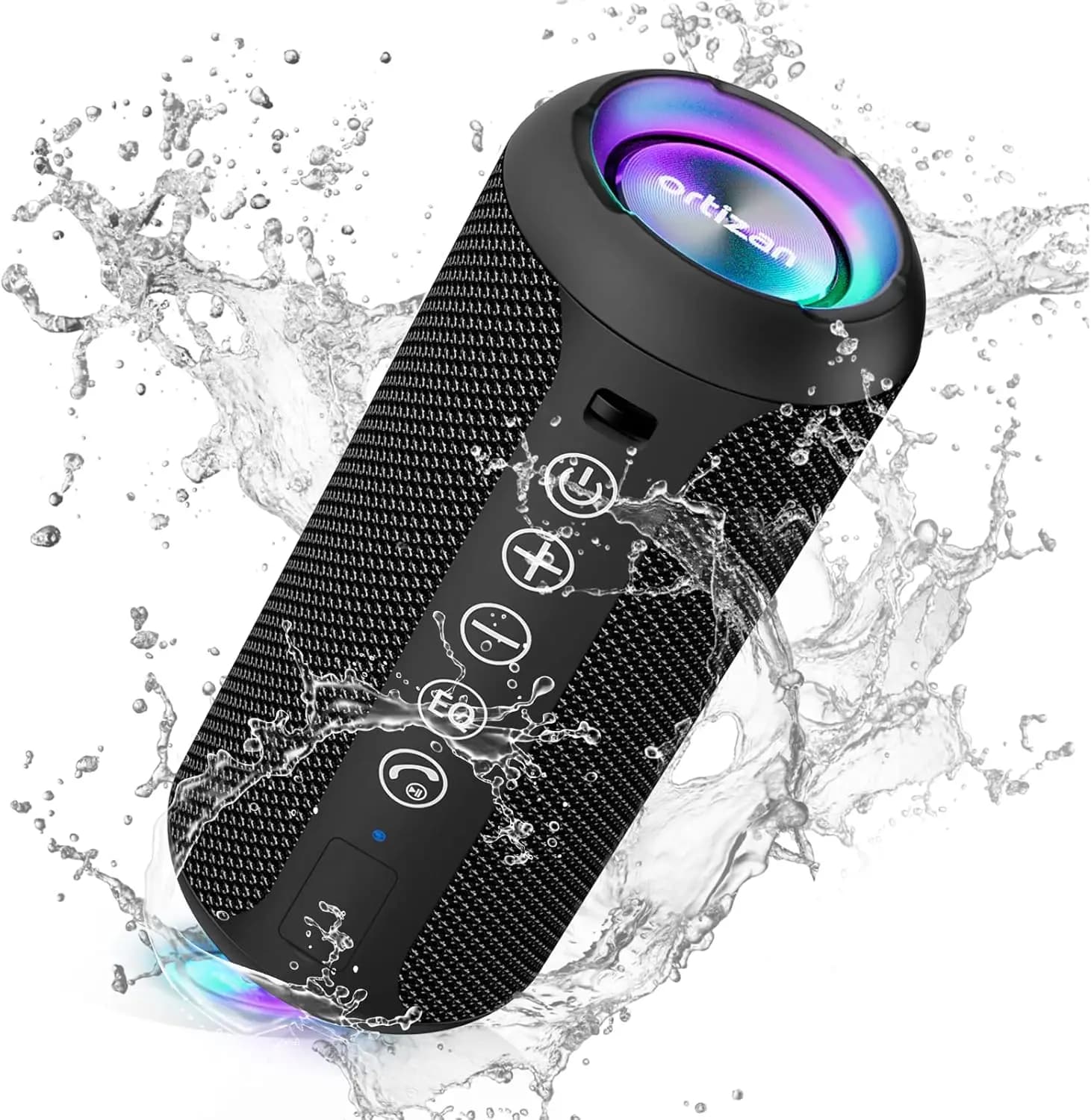
Ortizan X10 Portable Bluetooth Speaker with RGB Lights
In stock · Options available · Ships in 7–21 business days
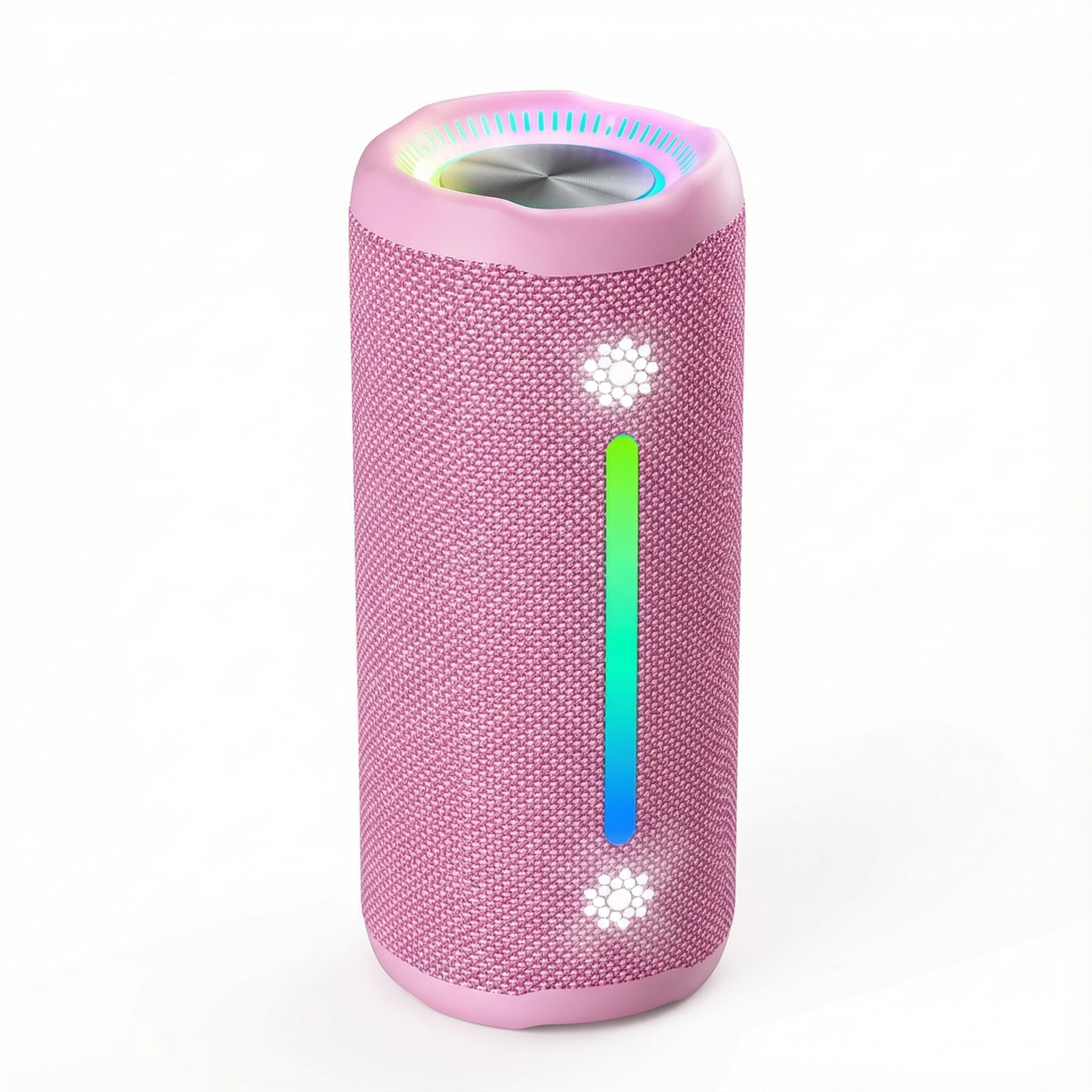
Ohayo X10 Max Bluetooth Speaker with Bass Boost and Lights
In stock · Options available · Ships in 7–21 business days
Xdobo X8 II Portable Bluetooth Speaker with Power Bank
In stock · Options available · Ships in 7–21 business days
Continue reading
 Tech & Gadgets
What Size Portable Speaker Do You Need? Loudness Guide
What size portable speaker do you need? Match speaker size class to room, crowd and listening distance, and learn how loudness falls with distance outdoors.
 Tech & Gadgets
Bluetooth Speaker Stereo Pairing: Setup, Sync and Lag Fixes
Bluetooth speaker stereo pairing explained: which speakers can pair, how to set up left and right channels, and how to fix dropouts and video lag.
 Tech & Gadgets
USB-C Hub Buying Guide: Ports, Video and Power Explained
USB-C hub buying guide: check what your laptop port supports, read data speed labels, size power pass-through and match the video and ports you need.