

Is a Robot Vacuum Worth It for Your Home? Fit Checklist
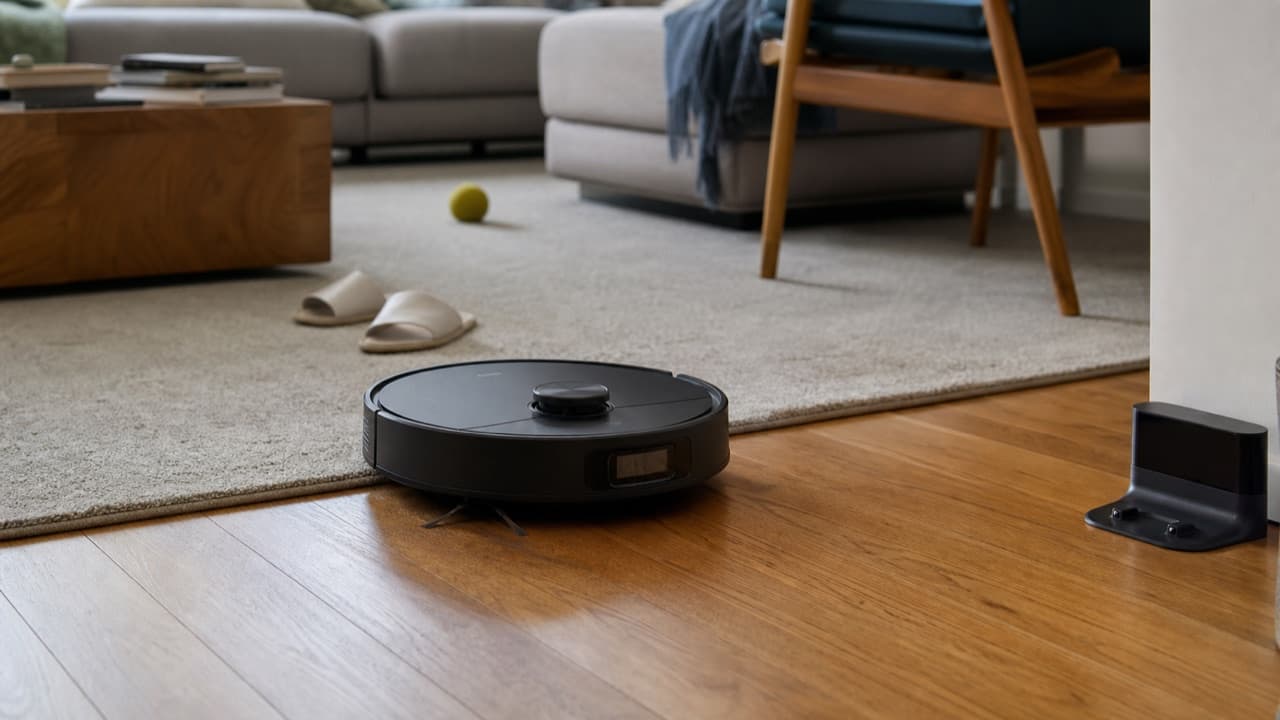
Is a robot vacuum worth it? That depends far more on your home’s layout than on suction numbers: open floors, low thresholds, furniture with clearance underneath and few loose cords make a robot genuinely useful, while thick shag rugs, tall door saddles and cluttered floors make it frustrating. A robot vacuum handles daily upkeep; it doesn’t replace a handheld or upright for stairs, upholstery and deep cleaning. This guide is for anyone deciding whether to buy one, with a room-by-room checklist you can run with a tape measure in about 15 minutes.
Key takeaways
- Measure door thresholds and rug edges. Many robots climb roughly 0.6 to 0.8 inches (15 to 20 mm); taller transitions block them.
- Measure the gap under sofas and beds and compare it to the robot’s height, including any navigation turret on top.
- High-pile and shag rugs, rugs with tassels, and some very dark rugs cause the most trouble.
- Robots can’t climb stairs. A multi-level home means carrying the robot or buying more than one, plus mapping each floor.
- Plan dock space: many makers recommend clear space roughly 1.5 feet (45 cm) in front and several inches on each side, near an outlet with Wi-Fi coverage.
The 15-minute home check
Walk through each room you’d want cleaned and note the following. The table below summarizes what to look for.
| Check | Usually fine | Likely trouble | Workaround |
|---|---|---|---|
| Door thresholds and rug edges | Under about 0.6 in (15 mm) | Over about 0.8 to 1 in (20 to 25 mm), or sharp edges | Threshold ramps, or mark rooms as separate zones |
| Rug type | Low and medium pile, flat weave | Shag, long tassels, very light thin rugs that bunch | Fold tassels under, use no-go zones, add rug grippers |
| Floor color and pattern | Most light and mid-tone floors | Some black or very dark rugs can trigger cliff sensors | Check reviews and settings for your model |
| Clearance under furniture | At least the robot’s height plus a little margin | Gaps a few millimeters too low, where it wedges | Furniture risers, or block the gap |
| Floor clutter | Shoes and toys picked up daily | Cords, socks, pet toys, charging cables | Cord clips, a tidy-up habit, obstacle-avoidance models |
| Stairs and drops | Single-level home | Multiple floors, sunken rooms, open landings | Carry the robot, multi-floor mapping, extra docks |
Floors, rugs and thresholds
Hard floors (tile, laminate, sealed wood, vinyl) are where robots perform best. Dust and pet hair sit on top, and the robot can run more often without wear concerns.
Carpets and rugs are more variable. Low and medium pile is generally fine; the robot usually increases suction automatically on carpet if it has that feature. High-pile and shag rugs slow robots down, can stall the brush roll and may be skipped entirely. Rugs with fringe or tassels wrap around brushes, and thin bathmats get dragged and bunched.
Thresholds are the most common blocker. Measure the height of each door saddle, rug edge and transition strip. Many robots handle around 0.6 to 0.8 inches; a few manage more. Compare your tallest transition with the listing’s stated climbing height before buying.
Dark rugs and cliff sensors: robots use downward-facing sensors to detect stairs. On some models, very dark or black rugs and floor patterns absorb the sensor’s light and look like a drop, so the robot refuses to cross them. Newer models and settings may handle this better, but it’s worth checking if you have dark flooring.
Furniture clearance and layout
The space under beds and sofas is where dust collects and where a robot earns its keep, if it fits. Measure the lowest point of the gap, including crossbars and sagging fabric. Then compare to the robot’s total height. Robots with a raised lidar navigation turret are taller than ones that navigate with cameras or low-profile sensors.
- Too low by a small margin is worse than much too low: the robot may wedge itself under and get stuck.
- Chair legs and bar stools slow cleaning as the robot weaves around them; pushing chairs in before a run helps.
- Narrow gaps between furniture of less than the robot’s width won’t get cleaned.
- Open-plan layouts clean faster and more evenly than many small rooms with narrow doorways.
Pets, kids and daily clutter
Robots are popular with pet owners because running daily keeps shedding under control. Hair wraps around brush rolls, though, so plan on cutting it free regularly; rubber or combination brush rolls tend to tangle less than bristle ones. Empty the bin more often, or consider a self-emptying dock.
The bigger risk is pet accidents. Some robots with camera-based obstacle avoidance are designed to recognize and avoid pet waste, but no system is perfect. Check the floor before scheduled runs when you have a new puppy or a pet that’s unwell.
Homes with toddlers or teenagers face the same issue with small toys, socks and phone cables. If the floor is rarely clear, the robot spends its runs stuck or avoiding obstacles. The robot vacuum obstacle setup guide covers how to prepare rooms once you own one.
Dock, Wi-Fi and running costs
- Dock placement: against a wall on a hard, level floor, near an outlet, away from stairs, with clear space in front. Self-emptying docks are larger and louder when they empty.
- Wi-Fi: many robots need a 2.4 GHz network for setup and app control. Check that your signal reaches the dock location.
- Runtime vs floor area: large homes may need the robot to recharge and resume mid-clean. Check whether your model supports recharge-and-resume.
- Consumables: filters, side brushes, main brush rolls and, for self-emptying docks, dust bags all need periodic replacement. Check replacement availability before buying.
- Privacy: camera-equipped robots and app mapping store data about your home. Review the app’s privacy settings and permissions.
Mistakes to avoid
- Buying on suction rating alone. A powerful robot that can’t cross your threshold cleans nothing past it.
- Not measuring under the sofa. A robot that wedges under furniture every day becomes a chore, not a helper.
- Expecting it to replace all other vacuums. Stairs, upholstery, car interiors and corners still need a handheld; see the handheld vacuum buying guide.
- Ignoring rug tassels and cords. They’re the top cause of stuck robots and tangled brushes.
- Placing the dock in a cramped corner. Robots often fail to find and dock correctly without clearance.
Is a robot vacuum right for you?
- It’s a strong fit if you have mostly hard floors or low-pile rugs, thresholds under about 0.6 inches, furniture clearance underneath, and a daily habit of picking things up.
- It’s a reasonable fit with some setup if you have pets, a few tall thresholds you can ramp, or rugs you can mark as no-go zones.
- It’s a weak fit if your floors are mostly shag or high pile, the home has many levels, or floors are rarely clear.
- Consider a handheld instead if you live in a small space where a quick daily pass by hand is faster than tidying for a robot. Our comparison of handheld vs robot vacuums explains the trade-offs.
If your home passes the check, the Goovi BR151 robot vacuum is available on ADLTHUB; compare its stated height, threshold climbing and features on the product page, along with delivery and returns. More cleaning tools are in home and kitchen.
Frequently asked questions
Do robot vacuums work on thick carpet?
They usually manage low and medium pile well but struggle with high-pile and shag carpet, where they can slow down, stall or skip areas. If most of your home is thick carpet, an upright or stick vacuum may suit you better.
Can a robot vacuum go over door thresholds?
Many can climb transitions of about 0.6 to 0.8 inches, and some can manage more. Measure your tallest threshold and compare it to the climbing height listed for the model, or use a small threshold ramp.
Why does my robot vacuum avoid black rugs?
Cliff sensors that detect stairs work by bouncing light off the floor. Very dark surfaces can absorb that light, so the robot reads the rug as a drop. Some models handle this better or let you adjust settings.
Are robot vacuums good for pet hair?
They’re good for keeping shed hair under control with frequent runs. Expect to clear hair from the brush roll and empty the bin often, and check floors for pet accidents before scheduled runs.
How much clearance does a robot vacuum need under furniture?
At least the robot’s full height, including any navigation turret, plus a small margin. Gaps that are only just too low are the most likely to trap it.
Shop Home & Kitchen
View all →
3-Tier Over-Toilet Storage Rack in Powder-Coated Carbon Steel
In stock · Options available · Ships in 7–21 business days
 Sale
Wingback Massage Recliner Chair in PU Leather with Footrest
In stock · Options available · Ships in 7–21 business days
 Sale
Mid-Century Modern Accent Armchairs, Set of Two, Wood Frame
In stock · Options available · Ships in 7–21 business days

Fireplace Flame Ultrasonic Humidifier and Oil Diffuser
In stock · Options available · Ships in 7–21 business days
Continue reading
 Home & Kitchen
Robot Vacuum Setup: Stop It Getting Stuck at Home
Robot vacuum setup that stops it getting stuck: prep rooms for the first map, set no-go zones, tame cords, rugs and thresholds, and keep sensors clean.
 Home & Kitchen
Under-Shelf Baskets for Small Apartments: Fit and Load Guide
Under-shelf baskets for small apartments: how to measure shelf thickness and clearance, which shelves can take them, load limits and the best spots to use one.
 Home & Kitchen
Knife Sharpening at Home: Stones, Rods and Pull-Throughs
Knife sharpening at home explained: honing vs sharpening, whetstone grits and angles, pull-through and electric sharpeners, serrated knives, and safe technique.