

Yoga Mat Thickness Chart: mm to Inches, Weight and Floors
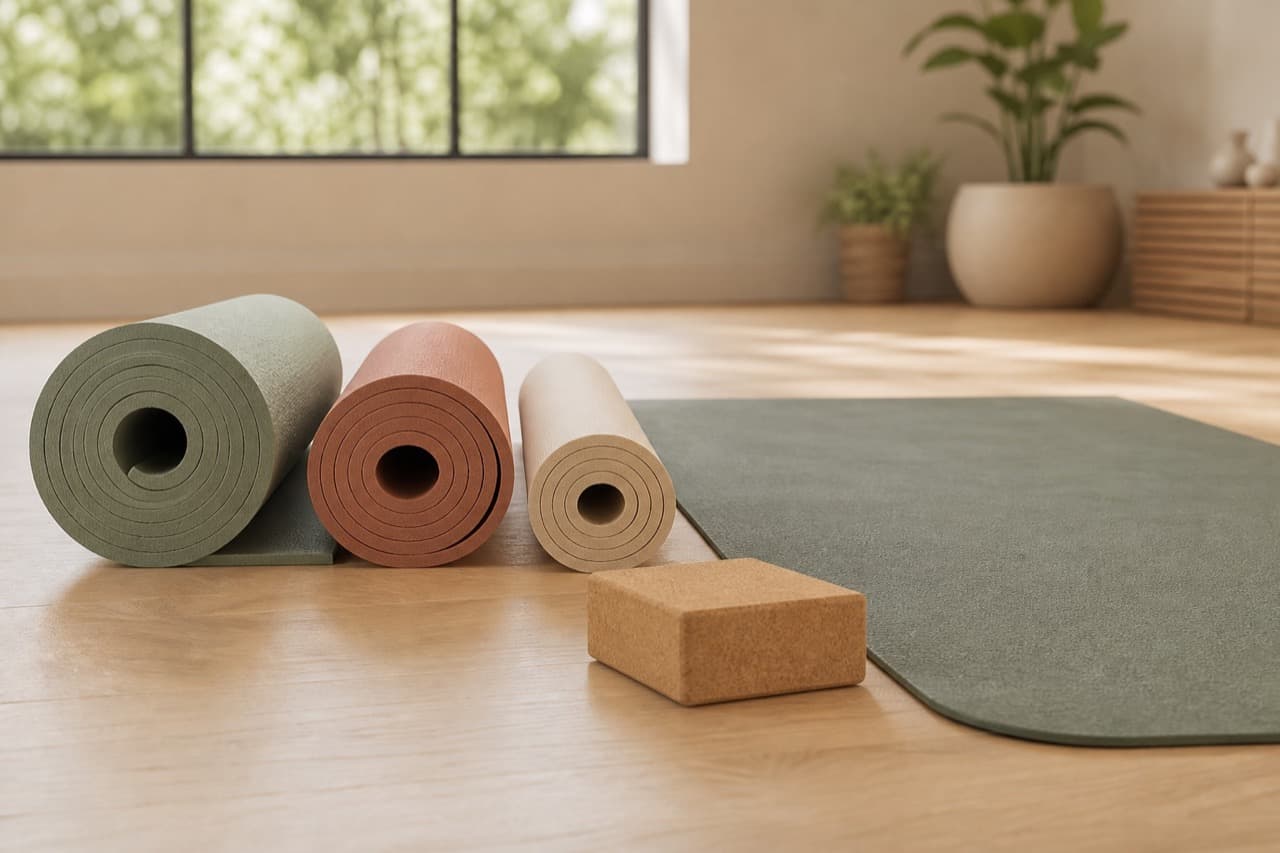
Most yoga mats run from about 1.5 mm for travel to 6 mm for extra cushion, with 4 to 5 mm (roughly 3/16 inch) the usual choice for everyday practice at home. This yoga mat thickness chart is for shoppers who want the numbers, meaning millimeters, inches, typical weight and rolled size, and a way to match them to the floor underneath and the distance the mat will travel. For how thickness relates to yoga style and sore joints, see our guide to choosing yoga mat thickness.
Key takeaways
- Standard thickness is 4 to 5 mm. Below 3 mm is firm and travel friendly; above 6 mm is plush but less stable for standing poses.
- Every extra millimeter adds weight and rolled diameter, so a 10 mm mat is a very different thing to carry than a 3 mm mat.
- The floor matters as much as your body: hard floors need cushion and grip, while thick plush carpet and a thick mat together wobble.
- Check how a listing states thickness: millimeters or inches, whether a fabric top layer is included, and what extra thick actually means for that seller.
- For flights and daily commutes, a folding or thin mat usually beats a thick mat that will not fit in the bag.
Yoga mat thickness chart: mm to inches
Inch figures are rounded to the nearest common fraction. Weight and rolled size are approximate for a standard 68 by 24 inch mat (173 by 61 cm); material, density and width change them, so treat the listing as the final word.
| Thickness | Inches | Typical feel | Typical use | Carry |
|---|---|---|---|---|
| 1.5 to 2 mm | 1/16 inch | Very firm, close to the floor | Folding travel mats, towel-top hot yoga | Under about 1 lb (0.5 kg); folds into a bag |
| 3 mm | 1/8 inch | Firm with little cushion | Balance work, commuting, light travel | Light; rolls about 3 inches across |
| 4 to 5 mm | 3/16 inch | Balanced cushion and stability | Everyday home practice, most styles | Moderate; rolls about 4 inches across |
| 6 mm | 1/4 inch | Extra cushion | Hard floors, knees, slower practice | Heavier; rolls about 5 inches across |
| 8 to 10 mm | 5/16 to 3/8 inch | Soft, noticeable sink | Floor work, stretching, Pilates-style routines | Bulky; about 6 inches across or more |
| 12 to 15 mm | 1/2 to 5/8 inch | Very soft | Exercise or mobility mats, not standing balance | Hard to carry far |
For weight, a common 4 to 6 mm mat in PVC, TPE or foam often falls around 2 to 4 lb (about 1 to 1.8 kg), thin folding mats weigh less, and natural rubber or dense PU mats can pass 5 lb (2.3 kg) even at moderate thickness. Rolled diameters are geometric estimates for a snug roll; a loose roll will be fatter.
Which thickness suits your floor
A mat is a thin layer between you and a surface, and the surface changes how that layer behaves.
| Floor | What to expect | Thickness to consider |
|---|---|---|
| Hardwood, tile, laminate | Hard on knees and wrists; slick floors let a mat creep | 4 to 6 mm with a grippy underside |
| Low-pile carpet | Comfortable; thin mats can bunch if they are light | 3 to 5 mm, dense material |
| Thick or plush carpet | A soft base under a soft mat makes the whole stack wobble | 3 to 4 mm dense mat, or practice on a harder patch of floor |
| Concrete, garage or basement | Hard, cold and sometimes dusty | 5 to 6 mm, and sweep the floor first |
| Grass | Uneven and sometimes damp | 5 to 6 mm or a firmer mat; dry the underside afterward |
| Deck, patio or sand | Rough surfaces can scuff the underside; sand gets everywhere | 4 to 6 mm; shake out or wipe the mat after each session |
On carpet, a dense mat usually behaves better than a tall squishy one. If a mat keeps sliding on a smooth floor, a rug pad underneath can help, but keep the layers few so that you do not recreate the wobble you were avoiding. Outdoors, remember that a dark mat in direct sun gets hot and that damp ground can leave moisture under the mat; dry it before rolling it up. Our guide on how to clean and store a yoga mat covers drying and storage by material.
Thickness and portability: weight, roll size and travel
Thickness is the main driver of how annoying a mat is to carry. At 3 mm, a mat rolls to a size that fits under an arm or in a long gym bag. At 8 to 10 mm, it becomes a bulky tube you carry on its own. If you walk, cycle or take public transport to class, aim for 3 to 5 mm and a mat weight you will not mind carrying. Remember too that width matters: wider mats of 26 inches or more add noticeable weight and roll fatter.
For air travel, a standard rolled mat will not fit inside most carry-on bags. Folding mats of 1.5 to 2 mm pack flat in a suitcase, while many travelers simply use a towel on a hotel floor. Thin mats can slide on tile and bunch on carpet, so test yours on a similar surface before you go. If a mat adds weight to a bag that is already near an airline’s limit, our guide on how to weigh carry-on luggage at home shows how to check before you leave.
How to read thickness and size in a product listing
- Units: listings mix millimeters and inches. A 1/4 inch mat is about 6.35 mm, and a 1/8 inch mat is about 3.2 mm.
- Extra thick has no standard: sellers use it for anything from 6 mm to 15 mm. Look for the actual number.
- What is measured: check whether the figure includes a top fabric or microfiber layer, or just the foam or rubber.
- Length and width: the usual size is 24 by 68 inches. People above roughly 5 feet 10 inches (178 cm) often prefer 72 inches or longer, so their hands and feet stay on the mat in poses like downward dog.
- Material and density: thickness says nothing about firmness. A dense 4 mm mat can feel more supportive than a soft 8 mm one.
- Weight and care: a listed weight lets you compare mats of the same thickness, and care notes tell you what cleaners are safe.
As an example, the Thick Non-Slip TPE Fitness Yoga Mat is listed at ADLTHUB. Check its product page for the stated thickness, dimensions, weight, material and care instructions, and compare those against the chart above. When it arrives, a ruler laid against the cut edge is a quick way to confirm the real thickness.
Mistakes to avoid
- Assuming thicker is always kinder to joints. A very soft mat can make knees and wrists sink and make balance harder; a folded blanket or knee pad is often a better fix, and our guide to beginner yoga props shows how.
- Buying by the label extra thick. Without a millimeter figure you may receive 6 mm or 15 mm.
- Ignoring the carry. A great mat you never take anywhere is no help if you attend classes or travel often.
- Putting a thick mat on plush carpet. The stack is unstable for standing poses.
- Using a thin travel mat on slick tile without testing it. It may slide, so check the underside grip.
- Forgetting length. A mat shorter than your height leaves your feet or head off it in lying poses.
- Rolling or storing the mat damp. That invites odor and can damage some materials.
Which yoga mat thickness fits you
- Pick 1.5 to 3 mm if you fly often, commute with your mat, or practice balance-heavy flows and want to feel the floor.
- Pick 4 to 5 mm if you want one mat for home practice on mixed floors and most styles.
- Pick 6 mm if your floor is hard, your knees feel sensitive, or your practice is slow and floor based.
- Pick 8 mm or more only for floor work, stretching or Pilates-style routines, and skip it for standing balance.
- Pick a folding mat if the mat has to live in a suitcase or desk drawer.
Browse more equipment in Fitness and Sports, and use the chart above together with the product page figures when you compare options.
Frequently asked questions
What is the most common yoga mat thickness?
Most mats are sold between 3 and 6 mm, and 4 to 5 mm (about 3/16 inch) is the usual standard for home practice. Thinner mats are used for travel and balance, thicker ones for cushioned floor work.
How thick should a yoga mat be for a hardwood floor?
A mat of 4 to 6 mm with a grippy underside suits most hardwood floors. It gives knees and wrists some cushion while staying stable. If the mat slides, try a different underside material or a rug pad.
Is a 6 mm yoga mat too thick?
Not for most people. It adds cushion on hard floors and is comfortable for slow practice, though standing balance poses feel slightly less planted than on a 3 or 4 mm mat. It is also heavier and bulkier to carry.
What thickness is best for a travel yoga mat?
A folding mat of about 1.5 to 2 mm packs flat and weighs very little, which is why it is popular for suitcases. You give up cushioning, so many travelers practice on carpet or add a towel on harder floors.
How many millimeters is a 1/4 inch yoga mat?
A 1/4 inch mat is about 6.35 mm, commonly listed as 6 mm. A 1/8 inch mat is about 3.2 mm, often sold as 3 mm.
Shop Fitness & Active Life
View all →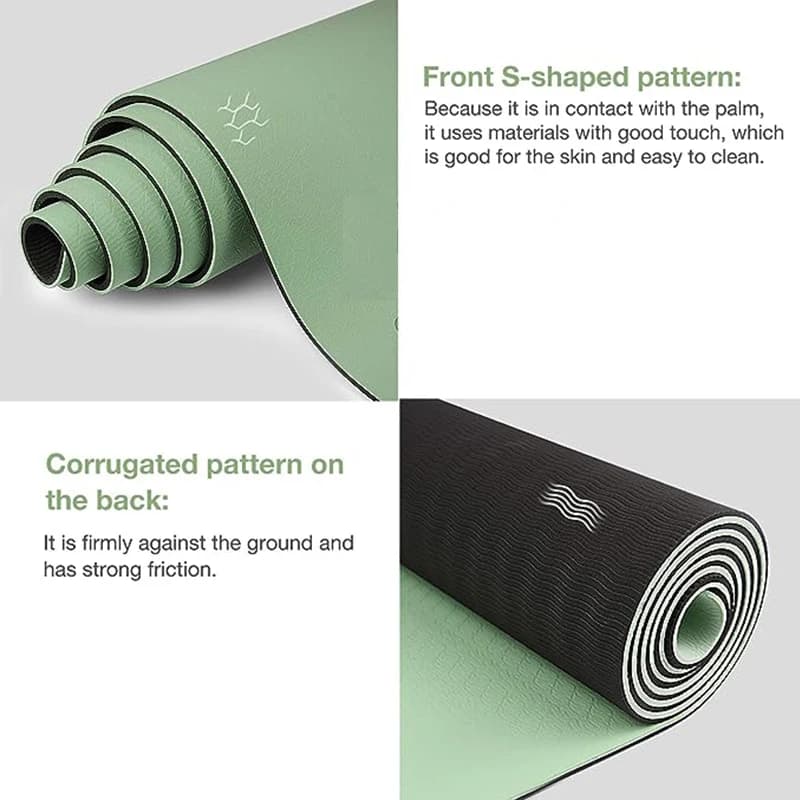
Continue reading
 Fitness & Active Life
Choosing Yoga Mat Thickness by Yoga Style and Body Needs
Choosing yoga mat thickness by your yoga style, knees, wrists and floor: what 3mm, 5mm and 10mm really feel like, and when density matters more than depth.
 Fitness & Active Life
How to Clean and Store a Yoga Mat by Material
How to clean and store a yoga mat made of PVC, TPE, natural rubber, PU or cork: daily wipes, deep cleaning, drying, and storage that prevents cracks and odor.
 Fitness & Active Life
Beginner Yoga Props: Blocks, Straps, Blankets, Bolsters
Which beginner yoga props to buy first: block sizes and materials, strap lengths, blankets and bolsters, plus how each prop helps common poses and what to skip.