

How to Clean and Store a Yoga Mat by Material
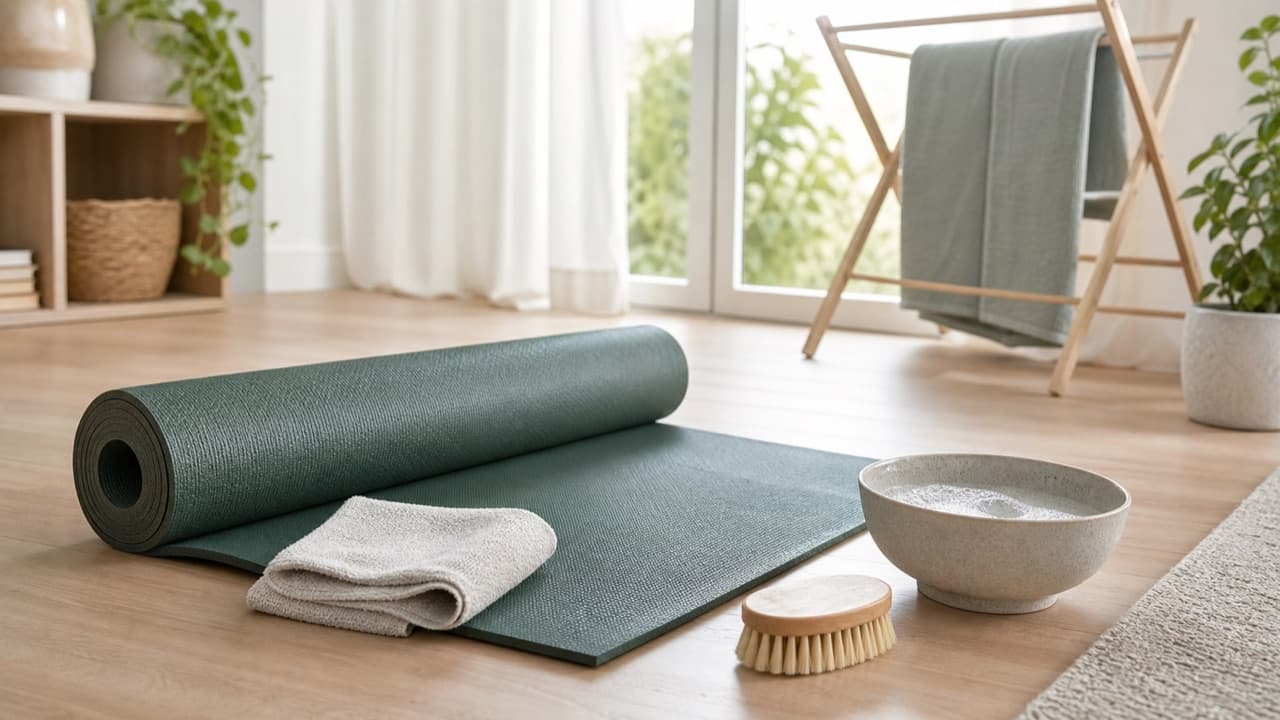
How to clean and store a yoga mat comes down to three habits: wipe it after every practice, deep clean it every few weeks with a method that suits its material, and store it rolled, dry and out of sunlight and heat. The material matters more than most people realize, because a cleaner that is fine on PVC can leave natural rubber slippery or speed up cracking. This guide is for anyone who practices at home, at a studio or outdoors and wants a mat that stays grippy, odor-free and in one piece for years.
Key takeaways
- Identify your mat material first: PVC, TPE, natural rubber, PU-topped rubber, cork or jute each tolerate cleaning differently.
- For most mats, a spray of water with a few drops of mild dish soap, wiped off with a damp cloth, is the safest regular cleaner.
- Avoid essential oil-heavy, vinegar-heavy or alcohol-heavy cleaners on natural rubber and PU surfaces unless the maker approves them; they can degrade the surface or leave it slick.
- Dry the mat fully, flat or draped, before rolling. Rolling a damp mat is the main cause of musty smells.
- Store away from direct sun, car trunks and radiators. UV and heat break down rubber and foam faster than use does.
- Roll with the practice side facing out so the edges curl down toward the floor when you unroll it.
Cleaning by yoga mat material
The label or product page usually names the material. If not, natural rubber tends to be heavy with a faint rubbery smell, PVC is dense and smooth, TPE is light and springy with a closed, slightly shiny surface, and PU-topped mats feel almost leathery and grippy when dry.
| Material | Regular clean | Avoid | Storage note |
|---|---|---|---|
| PVC | Mild soap and water; tolerates most gentle mat sprays | Harsh solvents, very hot water | Durable; still keep out of hot cars |
| TPE | Damp cloth with diluted mild soap; dry quickly | Soaking, machine washing, direct sun drying | Can dent or deform under weight or heat; roll loosely |
| Natural rubber | Water with a little mild soap; wipe off residue | Sun, oils, salt, strong vinegar or alcohol mixes | Most sensitive to UV; store in a shaded, cool place |
| PU-topped rubber | Damp microfiber cloth, minimal soap | Abrasive pads, alcohol, oils, long soaks | Top layer marks easily; avoid folding |
| Cork | Damp cloth; cork is naturally resistant to odor | Soaking; saturating the rubber base | Roll cork side out |
| Jute or cotton blends | Spot clean; some cotton rugs are washable per label | Machine washing unless the label permits | Dry thoroughly; natural fibers hold moisture |
A thick foam mat such as the thick non-slip TPE yoga mat falls in the TPE row; check its product page for any care instructions specific to that model.
Everyday wipe-down after practice
Sweat, skin oil and dust are what make a mat smell and lose grip. A 60-second wipe after each session prevents most buildup.
- Mix a spray bottle of water with a few drops of mild, unscented dish soap. Roughly 1 to 2 drops per cup (240 ml) is plenty; more soap leaves a slippery film.
- Lightly mist both sides, focusing on where hands and feet land.
- Wipe with a soft microfiber cloth, then go over it once more with a cloth dampened in plain water to remove soap residue.
- Leave it unrolled for 10 to 20 minutes until fully dry.
Commercial mat sprays are fine if the label lists your mat material. Many contain essential oils for scent; small amounts are usually fine on PVC and TPE, but makers of natural rubber and PU mats often warn against oils because they soften rubber over time.
How to deep clean a yoga mat
Every two to four weeks for regular home use, or more often for hot yoga, give the mat a fuller clean.
- Lay it flat in a bathtub, shower floor or clean patch outdoors in the shade.
- Wash with a soft cloth or sponge and lukewarm water with a small amount of mild soap. Avoid the scrubby side of sponges on PU, rubber and TPE surfaces.
- Rinse thoroughly with a cloth or a gentle shower stream. Leftover soap is the usual reason mats feel slick after washing.
- Press out water by laying the mat on a large towel, rolling the towel and mat together and pressing down, then unrolling.
- Air-dry completely draped over a shower rod, drying rack or two chairs, out of direct sun. Thick mats can take 12 to 24 hours.
Avoid full soaks for natural rubber, PU-topped and cork mats: water can work into the open-cell layers and take days to dry. Do not machine wash or tumble dry any mat unless the care label explicitly says it can be done; agitation and heat tear foam and delaminate layered mats.
How to store a yoga mat so it lasts
- Roll, don’t fold. Folds create creases that crack over time, especially in rubber and PU.
- Practice side out. Rolling with the top surface facing outward makes the ends curl toward the floor when you unroll, so the mat lies flat instead of flipping up.
- Keep it out of the sun. UV light is the main enemy of natural rubber, causing it to dry out, fade and flake. Even a window-side corner can do damage over months.
- Avoid temperature extremes. A car trunk on a summer day can exceed 140°F (60°C), enough to warp TPE and soften rubber. Very cold storage can make some mats stiff and prone to cracking when unrolled.
- Use a breathable bag or strap. A cotton or canvas bag, or a simple carry strap, lets moisture escape. Sealed plastic bags trap humidity and smell.
- Store upright or on a shelf. Standing a rolled mat in a corner or wall rack keeps heavy items from denting it. A horizontal stack of weights on top will leave permanent marks in thick foam.
Mistakes to avoid
- Rolling a damp mat. Moisture trapped in the roll causes musty odors and, in porous mats, mildew spots.
- Drying in direct sun. It seems efficient, but UV damages rubber and TPE surfaces in a way that does not reverse.
- Using bleach, disinfectant wipes or undiluted vinegar. These can break down surfaces, dry out rubber and leave residue on a mat that touches your face in many poses.
- Too much soap. A film of soap is slippery and attracts more dirt.
- Machine washing a layered mat. The top layer can peel from the base, which no cleaning can fix.
- Expecting a worn mat to recover grip. Bald spots and flaking mean the surface is used up. Cleaning helps a dirty mat, not a worn one.
Which care routine fits your practice
- Pick the minimal routine (wipe after use, deep clean monthly) if you practice gentle styles at home a few times a week.
- Pick a stricter routine (wipe every session, deep clean every one to two weeks, full drying before rolling) if you do hot yoga, practice daily, or share the mat.
- Choose a towel layer on top of a rubber or PU mat for sweaty classes. It protects the surface and is machine washable, which cuts down on mat washing.
- Consider replacing the mat when it flakes, tears, smells after thorough drying, or keeps slipping despite cleaning. Our yoga mat thickness guide helps choose a replacement, and the beginner yoga props guide covers blocks, straps and blankets that need their own care. More gear lives in the fitness and sports category.
Frequently asked questions
How often should I clean my yoga mat?
Wipe it after every session and deep clean every two to four weeks for regular use. Hot yoga, daily practice or a shared mat calls for weekly deep cleaning. Any time it smells or feels tacky, clean it sooner.
Can I put a yoga mat in the washing machine?
Only if the manufacturer’s care label explicitly says so. Most foam, rubber and layered mats can tear, stretch or delaminate in a machine, and dryer heat can warp them. Hand washing in a tub is the safer default.
Why does my yoga mat smell after cleaning?
Usually it was rolled before it fully dried, or soap residue was left behind. Rewash with less soap, rinse well, and let it dry flat or draped for a full day. New natural rubber mats also have a rubbery smell that fades over a few weeks of airing.
Can I use vinegar to clean a yoga mat?
Heavily diluted vinegar is sometimes suggested for PVC mats, but many natural rubber and PU mat makers advise against acidic cleaners because they can dry out the surface. Mild soap and water is the safest choice across materials.
What is the best way to store a yoga mat in a small apartment?
Roll it practice side out, secure it with a strap, and stand it upright in a closet corner, behind a door, or in a wall rack away from windows and heaters. Avoid storing it under heavy items that can dent the surface.
Shop Fitness & Active Life
View all →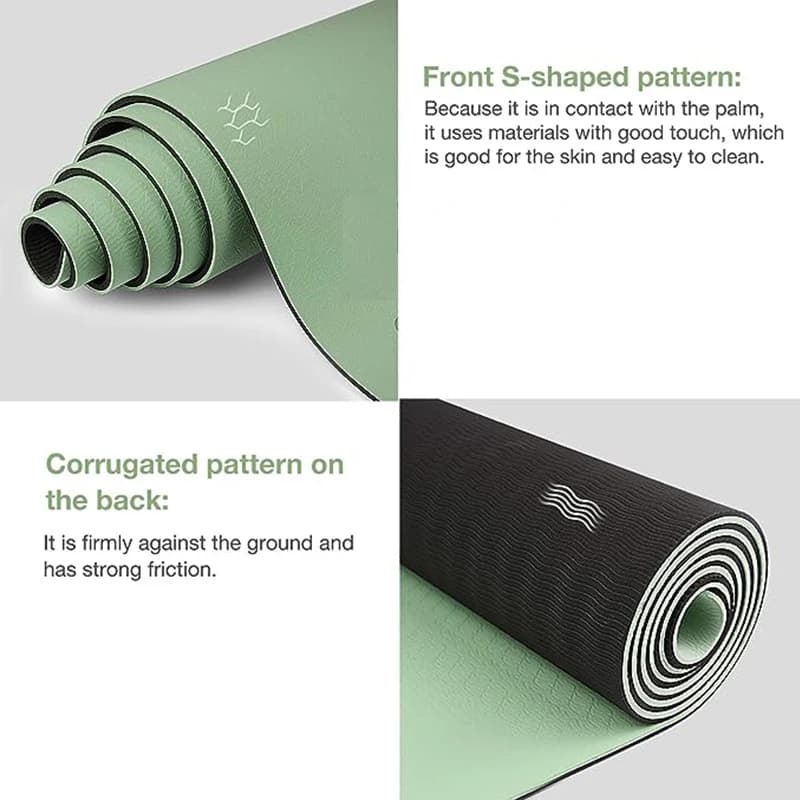
Continue reading
 Fitness & Active Life
Choosing Yoga Mat Thickness by Yoga Style and Body Needs
Choosing yoga mat thickness by your yoga style, knees, wrists and floor: what 3mm, 5mm and 10mm really feel like, and when density matters more than depth.
 Fitness & Active Life
Yoga Mat Thickness Chart: mm to Inches, Weight and Floors
Yoga mat thickness chart in mm and inches with typical weight and rolled size, plus which thickness suits hardwood, carpet, outdoor floors and travel.
 Fitness & Active Life
How to Clean a Protein Shaker and Get Rid of the Smell
How to clean a protein shaker: a two-minute daily routine, a deep clean for smelly bottles and stuck gaskets, safe soaking options and when to replace it.