

Beginner Yoga Props: Blocks, Straps, Blankets, Bolsters
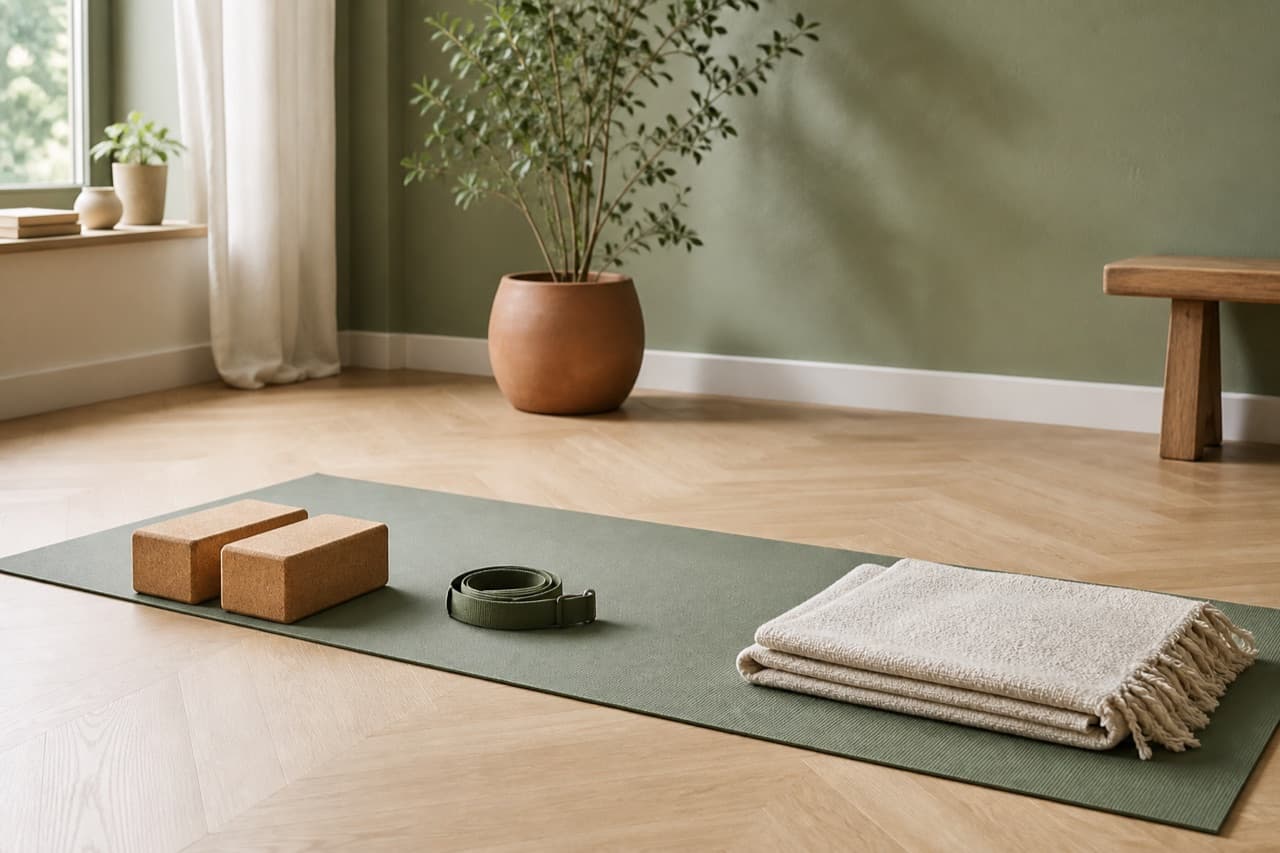
The beginner yoga props worth buying first are two blocks and a strap, with a firm blanket from your closet doing most of what a dedicated yoga blanket does. Together they bring the floor closer, extend your reach and lift your hips so you can hold poses with good alignment instead of straining. A bolster comes next if you enjoy restorative or yin classes. This guide is for new practitioners setting up a home practice or wondering why their class keeps handing out blocks, and it skips mat thickness, which has its own guide.
Key takeaways
- Buy blocks in pairs; many standing and seated poses use one under each hand or hip.
- A standard block is about 9 x 6 x 4 inches (23 x 15 x 10 cm); a 3-inch block is lighter but gives less height.
- Foam blocks are light and soft, cork is firmer and grippier but heavier, wood is the most stable and least forgiving.
- An 8-foot (2.4 m) strap suits most people; taller people or those with tight hamstrings may prefer 10 feet.
- Props are tools for alignment and comfort, not a sign you are doing it wrong. Many experienced teachers use them daily.
Yoga blocks: size, material and how to use them
Blocks raise the floor to you. In a standing forward fold or triangle pose, a block under the hand lets you keep the spine long instead of rounding to reach the ground. Sitting on a block in a cross-legged or kneeling pose tilts the pelvis forward and takes strain off the knees and lower back.
Each block has three heights depending on which side rests on the floor, so one block offers roughly 4, 6 and 9 inches of lift.
| Material | Typical weight | Feel | Best for | Drawbacks |
|---|---|---|---|---|
| EVA foam | Light, a few ounces | Soft, slight give | Sitting on, sensitive wrists, travel | Can compress and dent over time; less stable under full weight |
| Cork | About 1.5 to 2.5 lb (0.7 to 1.1 kg) | Firm, grippy even when sweaty | Balancing, bearing weight in hands | Heavier; can shed slightly when new |
| Wood or bamboo | Heaviest | Rigid | Inversions, advanced support | Slippery when damp, hard if you sit on it |
For beginners, a pair of foam or cork blocks covers almost every class. If you mostly practice on a carpet or soft mat, cork’s firmness is helpful; if you plan to sit on blocks often, foam is more comfortable.
Yoga straps: length and buckle types
A strap extends your arms. Loop it around the foot in a seated forward fold or reclined hamstring stretch, or hold it between the hands behind your back in shoulder openers. It lets you hold a pose with a straight spine instead of pulling yourself into a rounded shape.
- Length: 6-foot straps work for shorter people and simple stretches; 8 feet is the common all-round choice; 10 feet helps taller people and binding poses that loop around the body.
- Buckle: D-ring buckles are easy to adjust and quick to release. Cinch or quick-release cam buckles hold firmly and are easier for some to operate one-handed.
- Material: cotton is soft and grippy; nylon or polyester is smoother, slides more easily through the buckle and is quicker to dry.
A strap is not a resistance band. If you want strength work, see the resistance band progression guide instead.
Blankets and bolsters
Blankets
A firm, folded blanket raises the hips in seated poses, cushions knees in kneeling poses and supports the neck and shoulders in some reclined positions. Woven cotton or wool blankets, such as the classic striped Mexican-style blanket, fold into a firm, flat stack that holds its shape. A plush throw is too soft to support you, so test what you already own before buying.
Bolsters
Bolsters are dense, firm cushions, commonly around 24 to 28 inches long. Rectangular bolsters are stable and versatile for supported backbends and seated poses; round ones roll slightly and suit gentle chest openers and under-knee support. They make the most difference in restorative and yin yoga, where poses are held for several minutes. Look for a removable, washable cover and a firm fill such as cotton batting or buckwheat hulls.
Other props
Foam wedges lift the heels in squats or reduce wrist extension in plank and downward dog. A sturdy folding chair is used in chair yoga and some alignment-focused classes. An eye pillow adds comfort during final relaxation. None of these is needed to start.
A note on the mat itself
Your mat is the base for all of these props. Most beginners do well with something around 4 to 6 mm thick with good grip. TPE mats are light and usually latex-free; natural rubber grips well but is heavier and not suitable for anyone with a latex allergy. The Thick Non-Slip TPE Fitness Yoga Mat is one option; check its product page for thickness and dimensions. Our yoga mat thickness guide covers the trade-offs, and how to clean and store a yoga mat keeps it lasting longer. Wipe props after sweaty sessions too; cork and foam can be cleaned with a damp cloth and mild soap.
Mistakes to avoid
- Buying only one block. Many poses need two, one under each hand or one for the hips and one for the hands.
- Using a soft block for weight-bearing balances. Soft foam can compress or tip; choose cork or firm high-density foam if you lean on blocks in balancing poses.
- Pulling hard on a strap. The strap should help you hold a position, not force a deeper stretch. Ease off if you feel sharp or joint pain.
- Buying a large prop kit before trying classes. Many kits include items you will not use; buy the basics, then add what your style calls for.
- Skipping props out of pride. Alignment with support builds flexibility and strength more safely than straining to touch the floor.
Which props fit your practice
- Pick two blocks and an 8-foot strap if you are starting with beginner vinyasa, hatha or online classes. This handles nearly every modification.
- Add a firm blanket or two if your knees or hips feel uncomfortable sitting cross-legged or kneeling.
- Add a rectangular bolster if you enjoy restorative, yin or prenatal-focused classes, after checking with your provider for prenatal practice.
- Pick cork blocks if you sweat a lot or lean your full weight on them; pick foam if you want light, cushioned blocks you mainly sit on.
- Talk to a qualified teacher or physical therapist first if you are managing an injury, joint replacement or chronic pain; they can recommend prop use specific to you.
Explore more gear in the fitness and sports category.
Frequently asked questions
What yoga props do beginners really need?
Two blocks and a strap cover most beginner modifications. A firm folded blanket, which you may already own, helps with seated and kneeling poses. Bolsters and wedges are optional extras for specific styles.
What size yoga block should I get?
The standard 9 x 6 x 4 inch block suits most people and offers three heights. Slimmer 3-inch blocks are lighter for travel but give less lift, which matters if your hamstrings are tight.
Is cork or foam better for yoga blocks?
Cork is firmer, heavier and grippier, which helps when you put weight on the block. Foam is lighter, softer and more comfortable to sit on. Both work well for beginners; choose based on how you use them.
How long should a yoga strap be?
An 8-foot strap fits most people. Choose 6 feet if you are petite and use it mainly for simple stretches, and 10 feet if you are tall or want to loop it around your body in binding poses.
Can I use household items instead of yoga props?
Often, yes. Firm books can stand in for blocks, a belt or scarf works as a strap, and folded blankets or firm pillows can replace a bolster. Make sure substitutes are stable and will not slip under your weight.
Shop Fitness & Active Life
View all →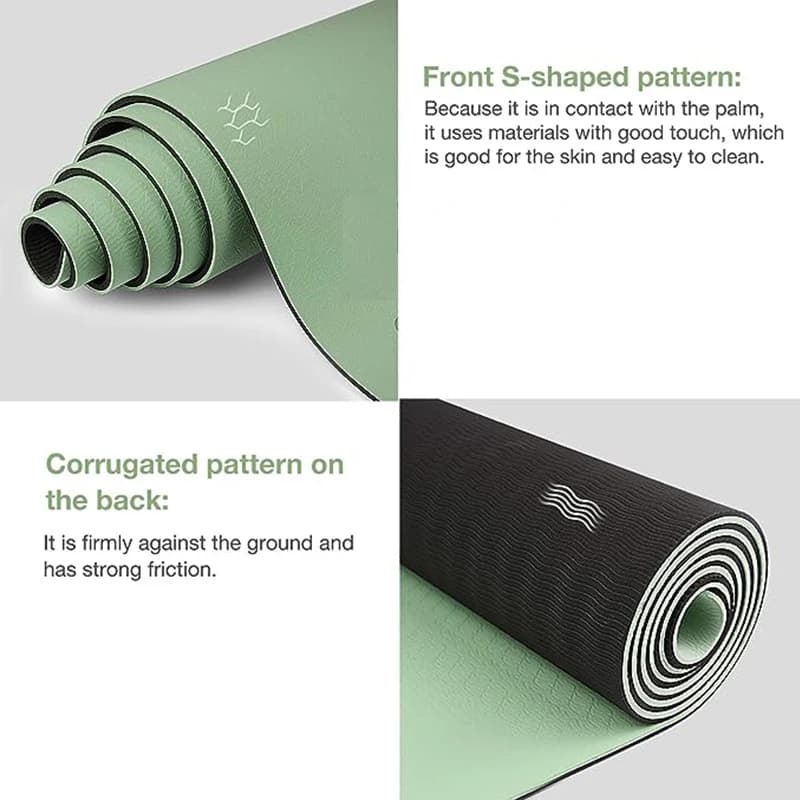
Continue reading
 Fitness & Active Life
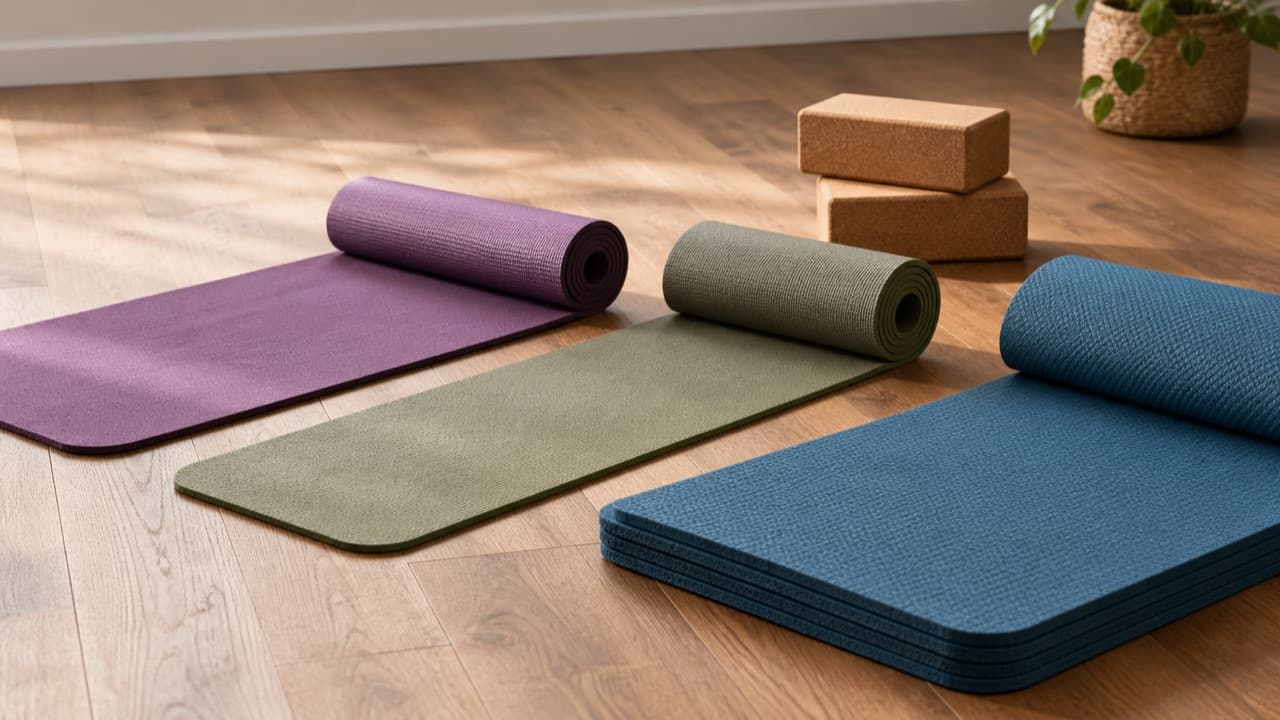
Choosing Yoga Mat Thickness by Yoga Style and Body Needs
Choosing yoga mat thickness by your yoga style, knees, wrists and floor: what 3mm, 5mm and 10mm really feel like, and when density matters more than depth.
 Fitness & Active Life
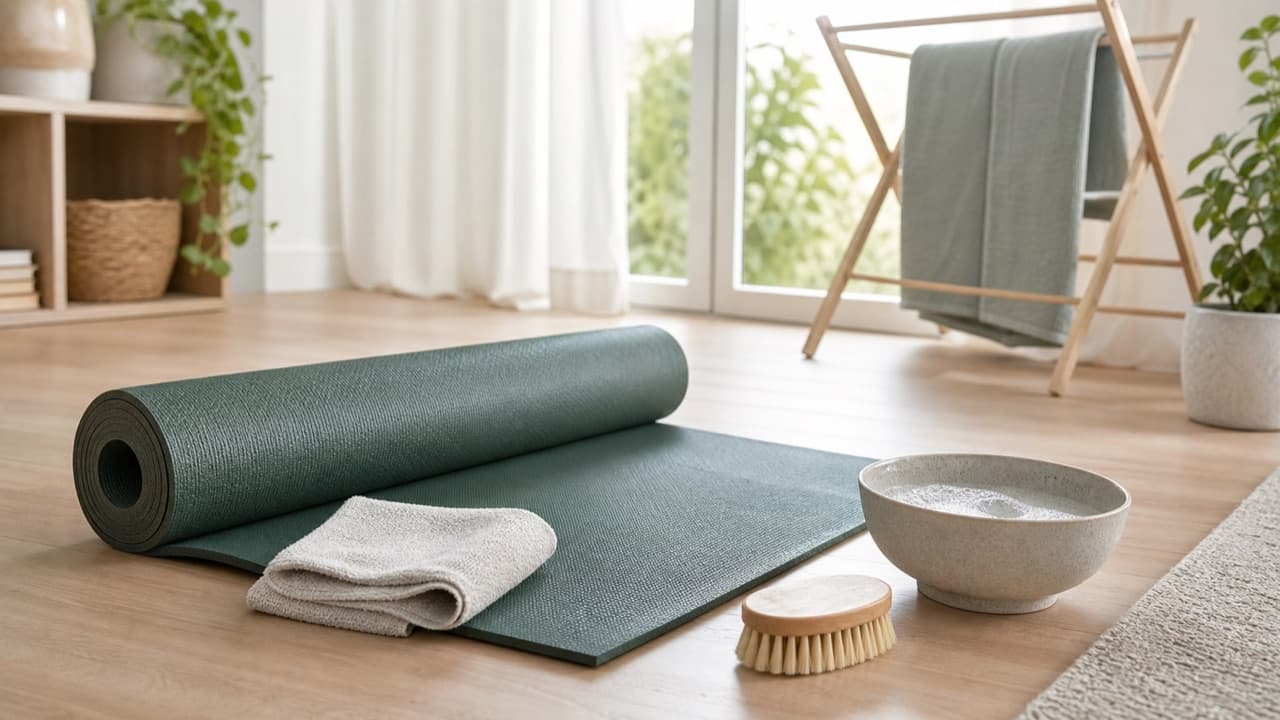
How to Clean and Store a Yoga Mat by Material
How to clean and store a yoga mat made of PVC, TPE, natural rubber, PU or cork: daily wipes, deep cleaning, drying, and storage that prevents cracks and odor.
 Fitness & Active Life
Yoga Mat Thickness Chart: mm to Inches, Weight and Floors
Yoga mat thickness chart in mm and inches with typical weight and rolled size, plus which thickness suits hardwood, carpet, outdoor floors and travel.