

Humidifier vs Aroma Diffuser: Output, Size and Cost
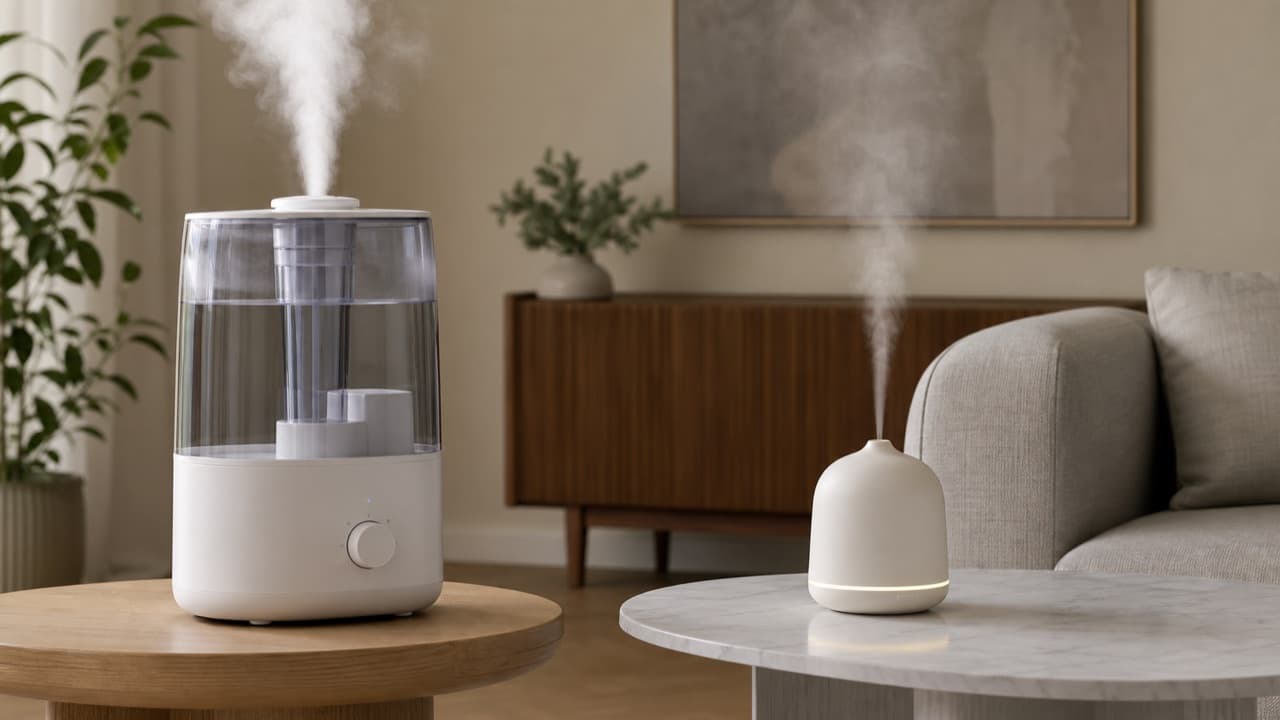
The humidifier vs aroma diffuser question has a short answer: a humidifier is built to add meaningful moisture to a room, while an aroma diffuser is built to spread scent and adds only a token amount of water to the air. A typical small diffuser holds 100 to 300 ml and emits a fraction of what even a compact humidifier puts out. This guide compares them on the specs that decide the purchase, including output, tank size, coverage, noise, running cost and upkeep, so you can buy the right device or a combination unit with realistic expectations.
Key takeaways
- Check mist output in ml per hour (or gallons per day). Small aroma diffusers usually produce a few tens of ml per hour; room humidifiers commonly produce roughly 150 to 400 ml per hour.
- Tank size sets runtime. A 200 ml diffuser lasts a few hours; a 3 to 4 liter humidifier can run overnight.
- Do not add essential oils to a humidifier tank unless the maker provides a separate aroma tray or pad. Oils can degrade plastics and void warranties.
- A 2-in-1 unit works when you mainly want scent with some extra moisture in a small room, not when you need to fix very dry winter air.
- Both need frequent cleaning; a humidifier’s larger volume of standing water makes daily emptying more important.
Spec-by-spec comparison
| Spec | Aroma diffuser (ultrasonic) | Room humidifier |
|---|---|---|
| Main purpose | Disperse essential oil scent | Raise relative humidity |
| Typical tank | 100 to 500 ml | About 1 to 6 liters for room units |
| Typical mist output | Roughly 20 to 50 ml per hour | Roughly 150 to 400 ml per hour, higher for large-room models |
| Runtime per fill | About 3 to 10 hours, often with intermittent modes | Often 8 to 24 hours or more |
| Effect on humidity | Minimal in most rooms | Noticeable in the rated room size |
| Oils | Designed for a few drops | Not in the tank unless an aroma tray is provided |
| Power draw | Commonly under 15 to 25 W | Ultrasonic often 20 to 40 W; warm mist often 200 W or more |
| Extras | LED lights, timers, Bluetooth audio in some | Humidistat, auto shutoff, filter or cartridge |
These are typical ranges across common models, not a guarantee for any specific unit. Read the listed ml per hour, tank volume and room size on each product page.
Why a diffuser cannot replace a humidifier
Raising room humidity takes a surprising amount of water. Air in a 12 x 12 foot bedroom with an 8 foot ceiling (about 1,150 cubic feet, or 33 cubic meters) only holds a few hundred milliliters of water vapor at comfortable humidity, but air leaks, ventilation and heating constantly pull moisture out. Humidifiers rated for a bedroom are sized to replace that loss continually, which is why they move a liter or more over a night. A diffuser running 30 ml per hour adds moisture so slowly that it is mostly carried away before the hygrometer moves.
So if your problem is dry winter air, static shocks or a dry nose and throat in a heated home, choose a humidifier. If your goal is fragrance and a calming visual mist, a diffuser does that job with less water to manage.
Are 2-in-1 humidifier diffusers worth it?
Combination units exist in two forms. Some are essentially a larger diffuser, with a 500 ml to 1 liter tank and slightly higher output, that market humidification as a bonus. Others are real humidifiers with a separate aroma pad, tray or chamber that keeps oil out of the main tank and away from the transducer.
- Good fit: small bedrooms, offices, or nurseries where you want light moisture plus occasional scent, and only if the maker explicitly allows oil in a designated spot.
- Poor fit: large living rooms in very dry climates, or anyone who wants to run humidity for health comfort all winter; a dedicated humidifier is more effective.
Decorative combo designs, such as the fireplace flame air humidifier and diffuser, list their tank and output on the product page; compare those numbers against your room size before expecting humidifier-level results. Scent-only devices like the Bluetooth smart aroma diffuser or the waterless wall-mounted aromatic oil diffuser add little or no moisture at all, which is fine if fragrance is the goal.
Running cost and upkeep
Electricity: ultrasonic diffusers and humidifiers use modest power, so running cost is usually low. Warm-mist humidifiers boil water and use far more, similar to a small heater, which can add noticeably to a winter electric bill.
Consumables: diffusers consume essential oils, a few drops per fill; quality oils are the main ongoing cost. Evaporative humidifiers need replacement wick filters; ultrasonic humidifiers may need demineralization cartridges, and both benefit from distilled water in hard-water areas. The humidifier filter replacement guide covers intervals.
Cleaning: diffusers need a weekly vinegar clean and emptying after use; see how to clean an essential oil diffuser. Humidifiers need daily water changes and cleaning every few days because more standing water means more opportunity for microbial growth.
Safety and placement differences
- Humidity level: aim for roughly 30 to 50 percent indoors. Higher levels encourage mold and dust mites. A humidifier with a built-in humidistat, or a separate hygrometer, keeps you in range.
- White dust: ultrasonic devices fed with hard tap water can disperse minerals as fine dust; distilled water prevents it.
- Warm mist: hot water and steam can scald, so keep warm-mist units away from children and pets.
- Essential oils: some oils can irritate people with asthma and are hazardous to pets, especially cats and birds. Ventilate, run diffusers intermittently, and ask a doctor or veterinarian if unsure. The aromatherapy diffuser safety guide covers the details.
- Placement: set either device on a water-resistant surface a few feet off the floor, away from electronics and walls, so mist does not soak furniture.
Mistakes to avoid
- Buying a diffuser to fix dry air. The output is too small to change humidity in most rooms.
- Adding oil to a standard humidifier tank. It can crack plastic, damage the transducer or wick, and void coverage.
- Ignoring room size. An undersized humidifier runs constantly without reaching target humidity.
- Running a humidifier without a hygrometer. Over-humidifying causes condensation and mold.
- Letting water sit for days in either device. Stagnant water leads to odor and biofilm.
Which one fits you
- Pick a humidifier if your indoor humidity regularly drops below 30 percent, you feel dry air symptoms, or you heat your home for months.
- Pick an aroma diffuser if you want scent, ambient light or a wind-down ritual and humidity is not a problem. The diffuser room size guide matches capacity to space.
- Pick a 2-in-1 for a small room where you want modest moisture and scent, with a designated aroma tray.
- Pick both if you need real humidification and want scent too; run them as separate devices. For the safety and sleep angle, read diffuser vs humidifier jobs and safe use. More options are in the home and kitchen category.
Frequently asked questions
Can an aroma diffuser work as a humidifier?
Only slightly. Most diffusers release a few tens of milliliters of water per hour, which is too little to raise humidity noticeably in a typical room. For dry air, use a humidifier.
Can I put essential oils in my humidifier?
Only if the manufacturer provides an aroma tray, pad or chamber and says oils are allowed. Adding oils to a standard tank can damage plastics and parts and may void the warranty.
Which is better for a bedroom, a humidifier or a diffuser?
If the air is dry, a humidifier sized for the room is better. If you just want a pleasant scent before sleep, a diffuser with a timer works. Some people use both.
Do humidifiers or diffusers use more electricity?
Ultrasonic diffusers and ultrasonic humidifiers both use little power. Warm-mist humidifiers use much more because they heat water. Check the wattage on the product page.
How much water should a humidifier use per day?
It depends on room size, humidity and settings, but bedroom-sized units commonly use a few liters per day on moderate settings. Use a hygrometer and target about 30 to 50 percent humidity.
Shop Home & Kitchen
View all →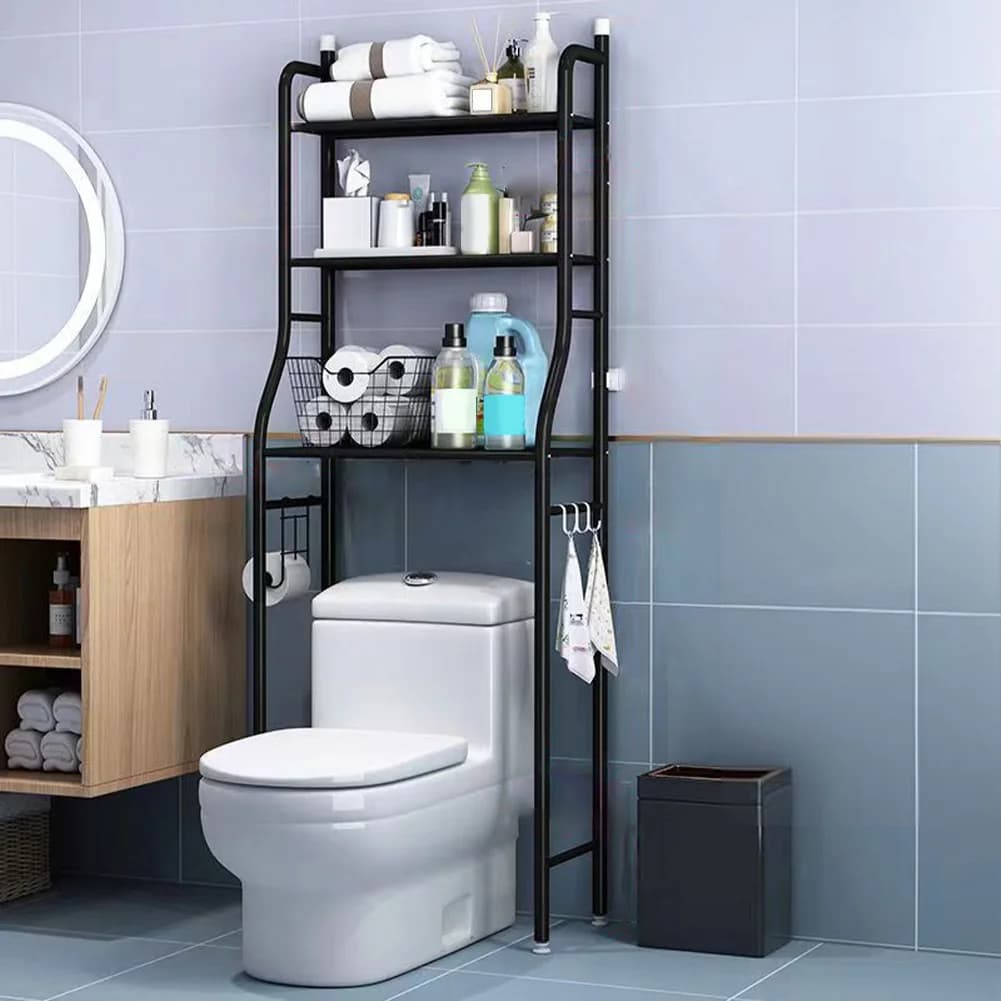
3-Tier Over-Toilet Storage Rack in Powder-Coated Carbon Steel
In stock · Options available · Ships in 7–21 business days
 Sale
Wingback Massage Recliner Chair in PU Leather with Footrest
In stock · Options available · Ships in 7–21 business days
 Sale
Mid-Century Modern Accent Armchairs, Set of Two, Wood Frame
In stock · Options available · Ships in 7–21 business days
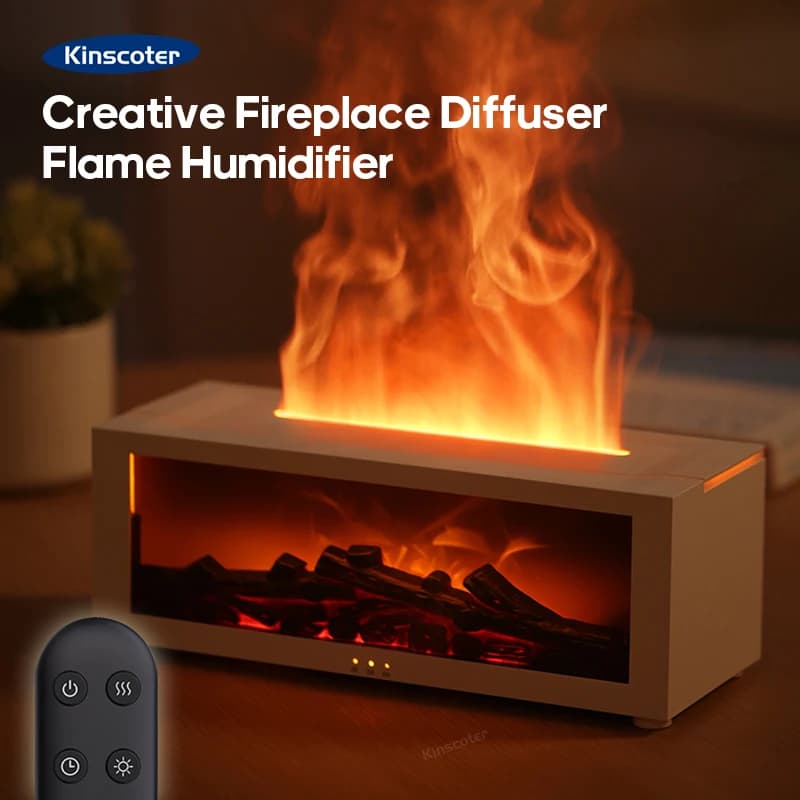
Fireplace Flame Ultrasonic Humidifier and Oil Diffuser
In stock · Options available · Ships in 7–21 business days
Continue reading
 Home & Kitchen
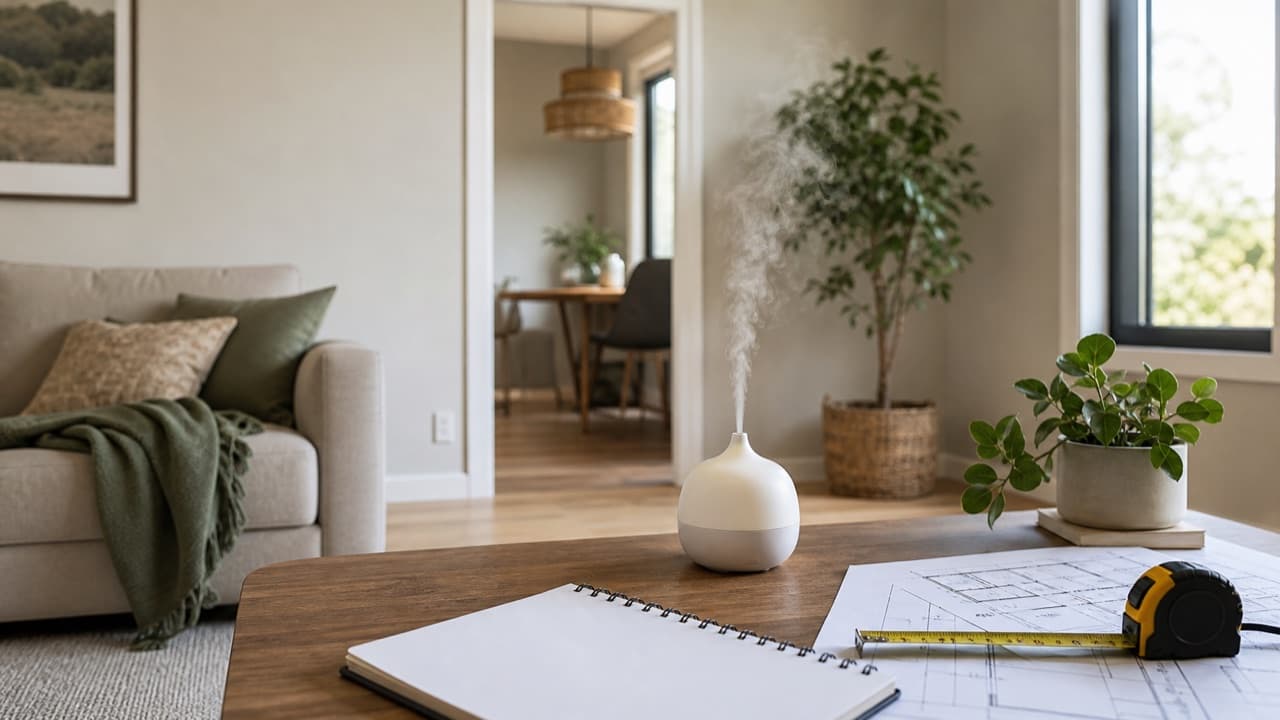
Essential Oil Diffuser Room Size: Coverage and Runtime
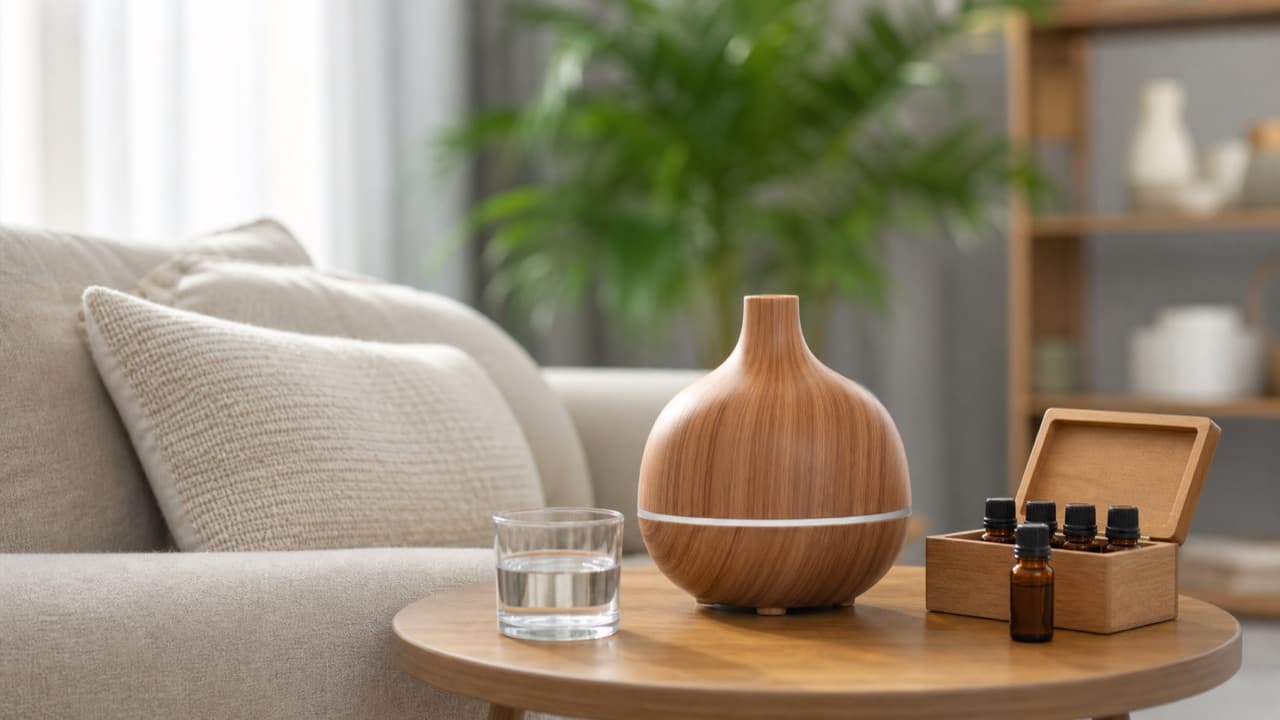
Essential oil diffuser room size explained: coverage claims, tank capacity vs runtime, ultrasonic vs nebulizing output, and where to place it safely.
 Home & Kitchen
Aromatherapy Diffuser Safety: Pets, Kids and Placement
Aromatherapy diffuser safety basics: how long to run it, oils to avoid around pets and young children, safe placement, electrical care and warning signs.
 Home & Kitchen
Humidifier Filter Replacement: When and How to Do It
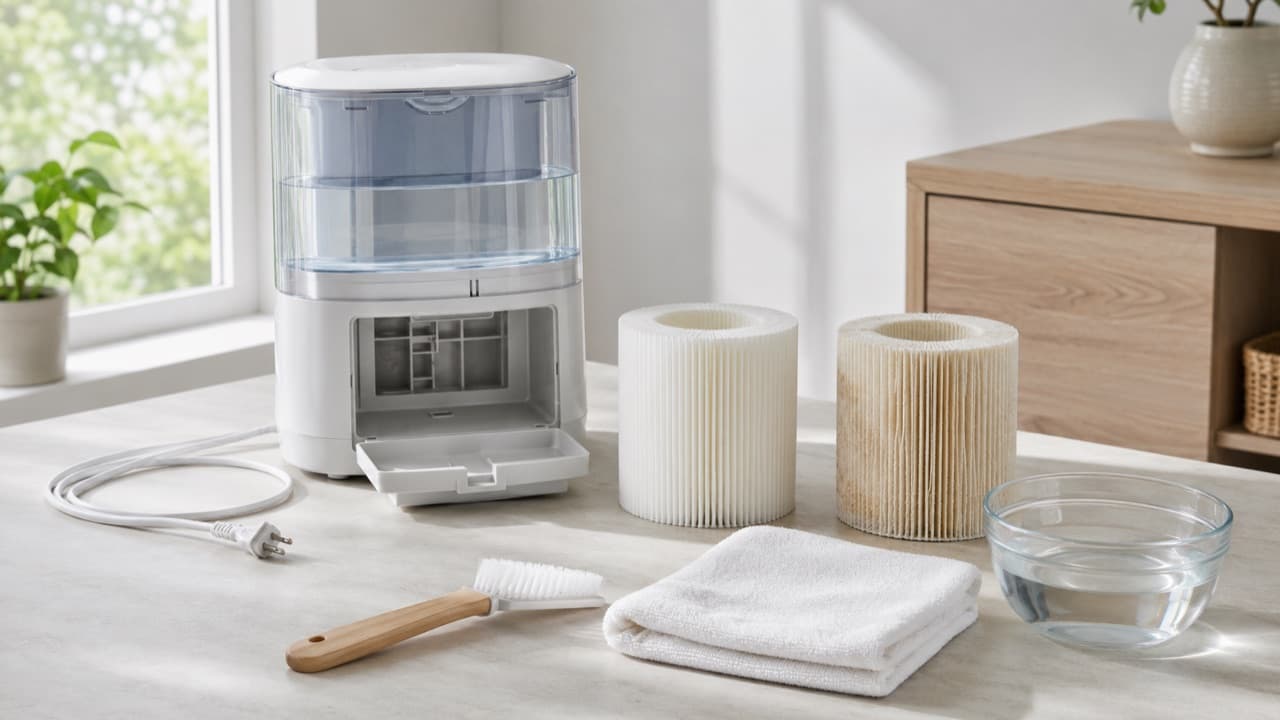
Humidifier filter replacement explained: wick vs cartridge filters, how often to change them, warning signs, hard-water effects, and how to clean between swaps.