

Humidifier Filter Replacement: When and How to Do It
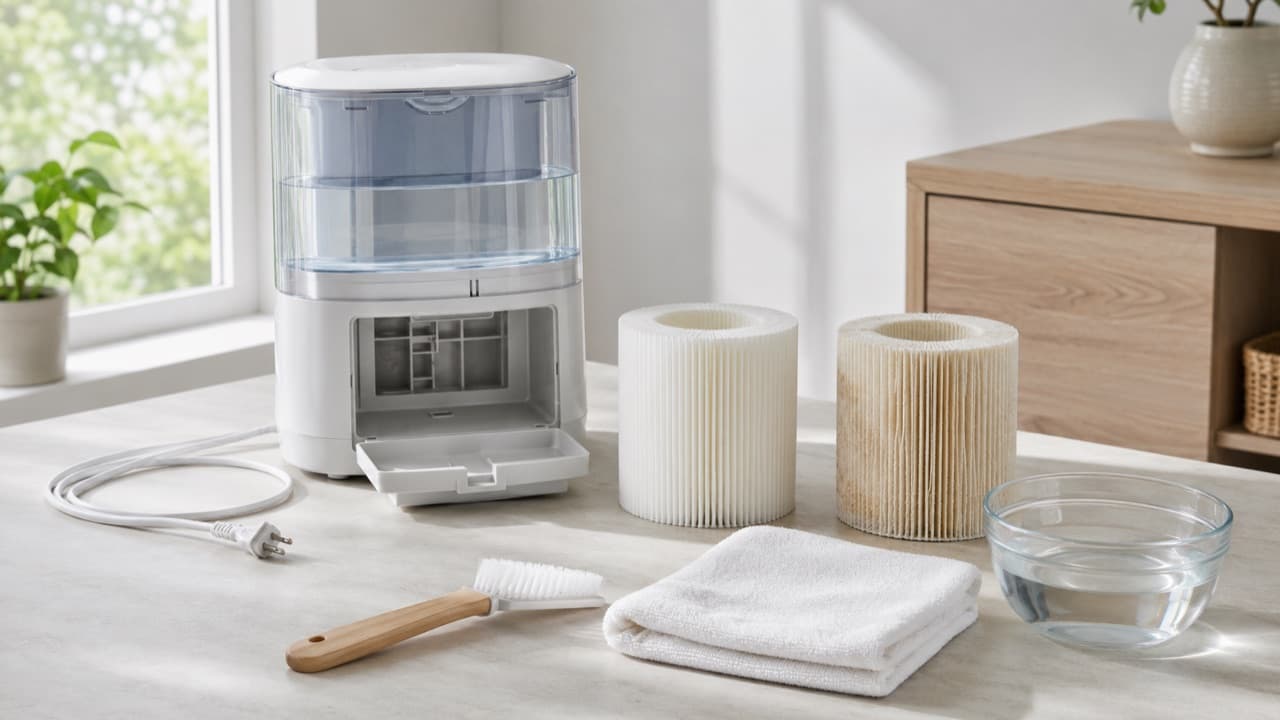
Humidifier filter replacement is due when the filter turns stiff, crusty, discolored or smelly, or when output drops even with a full tank; for many evaporative wick filters that happens every one to three months in regular use, sooner with hard water. Not every humidifier has a filter, though, and the part called a “filter” does different jobs in different machines. This guide explains which type you have, how often to replace it, how to swap it, and how to keep the rest of the humidifier clean so the new filter lasts.
Key takeaways
- Evaporative (cool-mist wick) humidifiers rely on the wick to work; a mineral-clogged wick sharply reduces moisture output.
- Ultrasonic humidifiers often have no filter, or an optional demineralization cartridge that reduces white dust from hard water.
- Manufacturers commonly suggest changing wicks every one to three months during the heating season; your water hardness and run time matter more than the calendar.
- Replace immediately if a filter smells musty, shows dark spots or slime, or has hardened like cardboard.
- Use the exact replacement model your manual lists. Wicks that look similar can differ in height or material and may not seal or draw water properly.
- A fresh filter does not replace cleaning the tank and base; US EPA guidance for home humidifiers emphasizes daily water changes and regular cleaning.
Which humidifier filter do you have?
| Humidifier type | Filter or cartridge | What it does | Typical replacement trigger |
|---|---|---|---|
| Evaporative (cool mist with fan) | Wick filter: paper, cellulose, foam or fiber pad | Absorbs water; the fan blows air through it to evaporate moisture | Hardened, crusted, discolored, odor, low output; often 1 to 3 months |
| Ultrasonic (cool or warm mist) | Often none; some have a demineralization cartridge or filter cassette | Reduces minerals that become white dust | Per the manual, often 1 to 3 months or when dust returns |
| Warm mist (steam vaporizer) | Usually none; some have pads that catch minerals | Boiling leaves minerals behind in the heating chamber | Replace pads when crusted; descale the chamber regularly |
| Whole-house (furnace-mounted) | Water panel or evaporator pad | Absorbs water inside the duct system | Commonly once per heating season, or as the manufacturer advises |
| Air washer or hybrid | Discs or a fabric belt, sometimes a separate air filter | Evaporation plus some particle capture | Follow the manual for each part |
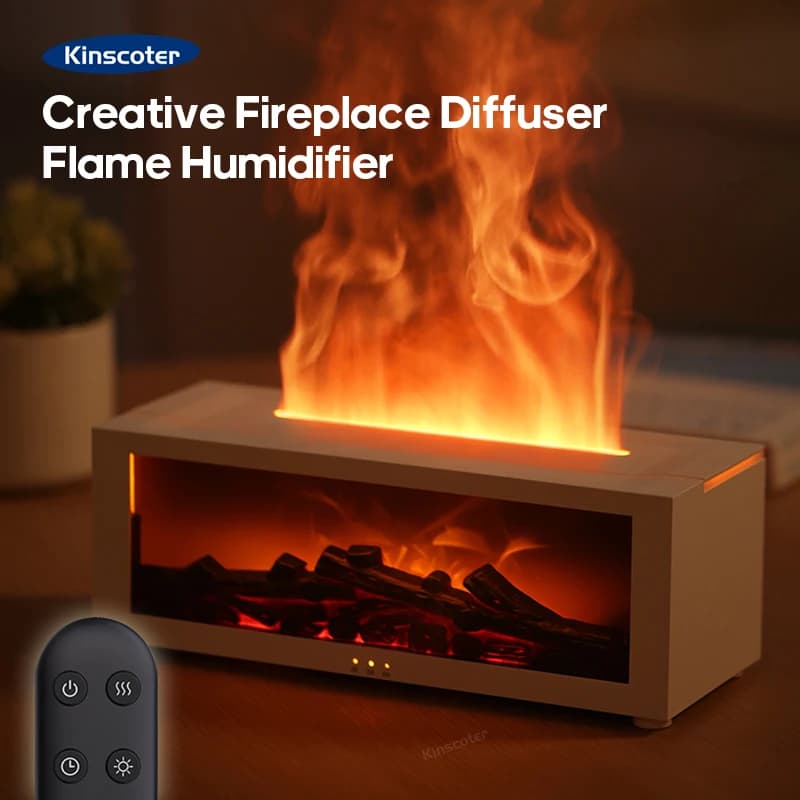
If your unit, like the fireplace flame air humidifier, is a small ultrasonic design, check the product page and manual for whether a filter or cartridge exists before you shop for one.
How often to change a humidifier filter
The manual’s interval is the starting point. These factors shorten it:
- Hard water. Calcium and magnesium deposit in the wick, turning it stiff and white or tan. Very hard water can cut filter life in half or more.
- Long run times. A humidifier running all night every night in a dry winter uses its filter faster than one run occasionally.
- High settings. More water through the wick means more minerals left behind.
- Letting water sit. Stagnant water encourages microbial growth on the wick.
Using distilled or demineralized water slows mineral buildup in any humidifier type. It costs more over a season, but it extends filter life and reduces scale. Some wick filters are treated to resist microbial growth; that helps but does not make a filter permanent.
Signs your filter needs replacing now
- The wick feels hard or crunchy rather than soft and absorbent.
- Visible white, brown or orange crust, especially near the bottom where it sits in water.
- Pink, black or green spots, or a slimy feel.
- A musty, sour or swampy smell when the fan runs.
- The room stays dry even though the tank empties slowly, which suggests the wick is not wicking.
- For ultrasonic units with a cartridge: white dust reappearing on nearby furniture.
How to replace a humidifier wick filter
- Unplug the humidifier and let a warm-mist unit cool completely.
- Remove the tank and empty the base.
- Lift out the old filter. It may be heavy with water; let it drip over a sink.
- Clean the base before the new filter goes in (see the next section). Putting a fresh wick into a dirty base contaminates it quickly.
- Check the new filter’s fit. Match the model number from your manual. Seat it fully in its holder so the bottom sits in the water tray and air must pass through it.
- Prime it if the manual says so. Some wicks need a few minutes in the water tray before the fan starts so they saturate evenly.
- Write the date on the filter edge or a piece of tape on the unit so you know when you changed it.
Generic replacement filters are common and many work fine, but quality varies. Check the dimensions and the humidifier models listed, and stick with the manufacturer’s filter if the manual says third-party filters affect warranty coverage.
Cleaning the humidifier between filter changes
The US EPA’s consumer guidance on home humidifiers recommends changing the water daily, cleaning the unit every third day, and following the manufacturer’s directions, using distilled or demineralized water where possible. A practical routine:
- Daily: empty the tank and base, rinse, wipe dry, and refill with fresh water.
- Every few days: descale the base and tank with white vinegar if the manual allows it, let it sit for 20 to 30 minutes, scrub with a soft brush, and rinse well.
- Weekly or per the manual: disinfect with the product or bleach solution the manufacturer specifies, then rinse thoroughly until there is no smell. Never mix bleach and vinegar, which releases toxic chlorine gas.
- Storage: at the end of the season, clean, dry completely, discard the used wick and store the unit dry. Install a fresh filter next season.
Most manufacturers say not to wash wick filters with soap or put them in the dishwasher, because residue and heat damage the material. Some allow a quick rinse or a vinegar soak to extend life slightly; follow the manual. Never add essential oils to a humidifier unless it has a designated oil tray. The humidifier vs aroma diffuser comparison explains why.
Mistakes to avoid
- Running without the filter. In evaporative units, the wick is how moisture gets into the air; without it, output collapses and water may splash.
- Flipping a crusted filter instead of replacing it. It may buy a few days, but a crusty wick also harbors microbes.
- Over-humidifying. Keep indoor humidity roughly between 30 and 50 percent. Condensation on windows is a sign you are too high, which can encourage mold. A cheap hygrometer helps.
- Using the wrong size filter. Gaps let air bypass the wick and reduce output.
- Ignoring white dust. In ultrasonic units, white dust means minerals are being dispersed; switch to distilled water or use the cartridge the maker specifies.
How to choose your replacement plan
- Pick a stock-up plan (buy a season’s worth of genuine filters) if you run an evaporative humidifier daily in winter and have hard water.
- Pick distilled water if you want fewer filter changes, own an ultrasonic unit with white dust problems, or have very hard water.
- Consider a filterless ultrasonic or warm-mist unit if filter costs bother you, but budget time for frequent cleaning.
- Choose a dehumidifier instead if your home is already humid; the dehumidifier room size guide covers that side, and the HEPA air purifier vs humidifier guide explains which device solves which air problem. Browse units in the home and kitchen category.
Frequently asked questions
How often should I replace my humidifier filter?
Many manufacturers suggest every one to three months during regular use, but hard water and long run times shorten that. Replace sooner if the filter hardens, discolors, smells or the room stops getting more humid.
Can I clean and reuse a humidifier filter?
Some manufacturers allow rinsing or a short vinegar soak to remove light mineral buildup, but most wicks are designed to be replaced. Do not use soap, bleach or a dishwasher unless the manual says so. If it smells or has visible growth, replace it.
Do ultrasonic humidifiers need filters?
Many do not. Some include an optional demineralization cartridge to reduce white dust from hard water. Using distilled water is the other common way to prevent mineral dust.
What happens if I don’t change my humidifier filter?
Output drops as minerals clog the wick, and an old wet filter can grow bacteria or mold that create odors. The humidifier also works harder for less benefit.
Why does my new humidifier filter turn brown?
Browning usually comes from minerals and iron in tap water, or from dust in the air. It is a normal sign of use, but rapid discoloration suggests hard water; distilled water helps.
Shop Home & Kitchen
View all →
3-Tier Over-Toilet Storage Rack in Powder-Coated Carbon Steel
In stock · Options available · Ships in 7–21 business days
 Sale
Wingback Massage Recliner Chair in PU Leather with Footrest
In stock · Options available · Ships in 7–21 business days
 Sale
Mid-Century Modern Accent Armchairs, Set of Two, Wood Frame
In stock · Options available · Ships in 7–21 business days
Fireplace Flame Ultrasonic Humidifier and Oil Diffuser
In stock · Options available · Ships in 7–21 business days
Continue reading
 Home & Kitchen
Humidifier vs Aroma Diffuser: Output, Size and Cost
Humidifier vs aroma diffuser compared by mist output, tank size, room coverage, running cost and upkeep, plus when a 2-in-1 unit makes sense for your room.
 Home & Kitchen
Under-Shelf Baskets for Small Apartments: Fit and Load Guide
Under-shelf baskets for small apartments: how to measure shelf thickness and clearance, which shelves can take them, load limits and the best spots to use one.
 Home & Kitchen
Knife Sharpening at Home: Stones, Rods and Pull-Throughs
Knife sharpening at home explained: honing vs sharpening, whetstone grits and angles, pull-through and electric sharpeners, serrated knives, and safe technique.