

How to Clean a Coffee Grinder Without Damaging It
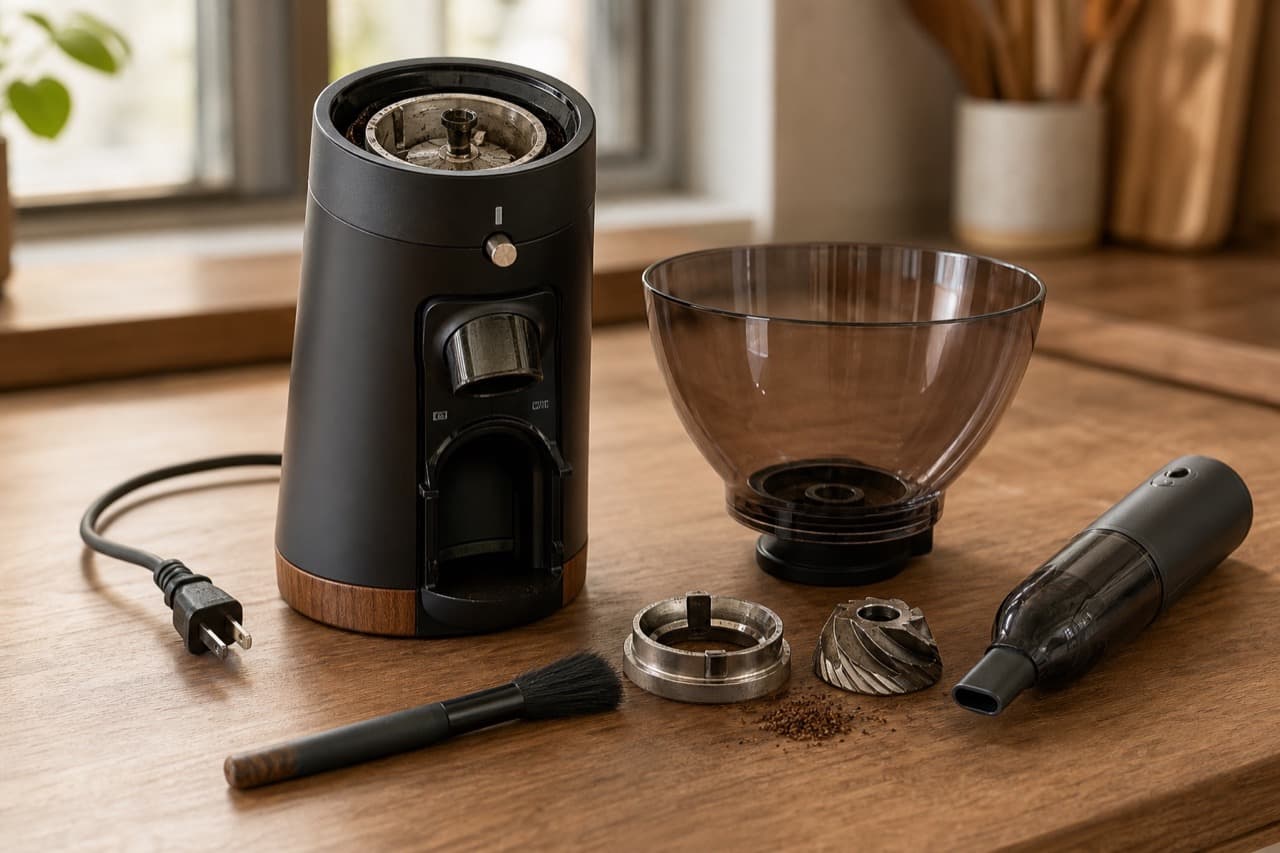
The short answer to how to clean a coffee grinder: unplug it, brush out loose grounds every week or two, and every month or so take out the removable parts and wipe away the oily residue that builds up on the burrs or blade. What you must avoid is water inside the motor housing, harsh scouring, and anything that leaves moisture on steel burrs. This guide is for anyone with an electric blade grinder, an electric burr grinder, or a hand grinder who wants fresher-tasting coffee without voiding a warranty or knocking the grind setting out of whack.
Key takeaways
- Stale coffee oil, not loose grounds, causes most off flavors. A quick brush-out is not enough on its own; plan a deeper clean roughly monthly for daily use.
- Never submerge an electric grinder’s base or run water through the motor area. Only parts the manual lists as washable go near a sink.
- Dry every metal part completely before reassembly. Steel burrs can spot-rust in hours if they go back in damp.
- Avoid raw rice in burr grinders. It is hard, starchy and can stress small motors; most burr makers either forbid it or recommend purpose-made cleaning pellets instead.
- Note or photograph your grind setting before you take a burr grinder apart, so you can return to it in seconds.
- Very dark, shiny, oily beans gum up a grinder far faster than medium roasts; clean more often if that is what you buy.
Why a dirty grinder makes coffee taste worse
Coffee beans contain oils that coat everything they touch during grinding. Fresh, those oils carry flavor. After a few days exposed to air they oxidize and turn rancid, and every new dose of beans picks up a little of that stale film. The result is coffee that tastes flat, bitter or faintly like old peanuts, even when the beans are freshly roasted.
There is also a mechanical side. Fine particles called fines pack into the burr chamber and the exit chute. Over time they compact into a crust that changes how coffee flows out of the grinder, which can make the grind less consistent and increase retention, meaning grounds from yesterday end up in today’s cup. On a blade grinder, packed residue under the blade makes the grind even more uneven than it already is.
How often to clean a coffee grinder
Frequency depends on how much you grind and how oily your beans are. These are sensible starting points; your manual’s schedule takes priority.
| Grinder type | Quick clean | Deep clean | Main risk when cleaning |
|---|---|---|---|
| Electric blade grinder | Wipe bowl after every few uses | Every 2 to 4 weeks | Water near the motor, cuts from the blade |
| Electric burr grinder | Brush hopper and chute weekly | Every 4 to 8 weeks; more with dark roasts | Losing the burr alignment or calibration, moisture on burrs |
| Manual (hand) grinder | Tap and brush after use | Every 1 to 2 months | Washing the bearing or axle area, losing small parts |
| Grinder also used for spices | After every spice batch | Before switching back to coffee | Lingering spice oils; a dedicated spice grinder is easier |
How to clean a blade coffee grinder
Blade grinders are the simplest to clean because most have a fixed bowl and a single spinning blade. Some models have a removable bowl that is dishwasher-safe; check before assuming yours is.
- Unplug it. Never clean a blade grinder that is plugged in; the lid switch is a convenience, not a safety system you should rely on with your fingers near the blade.
- Dump and brush. Turn it upside down over the trash and tap out loose grounds. Use a soft, dry brush to sweep around and under the blade.
- Absorb the oils. A common trick is to grind a tablespoon or two of plain white bread crumbs or a small amount of uncooked rice in a blade grinder. Blade grinders handle rice better than burr grinders because the blade simply smashes it, but it still dulls the blade slightly over time, so do this occasionally rather than weekly. Discard the powder.
- Wipe. Use a damp, well-wrung cloth or paper towel on the bowl and lid, keeping water away from the base and the shaft seal. A drop of mild dish soap on the cloth is fine for a stubborn film; follow with a cloth dampened with plain water.
- Dry. Leave the lid off for an hour so any moisture evaporates before the next use.
How to clean a burr grinder without wrecking the setting
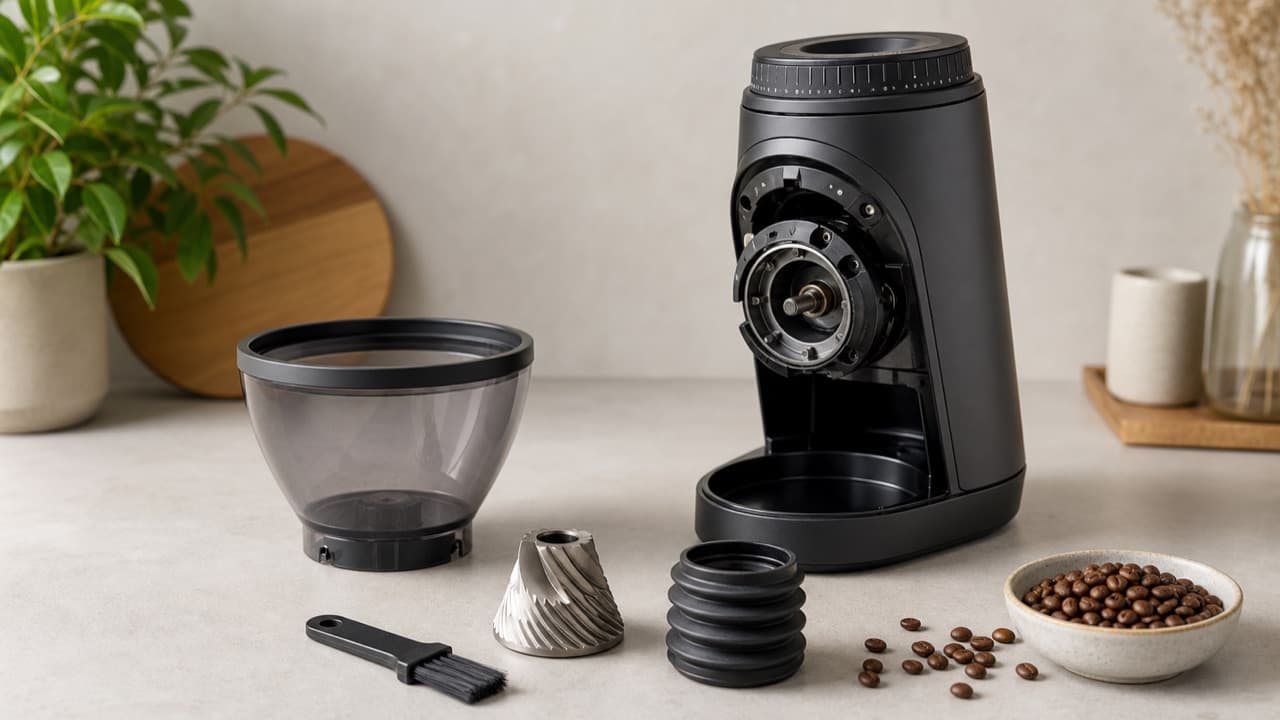
Burr grinders, electric or manual, crush beans between two abrasive rings or cones. They produce a far more even grind, but the burr chamber traps more oil and fines. For a full teardown with calibration steps, the dedicated burr coffee grinder cleaning and calibration guide goes deeper; the routine below covers what most owners need.
Routine clean for electric burr grinders
- Run the grinder empty for a few seconds to clear the chamber, then unplug it.
- Remove the hopper. Many hoppers have a shutoff gate; close it, lift it off and empty the beans into an airtight container. Hoppers are usually plastic and can be washed by hand in warm soapy water, then dried completely.
- Write down or photograph the current grind setting.
- Remove the upper burr if your model allows it without tools. Most designs twist out or lift out after the hopper is removed.
- Brush the upper and lower burrs with a stiff, dry nylon brush. A handheld vacuum or a short puff from a bulb blower clears the chamber. Avoid canned air held upside down, which can spray liquid propellant.
- Clear the exit chute with a thin brush or a pipe cleaner. This is where compacted fines hide.
- Wipe plastic surfaces with a dry or barely damp cloth. Do not wash the burrs unless the manual allows it.
- Reinstall the upper burr, return to your recorded setting, and grind a small amount of beans to purge any loosened residue before brewing.
Grinder cleaning tablets and pellets
Purpose-made grinder cleaning pellets are formulated from food-safe grain-based ingredients and are designed to break apart under burrs. You grind a measured dose, then grind some coffee afterward to flush the residue. They are a useful between-teardown step, especially for grinders that are awkward to disassemble. Check that the product is approved for your grinder type, use the amount on the package, and never use them in a grinder whose maker says not to. They do not replace taking the burrs out occasionally.
Manual hand grinders
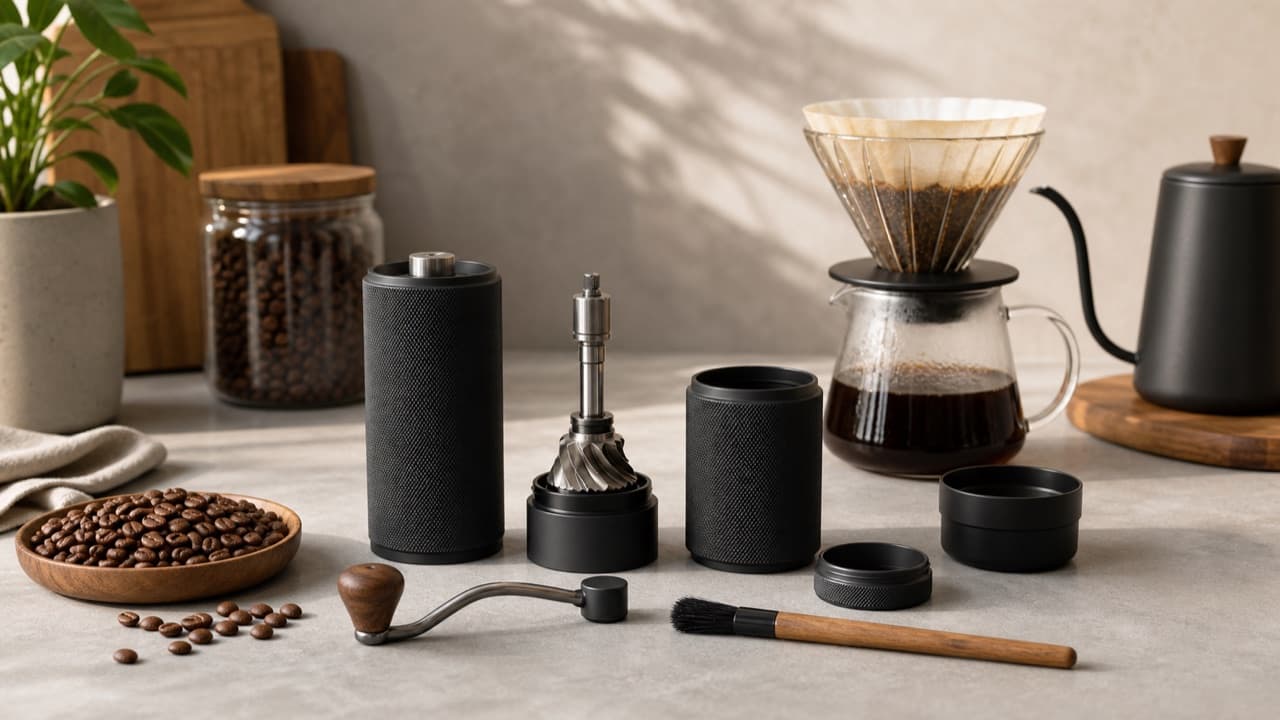
Hand grinders like the Timemore Chestnut C2 manual grinder usually come apart by unscrewing the handle nut and removing the inner burr and axle. Keep track of the order of washers, springs and clips; lay them out on a towel in sequence. Brush the burrs dry. Some manufacturers allow rinsing the outer body or catch cup, but the bearings and axle should stay dry and should not be degreased. If you rinse anything, dry it with a lint-free cloth and leave it on a rack until no moisture remains in threads. The product page is the place to check care guidance for a specific model; if you are still choosing, our manual coffee grinder buying guide explains how build quality affects cleaning.
Mistakes to avoid
- Putting the whole grinder under the tap. Water in a motor housing or switch can cause electrical failure and is a common reason warranty claims are refused.
- Running raw rice through a burr grinder. Rice is harder than roasted coffee and can strain the motor and jam small burr sets. Several grinder manufacturers specifically warn against it.
- Reassembling damp burrs. Most burrs are hardened steel, which is not stainless. A few hours of trapped moisture can leave rust spots that shed into your coffee.
- Using metal tools to scrape burrs. A knife tip or screwdriver can chip a cutting edge. Use a nylon brush, a wooden toothpick for packed corners, or a soft cloth.
- Losing the calibration. Burrs that are re-seated crooked, or a setting changed during cleaning, will make your next brew taste completely different. Record the setting first.
- Grinding spices in your coffee grinder. Cumin, cardamom and pepper oils linger. If you must, clean thoroughly afterward, but a separate inexpensive blade grinder for spices is simpler.
- Cleaning while plugged in. Brushing near burrs or blades with power connected is how fingers get hurt.
Cleaning tools that are worth having
You do not need a kit. A stiff nylon brush (many grinders include one), a small soft paintbrush, a few pipe cleaners, a bulb blower and a microfiber cloth handle nearly every grinder. A small handheld vacuum makes burr chambers easier. Keep the tools together near the grinder so a weekly brush-out takes two minutes rather than becoming a chore you postpone.
If you are setting up a coffee station from scratch, our coffee station setup and organization tips help you find a home for the grinder and its tools, and the full range of grinders and scales lives in the home and kitchen collection.
How to choose your cleaning routine
- Pick the light routine (weekly brush-out, monthly wipe) if you drink one or two cups a day of medium roast and use one grinder only for coffee.
- Pick the heavier routine (weekly brush-out plus pellets every two weeks, burr removal monthly) if you grind dark, oily beans, make espresso, or brew for a household.
- Pick a full teardown when you notice slower output, clumpier grounds, a stale smell from the chute, or shots that suddenly run differently. The espresso grinder dial-in guide helps if your grind needs readjusting afterward.
- Choose an easy-to-open grinder next time if cleaning feels like a fight. Electric models such as the Starseeker E55 electric grinder list their design details on the product page; check how the burrs are accessed before you buy any grinder.
Frequently asked questions
Can I wash my coffee grinder with water?
Only the parts the manufacturer says are washable, usually the hopper, lid and sometimes the grounds bin. The motor base, switch and, in most cases, the burrs should stay dry. If you wash any removable part, let it dry completely before refitting it.
Is it OK to clean a coffee grinder with rice?
In a blade grinder, an occasional small handful of rice is a common and generally harmless way to absorb oils. In a burr grinder, it is best avoided because rice is harder than coffee and can strain the motor or jam the burrs. Use grinder cleaning pellets designed for burr grinders instead.
How do I know my grinder needs a deep clean?
Signs include a stale or rancid smell from the chute, visible dark oily film on the burrs, slower grinding, more clumping, and coffee that tastes flat even with fresh beans. If grounds from the previous session keep appearing in your dose, compacted fines are likely building up.
Can I use vinegar or baking soda on grinder burrs?
It is not recommended. Liquids risk rust on steel burrs, and residue from vinegar or baking soda can affect flavor. Dry brushing, a barely damp cloth on non-metal parts, and food-safe grinder pellets are the safer combination.
Do grinder cleaning tablets affect the taste of coffee?
Used as directed, they should not, because you grind a small amount of coffee afterward to purge the residue. Discard that purge dose rather than brewing it.
Shop Home & Kitchen
View all →
3-Tier Over-Toilet Storage Rack in Powder-Coated Carbon Steel
In stock · Options available · Ships in 7–21 business days
 Sale
Wingback Massage Recliner Chair in PU Leather with Footrest
In stock · Options available · Ships in 7–21 business days
 Sale
Mid-Century Modern Accent Armchairs, Set of Two, Wood Frame
In stock · Options available · Ships in 7–21 business days

Fireplace Flame Ultrasonic Humidifier and Oil Diffuser
In stock · Options available · Ships in 7–21 business days
Continue reading
 Home & Kitchen
Manual Coffee Grinder Buying Guide: Burrs, Steps, Speed
Manual coffee grinder buying guide: compare burr size and material, stepped vs stepless adjustment, bearings, capacity and grind effort for your brew.
 Home & Kitchen
Burr Grinder Cleaning and Calibration: Deep Clean and Re-Zero
A burr grinder cleaning routine beyond a quick brush: removing burrs, clearing the chute, finding zero again, checking alignment and spotting burr wear.
 Home & Kitchen
Coffee Scale Accuracy: Response Time, Timers and Calibration
Coffee scale accuracy explained: resolution vs true accuracy, response lag, auto-start timers, and how to check and calibrate your scale at home.