

Coffee Scale Accuracy: Response Time, Timers and Calibration
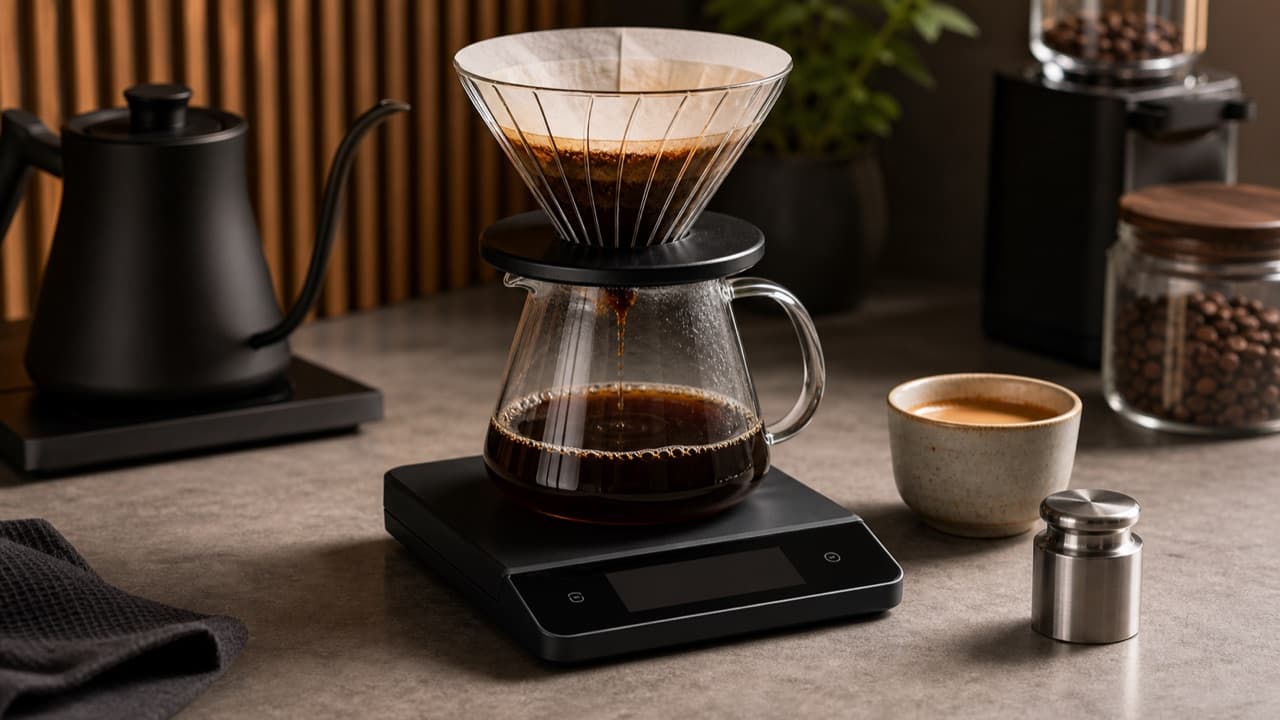
Coffee scale accuracy comes down to three separate things: how finely the display reads (resolution), how close that reading is to the true weight, and how quickly the number catches up while you pour. A scale that shows 0.1 g steps is not automatically accurate to 0.1 g, and a slow display can make you overshoot a pour-over or espresso yield by a gram or more. This guide is for home brewers who already weigh their coffee, or plan to, and want to understand which specs matter, how timers really work, and how to check and calibrate a scale without lab equipment.
Key takeaways
- Resolution (the 0.1 g on the box) is not accuracy; real-world tolerance on budget coffee scales is often a few tenths of a gram or more.
- Response time matters most for espresso, where the shot can gain several grams per second near the end.
- For pour-over, accuracy within about 1 g on a 300 to 500 g brew is already well under 1 percent and is plenty.
- Check a scale with a known mass, not a random household object; a US nickel is minted at 5 g and makes a handy rough check.
- Calibrate only with the weight the manual specifies, on a level, still surface, after the scale has warmed up.
Resolution, accuracy and repeatability are different specs
Coffee scale listings mix these terms, so it helps to separate them:
- Resolution or readability is the smallest step the display shows, typically 0.1 g on coffee scales and 1 g on general kitchen scales.
- Accuracy is how close the reading is to the true mass. Some listings give a tolerance such as plus or minus 0.1 to 0.5 g; many give none at all.
- Repeatability is whether the same object reads the same every time. For brewing, this matters more than absolute accuracy, because you mostly compare today’s recipe to yesterday’s.
- Capacity is the maximum load, usually 2 to 3 kg on pour-over scales and often less on compact espresso scales. Remember that a glass carafe or server plus brewer and water can weigh more than you expect.
Load-cell scales also tend to be most precise in the lower part of their range. Some scales switch from 0.1 g to 1 g steps above a certain weight, which is worth checking if you brew large batches.
How much accuracy does your brew method need?
| Method | Typical weights | What matters most | Practical tolerance |
|---|---|---|---|
| Espresso | 14 to 22 g dose, 25 to 50 g yield | Fast response, 0.1 g steps, fits on the drip tray | About 0.1 to 0.2 g on the dose |
| Pour-over | 12 to 30 g coffee, 200 to 500 g water | Smooth live reading during pours, built-in timer | About 0.5 to 1 g |
| French press and batch brew | 30 to 70 g coffee, 500 to 1,000 g water or more | Capacity and a large platform | 1 to 2 g is fine |
| Cold brew concentrate | 100 g coffee and up | Capacity, ideally 3 kg or more | Several grams is fine |
The reason espresso is so sensitive is the ratio. At a common 1:2 starting recipe, an 18 g dose produces a 36 g shot; a 0.5 g dose error is close to 3 percent of the dose, which is enough to shift extraction and shot time. In a 20 g pour-over with 320 g of water, the same 0.5 g error on the water is negligible.
Response time: why the number lags behind the pour
Every digital scale filters the raw load-cell signal so the display does not flicker. More filtering gives a steadier number but a slower one. On a fast espresso shot, the last few seconds can add a couple of grams per second; if the display trails by half a second or more, you stop the shot late and the final yield creeps past your target once the number settles.
A few practical checks reveal lag quickly:
- Drop a coin onto the platform and watch how long the display takes to settle on a final value.
- Pour water slowly from a kettle and see whether the reading climbs smoothly or jumps in steps.
- Stop pouring and note whether the number keeps rising for a moment afterward.
Scales sold specifically for espresso usually emphasize fast response. For pour-over, a smooth, readable climb matters more than raw speed. If you are dialing in shots, our espresso grinder dial-in guide explains how yield and time interact.
How coffee scale timers work
Manual timers
You press start when the pump or first pour begins. Simple and predictable, but easy to forget when your hands are full.
Auto-start timers
The timer starts when the scale detects weight increasing after tare, such as the first drops of espresso or the first pour of bloom water. That is convenient, but note what it actually measures: on espresso, an auto-start timer triggered by the first drops in the cup skips the pre-infusion and the delay before coffee appears, so its shot time reads shorter than a timer started with the pump. Pick one convention and stick to it so your recipes stay comparable.
Flow rate and app features
Some scales show flow rate in grams per second or log brews to an app. Flow rate is useful for keeping pour-over pours consistent. App logging is optional; check whether the app needs an account and whether the scale works fully without it.
How to check and calibrate a coffee scale
Before you calibrate anything, check whether you need to. Many scales are fine out of the box, and a bad calibration can make things worse.
- Set up properly. Use a firm, level counter away from drafts, fans and vibration from a grinder. Turn the scale on and let it sit for a minute or two before testing.
- Test repeatability. Weigh the same small object five times, removing it and taring between readings. Readings that wander by more than a couple of tenths suggest a problem with the surface, battery or load cell.
- Test against a known mass. A calibration weight is best. As a rough household check, a US nickel is specified at 5.000 g, so ten nickels should read close to 50 g; coins wear slightly, so treat this as a sanity check, not a certificate.
- Test linearity. Weigh a known mass alone, then on top of a full mug of water after taring. Both readings should match.
- Test off-center loading. Place the same weight at the center and near each edge; big differences point to a platform or load cell issue.
- Calibrate only if needed, using the exact procedure and weight in the manual. Most scales enter a calibration mode with a button sequence and then ask for a specific mass, commonly 100 g, 500 g, 1 kg or 2 kg. Using a different weight than requested will miscalibrate the scale.
Small stainless calibration weights are inexpensive. Handle them by the edges or with the supplied tweezers, since fingerprints and dust add tiny amounts of mass over time.
Build, heat, water and power
Hot kettles and full carafes can warm the platform, and temperature changes can make some load cells drift by a few tenths over a long brew. A silicone or cork pad under hot vessels helps, and many coffee scales include one. Splash resistance matters on an espresso drip tray; a listing may mention a water-resistance rating, but no budget scale should be submerged or rinsed under a tap. Power is either replaceable AAA batteries or USB charging; low batteries are a classic cause of drifting or slow readings, so test with fresh power before blaming the scale. Finally, check the auto-off delay. A scale that turns off after a minute without change can cut out during a long immersion brew.
The Timemore Black Mirror Coffee Scale is a coffee-specific option in ADLTHUB’s home and kitchen category; check the product page for its current resolution, capacity, timer modes and power details.
Mistakes to avoid
- Trusting the 0.1 g label as proof of accuracy. Test with a known mass instead.
- Calibrating with a full bag of coffee or a phone. Their labeled weights are not precise enough and you will lock the error in.
- Weighing on a dish towel or uneven tile. Soft or tilted surfaces cause drift and inconsistent readings.
- Comparing shot times from different timer conventions. Pump-start and first-drip timing can differ by several seconds.
- Overloading a compact espresso scale with a carafe. Exceeding capacity can damage the load cell permanently.
- Letting grounds and water sit on the platform. Wipe it after each brew; residue can creep into seams. The routine in our burr grinder cleaning guide pairs well with a quick scale wipe-down.
How to choose a scale for your setup
- Pick a compact, fast-response scale with 0.1 g steps if espresso is your main drink and it needs to fit under the portafilter.
- Pick a 2 to 3 kg scale with a smooth display and timer if you brew pour-over most days.
- Pick a large-platform, higher-capacity scale if you make French press, batch brew or cold brew concentrate.
- Pick a general kitchen scale if you only weigh beans for drip coffee; 1 g resolution is acceptable there.
If you are still deciding which coffee tools to buy first, the essential kitchen gadgets roundup puts a scale in context with the rest of the kitchen.
Frequently asked questions
How accurate does a coffee scale need to be?
For espresso, aim for consistent readings within about 0.1 to 0.2 g on the dose. For pour-over and French press, staying within about 1 g is plenty, because the brew weights are much larger.
How do I calibrate a coffee scale without a calibration weight?
You can check it roughly with US nickels, which are minted at 5 g each, but calibration itself should use the weight the manual specifies. If the scale reads correctly against coins and repeats well, it may not need calibrating at all.
Why does my coffee scale keep drifting?
Common causes are a weak battery, an uneven or soft surface, drafts, vibration, and heat from a hot vessel on the platform. Fix those first, let the scale warm up, then retest before calibrating.
Should the espresso timer start with the pump or the first drip?
Many baristas time from the moment the pump starts, so pre-infusion is included. Auto-start scales often begin at the first drip. Either works if you use the same method every time.
Can I use a kitchen scale for espresso?
Only if it reads in 0.1 g steps and responds quickly. Most 1 g kitchen scales are too coarse for espresso doses, though they work for drip coffee and French press.
Shop Home & Kitchen
View all →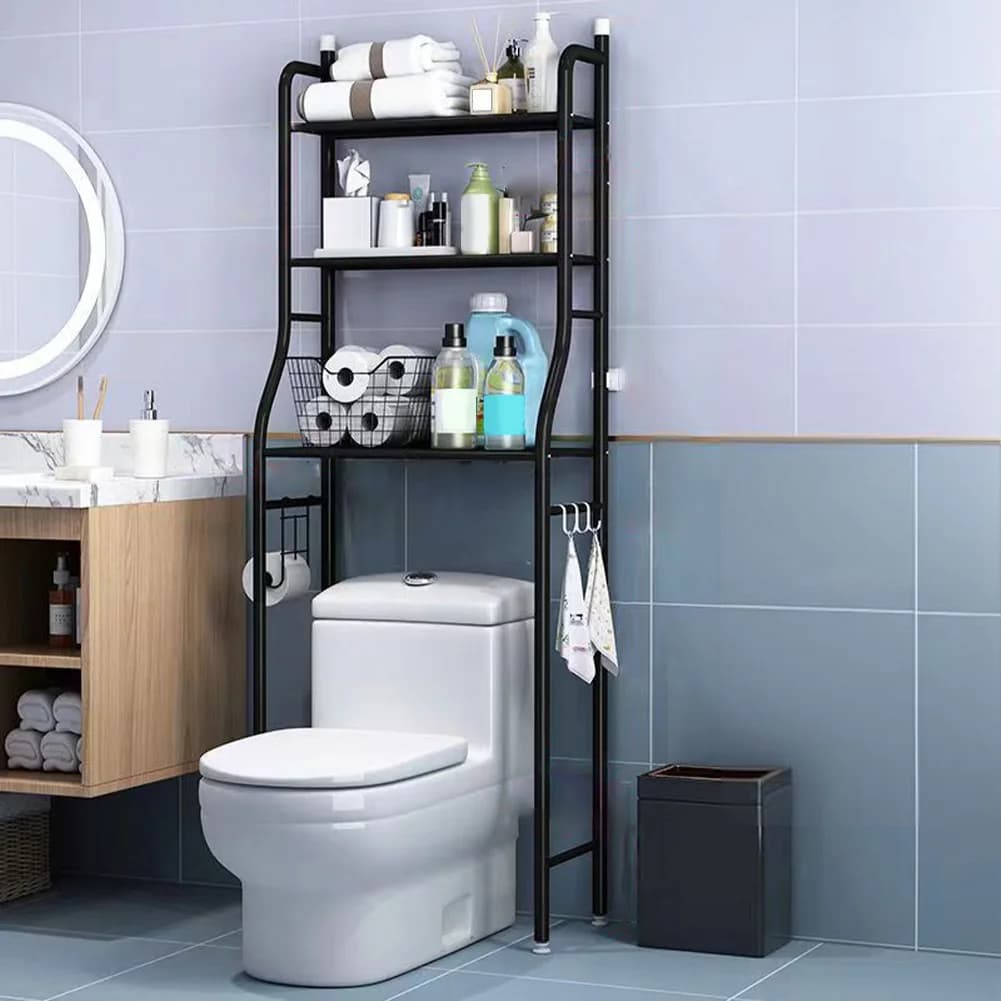
3-Tier Over-Toilet Storage Rack in Powder-Coated Carbon Steel
In stock · Options available · Ships in 7–21 business days
 Sale
Wingback Massage Recliner Chair in PU Leather with Footrest
In stock · Options available · Ships in 7–21 business days
 Sale
Mid-Century Modern Accent Armchairs, Set of Two, Wood Frame
In stock · Options available · Ships in 7–21 business days

Fireplace Flame Ultrasonic Humidifier and Oil Diffuser
In stock · Options available · Ships in 7–21 business days
Continue reading
 Home & Kitchen
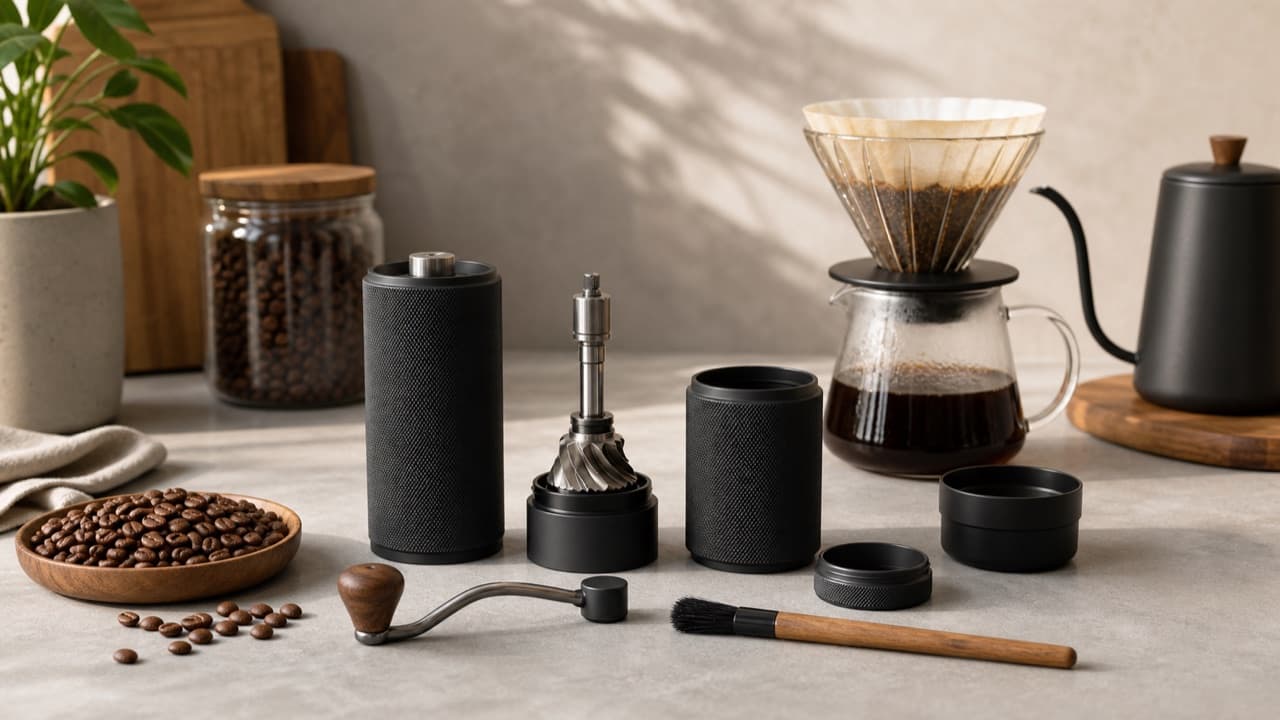
Manual Coffee Grinder Buying Guide: Burrs, Steps, Speed
Manual coffee grinder buying guide: compare burr size and material, stepped vs stepless adjustment, bearings, capacity and grind effort for your brew.
 Home & Kitchen
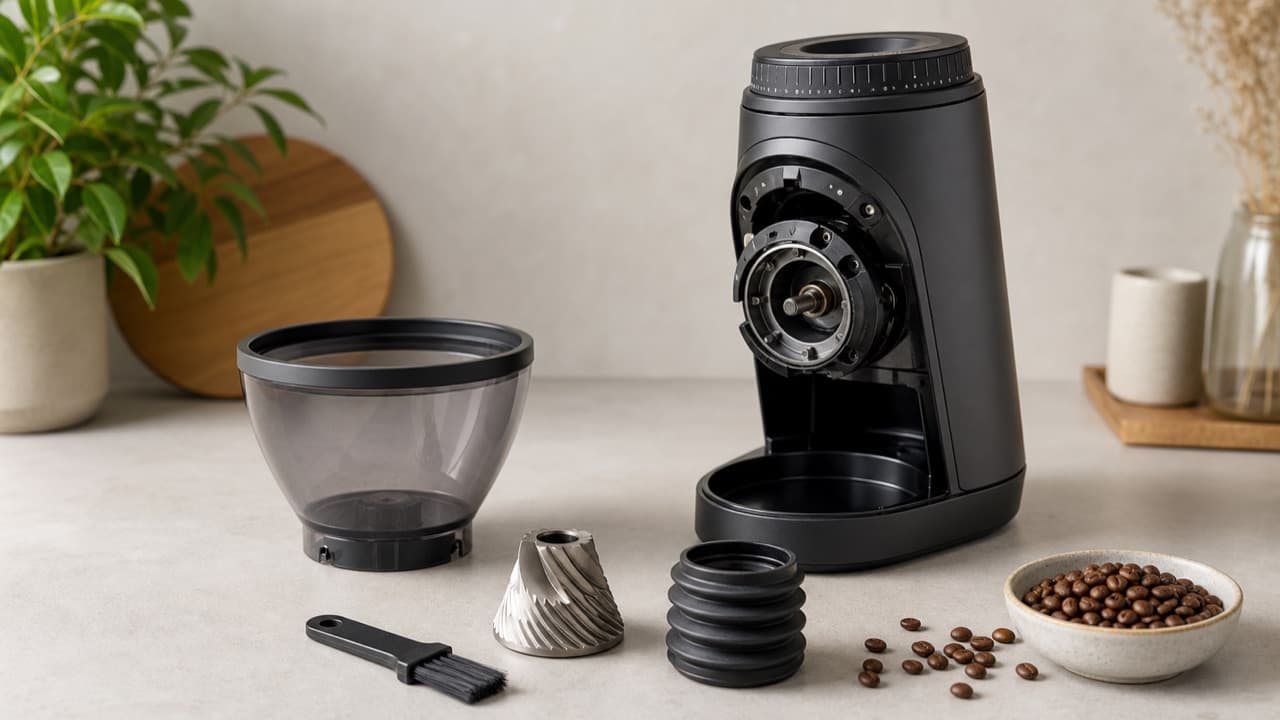
Burr Grinder Cleaning and Calibration: Deep Clean and Re-Zero
A burr grinder cleaning routine beyond a quick brush: removing burrs, clearing the chute, finding zero again, checking alignment and spotting burr wear.
 Home & Kitchen
Under-Shelf Baskets for Small Apartments: Fit and Load Guide
Under-shelf baskets for small apartments: how to measure shelf thickness and clearance, which shelves can take them, load limits and the best spots to use one.