

How to Measure for a Suit at Home: Men’s Size Guide
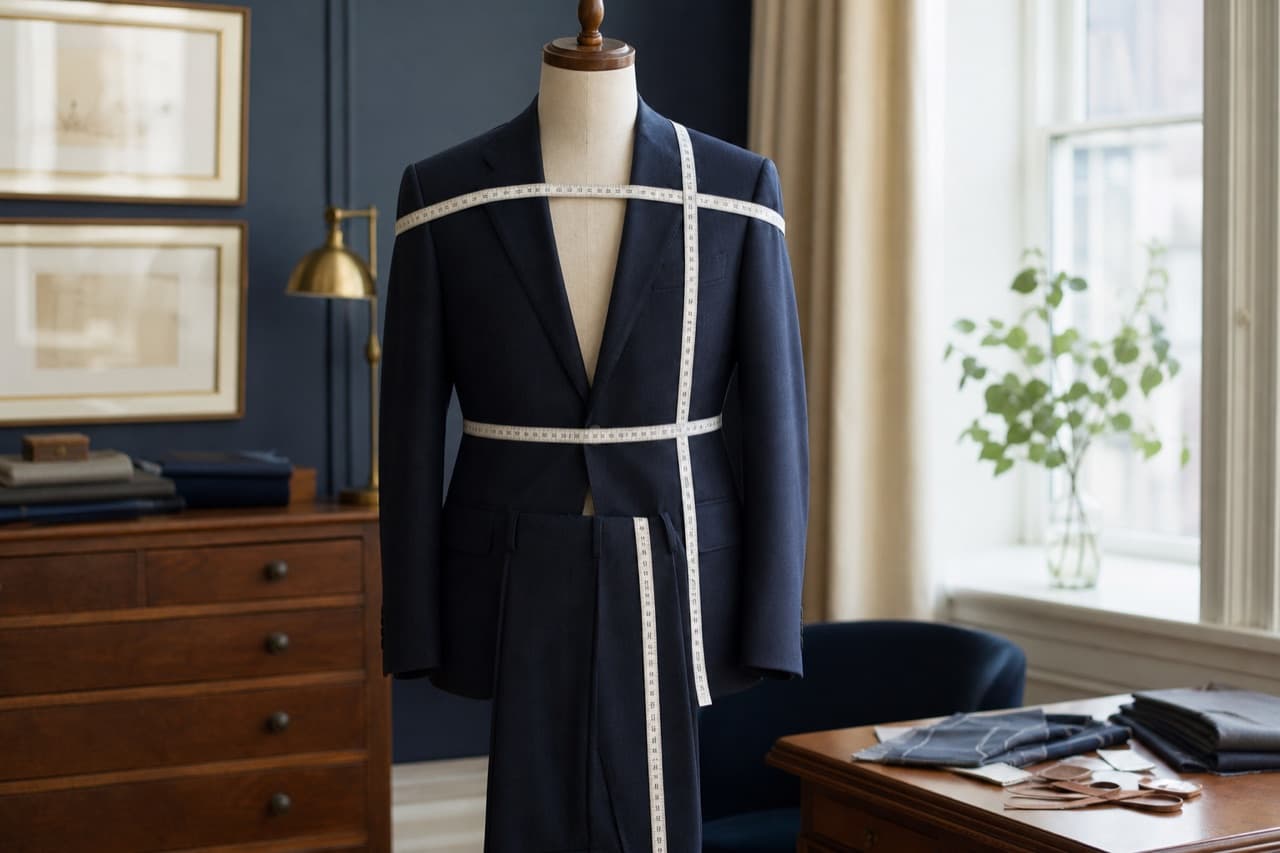
If you want to know how to measure for a suit at home, you need a soft tape measure, a thin shirt, about ten minutes and ideally someone to help. Seven body measurements (chest, shoulders, sleeve, waist, seat, inseam and height) plus one measurement taken from a jacket you already own will get you to the right size label far more reliably than guessing from your usual shirt size. This guide is for men ordering a suit online, whether for work, a wedding or a first interview, and it explains how to turn those numbers into labels like 40R and how to avoid the sizing traps that send suits back.
Key takeaways
- Your jacket size usually tracks your chest measurement in inches: a 40-inch chest typically points to a 40 jacket, before brand differences.
- The letter after the number (S, R, L) is jacket length, chosen mainly by height and torso length, not weight.
- “Drop” is the difference between jacket size and trouser waist; many suits use a 6-inch drop, so a 40 jacket pairs with 34 trousers.
- Always compare your body measurements with the seller’s chart, and if the chart lists garment measurements, compare them with a jacket that already fits you.
- Prioritize shoulders: a tailor can adjust sleeves, waist suppression and hems, but shoulders are difficult and expensive to fix.
Before you start: tools and technique
Use a flexible tailor’s tape, not a metal tape measure. Wear a thin dress shirt or T-shirt and the kind of trousers you will wear with the suit, and empty your pockets. Stand naturally with your arms relaxed; puffing out your chest or sucking in your stomach gives you a suit that fits only while you hold your breath.
- Keep the tape level and snug, but not tight. You should be able to slide one finger under it.
- Measure each point twice and use the average if the numbers differ.
- Record in inches, since US suit sizes are inch-based, and note the centimeter value if the seller’s chart is metric (1 inch = 2.54 cm).
- A helper is strongly recommended for chest, shoulders and sleeve; doing these alone usually lifts your arms and skews the reading.
The measurements, step by step
1. Chest
Run the tape around the fullest part of your chest, under the armpits and across the shoulder blades, with arms down. This is the number that most directly maps to your jacket size.
2. Shoulder width
Measure across the back from the outer edge of one shoulder bone to the other, following the natural curve. Compare this with the seller’s shoulder figure if one is given; it is the measurement that most determines whether a jacket looks right.
3. Sleeve length
With your arm relaxed at your side, measure from the shoulder point (where a jacket’s shoulder seam would sit) down to the wrist bone. A well-fitted jacket sleeve usually lets about 1/4 to 1/2 inch (6-13 mm) of shirt cuff show.
4. Trouser waist
Measure where you actually wear dress trousers, which is often a little higher than where you wear jeans, typically around or just below the navel. Do not use the size printed in your jeans; denim sizing often runs differently from true measurements.
5. Seat
Measure around the fullest part of your hips and seat with feet together. Athletic builds often need a larger seat than the waist alone suggests.
6. Inseam
Measure from the crotch seam to where you want the hem to fall, ideally on a pair of well-fitting trousers rather than your body. Many suit trousers ship unhemmed or with extra length so a tailor can finish them to your shoes.
7. Height and jacket length
Note your height in shoes you would wear. For a direct check, measure from where the collar meets the top of the shoulder at the back of the neck down to the point where the jacket should end; a traditional jacket roughly covers the seat.
Reading suit size labels: 40R, drop and EU sizes
Once you have numbers, the label is easier to decode. The number is usually the jacket’s chest size, and the letter is its length. Exact cutoffs differ by brand, so treat the ranges below as typical rather than fixed.
| Length | Typical height range | Notes |
|---|---|---|
| Short (S) | About 5’4″-5’7″ (163-170 cm) | Shorter body and sleeve length |
| Regular (R) | About 5’8″-6’0″ (173-183 cm) | The most widely stocked length |
| Long (L) | About 6’1″-6’3″ (185-191 cm) | Longer body and sleeves |
| Extra Long (XL) | About 6’4″ and up (193 cm+) | Less common; check availability |
Drop is the difference between jacket chest size and trouser waist on a matched suit set. A 6-inch drop is common, so a 40R jacket comes with 34-inch trousers; slim or “athletic” cuts may use a 7 or 8-inch drop. If your chest and waist differ by much more or less than the suit’s drop, prioritize the jacket fit and plan to have the trousers altered, or look for separates sold individually.
European labels typically add 10 to the US chest size, so a US 40 is roughly an EU 50. Imported suits, including many sold online, may also follow Asian sizing that runs a size or two smaller. When a seller gives garment measurements rather than body measurements, the jacket’s chest is usually several inches larger than your body chest to allow for movement, so do not compare your body chest directly to a garment figure.
The cross-check: measure a jacket that already fits
The most reliable way to buy online is to measure a blazer or suit jacket you already like. Lay it flat, buttoned, and measure:
- Chest: armpit to armpit across the front, then double it.
- Shoulders: seam to seam across the back.
- Sleeve: shoulder seam to cuff edge.
- Length: from the bottom of the collar seam at the back to the hem.
Compare those numbers with the seller’s garment chart. If your body measurements and your favorite jacket point to different sizes, trust the jacket, because it captures the ease and style you already find comfortable. For what a good fit looks like once the suit arrives, see our guide on how a men’s suit should fit, and if you are unsure between cuts, read slim-fit vs regular-fit suits.
Mistakes to avoid
- Using your shirt size as a suit size. Shirt sizes are based on neck and sleeve; they say nothing about chest or jacket length.
- Measuring over a sweater or with a wallet in your pocket. Bulk adds inches that the suit will not need.
- Ignoring the size chart for each brand. A 40R from one maker can fit like a 38R or 42R from another, especially across US, European and Asian sizing.
- Choosing a size to fit your waist. Waists are easy to alter; shoulders are not. Fit the shoulders and chest first.
- Cutting it close on a deadline. Allow time for delivery, a possible exchange and tailoring, typically at least a few weeks before a wedding or event.
How to choose your size and order with confidence
Pick the jacket size that matches your chest and shoulder measurements, and the length that matches your height and the jacket you already own. If you fall between sizes, choose the larger size when your shoulders are broad or you plan to wear layers, and the smaller one when your build is narrow and a tailor can let out the waist slightly. Pick a suit sold as separates if your chest-to-waist difference does not match a standard drop. Our fashion and apparel collection includes options such as the Formal Business Office Suit Set and the Boutique Mens Business Suit 3-Piece Set; compare your measurements with the size chart on each product page and check the return terms before ordering.
Frequently asked questions
How do I know my suit jacket size?
Measure around the fullest part of your chest with arms relaxed; that number in inches is usually your jacket size. Confirm against the seller’s chart, because cuts and sizing systems vary.
What does 40R mean on a suit?
40 refers to a jacket intended for roughly a 40-inch chest, and R means regular length, typically for men about 5’8″ to 6’0″. Short and long versions adjust the body and sleeve length.
What is a 6-inch drop on a suit?
It means the trousers are 6 inches smaller than the jacket size, so a 40 jacket comes with 34-inch trousers. Slim cuts may use a 7 or 8-inch drop.
Can I measure myself for a suit without help?
You can measure waist, seat and inseam alone, but chest, shoulders and sleeve are more accurate with a helper. If you are alone, measure a well-fitting jacket laid flat instead.
Should a suit be bought bigger to allow tailoring?
Buy for the shoulders and chest, not bigger. Tailors can take in or slightly let out the waist, shorten sleeves and hem trousers, but they cannot easily fix shoulders that are too wide or too narrow.
Shop Fashion & Style
View all →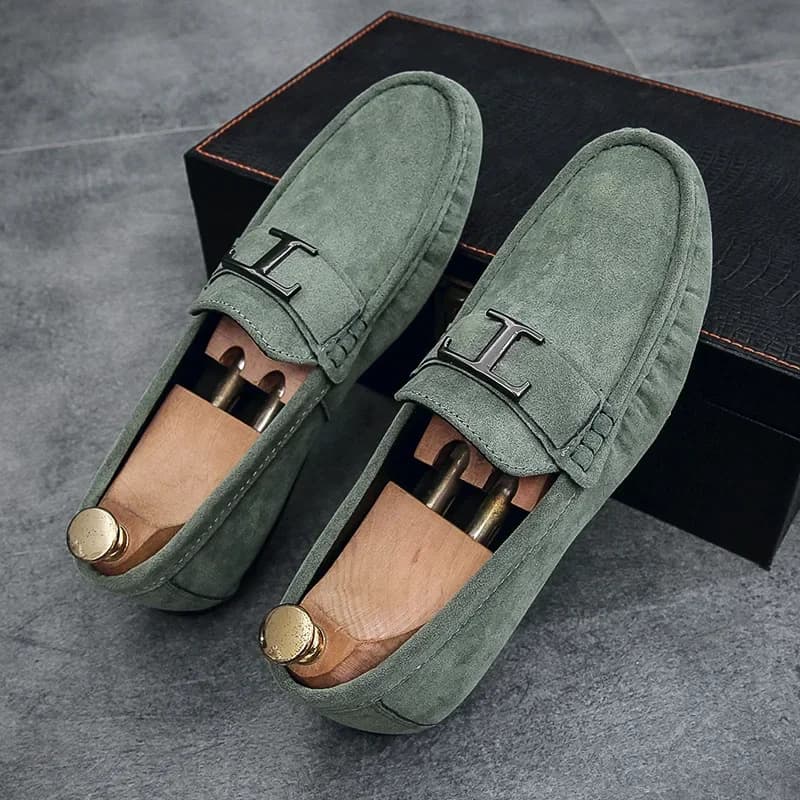
Men's Slip-On Casual Loafers in Soft Synthetic Leather
In stock · Options available · Ships in 7–21 business days
 Sale
Slim-Fit Shawl Lapel Tuxedo, Three-Piece Wedding Set
In stock · Options available · Ships in 7–21 business days
 Sale
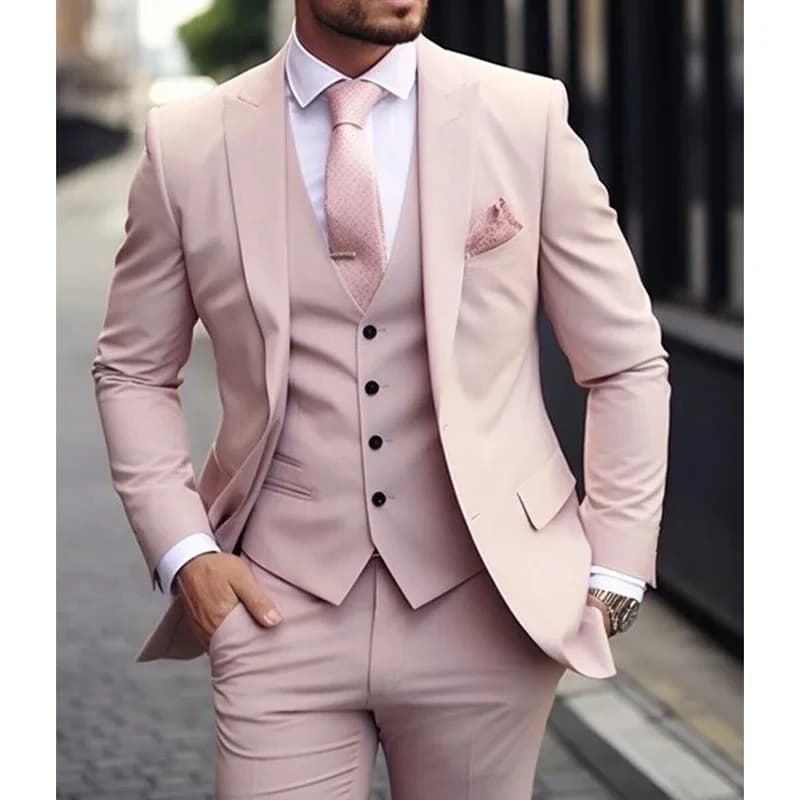
Pastel Pink Slim-Fit Three-Piece Wedding Suit
In stock · Options available · Ships in 7–21 business days
 Sale
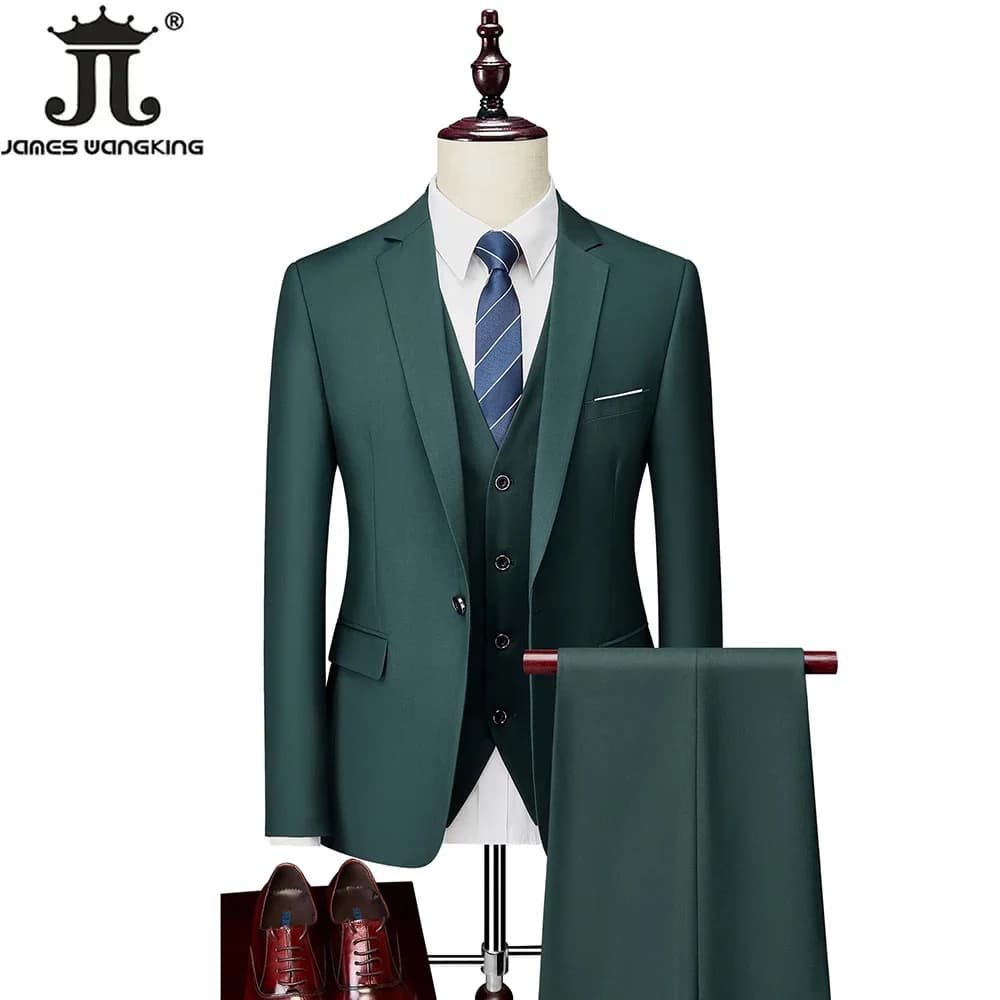
Solid-Color Notch Lapel Office Suit, Two- or Three-Piece
In stock · Options available · Ships in 7–21 business days
Continue reading
 Fashion & Style
How a Men’s Suit Should Fit: Jacket, Trousers, Tailoring
How a men’s suit should fit, checked point by point: shoulders, collar, chest, sleeve and jacket length, trouser break, plus which alterations a tailor can fix.
 Fashion & Style
How Should Loafers Fit? Men’s Heel, Instep and Width
How should loafers fit? Learn the right heel slip, instep contact, width and toe room for men’s loafers, plus sizing tips and fixes when a pair is loose.
 Fashion & Style
Slim Fit vs Regular Fit Suit: Which Cut Suits Your Build
Slim fit vs regular fit suit compared: chest-to-waist drop, armholes, sleeves and trouser openings, plus which cut fits your build and what a tailor can fix.