

Men’s Shoe Size Chart: US, UK, EU & cm Conversion
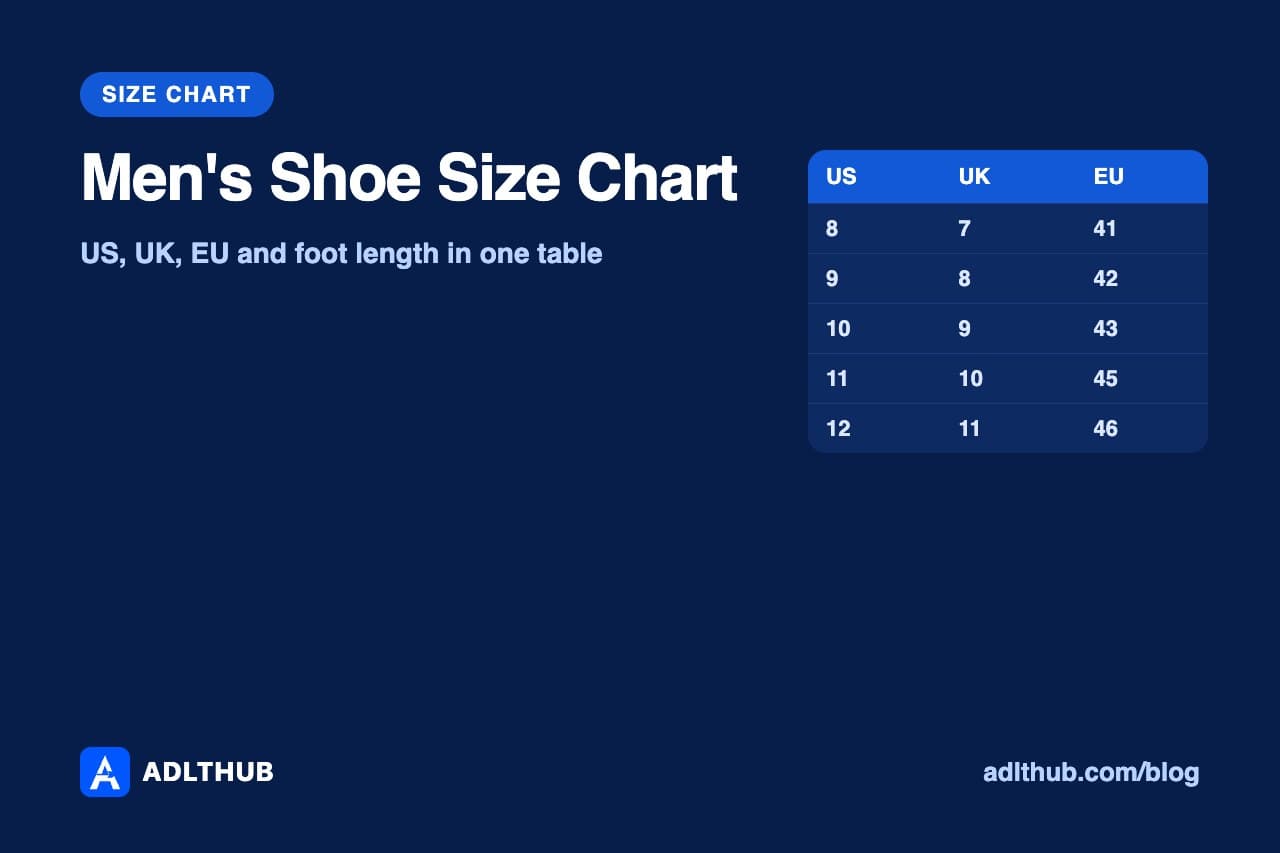
A US men’s size is usually about one size larger in number than the UK size for the same shoe, so a US 10 is typically a UK 9. EU sizing works on a different scale, and brands do not convert to it the same way: a US 10 can be listed as EU 43 or EU 44 depending on the label. When a chart and your usual size disagree, measure your foot length and go by that.
Key takeaways
- UK men’s sizes run about one size below US men’s: US 9 is usually UK 8.
- EU sizes do not follow the US scale one-to-one. Published charts from established brands differ by half a size, and sometimes a full size, at the same US size.
- Foot length is the most reliable reference. Measure both feet, standing, later in the day, and use the longer foot.
- For US men’s shoes, D is the standard (medium) width. E, 2E (also written EE) and 4E are progressively wider.
- Every brand publishes its own chart. Use the size chart on the product page you are buying from, and use this one to sense-check it.
Men’s shoe size chart: US, UK, EU and foot length
This chart takes the majority value from three published brand charts (Nike, Clarks and Dr. Martens). Where the brands disagree on the EU size, the cell shows the range rather than picking one. Foot lengths in inches come from Nike’s men’s chart; the centimeter values are those inches converted (1 inch = 2.54 cm) and rounded to one decimal place.
| US men’s | UK | EU | Foot length (in) | Foot length (cm) |
|---|---|---|---|---|
| 6 | 5 | 38 | 9 5/16 | 23.7 |
| 6.5 | 5.5 | 39 | 9 1/2 | 24.1 |
| 7 | 6 | 39–40 | 9 11/16 | 24.6 |
| 7.5 | 6.5 | 40–40.5 | 9 13/16 | 24.9 |
| 8 | 7 | 41 | 10 | 25.4 |
| 8.5 | 7.5 | 41.5–42 | 10 3/16 | 25.9 |
| 9 | 8 | 42 | 10 5/16 | 26.2 |
| 9.5 | 8.5 | 42.5–43 | 10 1/2 | 26.7 |
| 10 | 9 | 43 | 10 11/16 | 27.1 |
| 10.5 | 9.5 | 44–44.5 | 10 13/16 | 27.5 |
| 11 | 10 | 45 | 11 | 27.9 |
| 11.5 | 10.5 | 45–45.5 | 11 3/16 | 28.4 |
| 12 | 11 | 46 | 11 5/16 | 28.7 |
| 12.5 | 11.5 | 46.5–47 | 11 1/2 | 29.2 |
| 13 | 12 | 47 | 11 11/16 | 29.7 |
| 13.5 | 12.5 | 47.5–48 | 11 13/16 | 30.0 |
| 14 | 13 | 48 | 12 | 30.5 |
Where the sources differ:
- UK at the small end. Clarks and Dr. Martens list US 6 as UK 5. Nike lists US 6 as UK 5.5 and US 6.5 and 7 as UK 6. From US 7.5 upward, all three agree that UK is one size below US.
- EU in general. For US 10, Nike lists EU 44 while Clarks and Dr. Martens list EU 43. For US 7, the three charts give EU 40, 39.5 and 39. Samuel Hubbard’s chart gives US 10 as EU 43.5. Differences of half a size are common; a full size is not unusual.
- Foot length. Nike’s inch lengths match the Brannock scale, which Brannock Device Co. describes as men’s size 1 at 7 2/3 inches with each full size adding 1/3 inch. Dr. Martens’ chart lists longer centimeter lengths (for example, 28 for a US 10), and its US page notes that a half-size wearer may do better in the larger size with an insole. Do not mix one brand’s lengths with another brand’s sizes.
- Box labels. Nike notes that the CM or JP size printed on its boxes is not the same as your foot length in centimeters.
How to measure your feet at home
You need a sheet of paper larger than your foot, a pen, a ruler or tape measure, and a wall or a second person. This combines the method on Nike’s and Clarks’ size guides with Brannock’s fitting tips.
- Wear the socks you plan to wear with the shoes. Brannock’s instructions say socks should sit snug against the toes without pulling them back.
- Place the paper on a hard floor with one short edge flush against a wall (Clarks), or tape it to the floor (Nike).
- Stand on the paper with your heel against the wall and your weight evenly on both feet.
- Mark the tip of your longest toe. This is not always the big toe. If you are not using a wall, have someone mark the back of your heel as well.
- Measure the straight distance from the heel (or the wall edge) to the toe mark in inches or centimeters.
- Repeat with the other foot. Brannock and Nike both say to fit to the larger measurement.
- Find your length in the chart above, then check it against the brand’s own chart. Nike recommends sizing up if you fall between sizes.
Brannock also advises measuring for everyday shoes after you have been on your feet for the day, when feet have expanded.
Width: what D, E and EE mean
US men’s shoes use letters for width. D is medium, the default when no width is listed. Running Warehouse lists B as narrow, D as medium, 2E as wide and 4E as extra wide for men. Samuel Hubbard sells men’s shoes in medium (D), wide (EE) and extra wide (4E). EE and 2E are the same width written two ways. Some brands also list a single E, which is wider than D; the brand’s own width chart will say by how much.
How much wider each step is depends on the scale. Brannock Device Co. says each width on its device is 3/16 inch apart. Running Warehouse says going from standard to wide adds roughly 6 mm across the ball of the foot, and notes that these increments are not fully standardized between brands. Brannock makes the same point about the words “narrow” and “wide”.
Signs you may need a wider fit, according to Running Warehouse, include toes that feel bunched or overlap in the toe box, the foot spilling over the sides of the shoe, and blisters on the outside of the big toe or little toe, even when the length is right. UK brands may use their own letters instead: Clarks uses F for narrow, G for standard and H for wide.
Between sizes? How to choose
Advice differs by brand and by shoe type, so start from the product page and use these points to decide:
- Lace-ups and sneakers. Nike recommends sizing up when your measurement falls between sizes. Dr. Martens suggests taking the larger size and adding an insole if needed.
- Socks. Measure and try on in the socks you will actually wear. A thicker sock takes up room that the chart does not account for.
- Time of day. Measure later in the day, as Brannock advises, so the size still fits when your feet have expanded.
- Leather loafers. Slip-ons have no laces to take up slack, so the fit has to come from the size. G.H. Bass says loafers should feel snug but not tight, that leather loafers stretch slightly mainly in width, not length, and that loose loafers will not tighten with wear. Some heel slip is normal in new leather; a lot of it is a sign of poor fit. If you are choosing a pair such as our men’s casual loafers, use the size chart on that product page rather than this one, and prefer the size that is snug across the width but not short in the toes. Our men’s loafer fit guide covers what to check when they arrive.
If you plan to wear loafers with tailoring, fit matters more because the shoe is on show; see how to wear loafers with suits.
Frequently asked questions
How do I convert EU to US shoe size for men?
Find the EU size in the chart above and read across to the US column, then confirm it on the brand’s own chart. There is no fixed formula: brands list the same US size as EU 43 or EU 44, so foot length is the safer comparison.
Is a UK 9 the same as a US 10?
Usually yes. Clarks, Dr. Martens and Nike all list a UK 9 as a US men’s 10. The exception is at the smallest sizes, where Nike’s chart differs by half a size.
What shoe size is 27 cm foot length?
About a US men’s 10 (UK 9) on Nike’s chart, which lists 10 11/16 inches (27.1 cm) for that size. Dr. Martens lists 27 cm against a US 9, so check the chart of the brand you are buying.
Is D a wide shoe for men?
No. For men’s shoes, D is the standard medium width. Wide is usually E, EE (2E) or wider.
Should I size up or down for loafers?
There is no single rule. Leather loafers give a little in width but not in length, so avoid a size that is short in the toes and avoid one that is already loose. Follow the size chart and fit notes on the product page you are buying from.
Sources
- Nike: Men’s shoe sizing chart
- Clarks Australia: Size guide
- Dr. Martens US: Size guide
- Brannock Device Co.: About us (sizing scale)
- Brannock Device Co.: Instructions and fitting tips
- Running Warehouse: How to identify if you need a wide width shoe
- Samuel Hubbard: Men’s size guide
- G.H. Bass: Loafer fit and comfort guide
Checked on 24 November 2026. Brands size differently; use the chart on the product page you buy from.
Shop Fashion & Style
View all →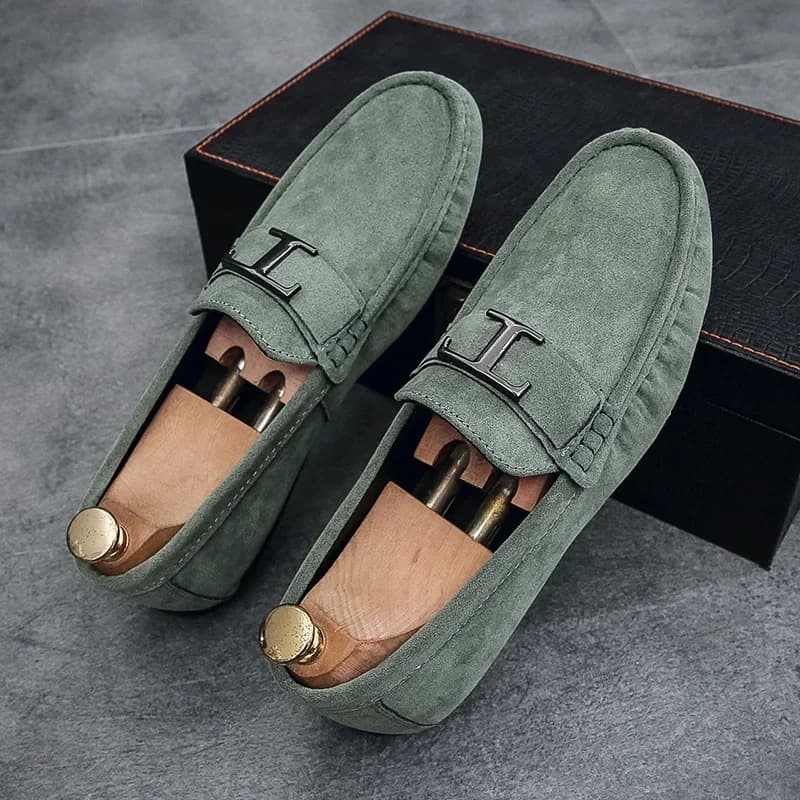
In stock · Options available · Ships in 7–21 business days
Choose options Sale
In stock · Options available · Ships in 7–21 business days
Choose options Sale
In stock · Options available · Ships in 7–21 business days
Choose options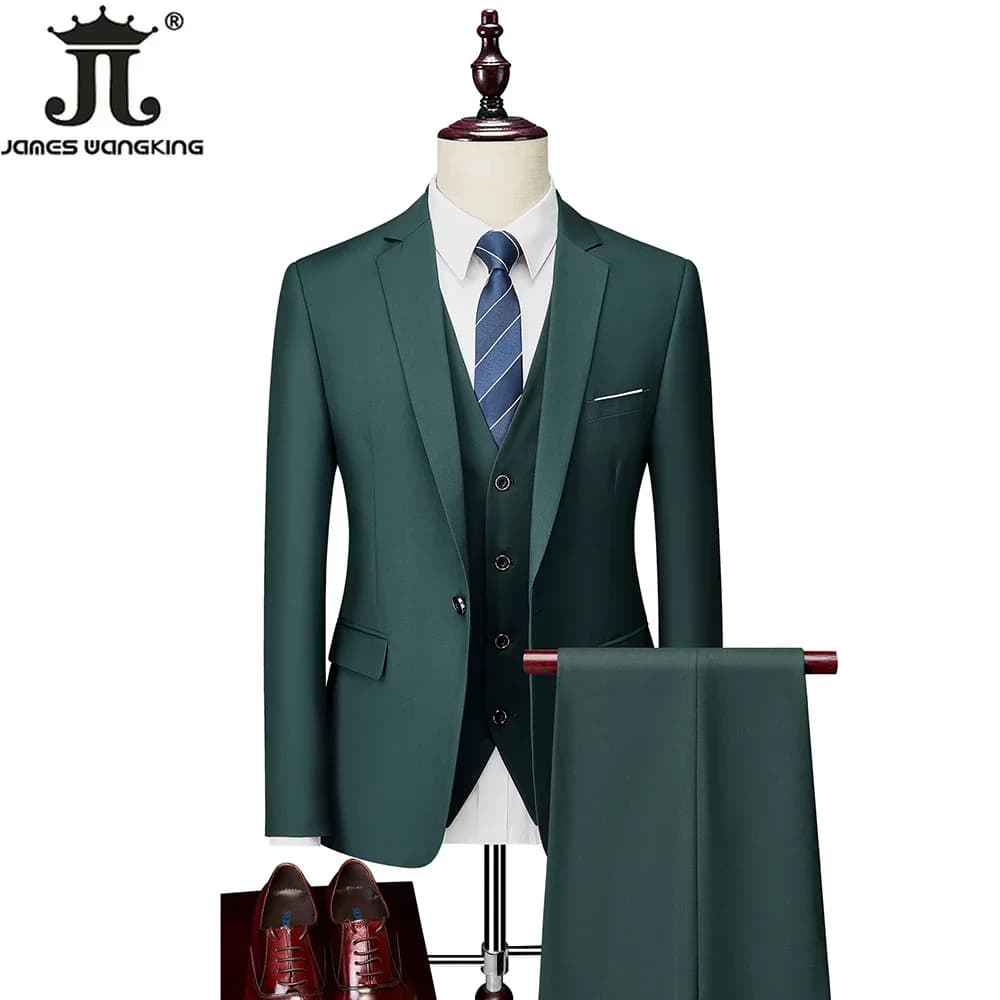 Sale
In stock · Options available · Ships in 7–21 business days
Choose optionsContinue reading
 Fashion & Style
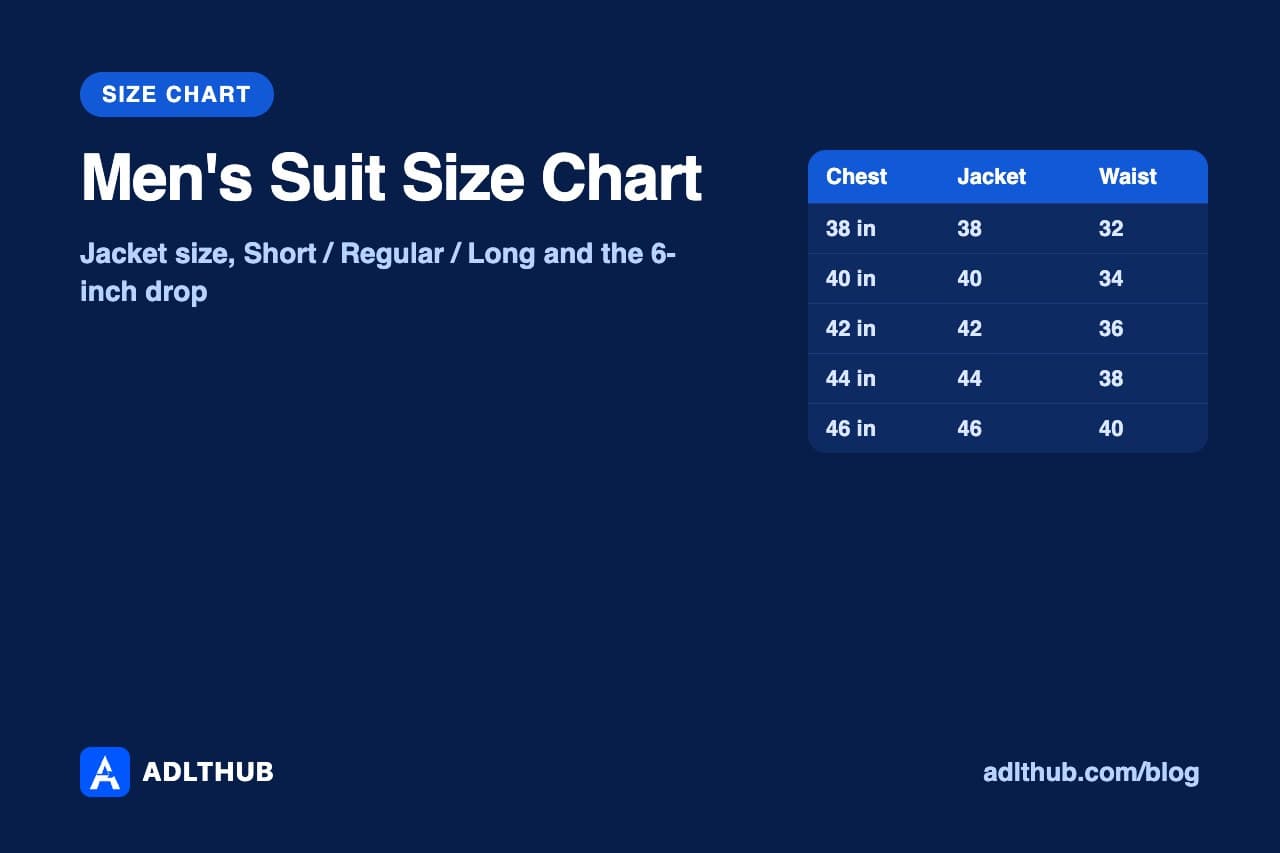
Men’s Suit Size Chart: Jacket, Length & Drop Explained
Men’s suit size chart: chest to jacket size, Short/Regular/Long by height, the 6-inch trouser drop and US-to-EU sizes, drawn from published brand charts.
 Fashion & Style
How to Measure for a Suit at Home: Men’s Size Guide
Learn how to measure for a suit at home: chest, shoulders, sleeve, waist, inseam and jacket length, plus how to read size charts like 40R and suit drop.
 Fashion & Style
How Should Loafers Fit? Men’s Heel, Instep and Width
How should loafers fit? Learn the right heel slip, instep contact, width and toe room for men’s loafers, plus sizing tips and fixes when a pair is loose.