

Hair Trimmer Guard Sizes and Blade Maintenance Guide
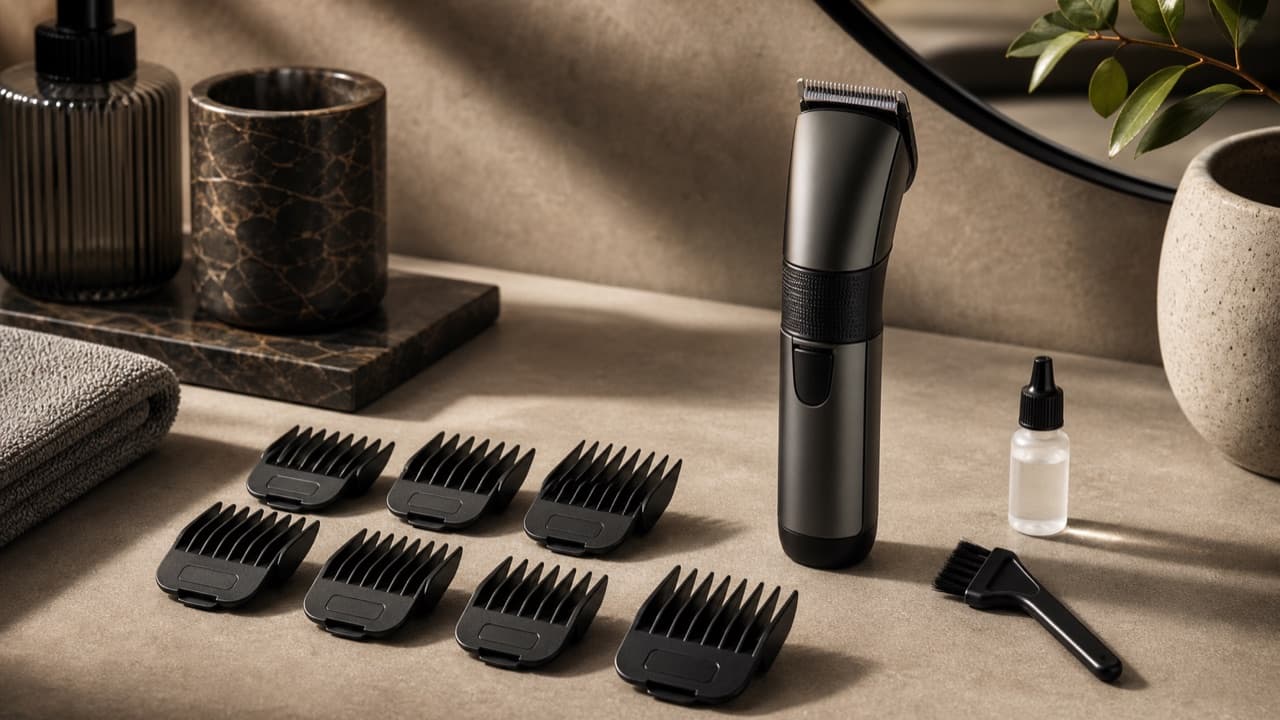
Hair trimmer guard sizes follow a rough convention in the US, where a #1 guard leaves about 1/8 inch (3 mm) and each step up adds about 1/8 inch, but the convention is not universal, so the length printed on the guard always beats the number. This guide is for anyone cutting their own or a family member’s hair at home, or keeping a beard at a fixed length. It decodes guard numbers, shows how to move between lengths without steps or bald patches, and covers the cleaning and oiling routine that keeps blades cutting cleanly for years.
Key takeaways
- Read the millimeter or inch length on the guard; numbers vary between brands and between clippers and trimmers.
- Always start one or two guards longer than you think you need. You can take more off; you cannot put it back.
- Blend between guard lengths with half sizes or the taper lever, working in small zones.
- Brush out hair after every use and oil the blade when the manual calls for it; a dry, clogged blade pulls and heats.
- Replace a guard with cracked or missing teeth immediately, because it can let the bare blade reach the skin.
Hair trimmer guard sizes: the number-to-length chart
Many full-size US clippers use this common scale. Use it as orientation, then confirm against the markings on your own guards.
| Guard number | Approximate length | Typical use |
|---|---|---|
| #0.5 (half) | 1/16 in (about 1.5 mm) | Low fades, very short sides |
| #1 | 1/8 in (about 3 mm) | Short sides, heavy stubble |
| #1.5 | 3/16 in (about 4.5 mm) | Blending between #1 and #2 |
| #2 | 1/4 in (about 6 mm) | Classic short sides, short beard |
| #3 | 3/8 in (about 10 mm) | Short buzz cut, medium-short beard |
| #4 | 1/2 in (about 13 mm) | Longer buzz, tops of short cuts |
| #6 | 3/4 in (about 19 mm) | Tops, longer beards |
| #8 | 1 in (about 25 mm) | Longest guard on many kits |
Smaller beard and detail trimmers often skip the number system and label combs directly in millimeters, such as 3, 6, 9 and 12 mm, or use a single adjustable comb with a dial. Both are fine; the point is to note which length you used so you can repeat a cut you liked.
What length is “no guard”?
Without a guard, most clipper blades leave roughly 1/32 to 1/16 inch depending on the blade and lever position, while a T-blade trimmer can go close to the skin. That is short enough to show the scalp on most people, so treat a guardless pass as a deliberate choice, not an experiment.
How to cut and blend between guards
- Start dry, clean and detangled. Most guards are designed for dry hair; wet hair lies flat and cuts shorter than expected. Follow your manual if it says otherwise.
- Do the longest length first. If the top will be a #4, run the #4 over the whole head. This gives a uniform baseline.
- Drop one size and work upward. Switch to the shorter guard for the sides and back, moving against the direction of growth from the bottom up, and flick the clipper outward as you reach the blend line.
- Blend the line. Use the half size or the in-between guard, or open the taper lever (lever open leaves slightly longer hair; closed cuts shorter) to soften the ridge between two lengths.
- Keep the guard flat. Tilting the clipper so only the guard tip touches makes the cut uneven and can dig in.
- Check in good light with a hand mirror, then go over any patches with the same guard rather than dropping a size.
Hair grows in different directions at the crown and neckline, so take extra passes from several angles there. For beard work, our electric shaver vs beard trimmer guide covers which tool fits which beard length.
Clipper vs trimmer: which guards fit what
Clippers have wider blades and stronger motors for bulk removal and use the full guard range. Trimmers have narrower, finer blades for edges, necklines, sideburns and beards, and usually come with shorter combs. Guards are rarely interchangeable between brands, and often not between models of the same brand, so buy replacements made for your exact model.
If you want one tool for sideburns, outlining and short beards, a compact cordless trimmer such as the Wireless Sideburns Hair Cutting Trimmer fits that role; for body grooming, a kit like the 3-in-1 Men’s Body Hair Shaver Kit is designed for the job. Check each product page for included combs, specifications, delivery and returns.
Cleaning and oiling: the maintenance routine
After every use
- Switch off and unplug or remove from the charger.
- Remove the guard and tap or brush hair from the blade and guard with the small brush supplied.
- If the manual allows, open or remove the blade and brush out hair packed behind it.
- Rinse only if the trimmer is rated washable, and let it air-dry fully with the blade open before storing.
Oiling
Most clippers and many trimmers need blade oil; some self-sharpening or washable models say otherwise, so check the manual first. A typical routine is a few drops along the top of the teeth and one at each side of the blade, then run the trimmer for several seconds to spread it and wipe off the excess. Oil before long sessions and after rinsing or using a blade spray, since water and sprays strip lubrication. Use the oil supplied or a dedicated clipper oil; cooking oil goes sticky and household lubricants can attract debris.
Sanitizing
If you share a trimmer, clean visible hair first, then use a disinfecting blade spray made for clippers, following its contact time. Never submerge a non-washable trimmer. Clean guards separately with warm soapy water and let them dry completely.
For a parts-by-parts routine across shavers and trimmers, see how to clean an electric shaver and trimmer.
Signs your blade or guard needs attention
- Pulling or snagging: usually hair build-up or a dry blade. Clean and oil before assuming the blade is dull.
- Blade feels hot quickly: friction from lack of oil, or a blade set too tight. Stop, let it cool, oil it.
- Loud rattling or changed sound: a loose blade, screw or worn part. Stop and check the manual.
- Uneven cutting after cleaning: the blade may be dull or misaligned. Replacement blades are often cheaper than a new trimmer.
- Cracked guard, bent teeth or a loose clip: replace it. A guard that pops off mid-pass leaves a bald strip.
Avoid adjusting blade alignment (“zero gapping”) yourself unless the manufacturer documents it. A top blade set too close to the edge of the bottom blade can nick or cut skin.
Mistakes to avoid
- Assuming a #2 is the same on every brand. Some combs are labeled in millimeters with different steps; read the length.
- Starting with the shortest guard. The commonest home-haircut regret. Start long and step down.
- Cutting damp hair with guards meant for dry hair. Wet hair lies flat, so the result comes out shorter and patchier once dry.
- Skipping the oil after rinsing. Water removes lubrication, so a washable blade can run dry and pull on the next use.
- Storing it damp in a closed pouch. Moisture encourages corrosion on the blade and odors in the guards.
- Leaving the battery flat for months. Lithium-ion batteries age faster when stored empty; top up periodically if the trimmer is rarely used.
How to choose a trimmer and guard set
- Pick a full-size clipper with numbered guards if you cut a whole head of hair and want fades or uniform buzz cuts.
- Pick a trimmer with millimeter combs if you mainly keep a beard at a fixed length or tidy edges.
- Pick a model with an adjustable comb if you want fine steps for beard length without a drawer full of guards.
- Pick a washable model if easy rinsing matters more than heavy-duty cutting, and plan to oil after rinsing.
Whatever you choose, check that replacement guards and blades are available for that model. Browse grooming tools in our personal care category.
Frequently asked questions
What number guard is 1/2 inch?
On the common US clipper scale, a #4 guard leaves about 1/2 inch (about 13 mm). Confirm on your own guard, because some brands mark lengths differently.
How often should I oil my hair trimmer?
Follow the manual. Many clipper makers suggest oiling before or after each use, and always after rinsing the blade or using a cleaning spray. Some washable or self-sharpening trimmers need little or no oil.
Can I use a guard on wet hair?
Most guards are intended for dry hair. Wet hair clumps and lies flat, so it cuts shorter and less evenly. If your trimmer is designed for wet use, follow its instructions.
Are clipper guards universal?
No. Attachment clips differ between brands and often between models from the same maker. Buy guards listed as compatible with your exact model so they lock securely.
Why is my trimmer pulling hair?
The usual causes are packed hair behind the blade, a dry blade, a low battery or a dull blade. Clean, oil and charge it first; if it still pulls, replace the blade.
Shop Beauty & Personal Care
View all →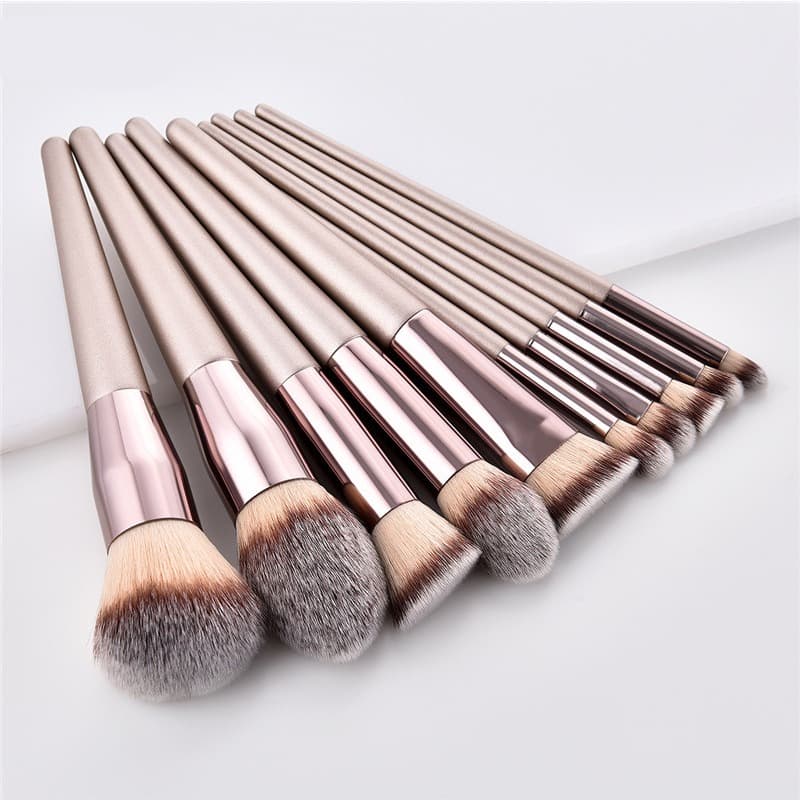 Sale
Champagne Gold Makeup Brush Set with Travel Pouch
In stock · Options available · Ships in 7–21 business days
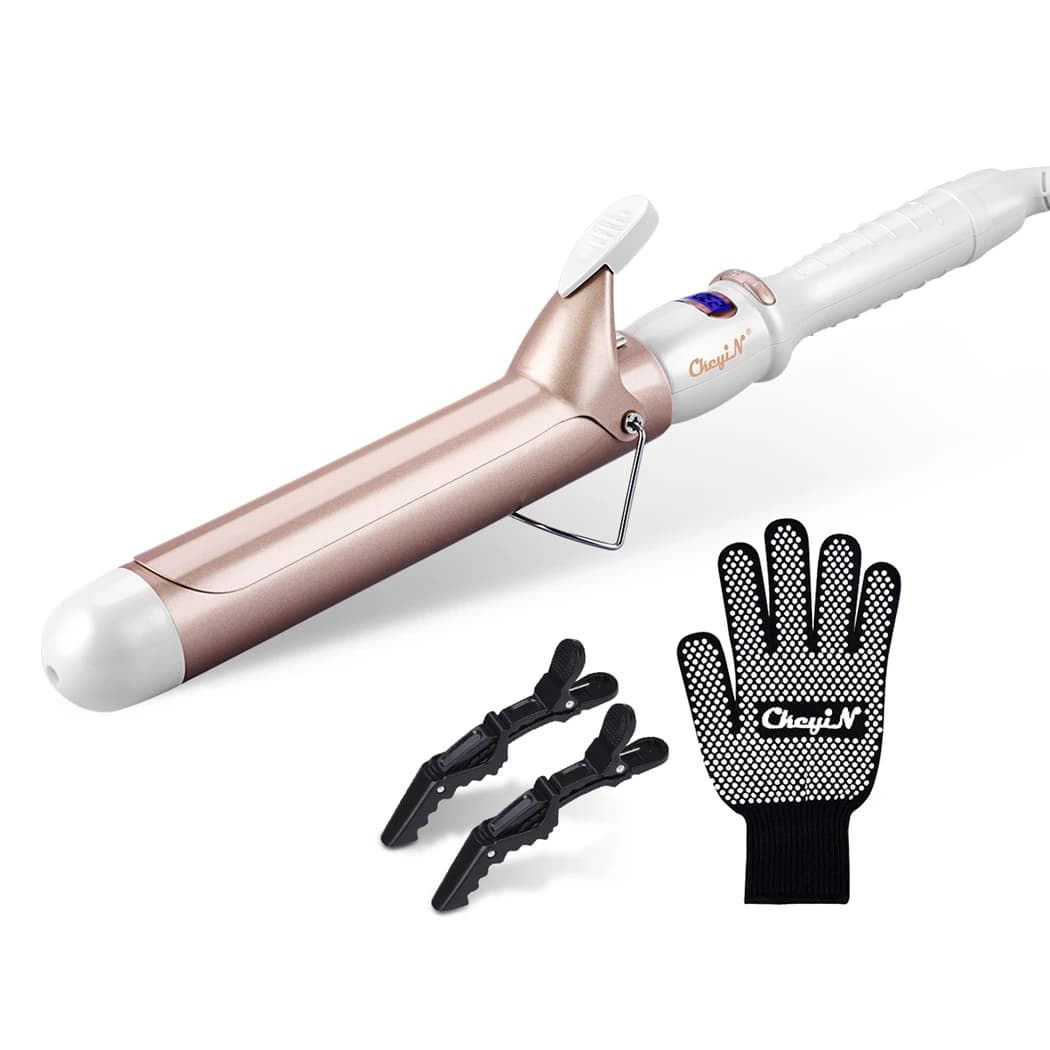
Tourmaline Ceramic Hair Curler with Adjustable Heat
In stock · Options available · Ships in 7–21 business days
 Sale
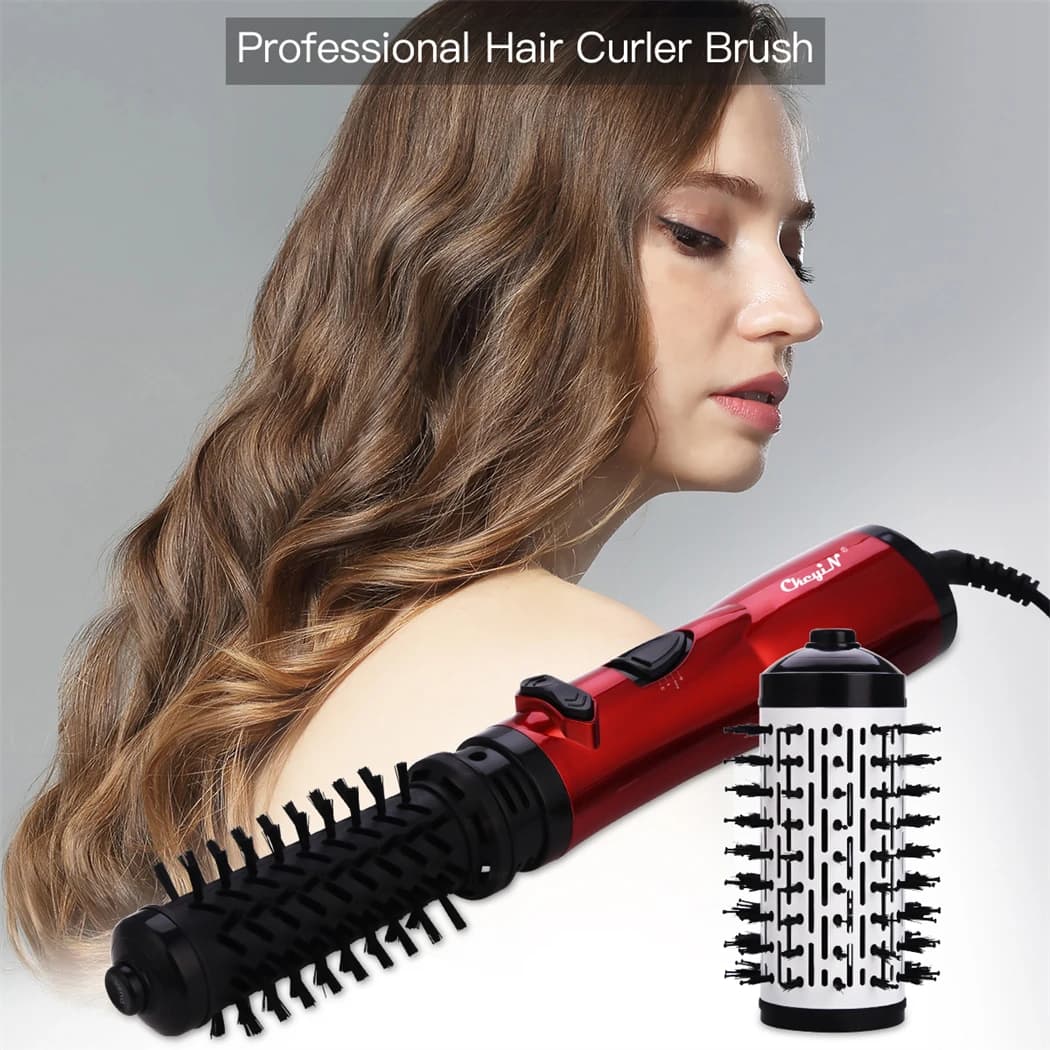
Rotating Hot Air Brush with Ceramic Tourmaline Barrel
In stock · Ships in 7–21 business days
 Sale
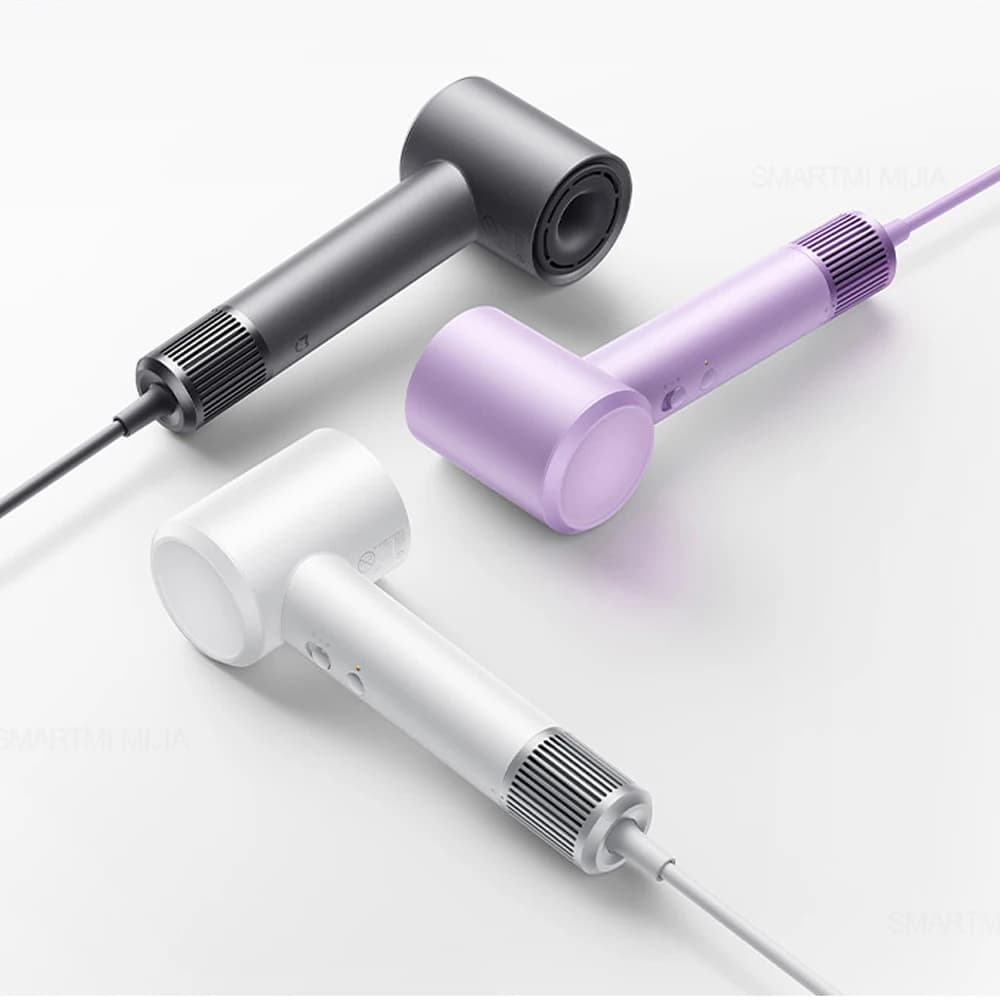
High-Speed Brushless Ionic Hair Dryer with Magnetic Nozzle
In stock · Options available · Ships in 7–21 business days
Continue reading
 Beauty & Personal Care
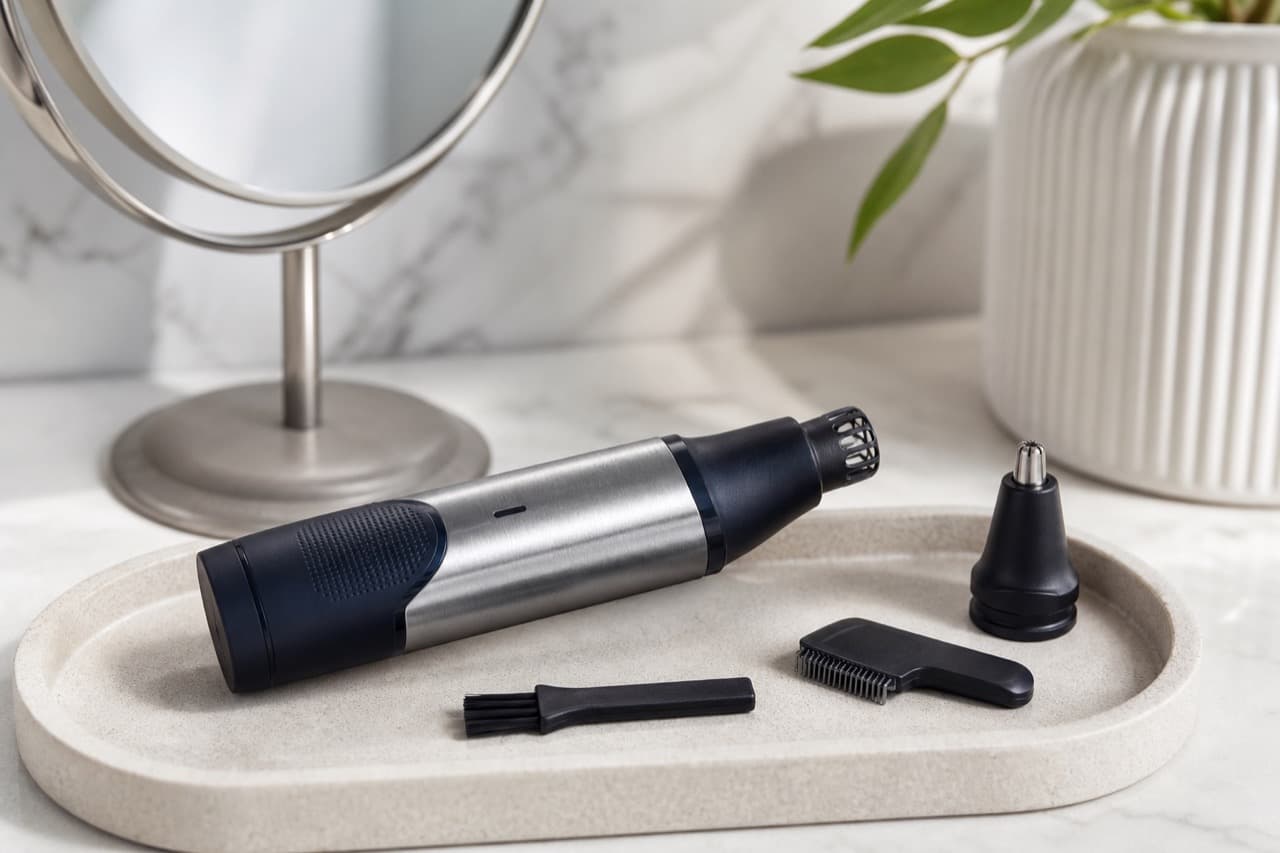
Nose and Ear Hair Trimmer Guide: Features That Matter
Nose and ear hair trimmer guide: rotary vs vertical blades, AA vs USB-C power, washable heads, eyebrow guides and cleaning, so you buy one that cuts cleanly.
 Beauty & Personal Care
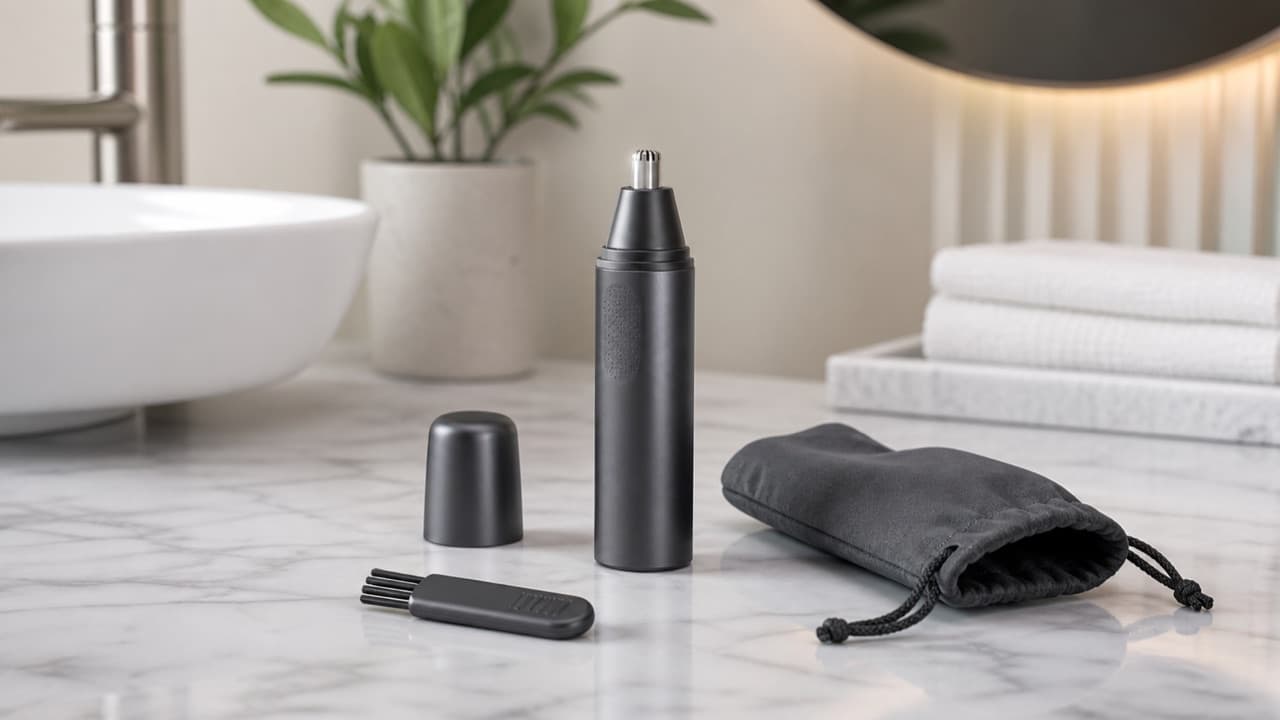
How to Trim Nose and Ear Hair Safely: Step by Step
How to trim nose and ear hair safely: how far to insert the trimmer, step-by-step technique, hygiene, why plucking is riskier, and when to see a doctor.
 Beauty & Personal Care
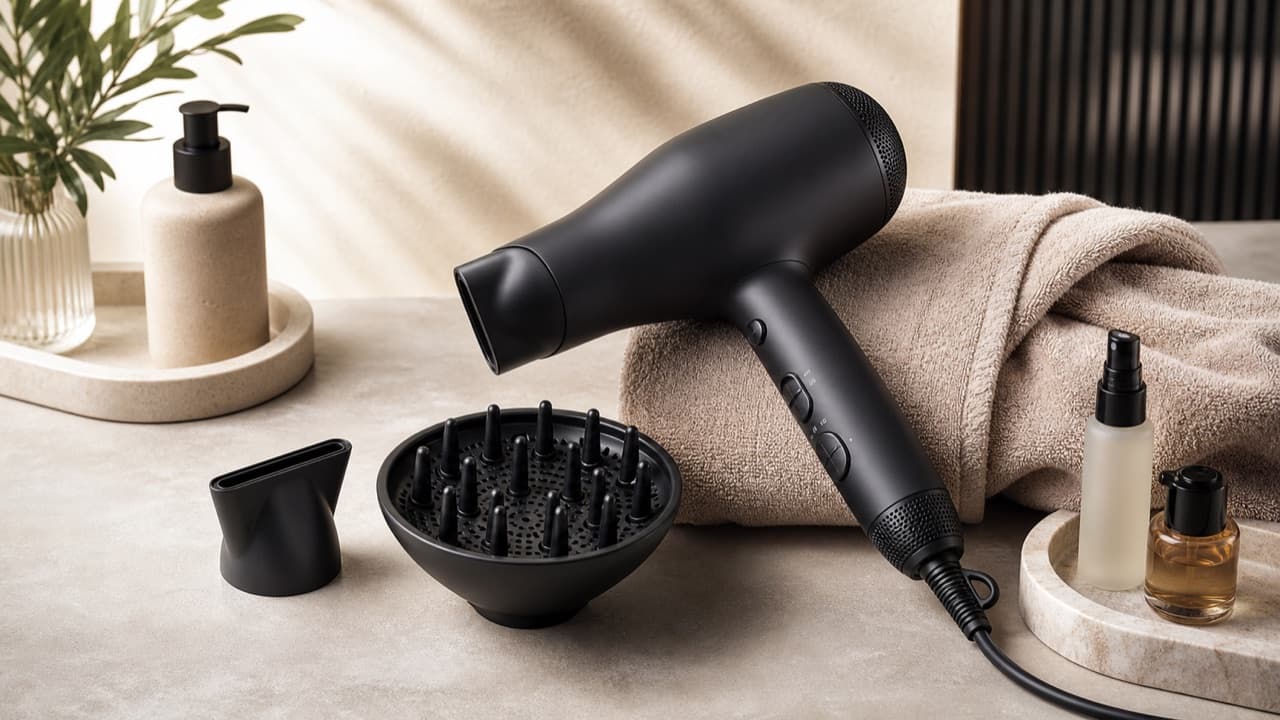
Hair Dryer Wattage, Heat Settings and Voltage Explained
Hair dryer wattage, heat and speed settings, motor types and voltage explained, so you can compare dryers, avoid travel burnout and dry faster with less heat.