

Hair Dryer Wattage, Heat Settings and Voltage Explained
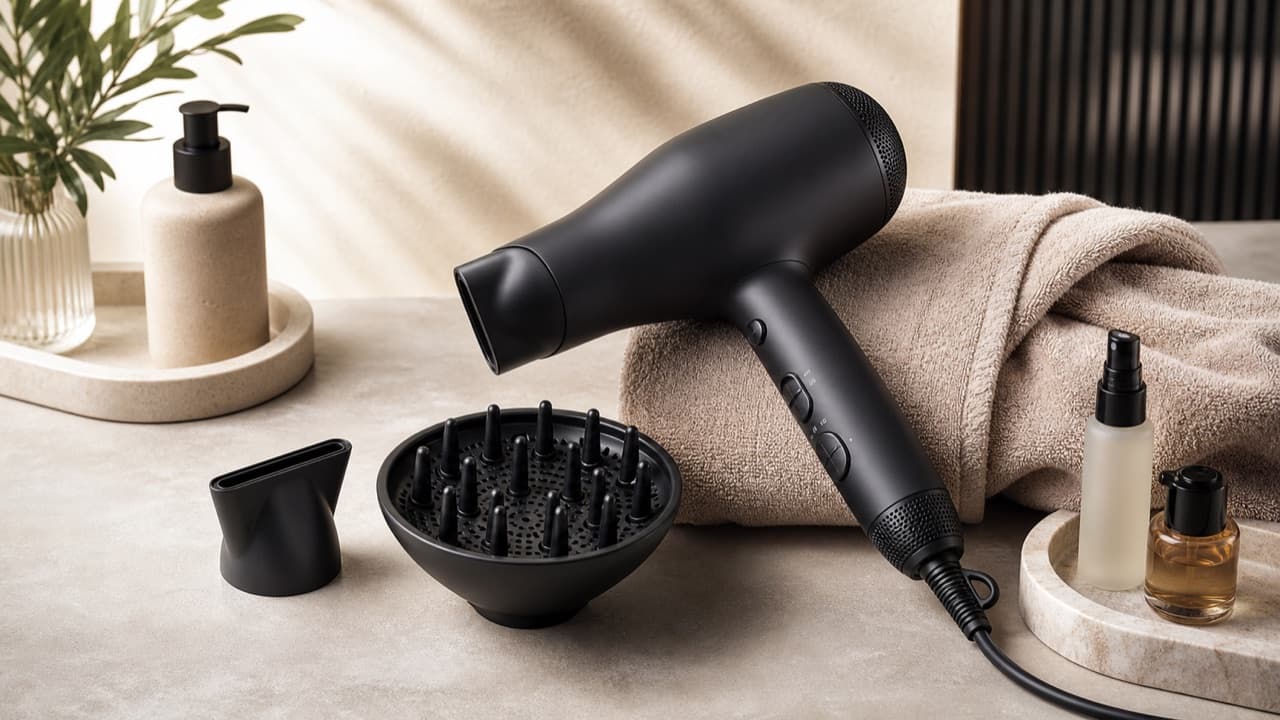
Hair dryer wattage tells you how much power the dryer can draw, mostly for its heating element, but it does not tell you how fast it will dry your hair. Drying speed comes from the combination of airflow (motor and nozzle design) and heat, and the fastest modern dryers often pair moderate wattage with very strong airflow. This guide explains what watts, heat settings, motor types and voltage labels really mean, for anyone comparing dryers online or planning to take one abroad.
Key takeaways
- Most full-size US dryers are rated roughly 1,200 to 1,875 watts; 1,875 W is the common ceiling on 120-volt outlets.
- Airflow speed often matters more than wattage for drying time, especially on long or thick hair.
- Look for at least two heat and two speed settings plus a cool shot; that is what lets you dry with less heat.
- A plug adapter does not change voltage. A 120V-only dryer plugged into a 230V outlet can be destroyed in seconds.
- The large plug with test and reset buttons on US hand-held dryers is a shock-protection device, not a fault.
- A clogged rear filter makes any dryer run hotter and weaker; cleaning it is the cheapest performance upgrade.
What hair dryer wattage really measures
Wattage is the dryer’s maximum electrical draw, and most of it goes into the heating coil. More watts means the dryer can produce hotter air at a given airflow, which helps with thick hair in cold bathrooms. It does not guarantee faster drying. A 1,875 W dryer with weak airflow can feel hot and slow, while a lighter dryer with a powerful motor can feel faster at a lower temperature.
On a standard US 15-amp, 120-volt circuit, an 1,875 W dryer on its highest setting uses most of the circuit’s comfortable capacity. That is why dryers trip breakers when someone runs a space heater or a second dryer on the same bathroom circuit. If your breaker trips, move one appliance to a different circuit rather than swapping in a “stronger” dryer.
Lower wattage, often roughly 1,000 to 1,400 W, is common on compact travel dryers. They work, but expect longer drying on thick hair.
Motor types and why “high-speed” dryers feel different
| Motor type | Typical traits | Best for | Trade-offs |
|---|---|---|---|
| AC motor | Heavier, strong steady airflow, long service life; common in salon-style dryers | Thick hair, frequent use | Weight and size; can be loud |
| Brushed DC motor | Light and inexpensive; common in budget and travel dryers | Occasional use, travel | Brushes wear; airflow usually weaker |
| Brushless DC (BLDC) “high-speed” | Small, light motor spinning very fast; strong, focused airflow | Daily drying, long hair, people wanting less heat | Higher price; can sound high-pitched |
High-speed dryers lean on air velocity rather than raw heat. Listings often quote motor speeds in the tens of thousands of rpm or higher; treat those as maker claims and compare instead how many heat and speed settings the dryer offers, its weight, and whether it includes a temperature-control feature. If you are weighing one, check the High-Speed Ionic Hair Dryer product page for current specifications, voltage, delivery and return terms.
Heat and speed settings: how to use them
Most dryers combine two or three heat levels with two speed levels, plus a cool-shot button. Each combination has a job:
- High speed, medium heat: rough-drying from wet. This removes most water quickly without maximum heat.
- Low speed, medium or low heat with a concentrator nozzle: smoothing sections over a round brush. Lower speed gives you control.
- High heat: reserved for very thick or coarse hair, or cold rooms. Keep the dryer moving and a few inches from the hair.
- Cool shot: sets a shape once a section is dry. Hair holds its shape as it cools.
- Low speed with a diffuser: curly and wavy hair, to dry without blowing curls apart.
A useful habit is to rough-dry until hair is around 70 to 80 percent dry, then style. Most heat exposure happens in that final stage, so the less time you spend there on high heat, the better. Our guide to a healthy hair and scalp routine with heat tools builds a full weekly routine around this idea.
What about ionic, ceramic and tourmaline?
These are common marketing labels. Ionic dryers are claimed to reduce static and frizz, and ceramic or tourmaline components are claimed to spread heat more evenly. Some people notice smoother results, but the effect varies by hair type and is hard to compare across brands. Treat these as tie-breakers, not reasons to pay much more.
Voltage: using a hair dryer when you travel
The US and Canada use roughly 120 volts. Most of Europe, the UK, Australia and much of Asia use roughly 220 to 240 volts. This is where expensive mistakes happen.
- Plug adapter: changes the plug shape only. It does nothing to voltage.
- Voltage converter: steps voltage down, but many compact travel converters are not designed for a high-wattage heating load running for several minutes. Check the converter’s continuous wattage rating against your dryer’s wattage, and follow its instructions.
- Dual-voltage dryer: usually has a switch marked 125/250 or similar. Set it before plugging in. Some switch automatically; the label or manual will say.
Read the rating label near the cord. “120V ~ 60Hz” means US-only. “100-240V” or a selector switch means dual voltage. Many hotels supply wall-mounted dryers, which can be easier than packing your own. For the rest of your power kit, see our travel power banks and plug adapters guide.
Safety features worth checking
- Immersion protection plug: US hand-held dryers include a shock-protection device, usually the bulky plug with test and reset buttons. If it trips, unplug, let things dry, and reset. If it trips repeatedly, stop using the dryer.
- Thermal cut-off: shuts the dryer off if it overheats, often because the intake is blocked. Let it cool, clean the filter, and try again.
- Removable rear filter: makes lint cleaning easy. Clean it every few weeks, or more often if you use styling powders.
- Cord length and hang loop: a cord of around 6 feet or longer reduces strain at the plug; a hang loop makes storage easier.
Never use a dryer near a full sink or tub, never wrap the cord tightly around a hot dryer, and keep the nozzle a few inches from hair and scalp.
Mistakes to avoid
- Buying on wattage alone. A higher number does not mean faster drying; airflow and settings matter as much.
- Drying on high heat from start to finish. Use high speed and moderate heat for rough-drying, then lower heat for styling.
- Trusting a plug adapter abroad. It only reshapes the plug; a single-voltage dryer can burn out immediately on 230V.
- Ignoring the filter. A lint-clogged intake makes air hotter and weaker and can trigger repeated shut-offs.
- Holding the concentrator against the hair. Contact concentrates heat on one spot. Keep a small gap.
How to choose the right dryer for you
- Choose a high-speed brushless dryer if you dry long or thick hair daily and want to use less heat and a lighter tool.
- Choose a full-size AC dryer if you want durability and strong airflow at a moderate price and do not mind weight.
- Choose a compact or folding dryer if it lives in a suitcase or gym bag and you mostly dry short hair.
- Choose dual voltage if you travel internationally more than once or twice a year.
If you are still deciding whether you need a dryer at all or a styling tool, compare options in our dryer brush vs straightener vs curler guide, and browse the personal care category.
Frequently asked questions
Is a higher wattage hair dryer better?
Not automatically. Higher wattage allows more heat, which helps thick hair and cold rooms, but drying speed also depends on airflow. A well-designed dryer around 1,500 to 1,875 W suits most people.
Can I use my US hair dryer in Europe?
Only if the label shows dual voltage, such as 100-240V or a 125/250 switch. A 120V-only dryer needs a converter rated for its full wattage, and many small converters are not. Otherwise use the hotel dryer or buy a dual-voltage model.
Why does my hair dryer keep shutting off?
Usually the thermal cut-off is responding to overheating, often from a blocked rear filter. Unplug it, let it cool, and clean the filter. If it keeps shutting off with a clean filter, stop using it and contact the seller or manufacturer.
Are high-speed hair dryers worth it?
For people who dry long or thick hair often, the lighter weight and strong airflow can shorten drying time and allow lower heat. For short hair or occasional use, a standard dryer is usually fine.
What does the cool shot button do?
It blows unheated air so a section of styled hair cools in shape, which helps the style last. It is also useful for finishing and for reducing heat on the scalp.
Shop Beauty & Personal Care
View all →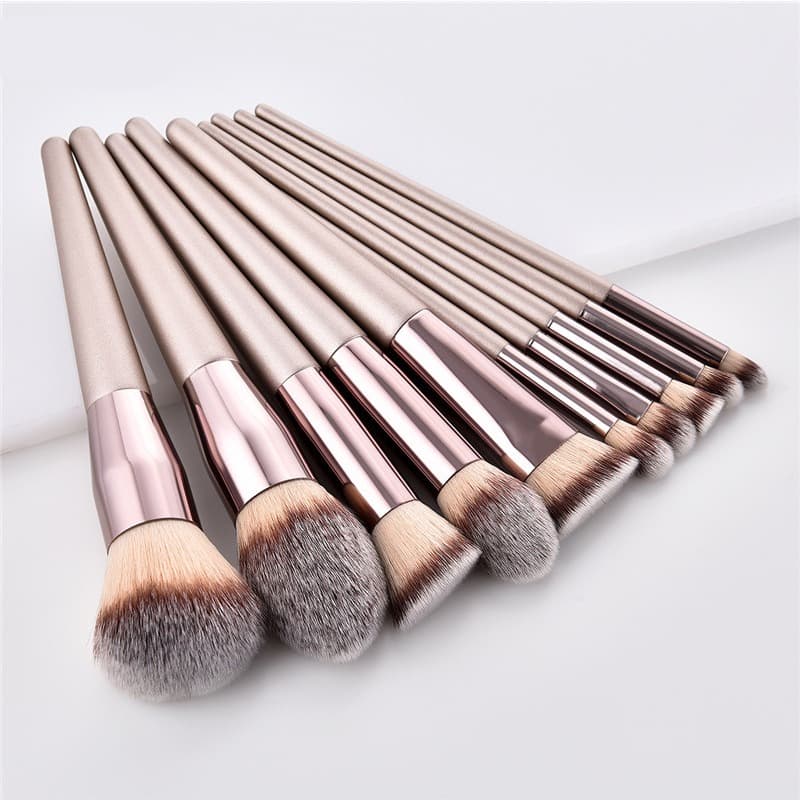 Sale
Champagne Gold Makeup Brush Set with Travel Pouch
In stock · Options available · Ships in 7–21 business days
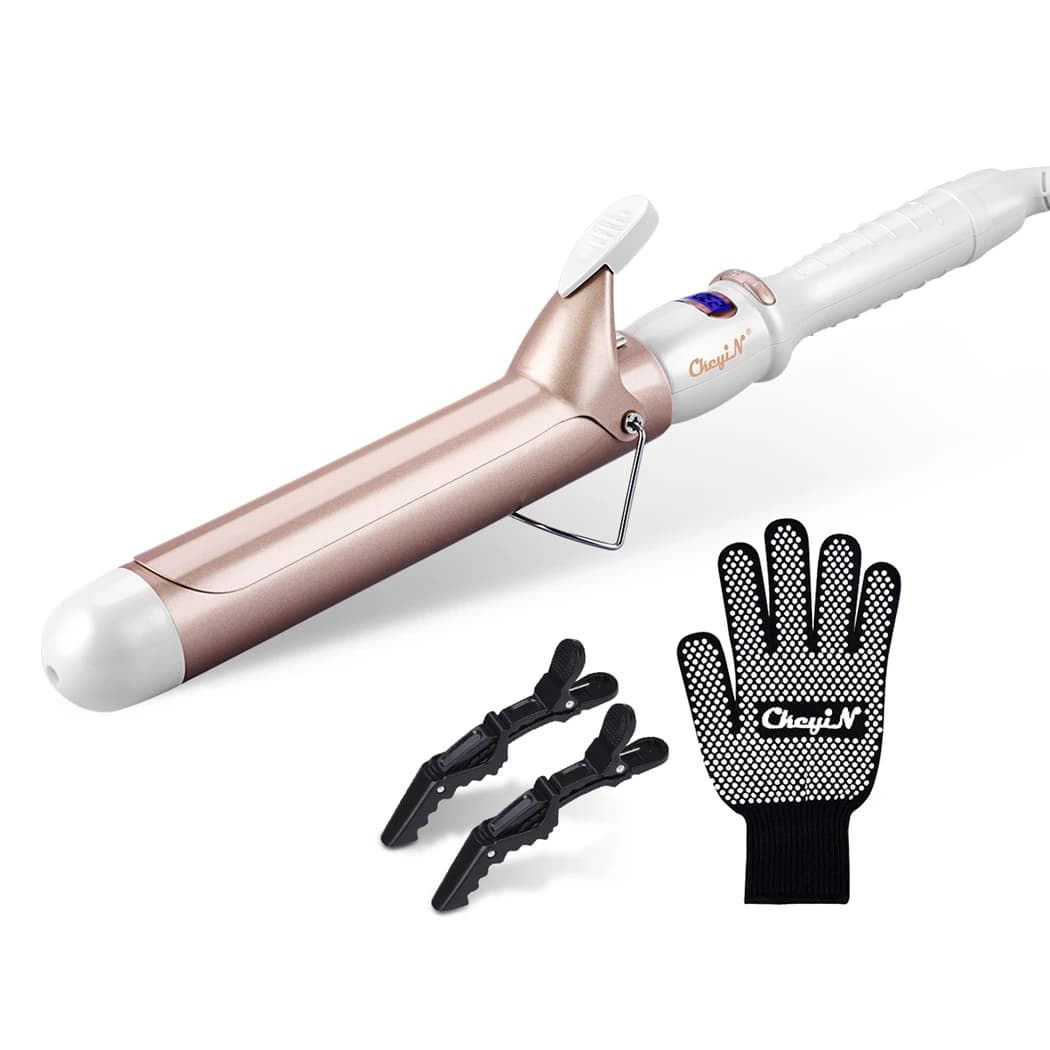
Tourmaline Ceramic Hair Curler with Adjustable Heat
In stock · Options available · Ships in 7–21 business days
 Sale
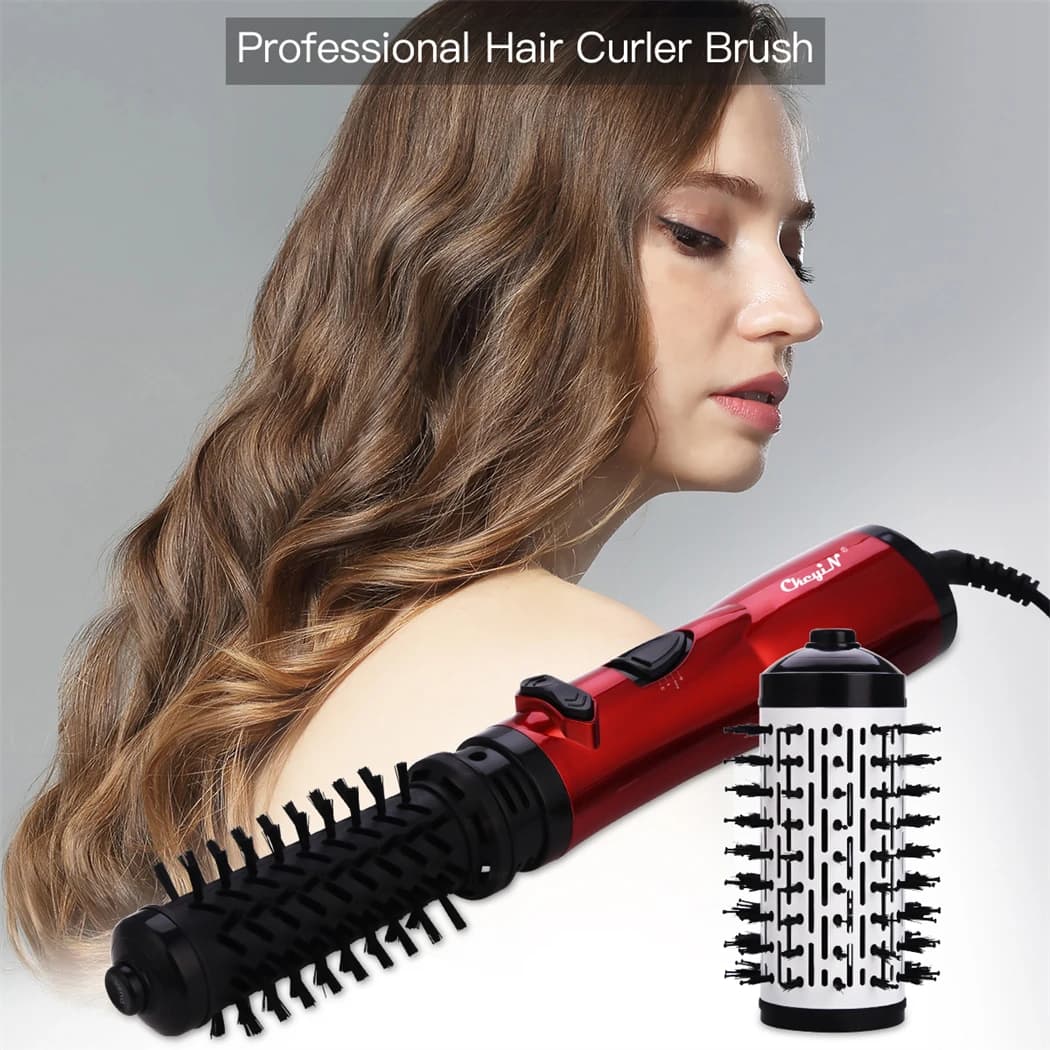
Rotating Hot Air Brush with Ceramic Tourmaline Barrel
In stock · Ships in 7–21 business days
 Sale
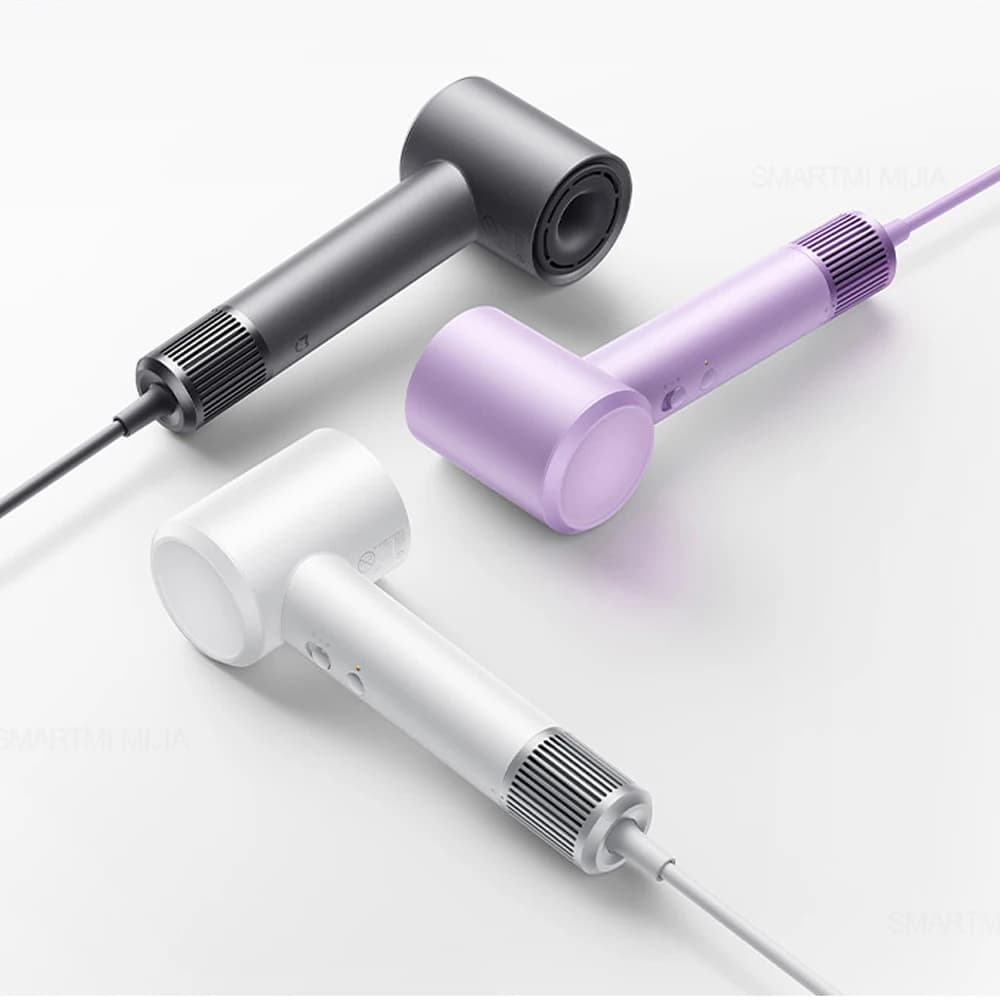
High-Speed Brushless Ionic Hair Dryer with Magnetic Nozzle
In stock · Options available · Ships in 7–21 business days
Continue reading
 Beauty & Personal Care
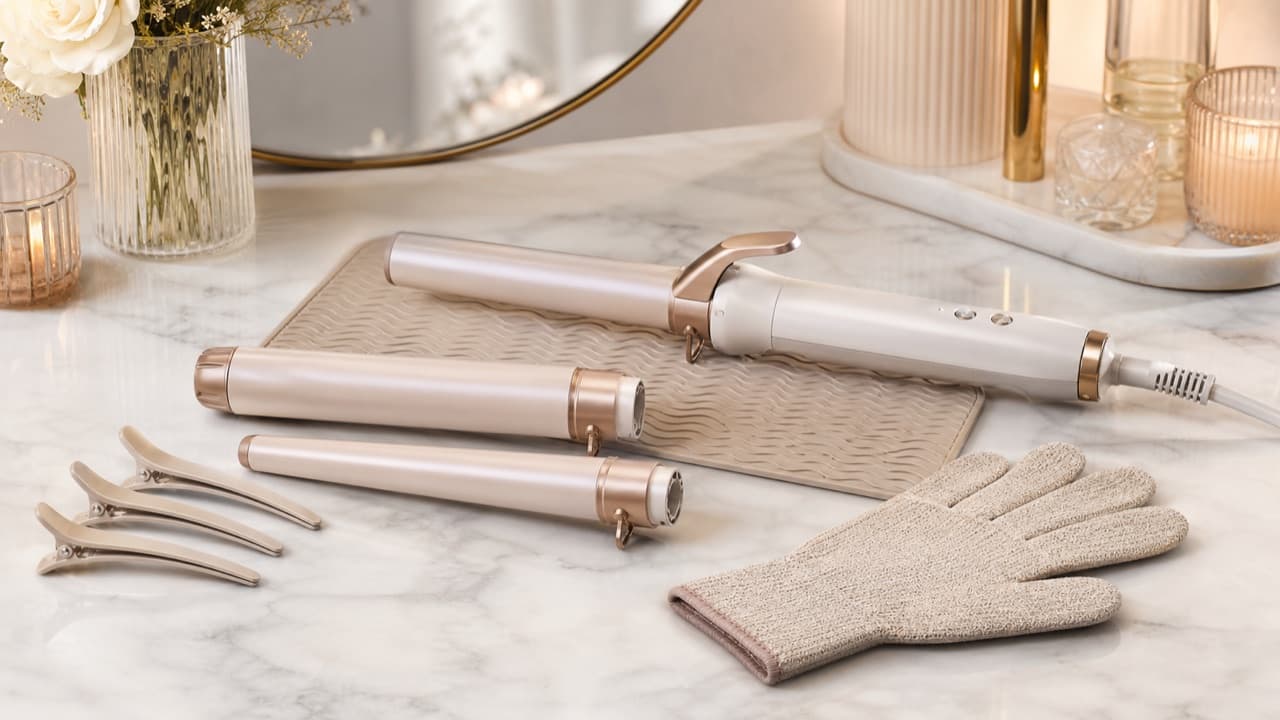
Curling Iron Barrel Size Guide: Pick by Hair and Heat
Curling iron barrel size sets your curl shape. See which diameter suits your hair length, which temperature to start at and the safety features to look for.
 Beauty & Personal Care
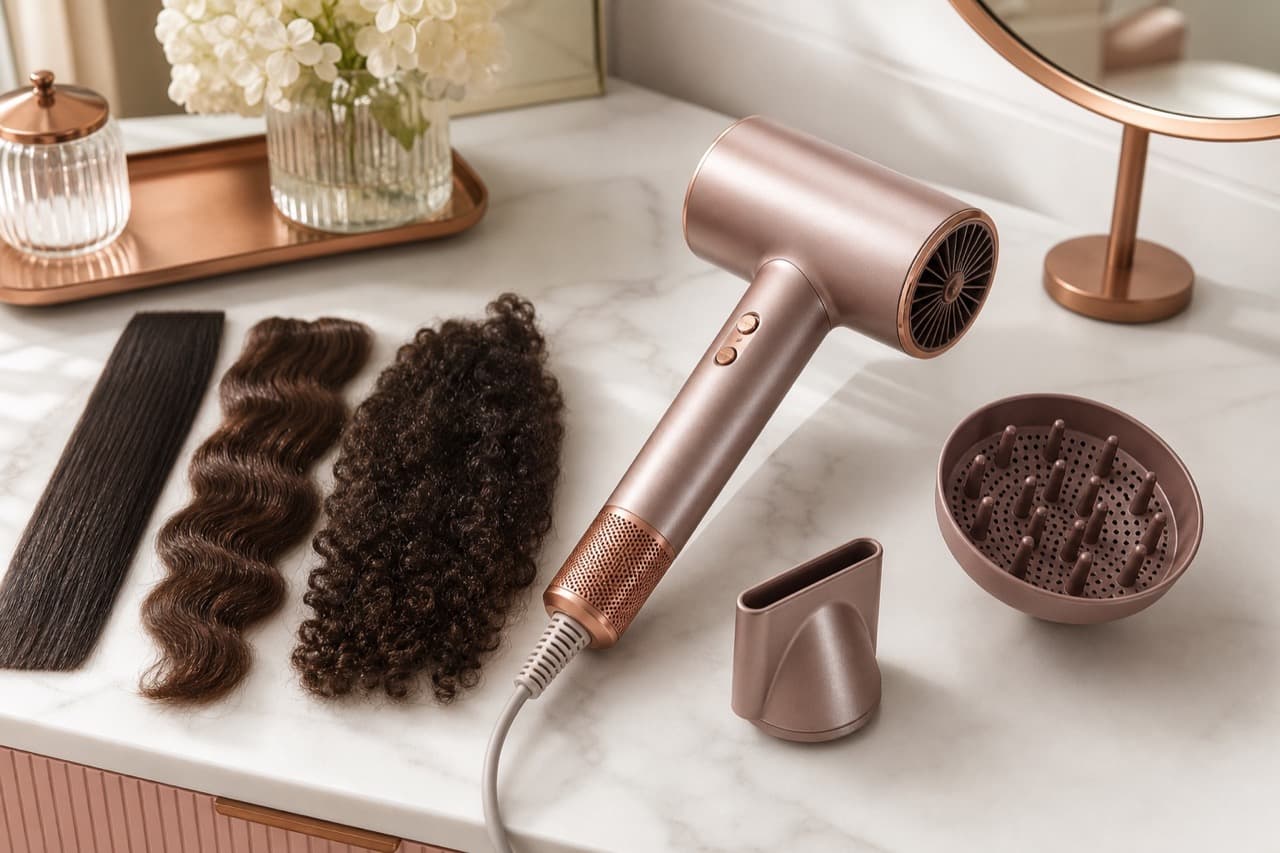
Hair and Scalp Care Routine for People Who Heat Style
A practical hair and scalp care routine for heat stylers: wash and dry habits, a weekly heat schedule, safe tool temperatures and signs of heat damage to watch.
 Beauty & Personal Care
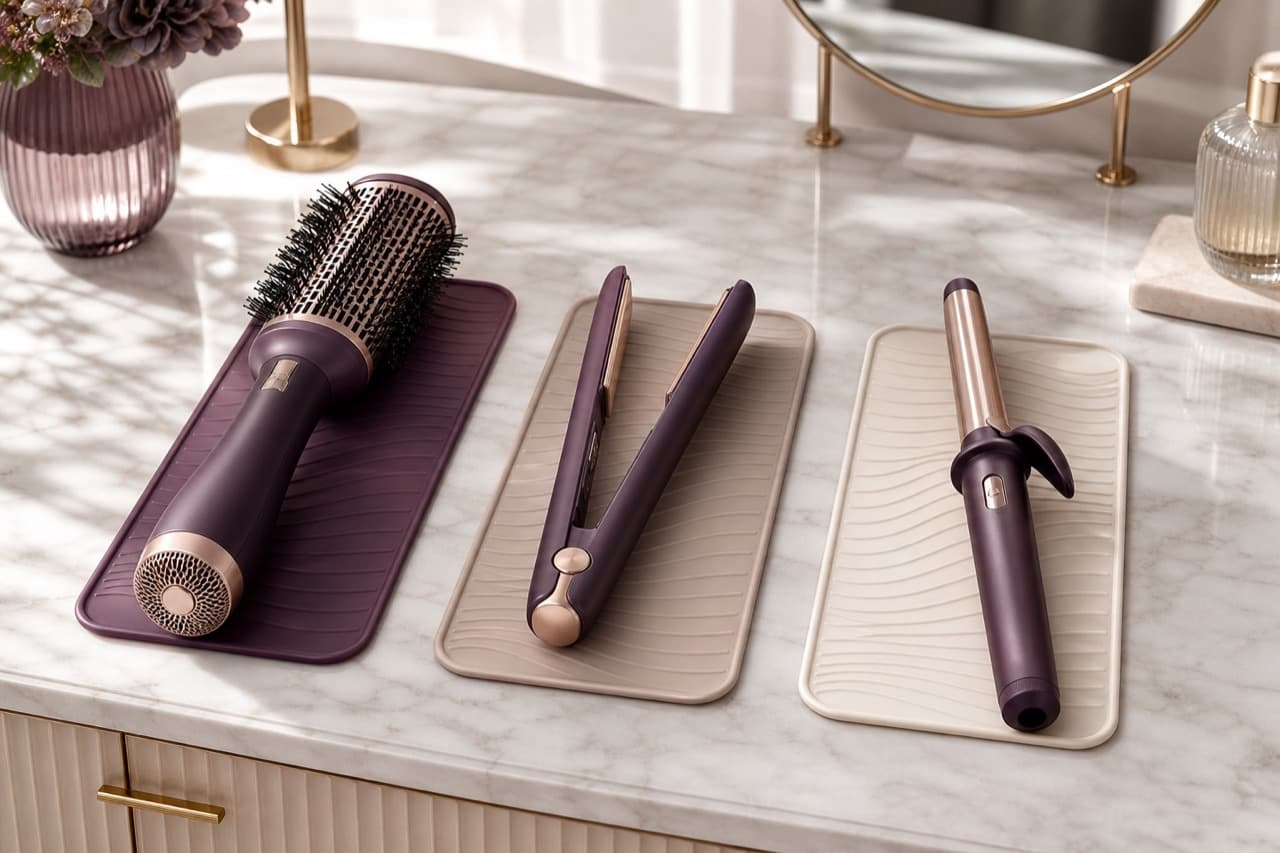
Hair Dryer Brush vs Straightener vs Curler: Which to Buy
Hair dryer brush vs straightener vs curler: compare results, heat, hair types, styling time and damage risk so you buy the one tool that fits your routine.