

Hair Dryer Brush vs Straightener vs Curler: Which to Buy
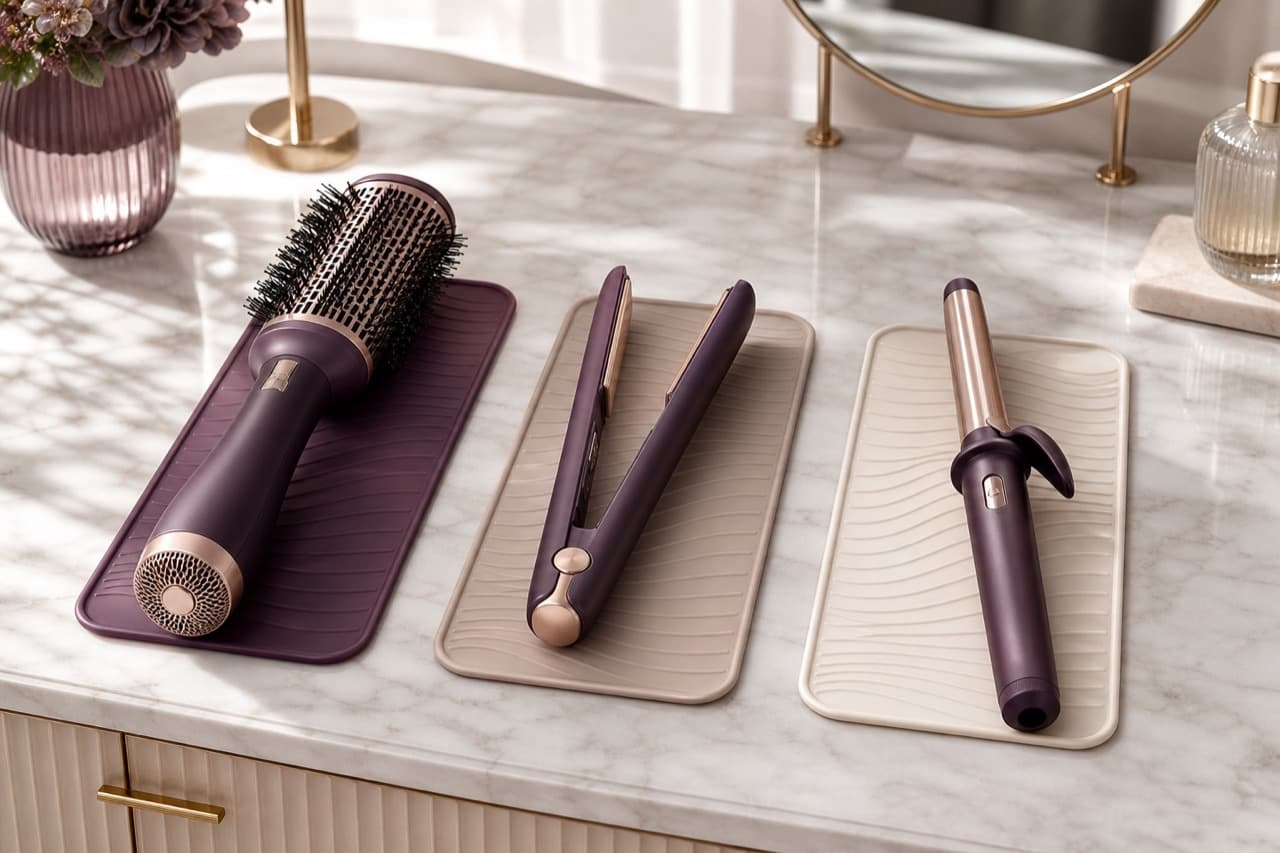
If you want volume and a smooth blowout straight from the shower, a dryer brush is usually the right buy; if you want sleek, poker-straight hair or a polished finish on dry hair, a straightener wins; and if you want defined curls or waves that last, you need a curler. That is the short answer to the hair dryer brush vs straightener vs curler question. This guide is for anyone who can only justify one hot tool (or wants to know which second tool actually adds something), and it walks through results, heat, hair type, time and the damage trade-offs of each.
Key takeaways
- A dryer brush works on damp hair and replaces a separate blow-dry; straighteners and curling irons work on fully dry hair only.
- Dryer brushes give soft volume and bend, not crisp curls or glass-straight lengths.
- Straighteners reach the highest direct-contact heat, so they reward good technique and punish repeated passes.
- Curler barrel size decides the result more than brand: roughly 1 inch for classic curls, 1.25 to 1.5 inches for loose waves.
- A flat iron can also curl or wave with practice; a curler cannot straighten, and a dryer brush cannot make tight curls.
- Whichever you choose, adjustable temperature matters more than maximum temperature.
What each tool actually does
All three use heat to reshape hair, but they apply it differently, and that difference explains nearly every pro and con.
Hair dryer brush (hot-air brush)
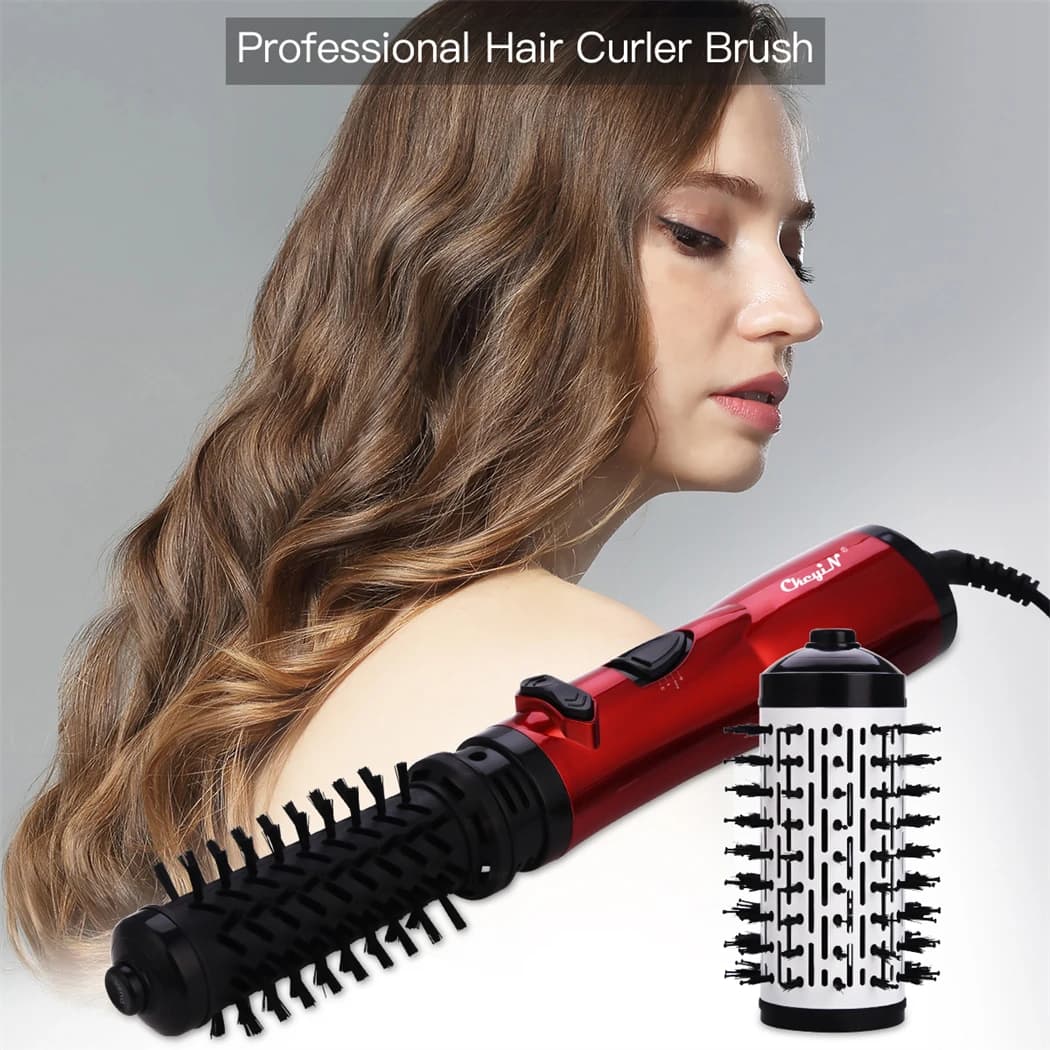
A dryer brush blows heated air through a bristled barrel, usually oval or round, while you pull hair over it. Because it dries and shapes at the same time, it is the only one of the three designed for damp hair. Air heat is gentler than a hot plate pressed onto the strand, but you spend longer under heat because you are drying from damp. The result is a salon-style blowout: lift at the root, smoothness through the lengths and a soft bend at the ends. For deeper detail on barrel shapes and technique, see our hot-air brush buying and use guide.
Straightener (flat iron)
A straightener clamps a small section between two heated plates and glides down the length. Contact heat plus tension flattens the cuticle, which is why flat-ironed hair looks shiny. Most adjustable models run from roughly 250°F to 450°F (about 120°C to 230°C). Plate width shapes what it is good at: about 1 inch is the all-rounder, 1.5 to 2 inches speeds up long, thick hair, and narrow plates around half an inch handle short cuts, bangs and beard-length styling. With a rounded housing and a twist-and-pull motion, a flat iron can also make beach waves.
Curler (curling iron or wand)
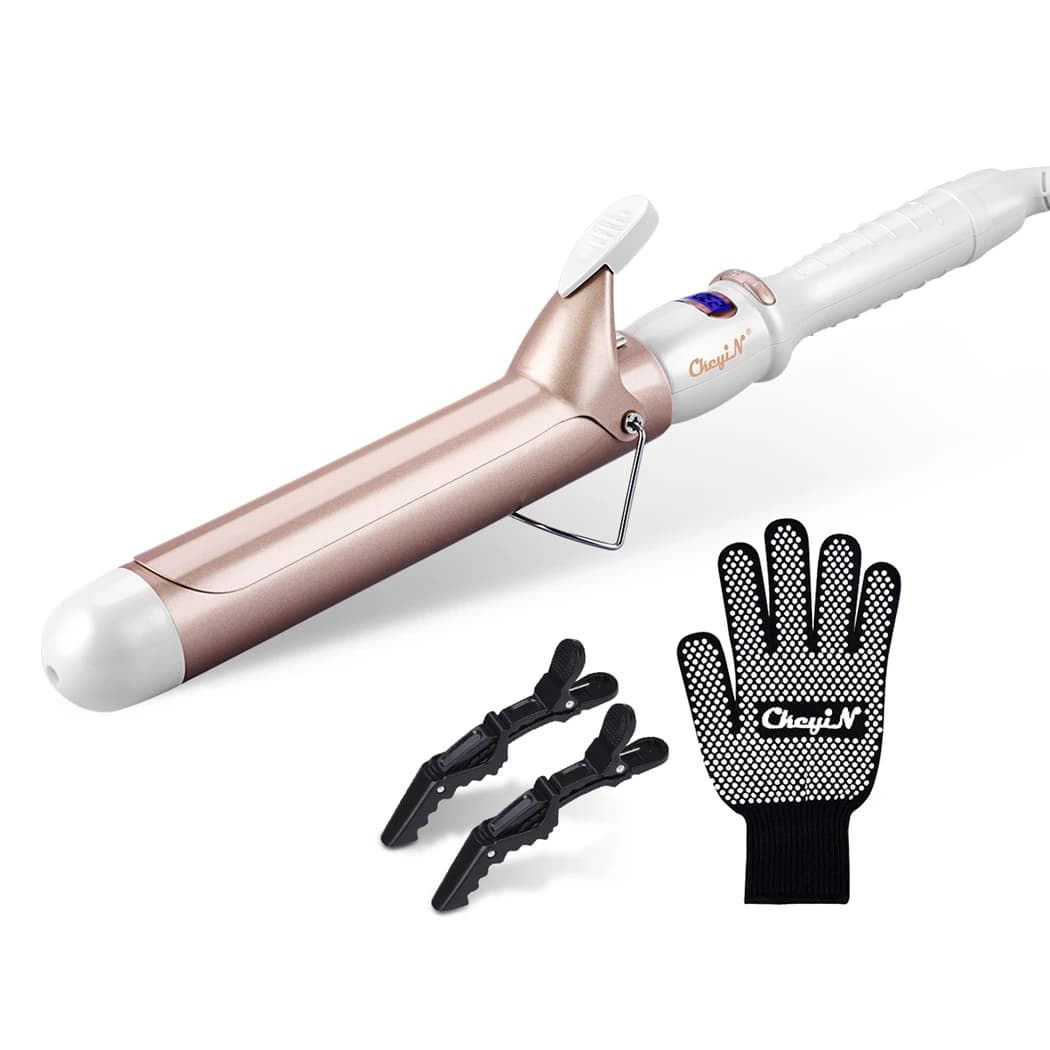
A curler wraps hair around a heated barrel. A clamped curling iron grips the ends for uniform, bouncy curls; a clipless wand gives looser, more lived-in waves but takes practice and a heat glove. Barrel diameter controls the curl: around 3/4 inch for tight curls, 1 inch for classic curls, and 1.25 to 1.5 inches for loose waves. Our curling iron barrel size guide maps barrels to hair length in detail.
Side-by-side comparison
| Factor | Dryer brush | Straightener | Curler |
|---|---|---|---|
| Hair state | Damp (towel-dried, not dripping) | Completely dry | Completely dry |
| Typical result | Volume, smooth blowout, soft bend | Sleek and straight; waves with practice | Defined curls or waves |
| Heat type | Hot air | Direct plate contact | Direct barrel contact |
| Time on medium-length hair | Replaces drying; often 15 to 30 minutes total | Often 10 to 20 minutes after drying | Often 15 to 30 minutes after drying |
| Learning curve | Low to moderate | Low for straight, moderate for waves | Moderate; wands are hardest |
| Best hair lengths | Chin to mid-back | Any, if plate width matches | Shoulder length and longer is easiest |
Times vary widely with thickness and length, so treat the ranges as rough planning numbers rather than promises.
Which tool suits your hair type?
Fine or thin hair
Fine hair heats through quickly, so it rarely needs high settings. Many stylists keep fine or damaged hair in roughly the 250°F to 350°F zone on flat irons and curlers. A dryer brush is often the most flattering single tool here because root lift is what fine hair lacks. Straighteners can leave fine hair looking flat unless you bevel the ends.
Medium, wavy hair
This is the most flexible hair type. A dryer brush handles most days; add a curler if you want defined curls for events. A straightener is useful if humidity makes waves frizz and you want a smooth reset.
Thick, coarse or curly hair
Coarse hair often needs more heat or smaller sections, and a dryer brush can take a long time to dry dense curls from damp. Many people with thick curly hair rough-dry with a regular dryer first, then finish with the brush or a flat iron. A wider straightener with consistent heat across the plates saves time. Be honest about how often you will straighten: daily high-heat passes on curly hair are the fastest route to heat damage and loosened curl pattern.
Short hair
Short cuts are the exception to most rules. A narrow straightener or a small-barrel curler is easier to maneuver close to the scalp than a large oval dryer brush, which can tangle or simply be too big to grip short lengths.
Heat, damage and safety: the honest trade-offs
None of these tools is damage-free. Damage risk comes from the combination of temperature, contact time and how often you style.
- Dryer brushes run cooler at the surface but keep hair under heat longer. The main hazard is tangling: pulling hair too tightly or rotating the brush into long hair can snag.
- Straighteners concentrate heat. One slow, controlled pass with tension is gentler than three fast ones. Never use one on damp hair; trapped water can boil inside the strand, and hissing or steam on supposedly dry hair is a sign to stop.
- Curlers hold the same section on a hot barrel for several seconds. Holding longer than needed adds damage without making curls last much longer; setting curls to cool before brushing does more for hold.
For all three: use a heat protectant (our heat-protectant spray guide covers how much and when), start at the lowest setting that works, keep hot tools on a heat-resistant surface, and unplug them after use. Look for auto shut-off, a swivel cord and a cool tip on curlers. Keep any corded tool away from water-filled sinks.
Cost of ownership and practical extras
The price tag is only part of the decision. Consider:
- Do you already own a dryer? If you do, a straightener or curler adds a capability. A dryer brush partly duplicates it, though it saves a step for blowouts.
- Attachments: some dryer brushes come with multiple heads; extra heads are only worth paying for if you will use them.
- Cleaning: dryer brushes collect hair in the bristles and lint at the air intake, which needs regular clearing to keep airflow and heat stable. Plates and barrels need occasional wiping when cold to remove product build-up.
- Travel: check the voltage rating before taking any tool abroad. US tools are usually 120V only; using them on 230V outlets without dual-voltage support can destroy the tool.
Browse styling tools in our personal care category, including the Rotating Hot Air Blow Dryer Brush and the Professional Ceramic Hair Curler. Check each product page for current specifications, heat settings, delivery and returns.
Mistakes to avoid
- Buying for the look in a photo, not your hair. Big bouncy curls in an ad often come from rollers, extensions or professional styling. Match the tool to your length and texture.
- Using a dryer brush on dripping-wet hair. It overloads the tool, takes far longer and leaves hair under heat for extra minutes. Towel-dry or rough-dry to around 70 to 80 percent first.
- Running every tool at maximum. High settings exist for coarse hair. If your hair styles at a lower setting, extra heat only adds wear.
- Picking the wrong barrel or plate size. A 2-inch barrel on chin-length hair gives a bend, not a curl; a 2-inch flat iron on a pixie cut cannot reach the roots.
- Brushing out curls while they are hot. Let curls cool fully before touching them, or they drop quickly.
How to choose: which one fits you
- Pick a dryer brush if you style mostly after washing, want volume and smoothness, and would like to replace a dryer-plus-round-brush routine with one tool.
- Pick a straightener if you want sleek hair, need to tame frizz between washes, or want the most versatile single tool; it can also create waves once you learn the twist.
- Pick a curler if curls or defined waves are your main goal, your hair holds a curl reasonably well, and you style on dry, second-day hair.
- Pick two if you want both everyday volume and occasional curls: a dryer brush for wash days plus a curler for events covers most needs without overlap.
If drying itself is your bottleneck, read our hair dryer heat, speed and voltage guide before buying any styling tool.
Frequently asked questions
Is a hair dryer brush less damaging than a straightener?
It applies lower surface heat because it uses air rather than a hot plate, but it keeps hair under heat for longer while drying. Used with moderate settings and heat protection, either can be reasonable. Frequency and temperature matter more than which tool you pick.
Can a straightener replace a curling iron?
Partly. A flat iron with rounded edges can create waves and loose curls using a twist-and-glide technique. It will not give the uniform, tight ringlets of a small-barrel curling iron, and it takes practice to avoid dents.
Can I use a dryer brush on dry hair?
You can use it on dry hair to refresh a blowout or add bend, usually on a low or cool setting. It is designed primarily for damp hair, so it will not straighten dry hair as effectively as a flat iron.
What temperature should I use on my hot tools?
Start at the lowest setting that shapes your hair and increase gradually. Fine or damaged hair often needs much less heat than coarse hair. Follow the temperature guidance in your tool’s manual and stop raising heat once the style holds.
Which tool is best for short hair?
A narrow straightener, around half an inch to 1 inch, is usually the easiest for short cuts because it reaches close to the scalp. Small curling barrels also work for texture; large oval dryer brushes are often too big for very short hair.
Shop Beauty & Personal Care
View all → Sale
Champagne Gold Makeup Brush Set with Travel Pouch
In stock · Options available · Ships in 7–21 business days
Tourmaline Ceramic Hair Curler with Adjustable Heat
In stock · Options available · Ships in 7–21 business days
 Sale
Rotating Hot Air Brush with Ceramic Tourmaline Barrel
In stock · Ships in 7–21 business days
 Sale
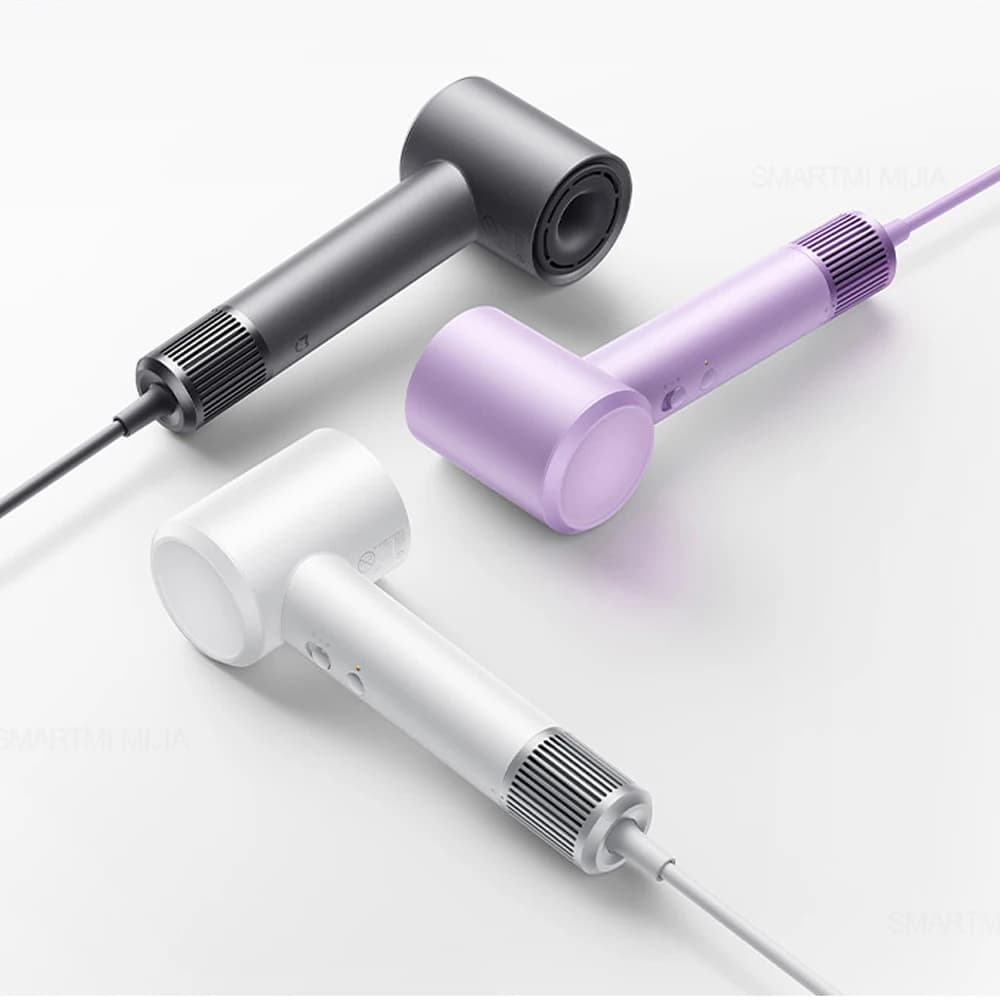
High-Speed Brushless Ionic Hair Dryer with Magnetic Nozzle
In stock · Options available · Ships in 7–21 business days
Continue reading
 Beauty & Personal Care
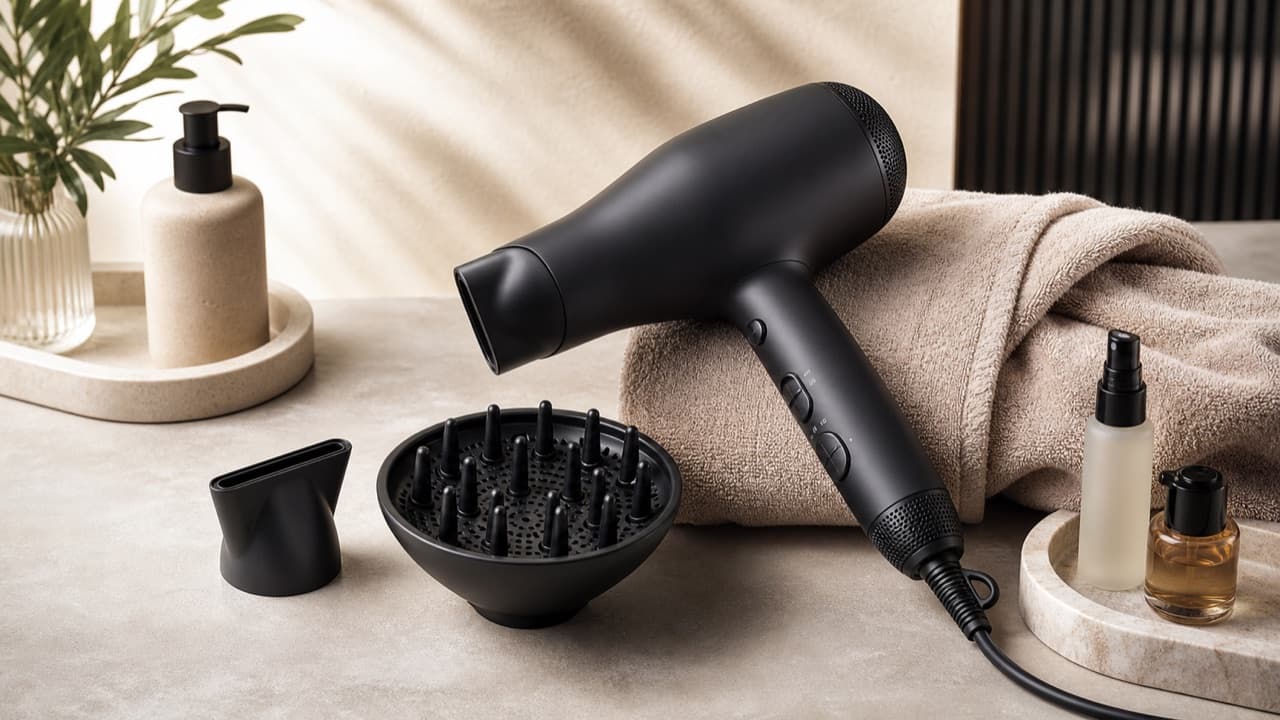
Hair Dryer Wattage, Heat Settings and Voltage Explained
Hair dryer wattage, heat and speed settings, motor types and voltage explained, so you can compare dryers, avoid travel burnout and dry faster with less heat.
 Beauty & Personal Care
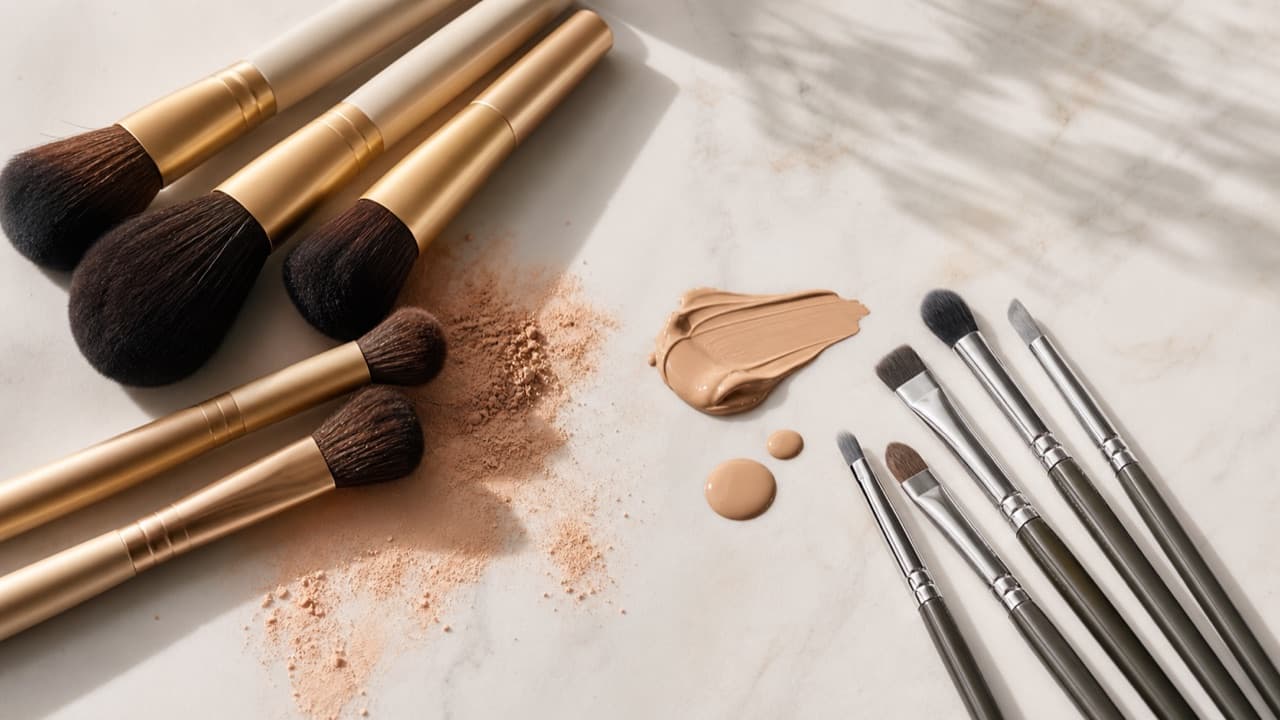
Synthetic vs Natural Makeup Brushes: Which Should You Buy?
Synthetic vs natural makeup brushes: how each bristle type handles powder, cream and liquid, how to wash them, and which to buy for face and eye makeup.
 Beauty & Personal Care
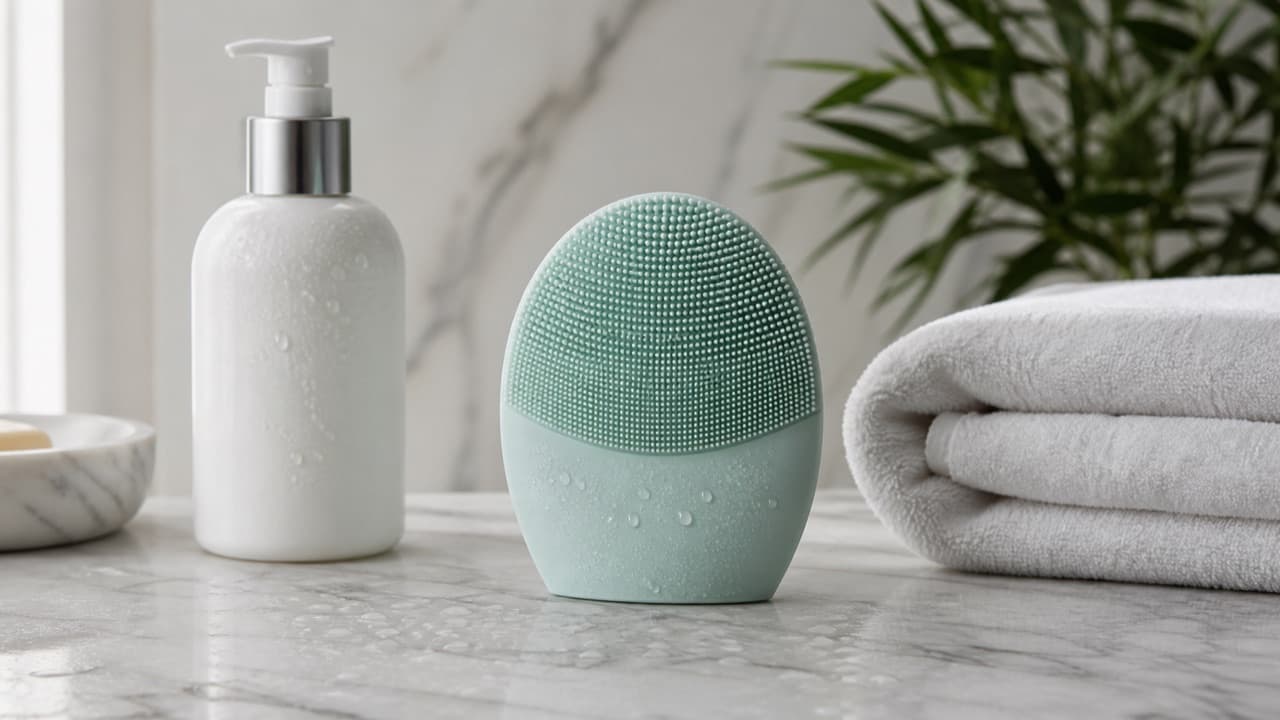
How to Use a Silicone Facial Cleansing Brush Gently
How to use a silicone facial cleansing brush: technique, how often to use it, which skin types should go easy, and how to clean and store the device safely.