

Suit Construction: Fused vs Half Canvas vs Full Canvas
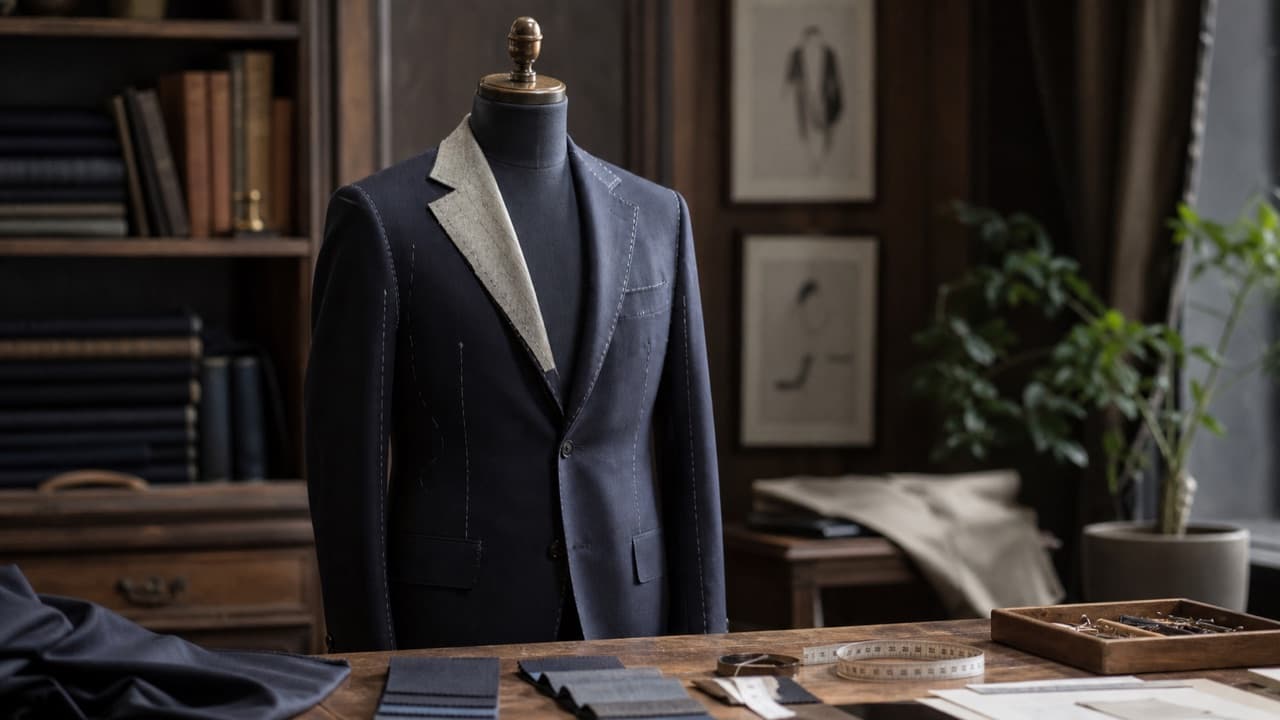
Suit construction describes what sits between a jacket’s outer fabric and its lining to give the chest and lapels their shape: a fused interlining glued to the cloth, a floating canvas stitched in through the chest (half canvas), or a canvas running the full length of the front (full canvas). Canvas generally drapes and ages better and survives more tailoring, but costs more; fused jackets are lighter on the wallet and fine for many wearers. This guide is for anyone buying a business suit who wants to understand what they’re paying for, and how to check it without cutting anything open.
One caveat up front: construction is not a guarantee of fit. A well-fitting fused suit will look better than a poorly fitting full-canvas one every time.
Key takeaways
- Fused jackets use a heat-bonded interlining. They’re the most common construction at entry price points and can look sharp when new.
- Half-canvas jackets put a stitched, floating canvas in the chest and lapels and fuse the lower front, a common middle ground on price and performance.
- Full-canvas jackets carry the canvas to the hem. They’re the most expensive and usually the most adaptable to the wearer’s shape over time.
- The pinch test, done just below the chest pocket and near the bottom of the jacket front, tells you a lot in seconds.
- A softly rolling lapel is a good sign of canvas; a lapel pressed flat like cardboard often points to fusing.
- Fit through the shoulders matters more than construction, because shoulders are the hardest and most expensive part to alter.
What’s inside a suit jacket
A jacket front has three main layers: the shell fabric you see, an interlining that supports it, and the lining. The interlining is what gives the chest its gentle curve and helps the lapel roll rather than collapse. How that interlining is attached is what “construction” refers to.
- Fused interlining is a thin fabric coated with heat-activated adhesive and bonded to the back of the shell.
- Canvas is a separate interlining traditionally made from blends that may include wool, cotton, linen and horsehair. It’s stitched to the shell in key places and otherwise “floats”, so the shell and canvas move together without being glued.
- Pad stitching attaches the canvas to the lapel and collar with many small stitches that build in a curve. It can be done by hand or by machine.
Fused, half canvas and full canvas compared
| Feature | Fused | Half canvas | Full canvas |
|---|---|---|---|
| How the front is supported | Adhesive interlining bonded across the front | Floating canvas in chest and lapel; lower front fused | Floating canvas from shoulder to hem |
| Typical price tier | Entry and much of mid-range ready-to-wear | Mid to upper ready-to-wear, many made-to-measure | Upper ready-to-wear, many made-to-measure and bespoke |
| Feel and drape | Can be stiffer and flatter | Softer chest and natural lapel roll | Softest drape, most shaping through the body |
| Long-term behavior | Risk of bubbling if adhesive separates; flatter look over time | Chest molds somewhat; lower front behaves like fused | Front gradually molds to the wearer |
| Pressing and care | Avoid high heat and aggressive pressing | More forgiving | Most forgiving and reshapeable by a tailor |
Fused construction
Fused jackets are quicker and cheaper to make, which is why they dominate entry-level suits. Modern fusing materials are much better than older ones, and a good fused jacket can look crisp. The trade-offs are a stiffer, flatter chest, lapels that tend to be pressed flat rather than rolled, and the possibility of bubbling. Bubbling happens when the adhesive releases in patches, leaving the shell rippled; heat, steam, repeated cleaning and age raise the risk. Once a fused front bubbles, it’s difficult to fix properly.
Half-canvas construction
A half-canvas jacket uses a floating canvas where shaping matters most, through the chest and up into the lapels, and fuses the lower front. You get a natural lapel roll and a chest that shapes to you at a price below full canvas. For most people buying a first serious business suit, half canvas hits the best balance.
Full-canvas construction
Full canvas extends the floating layer down to the hem. Over months of wear, body heat and movement help the jacket front settle into the wearer’s shape, and a skilled tailor can press and reshape it more freely. It’s also the most expensive to make, and it only pays off if the cut fits you well to begin with.
How to check suit construction: the pinch test
Listings don’t always state construction, and the term “canvassed” is sometimes used loosely. The pinch test helps.
- Find the right spots. Use two places on the jacket front: one just below the chest pocket, and one about an inch or two above the bottom of the front, below the lowest button.
- Pinch and separate. Pinch the shell and lining together gently, then pull your fingers slightly apart.
- Feel for a third layer. A canvassed area has a distinct floating layer between shell and lining that you can feel slide. A fused area feels like two layers, with the interlining stuck to the shell.
- Read the result. Canvas at both spots suggests full canvas. Canvas at the chest only suggests half canvas. No floating layer at either spot suggests fused.
Also look at the lapel. Hold the jacket buttoned on a hanger or on your body: a canvassed lapel tends to roll in a soft curve toward the top button, while a heavily fused lapel often lies flat with a sharp pressed edge. This is a clue, not proof, since pressing and style also affect it.
Other build details that matter as much
Shoulders and fit
Shoulder construction (structured, padded, natural or soft) sets a jacket’s silhouette, and the shoulder is the hardest area to alter. If the shoulder seam doesn’t sit at the edge of your shoulder, look elsewhere. Our guide on how a men’s suit should fit covers jacket length, sleeve pitch and trousers, and you can take accurate numbers using how to measure for a men’s suit at home.
Fabric and lining
Wool remains the standard for business suits because it breathes, recovers from creasing and takes pressing well. “Super” numbers (such as Super 110s or 130s) refer to how fine the wool fibers are; finer cloth feels smoother but tends to be more delicate and crease-prone, so very high numbers aren’t automatically better for daily office wear. Full linings make jackets slide on easily; half or quarter linings run cooler in warm climates.
Alteration allowances
Check whether the trousers have extra seam allowance at the center back seam and whether the hems are left unfinished for tailoring. Working sleeve buttonholes look refined but make shortening sleeves from the cuff more complicated and expensive.
Mistakes to avoid
- Paying for canvas in a suit that doesn’t fit your shoulders. Construction can’t fix a jacket that’s the wrong shape for your frame.
- Taking “canvassed” at face value. Some listings use it for a jacket with only a small chest piece. Pinch-test or ask for detail.
- Ironing a fused jacket hard. High heat and heavy pressure can loosen the adhesive. Steam gently from a distance or use a professional presser.
- Dry cleaning too often. Frequent cleaning wears fabric and can stress fused fronts. Brush, air and spot-clean between occasional professional cleans.
- Folding a suit badly for travel. Creasing the chest and lapel repeatedly shortens a jacket’s life; our how to pack a suit for travel guide shows better methods.
Which construction fits you
- Pick fused if you need a suit for occasional events, interviews or a short-term role, your budget is tight, or you’re still unsure of your preferred cut. Spend the savings on tailoring.
- Pick half canvas if you wear a suit weekly or more, want a natural lapel roll and better aging, and want the best value per wear.
- Pick full canvas if you wear suits daily, have found a cut that suits your build, and want a jacket that can be reshaped and maintained for many years.
If you’re building a rotation, our office suit capsule wardrobe guide helps you choose colors and quantities, and two-piece vs three-piece suit covers the waistcoat question. When comparing options such as the Boutique Mens Business Suit 3-Piece Set or the Formal Business Office Suit Set, check each product page for fabric, sizing, delivery and returns, and if construction isn’t stated, assume fused and judge on fit. More options are in the fashion and apparel category.
Frequently asked questions
Is a fused suit bad?
No. A fused suit that fits well can look sharp and serve occasional wear for years. It’s typically stiffer than a canvassed jacket and needs gentler pressing, so it’s best for lighter use or tighter budgets.
Is half canvas worth it over fused?
For suits worn regularly, usually yes. The canvassed chest and lapel drape more naturally and hold their shape better over time, and the price gap is often smaller than the jump to full canvas.
How can I tell if a suit is full canvas?
Do the pinch test near the bottom of the jacket front, below the last button. If you can feel a separate floating layer there as well as in the chest, the jacket is likely full canvas.
What causes bubbling on a suit jacket?
Bubbling happens when the adhesive in a fused interlining separates from the shell fabric, leaving ripples. Heat, steam, frequent dry cleaning and age raise the risk, and it’s hard to repair once it starts.
Does construction affect how a suit fits?
It affects how a jacket drapes and how well it can be adjusted, but not the basic fit. Shoulder width, chest and jacket length must suit your body regardless of construction.
Shop Fashion & Style
View all →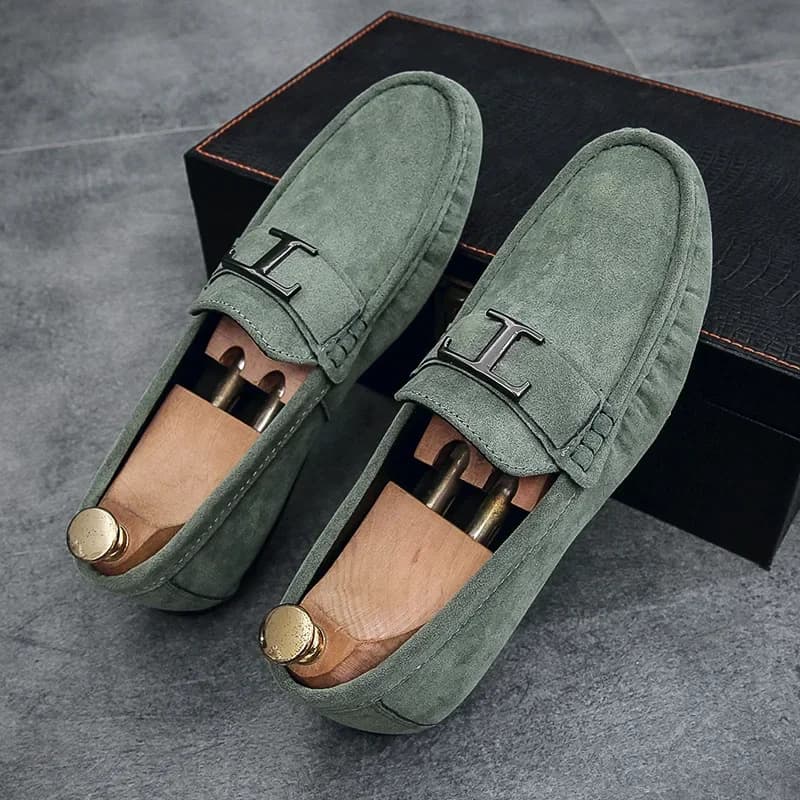
Men's Slip-On Casual Loafers in Soft Synthetic Leather
In stock · Options available · Ships in 7–21 business days
 Sale
Slim-Fit Shawl Lapel Tuxedo, Three-Piece Wedding Set
In stock · Options available · Ships in 7–21 business days
 Sale
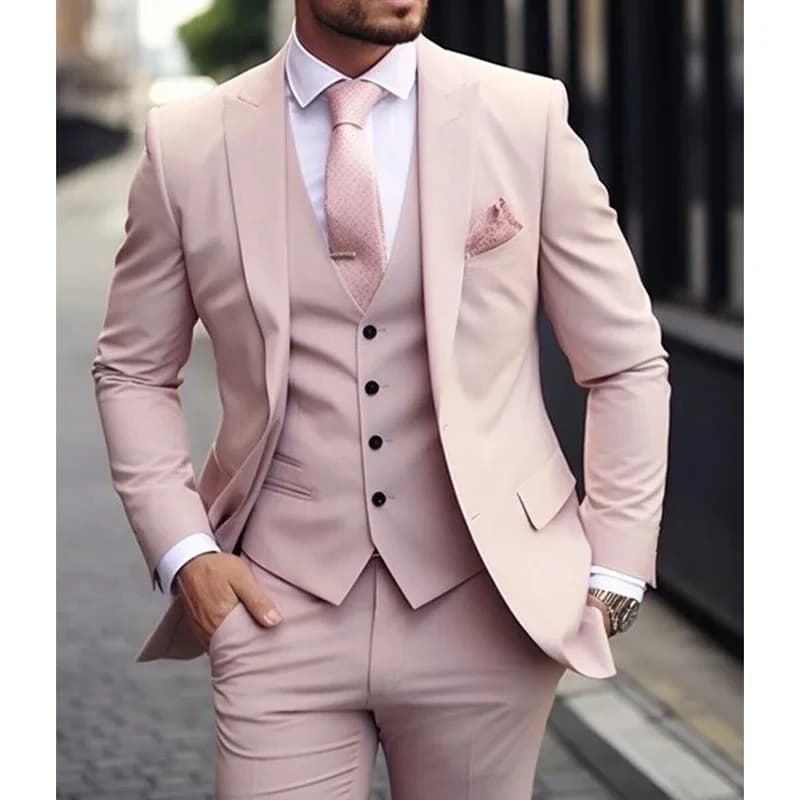
Pastel Pink Slim-Fit Three-Piece Wedding Suit
In stock · Options available · Ships in 7–21 business days
 Sale
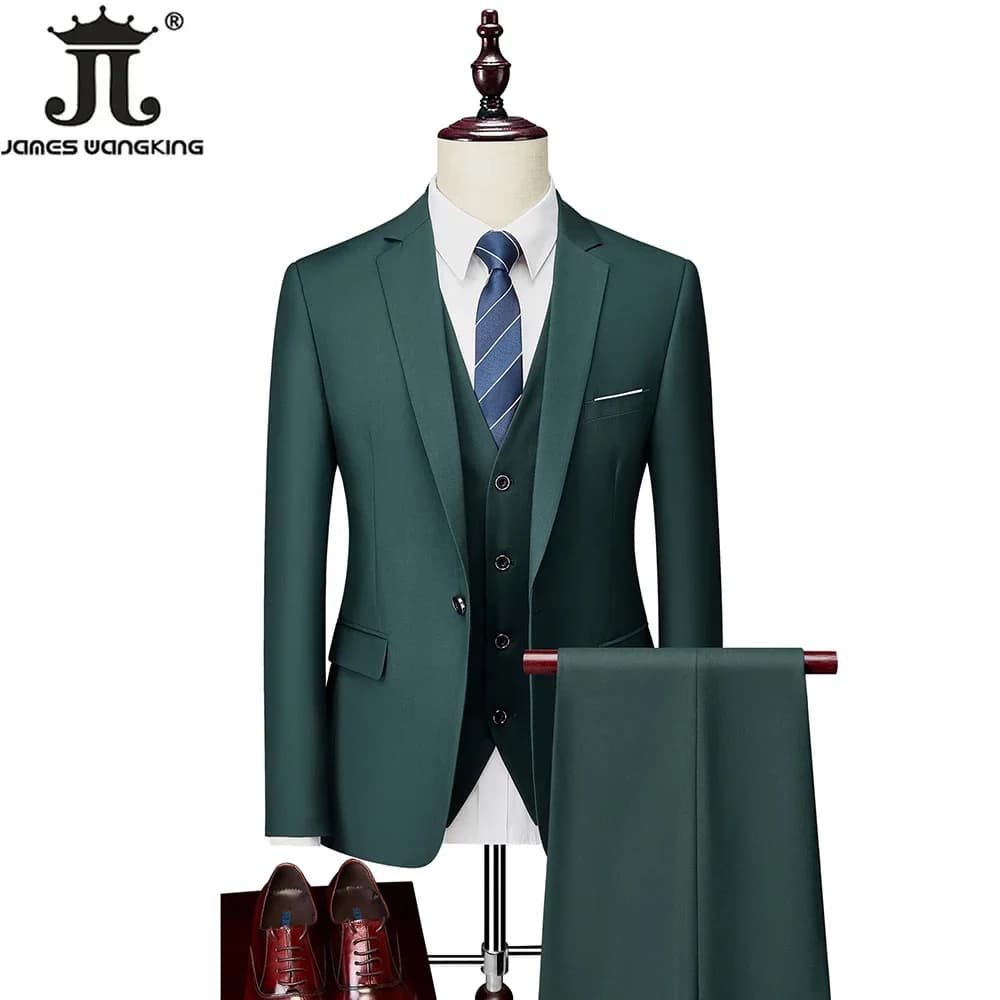
Solid-Color Notch Lapel Office Suit, Two- or Three-Piece
In stock · Options available · Ships in 7–21 business days
Continue reading
 Fashion & Style
Slim Fit vs Regular Fit Suit: Which Cut Suits Your Build
Slim fit vs regular fit suit compared: chest-to-waist drop, armholes, sleeves and trouser openings, plus which cut fits your build and what a tailor can fix.
 Fashion & Style
Office Suit Capsule Wardrobe: 3 Suits, 10 Days of Outfits
Build an office suit capsule wardrobe with three suits, five shirts and two pairs of shoes: which colors and fabrics to buy first, how to rotate them and care.
 Fashion & Style
Wedding Suit Colors and Fabrics by Season
Wedding suit colors and fabrics matched to the season: which shades suit spring, summer, fall and winter weddings, and which cloth weights keep you comfortable.