

Air Fryer Energy Cost: How Much Does It Cost to Run?
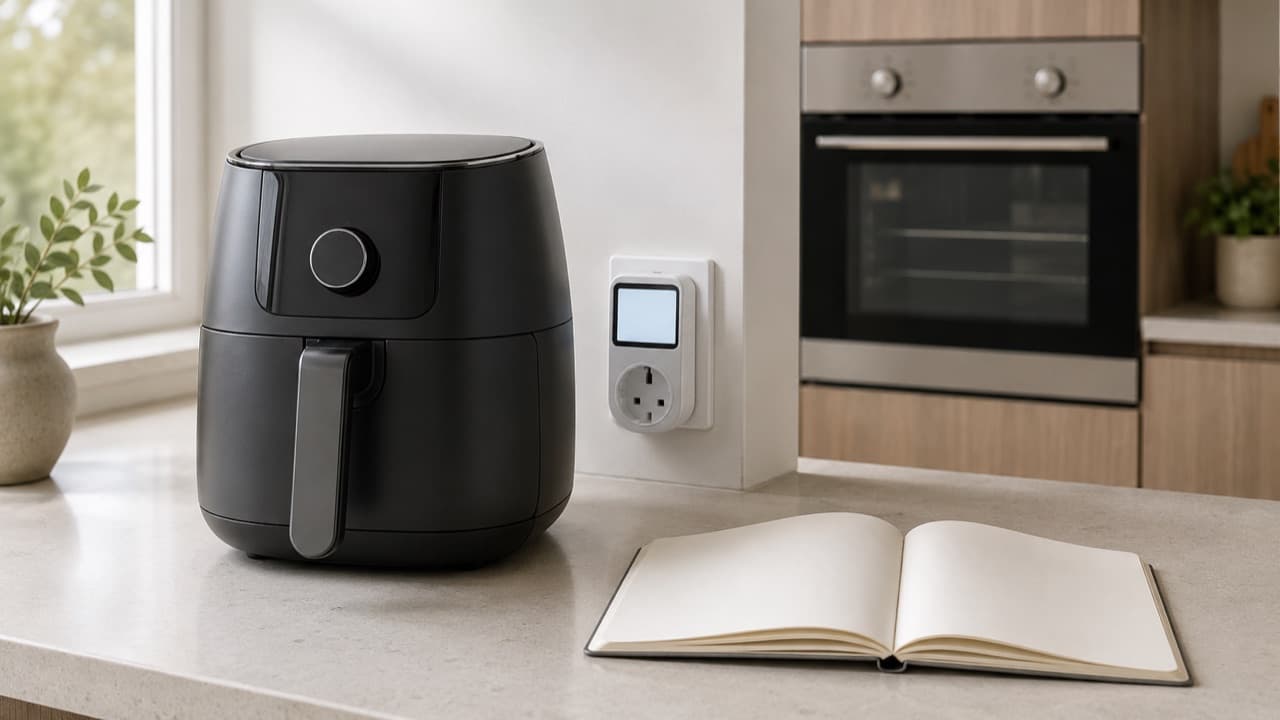
For most US households, the air fryer energy cost is roughly 5 to 15 cents per typical cooking session, because a 1,400 to 1,700 watt basket model usually runs for 15 to 25 minutes and the heating element cycles off once it reaches temperature. This guide is for anyone deciding whether an air fryer will lower their electric bill, or who wants to calculate the real cost using their own appliance and utility rate instead of trusting a headline number.
The short version: an air fryer is usually cheaper than heating a full-size oven for small and medium portions, more expensive than a microwave for reheating, and not a meaningful bill saver unless it replaces oven use you were already doing.
Key takeaways
- Cost per use = watts ÷ 1,000 × hours × your electricity rate per kWh. Your utility bill lists the rate.
- Rated wattage is the maximum draw; actual use is lower once the fryer reaches temperature and the element starts cycling.
- The biggest savings come from skipping a 10 to 15 minute oven preheat for small batches, not from the air fryer being magically efficient.
- Large batches cooked in several rounds can cost as much as, or more than, a single oven bake.
- Run an air fryer directly from a wall outlet on a circuit without other heating appliances; it is a high-draw appliance.
How to calculate your air fryer energy cost
Find the wattage on the label underneath the unit or in the manual. Most basket air fryers are rated between about 1,200 and 1,800 watts, compact 2-quart models closer to 800 to 1,000 watts, and air fryer toaster ovens up to about 1,800 watts.
- Convert watts to kilowatts: 1,500 W ÷ 1,000 = 1.5 kW.
- Multiply by cooking time in hours: 20 minutes is 0.33 hours, so 1.5 × 0.33 = 0.5 kWh at full power.
- Multiply by your rate: at 17 cents per kWh, 0.5 × $0.17 = about 8.5 cents.
That figure is a ceiling. Air fryers, like ovens, run the element hard while heating and then switch it on and off to hold temperature, while the fan runs continuously at a much lower draw. Actual consumption for the same 20 minutes is often noticeably below the nameplate calculation. If you want a real number, a plug-in electricity usage meter (the kind you plug the appliance into) shows the actual kWh for one cook.
What electricity rate should you use?
Use the per-kWh price from your own bill, including delivery charges if they are billed per kWh. US residential rates vary widely by state: many households pay somewhere in the mid-teens of cents per kWh, while parts of New England, California and Hawaii pay well above 30 cents. Time-of-use plans can make the same dinner cost twice as much at 6 p.m. as at 10 p.m.
Air fryer vs oven vs microwave: running cost compared
The comparison only makes sense for the same food. Here is a rough picture for cooking a family-sized portion of something like chicken thighs or roasted vegetables, using 17 cents per kWh. Actual figures depend on your appliance, its insulation and how full it is.
| Appliance | Typical rated power | Preheat | Approx. energy for one meal | Approx. cost at 17 cents/kWh |
|---|---|---|---|---|
| Basket air fryer | 1,400 to 1,700 W | 0 to 3 min | 0.3 to 0.6 kWh | 5 to 10 cents |
| Air fryer toaster oven | 1,500 to 1,800 W | 3 to 5 min | 0.4 to 0.8 kWh | 7 to 14 cents |
| Full-size electric oven | 2,000 to 5,000 W elements | 10 to 15 min | 1 to 2+ kWh | 17 to 35+ cents |
| Microwave (reheating) | About 1,000 to 1,500 W input | None | 0.05 to 0.15 kWh | 1 to 3 cents |
Gas ovens are a different calculation, since you pay per therm, and many gas ovens still use electricity for the igniter. The general pattern holds: small, fast cooks favor the air fryer; large roasts and multiple sheet pans favor the oven.
When an air fryer actually saves money
The savings are real but modest. If an air fryer replaces four or five oven sessions a week, at a difference of perhaps 10 to 25 cents each, that adds up to something like $2 to $5 a month for many households, more where rates are high. In summer there is a second benefit: a small appliance dumps far less heat into the kitchen, so your air conditioning works less.
It does not save money when:
- You cook in three or four rounds because the basket is too small for your household. Size up instead; roughly 2 to 3 quarts suits one or two people, 5 to 6 quarts suits a family of four.
- It replaces the microwave for reheating soup or leftovers that the microwave handles in two minutes.
- It is an extra appliance you buy and rarely use. The purchase price takes years of small savings to recover.
If you are timing the purchase, our Black Friday vs seasonal sales guide explains when small kitchen appliances tend to be discounted.
Power, outlets and safe placement
A standard US kitchen circuit is 120 volts and 15 or 20 amps. A 1,700 watt air fryer draws about 14 amps, close to the limit of a 15 amp circuit, so running it alongside a kettle or toaster on the same circuit can trip the breaker. Practical rules:
- Plug it directly into a wall outlet. Avoid extension cords and power strips unless the manual specifically allows a heavy-duty cord.
- If you want to track usage with a smart plug, check that the plug’s continuous rating covers the appliance’s full wattage; many are rated 15 amps, but cheaper ones may not be suitable for heating appliances. The smart plug guide covers ratings and safe use.
- Leave the clearance the manual specifies around the exhaust vent, typically several inches at the back and above, and keep it off the stovetop.
- Do not cover the basket with foil or parchment that can blow into the element, and never run it empty with liners.
Mistakes to avoid
- Using the rated wattage as the actual cost. It overstates consumption; measure with a plug-in meter if the number matters to you.
- Preheating longer than needed. Many recipes work with 2 to 3 minutes of preheat, or none at all for frozen foods.
- Overfilling the basket. Crowded food needs longer cook times and comes out less crisp, so you pay more for a worse result.
- Ignoring a greasy fan and element. Built-up grease affects airflow and can smoke. Clean the basket after each use and wipe the element area once it is cool, following the manual.
- Comparing against a gas oven with electric rates. Use your gas price per therm for the oven side of the comparison.
How to choose an air fryer with running cost in mind
- Pick a compact basket (2 to 4 quarts) if you cook for one or two and mostly do sides, reheats of crispy food and small proteins.
- Pick a 5 to 6 quart basket or dual-basket model if you cook full meals for three or more and want to avoid multiple rounds.
- Pick an air fryer toaster oven if it will replace your full oven for most weeknight cooking and you have the counter space.
- Stick with the oven if you regularly cook large roasts or several trays at once.
For more ideas on small appliances that earn their space, see our list of essential kitchen gadgets or browse the home and kitchen category.
Frequently asked questions
How much electricity does an air fryer use per hour?
At full power, a 1,500 watt air fryer would use 1.5 kWh in an hour. In practice it uses less because the element cycles once the set temperature is reached. Most cooks also last 15 to 25 minutes, not a full hour.
Is it cheaper to use an air fryer or an oven?
For small and medium portions, an air fryer is usually cheaper because it heats a much smaller space and needs little or no preheat. For large batches that need several air fryer rounds, the oven can be equal or cheaper.
Does an air fryer use more electricity than a microwave?
Per minute the power draw is similar, but microwaves finish reheating much faster, so they usually use less energy for leftovers, soups and drinks. Air fryers make sense when you want crisp texture.
Can I plug an air fryer into an extension cord?
Most manufacturers advise against it because the appliance draws a high current that can overheat thin cords. Plug it directly into a wall outlet, and follow the manual if it lists an approved cord type.
Will an air fryer lower my electric bill?
Only modestly, and only if it replaces regular oven use. Typical savings are a few dollars a month, more in areas with high electricity rates or where it also reduces summer air-conditioning load.
Shop Home & Kitchen
View all →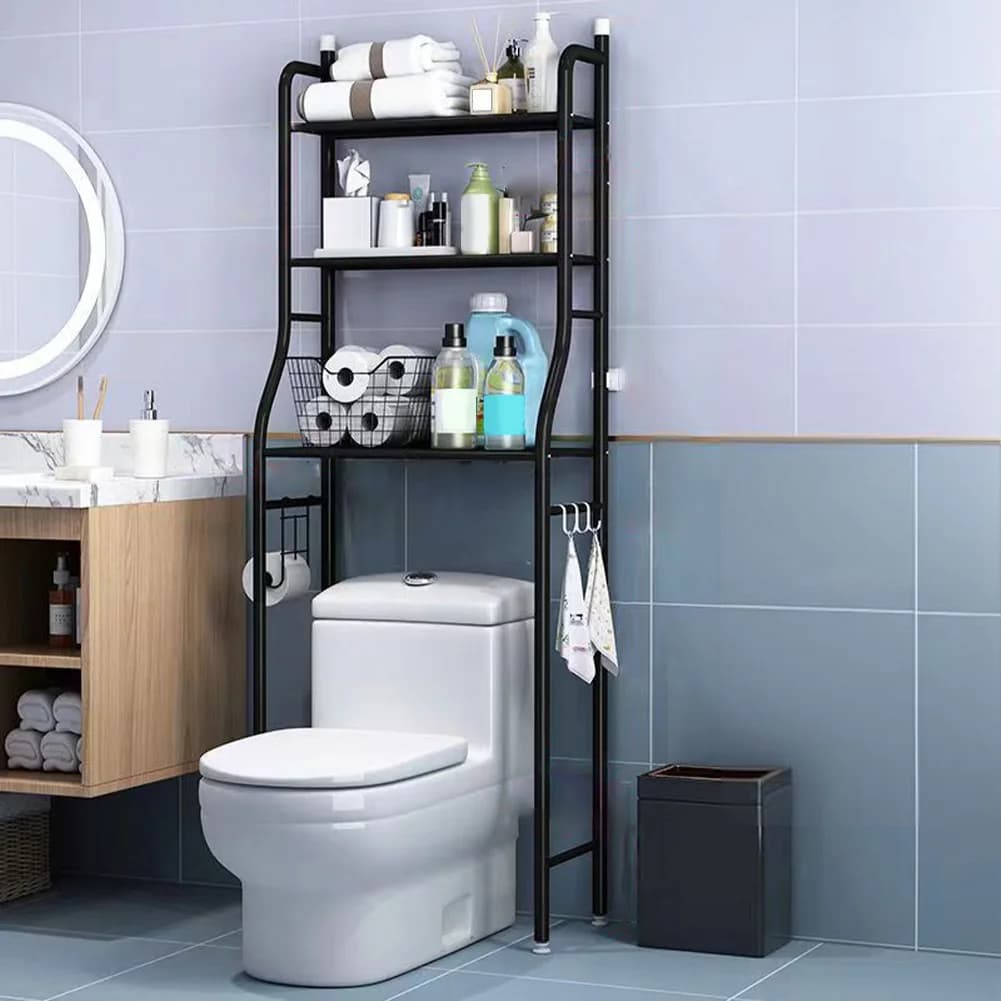
3-Tier Over-Toilet Storage Rack in Powder-Coated Carbon Steel
In stock · Options available · Ships in 7–21 business days
 Sale
Wingback Massage Recliner Chair in PU Leather with Footrest
In stock · Options available · Ships in 7–21 business days
 Sale
Mid-Century Modern Accent Armchairs, Set of Two, Wood Frame
In stock · Options available · Ships in 7–21 business days

Fireplace Flame Ultrasonic Humidifier and Oil Diffuser
In stock · Options available · Ships in 7–21 business days
Continue reading
 Home & Kitchen
Humidifier vs Aroma Diffuser: Output, Size and Cost
Humidifier vs aroma diffuser compared by mist output, tank size, room coverage, running cost and upkeep, plus when a 2-in-1 unit makes sense for your room.
 Home & Kitchen
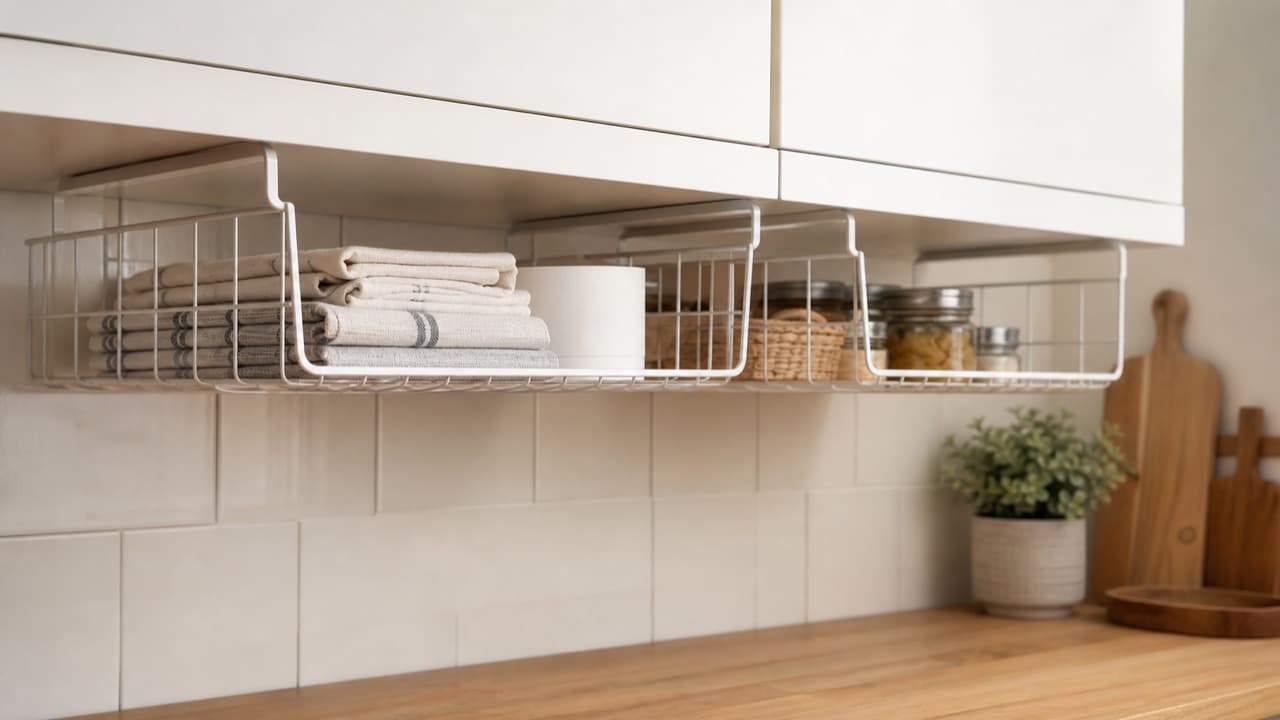
Under-Shelf Baskets for Small Apartments: Fit and Load Guide
Under-shelf baskets for small apartments: how to measure shelf thickness and clearance, which shelves can take them, load limits and the best spots to use one.
 Home & Kitchen
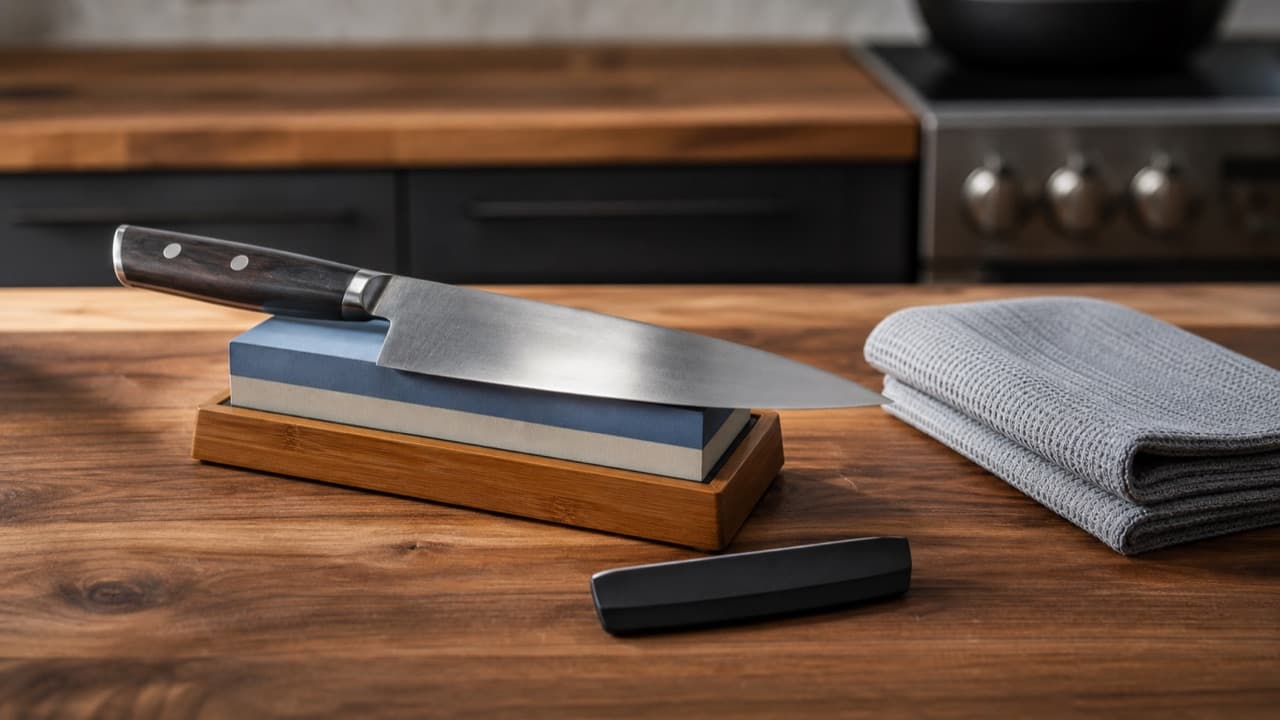
Knife Sharpening at Home: Stones, Rods and Pull-Throughs
Knife sharpening at home explained: honing vs sharpening, whetstone grits and angles, pull-through and electric sharpeners, serrated knives, and safe technique.