

How Should Loafers Fit? Men’s Heel, Instep and Width
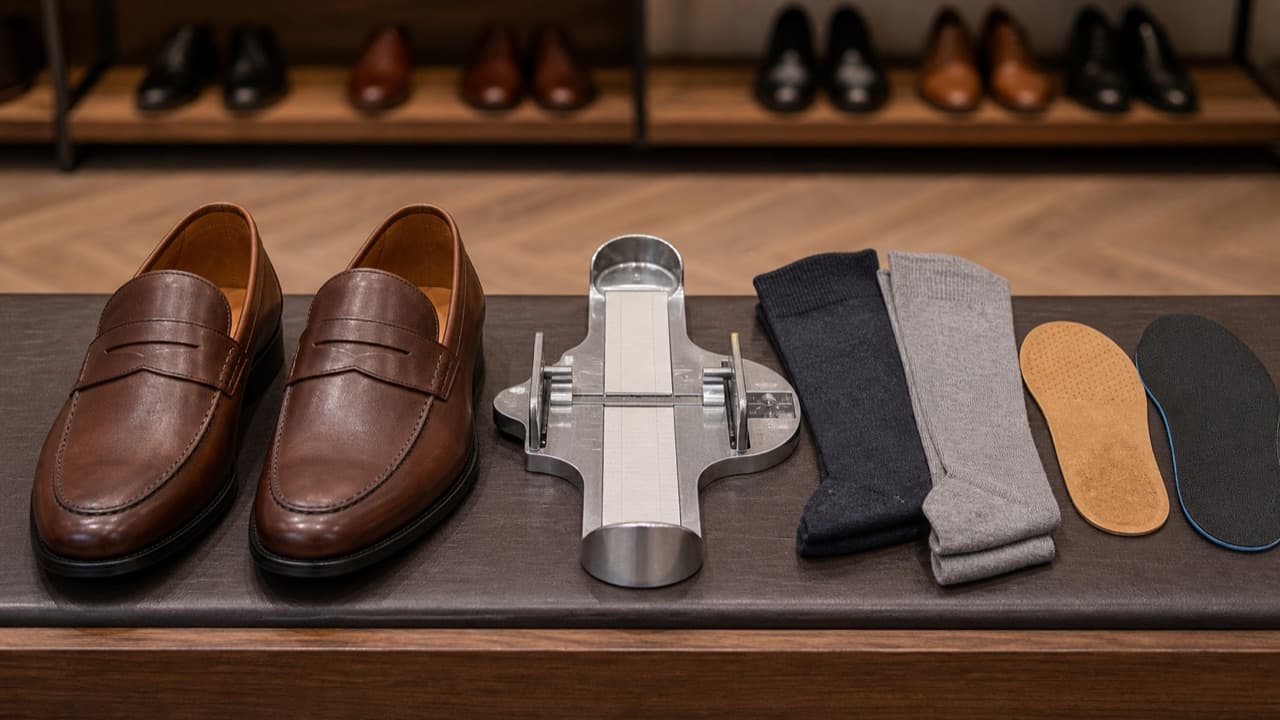
How should loafers fit? Snugly through the instep and heel, firm but not pinching across the widest part of your foot, and with a little less toe room than a lace-up shoe. Because loafers have no laces to pull the shoe onto your foot, the leather itself has to hold you in place, so a loafer that feels “comfortably roomy” in the store often slips off by lunchtime. This guide is for men buying loafers online or trying a new style for the first time. It explains the three fit points that matter (heel, instep and width), what normal break-in looks like, and how to fix a pair that is slightly off.
Key takeaways
- A new leather loafer should feel snug across the top of the foot; it will relax a little with wear, while a loose pair only gets looser.
- Slight heel lift, roughly 1/8 to 1/4 inch (3-6 mm), is common in new loafers with firm soles. Your whole heel coming out of the shoe is not.
- Leather can give somewhat in width; it does not meaningfully stretch in length. Never size down hoping the shoe will lengthen.
- Try loafers on with the socks you will actually wear; no-show socks and dress socks can change fit by about a half size.
- Measure your feet late in the day, when they are at their largest, and check the brand’s own chart rather than assuming your sneaker size.
The three fit points: heel, instep and width
Heel
The heel counter (the stiffened back of the shoe) should cup your heel without digging in at the top edge. Walk across a hard floor: a small amount of lift is normal while a stiff sole is new, because the sole has not yet learned to flex where your foot bends. If your heel lifts so much that the shoe flaps, or the collar rubs your Achilles raw within a few steps, the shoe is too long or the heel shape does not suit you.
Instep
The instep is the top of your foot, under the strap or saddle of a penny loafer. On a laceless shoe, this is the main grip point. You should feel even contact across the top of the foot, without sharp pressure from the edge of the vamp. A gap you can fit a finger into means the shoe will slip; red marks after ten minutes mean it is too shallow or narrow for your foot.
Width
Across the ball of the foot, the widest part, the shoe should be snug with no bulging of the leather over the sole edge. Men’s shoes in the US typically use D as standard (medium) width, with E, 2E (EE) and wider for broader feet and B or C for narrow ones. Many fashion loafers come in medium width only, which is fine for most feet but not for everyone.
Length, toe room and sizing
Loafers generally need less toe room than lace-ups because the foot cannot slide forward as much when the instep is held firmly. A rough guide is about a quarter to a half inch (6-13 mm) between your longest toe and the end of the shoe, but the shape of the toe box changes how that feels. A sleek almond toe will feel tighter at the same length than a rounder one.
Brands do not size consistently, and loafers often run a half size differently from the same brand’s sneakers or boots. European sizes do not convert exactly to US sizes either; charts differ by maker, so use the brand’s chart.
| Fit check | Good sign | Problem sign | Likely fix |
|---|---|---|---|
| Heel | Slight lift that eases as the sole flexes | Heel slides out with each step | Heel grips or a half insole; a half size smaller if extreme |
| Instep | Firm, even contact across the top | Visible gap, or sharp pressure line | Tongue pad for gaps; a different last for pressure |
| Width | Snug at the ball, no overhang | Little toe pinched or leather bulging | Wider width or professional stretching of leather |
| Length | About 1/4-1/2 inch toe room | Toes touching, or excess length causing creasing far forward | Change size; length does not stretch |
How materials and construction affect fit
Material changes how much a loafer will adapt to your foot.
- Calf leather: molds gradually to your foot and relaxes slightly across the width and instep over the first several wears.
- Suede: softer and usually gives more and faster than smooth leather, so starting snug matters even more.
- Synthetic or coated leather: stretches very little; buy it in the size that fits on day one.
- Unlined or lightly lined uppers: softer and more flexible, but also more likely to loosen over time.
Construction affects comfort and break-in. Moccasin-style loafers, where the leather wraps under the foot, and driving moccasins with rubber pebble soles are flexible from the start but are not built for long city walks; the thin soles wear quickly on pavement. Shoes with a cemented or stitched sole and a stiffer heel counter take longer to break in but hold their shape better. Penny, tassel and horsebit loafers differ mostly in decoration; the strap or bit sits over the instep and does not change fit by itself, though a heavy hardware bit can press on a high instep.
Break-in and fixing a pair that is slightly off
Expect a short break-in for leather loafers. Wear them around the house for an hour or two at a time for the first few days, on clean floors if you might need to return them. If they still pinch after a week of short wears, they probably will not settle.
Small fixes can rescue a pair that is close:
- Heel grips: adhesive pads inside the heel counter reduce slip.
- Tongue pads: stick under the vamp to fill space over a low instep.
- Half or full insoles: take up overall volume, which helps when the shoe is slightly long or deep.
- Professional stretching: a cobbler can stretch leather a little in width or at a pressure spot. They cannot add length.
For care between wears, use cedar shoe trees to absorb moisture and hold shape, and rotate loafers so each pair rests a day after wearing. Condition smooth leather periodically, and protect suede with a suitable spray before wet weather.
Mistakes to avoid
- Buying a size up for comfort. Extra length in a laceless shoe means heel slip and blisters, and it will not tighten later.
- Fitting with thick athletic socks. If you wear no-show socks with loafers, try them on that way.
- Ignoring instep pressure. Width can relax, but a vamp that cuts across a high instep tends to stay uncomfortable.
- Wearing driving moccasins as everyday walking shoes. The thin pebble soles wear down quickly on concrete.
- Breaking in outdoors before deciding. Scuffed soles usually rule out a return. Test at home first.
How to choose the right pair
Pick a smooth leather loafer with a firm heel counter if you will wear it with tailoring or for long days in the office, and size for a snug instep. Pick suede or an unlined loafer if comfort and a softer look matter more, and start a little snugger than you think. Pick a wider-width maker if your feet are broad, rather than sizing up. If you are pairing loafers with tailoring, our guide on how to wear loafers with suits covers styling, and how a men’s suit should fit covers the trouser break that shows them off. The Men’s Casual Leather Loafer Shoes are one option in our fashion and apparel collection; compare your measurements with the size chart on the product page and check the return terms before ordering.
Frequently asked questions
Should loafers be tight or loose at first?
Leather loafers should feel snug at first, especially across the instep, without pain. They usually relax slightly with wear, while a loose pair tends to get looser.
Is heel slip normal in new loafers?
A little heel lift, roughly 1/8 to 1/4 inch, is common while a stiff sole breaks in. If your heel comes out of the shoe or the slip does not improve after a week of wear, the shoe is likely too big.
Do loafers stretch over time?
Leather and suede loafers can relax somewhat in width and over the instep, but they do not stretch noticeably in length. Synthetic materials stretch very little.
Should I size down for loafers?
Some people take a half size smaller in loafers than in sneakers, but it depends on the brand. Measure your foot and follow the maker’s size chart rather than assuming.
How do I stop loafers from slipping off my heels?
Try heel grips, a tongue pad under the vamp or a half insole to take up volume. If the shoe is a full size too long, these fixes will not be enough.
Shop Fashion & Style
View all →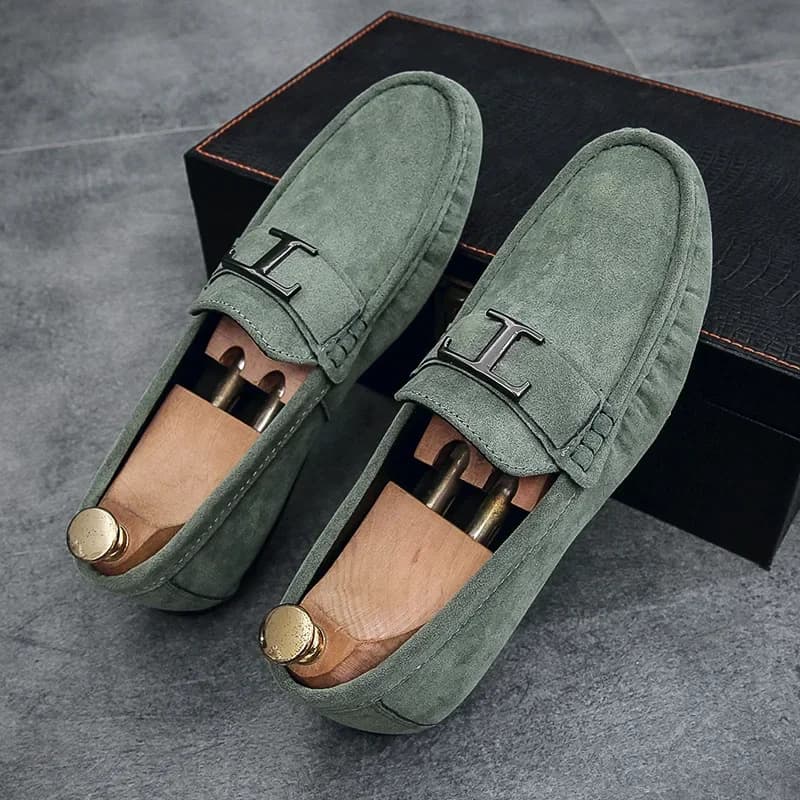
Men's Slip-On Casual Loafers in Soft Synthetic Leather
In stock · Options available · Ships in 7–21 business days
 Sale
Slim-Fit Shawl Lapel Tuxedo, Three-Piece Wedding Set
In stock · Options available · Ships in 7–21 business days
 Sale
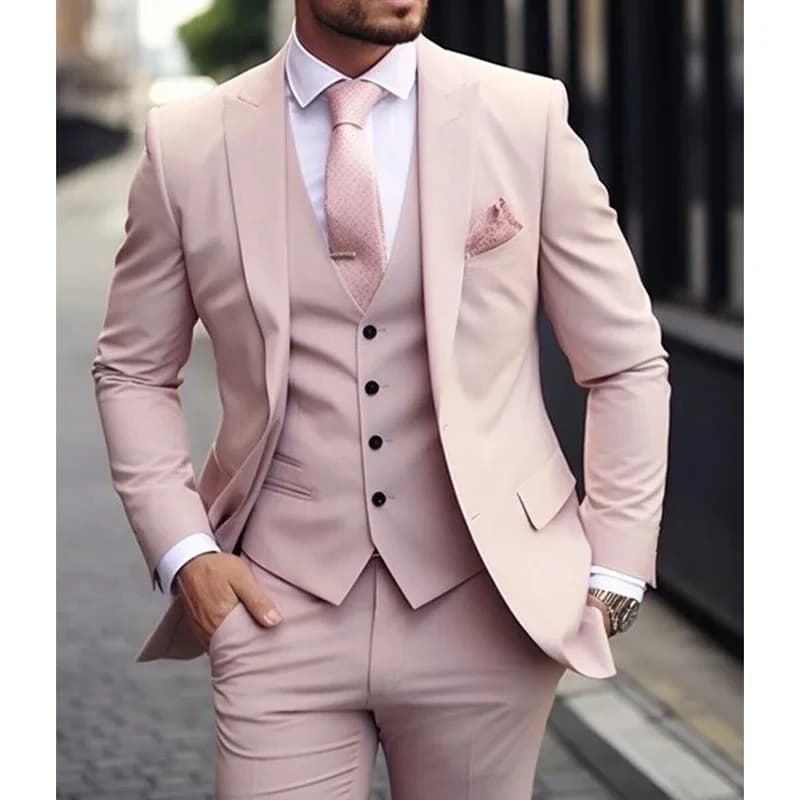
Pastel Pink Slim-Fit Three-Piece Wedding Suit
In stock · Options available · Ships in 7–21 business days
 Sale
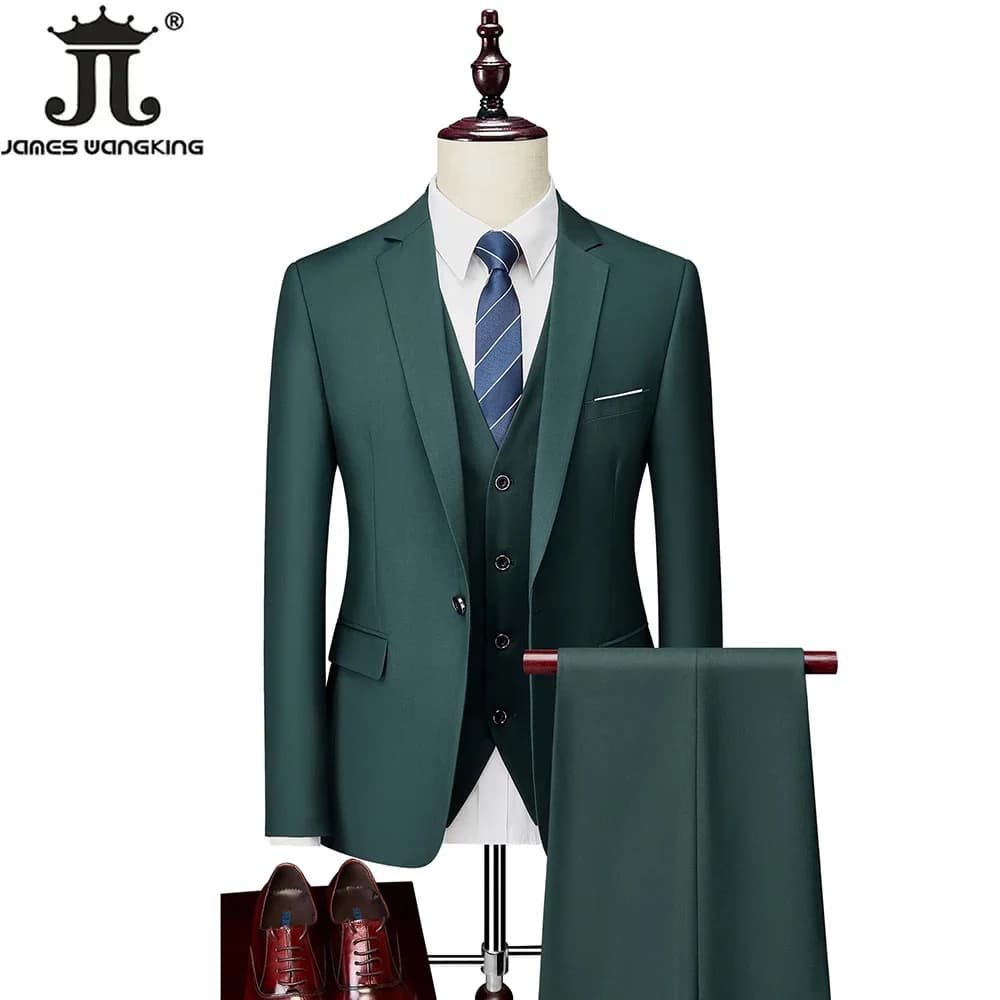
Solid-Color Notch Lapel Office Suit, Two- or Three-Piece
In stock · Options available · Ships in 7–21 business days
Continue reading
 Fashion & Style
How a Men’s Suit Should Fit: Jacket, Trousers, Tailoring
How a men’s suit should fit, checked point by point: shoulders, collar, chest, sleeve and jacket length, trouser break, plus which alterations a tailor can fix.
 Fashion & Style
How to Measure for a Suit at Home: Men’s Size Guide
Learn how to measure for a suit at home: chest, shoulders, sleeve, waist, inseam and jacket length, plus how to read size charts like 40R and suit drop.
 Fashion & Style
Slim Fit vs Regular Fit Suit: Which Cut Suits Your Build
Slim fit vs regular fit suit compared: chest-to-waist drop, armholes, sleeves and trouser openings, plus which cut fits your build and what a tailor can fix.